
The 5-4-3-2-1 grounding method calms a racing mind by walking you through your senses: name five things you can see, four you can feel, three you can hear, two you can smell and one you can taste. It takes about a minute, needs no equipment, and works well in three moments where stress tends to spill into eating: just before a meal, before a stressful meeting or conversation, and at bedtime.
Below is the basic method, quick variations for each of those moments, and a few backup tools for when one technique isn’t enough.
Why grounding helps
When you feel stressed, attention narrows onto worries about what might happen or what already went wrong. Grounding pulls attention back to what is actually around you right now. Mayo Clinic’s guide to mindfulness exercises suggests using all your senses (touch, sound, sight, smell and taste) to stay present, and notes that mindfulness can ease anxiety by helping you stay focused on the present moment.
For eating, this matters because a stressed, rushed brain is more likely to eat fast, eat past fullness, or reach for food as a way to settle down. A minute of grounding gives you a gap between the feeling and the fork.

The 5-4-3-2-1 method, step by step
This version follows the layout used in an NHS grounding technique handout. Say each item silently or under your breath. Go slowly enough to actually notice each one.
- 5 things you can see. Pick details you would normally skip: the grain of a table, a mark on the ceiling, the colour of a mug, light on a window.
- 4 things you can feel. The fabric of your sleeves, the chair under you, the air temperature on your skin, the pressure of your feet on the floor.
- 3 things you can hear. A fan or fridge hum, traffic, birds, your own breathing.
- 2 things you can smell. Soap on your hands, your clothes, food cooking. If nothing stands out, walk to a window or sniff your sleeve.
- 1 thing you can taste. The last thing you ate or drank, toothpaste, a sip of water, or a mint.
If you lose count, that is fine. The counting is only there to keep your attention busy with the present. Start again from wherever you are.
Before meals: a 60-second reset
Use this when you sit down feeling frazzled, starving or still “on” from the day.
- Do the 5-4-3-2-1 sequence, but make the last three steps about the meal: the sounds of the kitchen, two smells from the plate, and the taste of your first bite.
- Put your fork down after that first bite and notice the texture and temperature.
- Check in: on a scale of 1 to 10, how hungry are you right now? This number helps you decide how much to serve and when to pause.
This pairs well with a broader mindful eating practice, where the goal is to eat at a pace that lets you notice fullness.
Before meetings or hard conversations
You may not be able to close your eyes or breathe audibly, so keep it discreet:
- Feet and hands: press your feet into the floor and your palms lightly together or onto your thighs. Notice the pressure for three slow breaths.
- Quick visual scan: name five colours you can see in the room.
- One sound: pick the quietest sound you can hear and follow it for a few seconds.
Afterward, if the stress tends to send you to the vending machine or snack drawer, decide in advance what you will do after the meeting instead, such as a glass of water and a two-minute walk.
At bedtime: slow it down
At night the goal is to calm down rather than to snap back to attention, so pair grounding with slow breathing:
- Lie down and notice four points of contact: head on the pillow, shoulders, hips, heels.
- Listen for three sounds, then let them fade into the background.
- Breathe using the pattern in the NHS breathing exercise for stress: let the breath flow gently into your belly without forcing it, breathe in through your nose and out through your mouth, and count steadily from 1 to 5 on each in-breath and out-breath if that helps. The NHS suggests continuing for at least five minutes and practising regularly for the most benefit.
If late-evening snacking is a habit for you, doing this routine at the time you would usually head to the kitchen can help break the link.
Other grounding tools to keep on hand
| Tool | How to do it | Best for |
|---|---|---|
| Butterfly hug | Cross your arms over your chest, hands resting below your collarbones, and tap left and right slowly while breathing evenly. | Feeling overwhelmed at home |
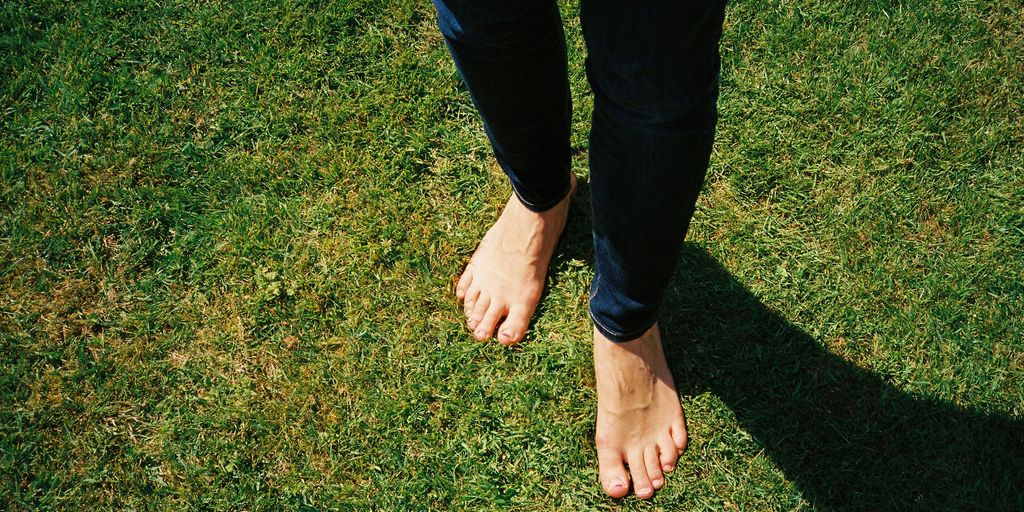
| Barefoot walk | Walk slowly on grass, sand or a rug and notice each step: heel, arch, toes. | Restlessness, afternoon slump |
| Sky focus | Step outside and watch clouds or the light for one minute. | Feeling boxed in or scattered |
| Cold water | Run cool water over your wrists and focus on the temperature. | Sudden strong emotion |
| Body scan | Move attention slowly from toes to head, noticing sensations without trying to change them. | Bedtime, tension |
Mayo Clinic describes the body scan as a common mindfulness exercise that helps you notice what your body is feeling, and points out that mindfulness can be practised sitting, standing, walking or lying down, so you can choose whatever fits the moment.

Making it a habit
Grounding works best when you have practised it on calm days, so it is familiar when stress hits. Tie it to something you already do:
- Every time you sit down to eat lunch
- When you park the car or get off the bus
- After you brush your teeth at night
Keep a short note on your phone: “5 see, 4 feel, 3 hear, 2 smell, 1 taste.” Some people also find it useful to jot down a quick before-and-after stress rating (1 to 10) for a week to see which version helps them most. For more ideas on handling day-to-day pressure, see these stress management techniques.
When to check with a professional
Grounding is a self-help skill, not a treatment. Talk to your doctor or a mental health professional if anxiety or panic is frequent, is getting worse, keeps you from sleeping, or affects work, relationships or eating. If stress eating feels out of control, a professional can help, and you can also read about managing cravings in the meantime.
Quick takeaways
- 5-4-3-2-1: see, feel, hear, smell, taste. About a minute, anywhere.
- Before meals, end the sequence with the smell and taste of your food and a hunger check.
- Before meetings, use discreet versions: feet pressing down, colours in the room.
- At bedtime, pair grounding with slow belly breathing for at least five minutes.
- Practise on calm days so the skill is ready on hard ones.
FAQ
How long does the 5-4-3-2-1 technique take?
Usually one to two minutes. You can stretch it out by spending longer on each sense.
What if I can’t find something to smell or taste?
Move to a window, smell your hands or sleeve, or take a sip of water. You can also simply notice that there is no strong smell and move on.
Can grounding replace therapy for anxiety?
No. It is a useful in-the-moment tool and can complement professional care, but persistent anxiety deserves proper assessment and support.