
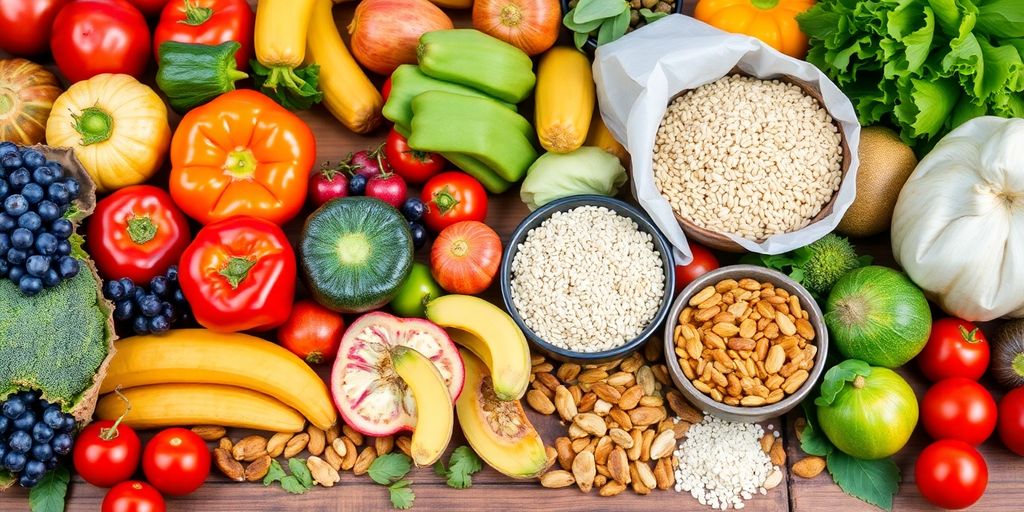
Whole foods are foods that are unprocessed or minimally processed, such as vegetables, fruit, beans, lentils, whole grains, nuts, seeds, eggs, milk, plain yogurt, fish and meat. The easiest way to eat more of them is to make small swaps you will actually keep: add one whole food to each meal, keep a few versatile staples on hand, read ingredient lists, and lean on frozen and canned basics to save time and money. You do not need to cut out every packaged food to see a difference.

What counts as a whole food
Think of processing as a spectrum rather than a yes-or-no label:
| Category | Examples |
|---|---|
| Whole or minimally processed | Fresh, frozen or canned vegetables and fruit; dried or canned beans and lentils; oats, brown rice, barley; eggs; milk and plain yogurt; nuts and seeds; plain fish, poultry and meat |
| Processed but still useful | Whole grain bread, plain canned tuna or salmon, tofu, cheese, natural peanut butter, unsweetened frozen fruit |
| Highly processed | Sugary drinks, candy, chips, many packaged baked goods, processed meats, instant noodles, many ready-made sauces |
Canada’s Food Guide describes highly processed foods as processed or prepared foods and drinks that add excess sodium, sugars or saturated fat to our diets, and recommends limiting them. Building more of your meals from the first two rows naturally crowds those foods out.
Why whole foods help
- More fibre: Canada’s Food Guide notes that whole grain foods have more fibre than refined grains because they include all parts of the grain. Vegetables, fruit and legumes add even more.
- Better fullness: fibre, protein and water in whole foods help meals feel more satisfying, which can make portion sizes easier to manage.
- Less added salt and sugar: you control what goes in when you start with basic ingredients.
- More vitamins and minerals: whole foods keep more of the nutrients that refining can strip away.

Common myths
- “Whole foods are too expensive.” Some are, but many staples are among the cheapest foods in the store. Canada’s Food Guide points out that beans, lentils and other legumes are inexpensive protein foods, and that frozen and canned vegetables and fruit are healthy options that can cost less than fresh when produce is out of season.
- “I have to eat 100% whole foods.” No. Aim for mostly whole foods and enjoy other foods sometimes without stress.
- “Frozen and canned don’t count.” They do. Plain frozen vegetables and fruit, and canned beans, tomatoes and fish, are convenient whole-food staples. Rinse canned beans and choose lower-sodium options when you can.
How to spot whole foods at the store
Produce, bulk bins, the dairy case and the fresh meat and fish counters are good places to start, but the inner aisles also hold oats, dried lentils, canned beans, brown rice and frozen vegetables. For packaged foods, the ingredient list is your best tool. Canada’s Food Guide explains that the ingredient list shows ingredients by weight, starting with the one that weighs the most. Quick checks:
- Short and familiar: “rolled oats” or “chickpeas, water, salt” is a good sign.
- First ingredient: for bread and cereal, look for a whole grain such as “whole grain whole wheat flour” or “whole grain oats.”
- Sugar and salt: on the Nutrition Facts table, 5% Daily Value or less is a little and 15% or more is a lot.
For a full shopping plan, see our guide to healthy grocery shopping.
Easy swaps, meal by meal
Start with one meal and one swap at a time. Once it feels routine, add another.
| Meal | Instead of | Try |
|---|---|---|
| Breakfast | Sweetened cereal | Oatmeal with frozen berries and a spoon of nuts or seeds |
| Breakfast | Flavoured yogurt | Plain yogurt with fruit and a little honey |
| Lunch | Packaged noodle cup | Leftover brown rice, canned beans, frozen vegetables and salsa |
| Lunch | White bread sandwich | Whole grain bread with egg, tuna or hummus and vegetables |
| Dinner | Jarred pasta sauce | Canned tomatoes, garlic, onion and herbs simmered for 15 minutes |
| Dinner | Frozen breaded fish | Plain fish fillet baked with lemon and herbs |
| Snack | Chips | Air-popped popcorn, roasted chickpeas or nuts |
| Drink | Pop or sweetened drinks | Water, sparkling water with citrus, or milk |
Need more snack ideas? Our list of high-protein snacks includes many whole-food options.

Build a whole-foods pantry
Having the basics on hand makes a quick, home-cooked meal possible on busy nights.
- Grains: rolled oats, brown rice, barley, quinoa, whole wheat pasta
- Legumes: canned chickpeas, black beans, kidney beans; dried lentils
- Canned: tomatoes, tuna, salmon, low-sodium broth
- Freezer: mixed vegetables, spinach, berries, plain fish fillets, chicken breasts
- Fridge: eggs, plain yogurt, milk, cheese, carrots, cabbage, apples
- Flavour: olive or canola oil, vinegar, lemon juice, garlic, onions, dried herbs and spices
- Nuts and seeds: peanuts, almonds, sunflower seeds, ground flaxseed
Store whole grains, nuts and seeds in sealed containers in a cool, dark place, or in the fridge or freezer if you use them slowly, since their natural oils can go stale.
Save time with simple prep
- Cook once, eat twice: make a big pot of brown rice, lentils or a soup on the weekend and use it in several meals.
- Wash and cut produce when you get home so it is ready to grab.
- Use sheet-pan dinners: chopped vegetables, chickpeas or chicken, oil and spices, roasted together.
- Plan three or four dinners for the week and repeat favourites. Our guide to meal planning walks through a simple system.
Flavour whole foods with herbs, spices, citrus, garlic, vinegar and a little oil rather than relying on salty sauces.

Eating out
You can apply the same idea at restaurants: choose dishes built around vegetables, beans, grilled fish or chicken and whole grains, ask for sauces on the side, and add a side salad or vegetables when you can. One meal out does not undo your habits at home.
A sample whole-foods day
Here is what one ordinary day might look like. It is an example to adapt, not a meal plan to follow exactly.
- Breakfast: oatmeal cooked in milk, topped with frozen blueberries and a spoon of ground flaxseed.
- Lunch: whole grain wrap with hummus, leftover roasted vegetables, spinach and a hard-boiled egg; an apple.
- Snack: plain yogurt with a handful of almonds.
- Dinner: lentil and vegetable soup made with canned tomatoes and low-sodium broth, with a slice of whole grain bread.
- Drinks: water through the day, and a glass of milk or a caffeine-free herbal tea in the evening.
When to check with a professional
If you have diabetes, kidney disease, digestive conditions or food allergies, or you are significantly increasing fibre, talk to your doctor or a registered dietitian about the best approach for you. Increase fibre gradually and drink water to reduce bloating.
Key takeaways
- Whole foods are unprocessed or minimally processed; frozen and canned basics count.
- Aim for mostly whole foods and limit highly processed foods, without chasing perfection.
- Use the ingredient list: short, familiar ingredients and a whole grain listed first.
- Make one swap per meal at a time, and keep a stocked pantry for quick dinners.
- Legumes, oats and frozen produce keep whole-food eating affordable.