
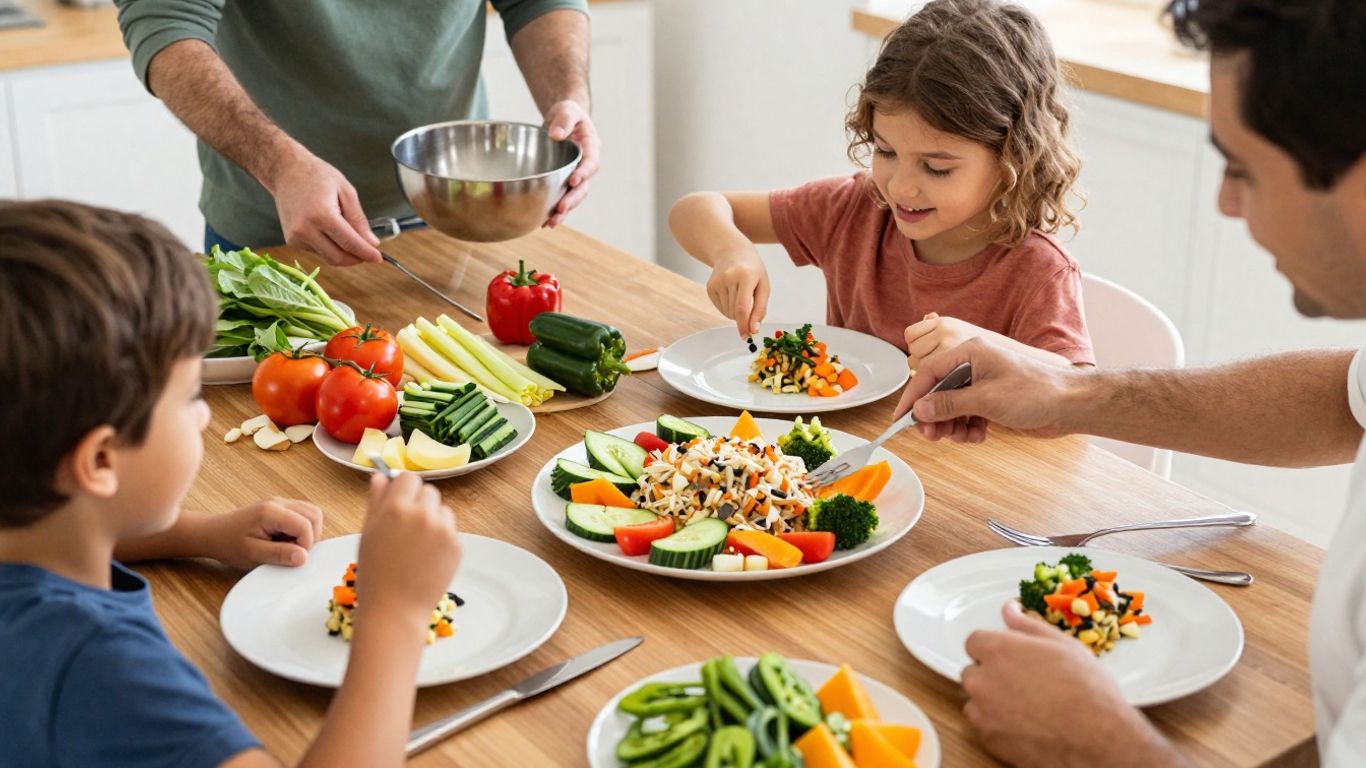
The easiest way to feed a family without cooking three different dinners is to prep one or two shared “bases” (a grain, a protein, a tray of vegetables, a sauce) and let each person finish their own plate. Adults can build a balanced bowl, kids can pick familiar toppings, and everyone eats the same meal. Involving children in the prep also makes them more willing to try what’s on the table.
Here is how to choose good bases, set up kid-friendly finishes, and handle picky eating without turning dinner into a negotiation.
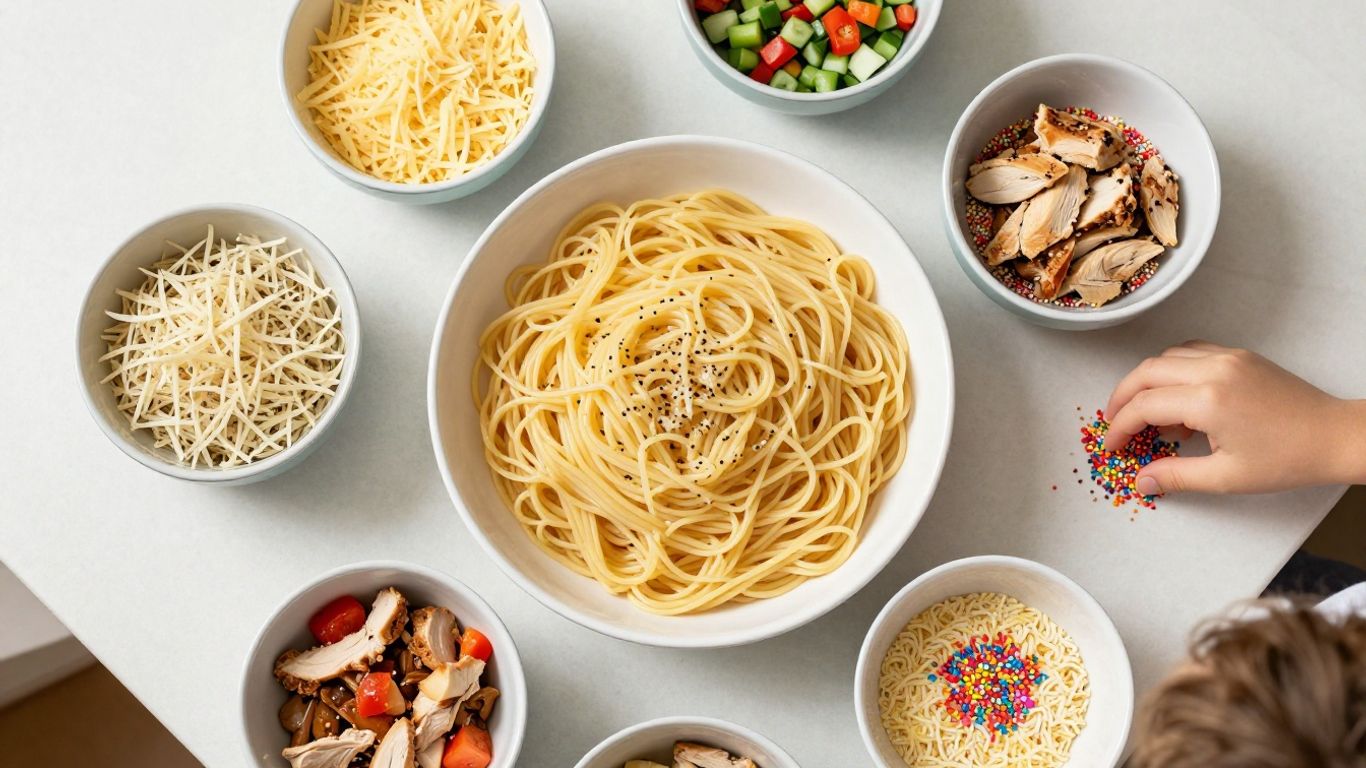
How the “shared base” method works
On a prep day (or during one longer evening), cook a few versatile components in bulk. During the week, each dinner takes 10 to 20 minutes: reheat the bases, put out a few finishes, and let everyone assemble. You decide what goes on the table; each person decides how much of it to take.
That split reflects Health Canada’s advice for parents and children: what you have in your home is what your family eats, and kids can decide how much they eat. The same page encourages eating together as a family as often as possible.
Choosing your bases
| Base type | Good options | Prep tip |
|---|---|---|
| Grain | Brown rice, whole-wheat pasta, quinoa, barley, whole-grain tortillas | Cook a big pot; cool in shallow containers |
| Protein | Shredded chicken, black beans, lentils, baked tofu, seasoned ground turkey | Season lightly so it works in several dishes |
| Vegetables | Roasted peppers, zucchini, broccoli, sweet potato, carrots | Roast two sheet pans at once |
| Sauce | Simple tomato sauce, yogurt-herb sauce, mild peanut sauce | Store separately so plates stay customizable |
Two bases from each row will carry you through most of a week. Frozen and canned staples such as frozen vegetables, canned beans and canned tomatoes count too and save a lot of time.
Kid-approved finishes
The “finish” is what makes a shared base feel like a different meal each night. A few formats that work well with children:
Build-your-own taco or burrito night
Base: beans or seasoned chicken plus rice. Finishes: shredded cheese, diced tomato, corn, lettuce, mild salsa, plain yogurt instead of sour cream.
Grain bowls
Base: rice or quinoa, roasted vegetables and a protein. Finishes: shredded carrot, cucumber coins, edamame, sesame seeds, a mild sauce on the side.
Pasta two ways
Base: whole-wheat pasta and tomato sauce with lentils or ground turkey stirred in. Finishes: grated cheese, peas, spinach for adults, plain buttered noodles with sauce on the side for a cautious eater.
English-muffin or pita pizzas
Base: whole-grain muffins or pitas and tomato sauce. Finishes: cheese, peppers, mushrooms, pineapple, leftover chicken.
Quesadillas
Base: whole-grain tortillas and beans or chicken. Finishes: cheese, corn, sautéed peppers, spinach folded inside.
Breakfast for dinner
Base: eggs and whole-grain toast or pancakes. Finishes: fruit, yogurt, roasted potatoes, sautéed vegetables.
A weekly rhythm like taco Tuesday or pizza Friday removes decision fatigue. Our post on theme days explains how to set one up.
Getting kids involved
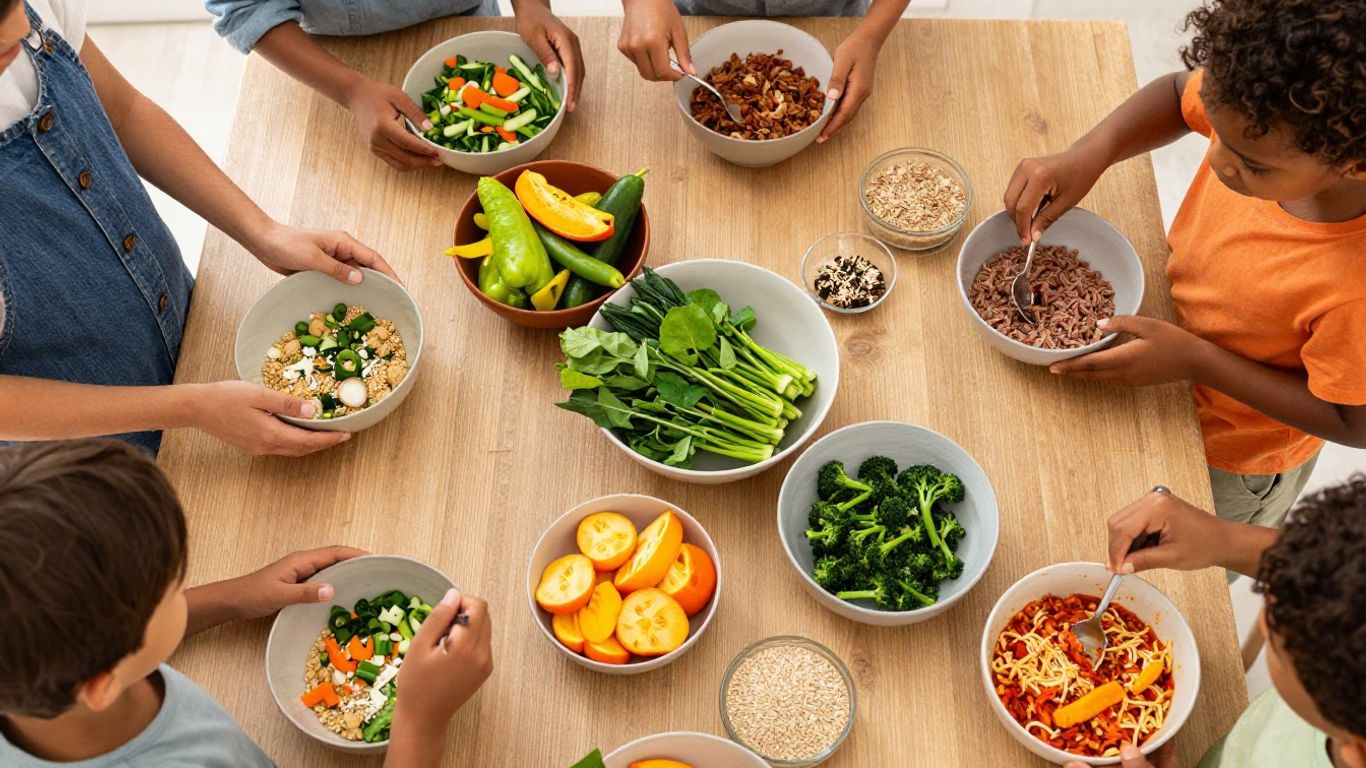
Canada’s Food Guide lists many benefits of involving kids in planning and preparing meals, including building food skills and confidence and encouraging picky eaters to try foods they helped make. It suggests tasks by age:
| Age | Jobs they can do |
|---|---|
| 2 to 3 | Wash vegetables and fruit, add ingredients to a bowl, count ingredients |
| 3 to 4 | Gather ingredients, mix, pour from measuring cups, help make a sandwich or pizza, mash bananas or sweet potatoes |
| 4 to 6 | Set the table, stir, slice soft foods with a children’s knife |
| 6 to 8 | Crack and beat an egg, toss salads, make an easy breakfast, use a can opener or blender |
| 8 to 11 | Cut bread and easy-to-grip produce, pack their own lunch, use the microwave and stove with help |
| Pre-teens and teens | Follow more complex recipes, take charge of dinner on set nights |
Keep adult supervision for knives, stovetops and ovens, and choose one or two jobs per child per session so it doesn’t take all evening.
Handling picky eating
- Keep offering. Health Canada notes that children are more likely to accept a new food the more often they are exposed to it, and a rejected food can be offered again later.
- Always include a “safe” food. Make sure each meal has at least one item your child usually eats, such as rice, bread or a favourite fruit.
- Serve it deconstructed. Many children prefer foods that don’t touch. Shared bases make this easy.
- Skip pressure and bribes. Let them serve themselves and decide how much to eat.
- Eat the same food yourself. Kids notice what the adults at the table choose.
A sample 60-minute prep session
- Minutes 0 to 10: start a pot of brown rice and heat the oven. Kids wash vegetables.
- Minutes 10 to 25: chop peppers, zucchini and sweet potato onto two sheet pans and roast. Older kids can help cut soft vegetables.
- Minutes 25 to 40: simmer a pot of lentils or brown ground turkey with onion and garlic. Rinse two cans of black beans.
- Minutes 40 to 50: stir together a quick yogurt-herb sauce and a simple tomato sauce.
- Minutes 50 to 60: portion everything into shallow containers, label, and fill a “topping box” with cheese, corn and chopped cucumber.
That one session covers tacos, grain bowls, pasta and quesadillas for the week, with only reheating and assembling left on busy nights.
Making it easier for you
- Keep a short list of five or six family favourites and rotate them instead of inventing new meals every week.
- Double the protein on prep day and freeze half for the following week.
- Let older children plan and lead one dinner a week using the bases in the fridge.
Keeping it safe and simple
- Cool cooked bases quickly in shallow containers and refrigerate them within two hours.
- Plan to use refrigerated bases within 2 to 3 days and freeze the rest. Our guide to batch-cooking food safety covers cooling, storing and reheating in detail.
- Store toppings in clear containers at kid height in the fridge so children can help set up.
Takeaways
- Prep one or two grains, proteins, vegetables and sauces; let each person finish their own plate.
- Rotate formats: tacos, bowls, pasta, pizzas, quesadillas, breakfast for dinner.
- Give kids age-appropriate prep jobs; they are more likely to try what they helped make.
- You choose what is served, they choose how much; keep offering new foods without pressure.
- Eat together as often as you can.
FAQ
Is it okay to use frozen or canned vegetables for family meal prep?
Yes. Canada’s Food Guide notes that frozen and canned vegetables can be as nutritious as fresh. Choose versions with little or no added sodium or sauce.
What if my child refuses the meal?
Keep it low-key. Make sure there was a familiar food on the table, don’t cook a separate meal, and offer the new food again another day.