
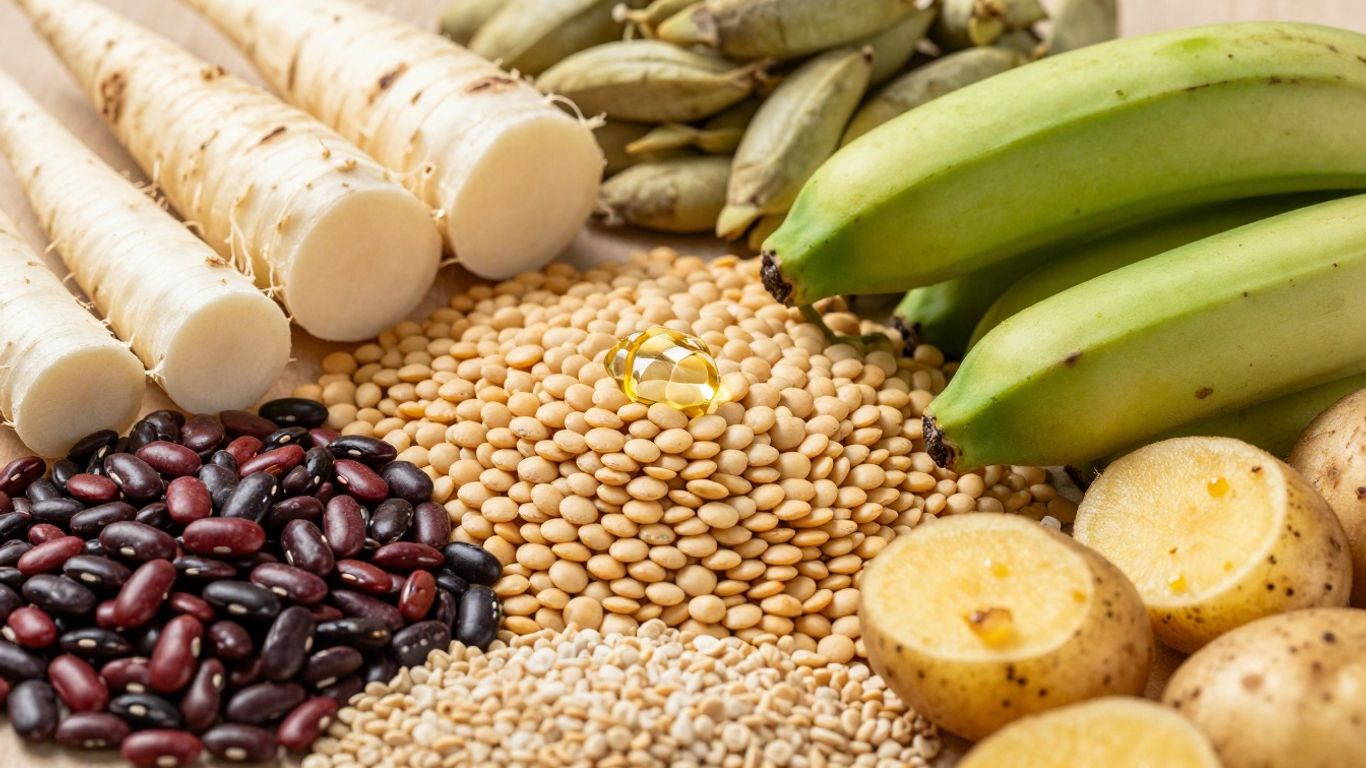
Inulin, GOS (galacto-oligosaccharides) and resistant starch are three different types of prebiotic fibre that feed different gut bacteria, so eating a mix of them is more useful than loading up on one. The key to avoiding gas, bloating and cramps is to add them slowly, in small food-based amounts spread across the day, with enough fluid. Most people can get all three from ordinary foods without supplements.
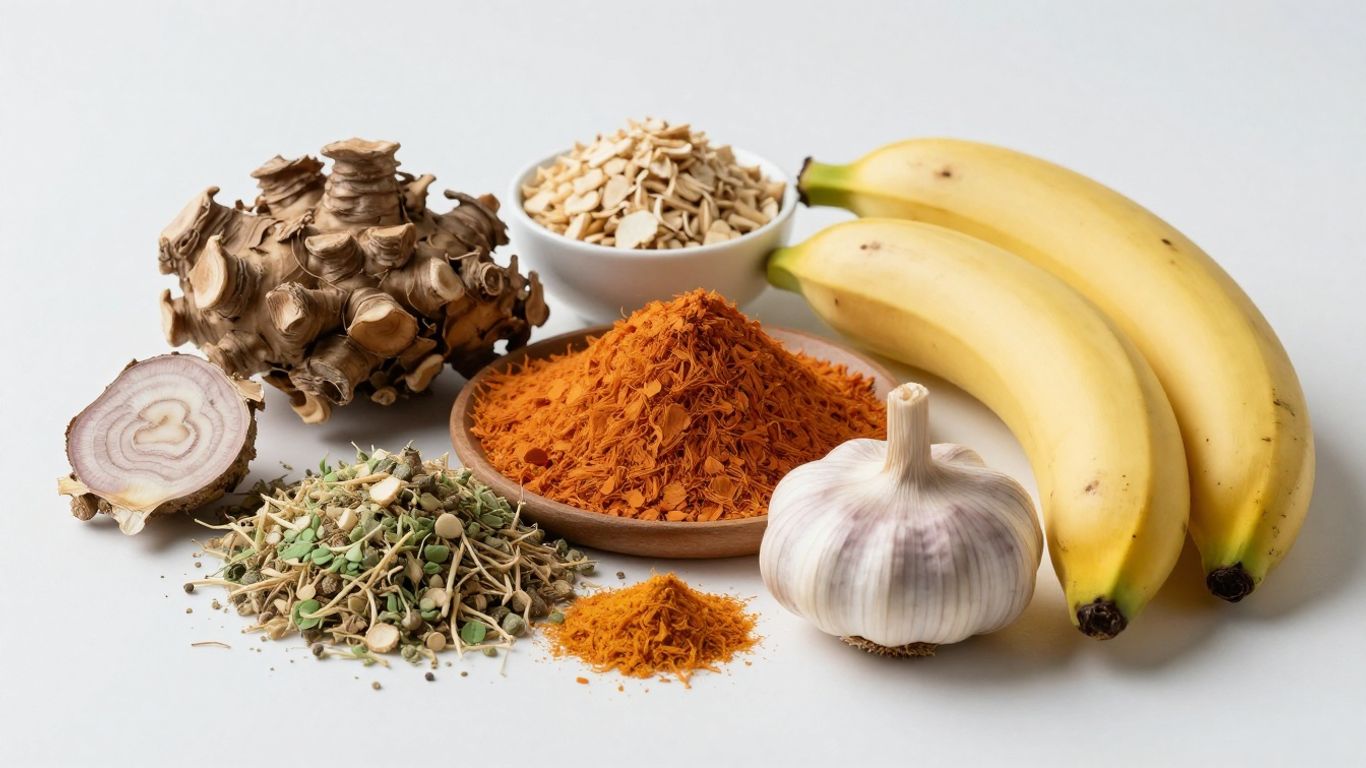
What prebiotics are, briefly
Prebiotics are components of food that we can’t digest ourselves but that bacteria in the large intestine can ferment. That fermentation produces short-chain fatty acids, which are linked with gut and wider health. A 2019 review of prebiotics lists fructo-oligosaccharides (the family inulin belongs to) and galacto-oligosaccharides as the two best-studied groups, and notes that resistant starch has been proposed as a prebiotic because it promotes butyrate production.
The same review explains why prebiotics can cause discomfort: because they’re fermented and draw water into the bowel, side effects can include bloating, cramping, flatulence and loose stools. It also notes that shorter-chain prebiotics may cause more side effects. That is the “distress” this article is about avoiding.
The three types at a glance
| Type | Common food sources | Tolerance notes |
|---|---|---|
| Inulin and fructans | Onions, garlic, leeks, asparagus, Jerusalem artichoke, chicory root, wheat and rye, slightly green bananas | Ferments fairly quickly; a common cause of gas when added in large amounts. Chicory-root inulin is often added to “high-fibre” bars. |
| GOS | Beans, lentils, chickpeas, split peas, soy foods; small amounts in milk | Familiar “beans cause gas” effect. Rinsing canned legumes and starting with small portions helps. |
| Resistant starch (RS) | Cooked-and-cooled potatoes, rice and pasta; oats; slightly green bananas; legumes | Usually ferments more slowly and is often gentler, which makes it a good starting point. |
Why variety matters
Different bacteria prefer different fibres, and some bacteria feed on the by-products of others. Eating a range of fibre sources is also the standard healthy-eating advice: the NHS recommends getting fibre from a variety of sources and notes that most adults eat well below the 30 g a day target. A “rotation” is simply a structured way of getting that variety without overwhelming your gut with one type at once.
A gentle 4-week rotation
Mayo Clinic’s advice for any fibre increase applies here: add fibre slowly over a few weeks and drink plenty of water, which gives your gut bacteria time to adapt. Here’s one way to do that.
Week 1: Start with resistant starch
- Cook extra potatoes, rice or pasta and chill them overnight. Use them in a potato salad, a rice bowl or reheat them (reheating keeps some of the resistant starch).
- Have oats for breakfast a few days this week.
- Add one small portion per day, not three.
Week 2: Add small amounts of GOS
- Add 2–3 tablespoons of rinsed canned lentils or chickpeas to a salad or soup.
- Try a small serving of hummus with vegetables.
- Keep the resistant starch foods from Week 1.
Week 3: Layer in inulin-rich foods
- Cook with onions, leeks and garlic in normal recipe amounts rather than piling them on.
- Add a few spears of asparagus or a slightly green banana.
- Go easy on fortified bars and drinks with added chicory root or inulin; they can deliver a much larger dose than whole foods.
Week 4: Rotate
Aim for one or two prebiotic foods at each meal, drawing from different columns of the table over the week. For example:
- Breakfast: oats with a slightly green banana (RS + inulin)
- Lunch: lentil soup with whole-grain bread (GOS + fructans)
- Dinner: chilled potato salad with chives, plus roasted asparagus (RS + inulin)
How to keep discomfort low
- Spread it out. Several small portions across the day are easier than one large fibre-heavy meal.
- Change one thing at a time. If you add a new food, give it a few days before adding the next one, so you know what’s causing any symptoms.
- Drink enough. Water, milk, herbal tea and soups all count.
- Cook and rinse. Rinsing canned legumes and cooking vegetables well can make them easier to tolerate.
- Step back, don’t quit. If you get uncomfortable, return to the last amount that felt fine for a week, then try again with a smaller increase.
- Watch supplements. Powdered inulin or GOS products deliver concentrated amounts. Food sources are a gentler place to start.
Reading your body’s signals
| What you notice | What it likely means | What to try |
|---|---|---|
| A bit more gas than usual | Normal adjustment | Hold your current amount for a few more days |
| Bloating or cramping | Too much, too fast | Cut back to the last comfortable amount; spread portions out |
| Symptoms only with one food group | That type may not suit you right now | Lean on the other two types; retry later in smaller amounts |
| Loose stools | Possible osmotic effect | Reduce the amount, especially of supplements or fortified products |
A note on IBS and sensitive guts
People with irritable bowel syndrome often react strongly to fructans (including inulin) and GOS, because these are fermentable carbohydrates. If you have IBS or ongoing gut symptoms, a slow rotation may still be too much, and a dietitian can help you work out which foods you tolerate and in what amounts. For general bloating strategies, see our guide on how to reduce bloating.
Prebiotics and probiotics together
Prebiotics feed bacteria; probiotics are live microbes. Eating both, for example yogurt or kefir alongside fibre-rich foods, is a reasonable food-first approach. Our article on ferments vs probiotic capsules covers how to choose, and fibre for digestion looks at the bigger fibre picture.
When to check with a professional
- Persistent bloating, pain or changes in bowel habits that don’t settle when you scale back
- Blood in your stool, unexplained weight loss or night-time symptoms
- A diagnosed gut condition such as IBS, inflammatory bowel disease or a history of bowel surgery
- Before starting prebiotic supplements if you’re pregnant, managing a medical condition or taking medications
Takeaways
- Inulin, GOS and resistant starch feed different bacteria; a mix beats a mountain of one.
- Start with resistant starch (cooled potatoes, rice, oats), then add legumes, then onion-family and other inulin foods.
- Increase slowly over a few weeks, spread portions across meals, and drink enough fluid.
- If symptoms flare, step back to the last comfortable amount rather than stopping entirely.
- Food sources first; concentrated powders and fortified bars are where most trouble starts.
FAQ
How long does it take to adjust?
Many people notice gas settling within a couple of weeks of a steady intake, but it varies. Going slower is fine.
Do I need a prebiotic supplement?
Most people don’t. Beans, oats, onions, garlic, cooled potatoes and bananas provide all three types in amounts that are easier to tolerate.
Does reheating cooled rice or potatoes undo the resistant starch?
Some resistant starch appears to remain after reheating, so leftovers can still count. Store cooked rice in the fridge promptly and reheat it until steaming hot.