
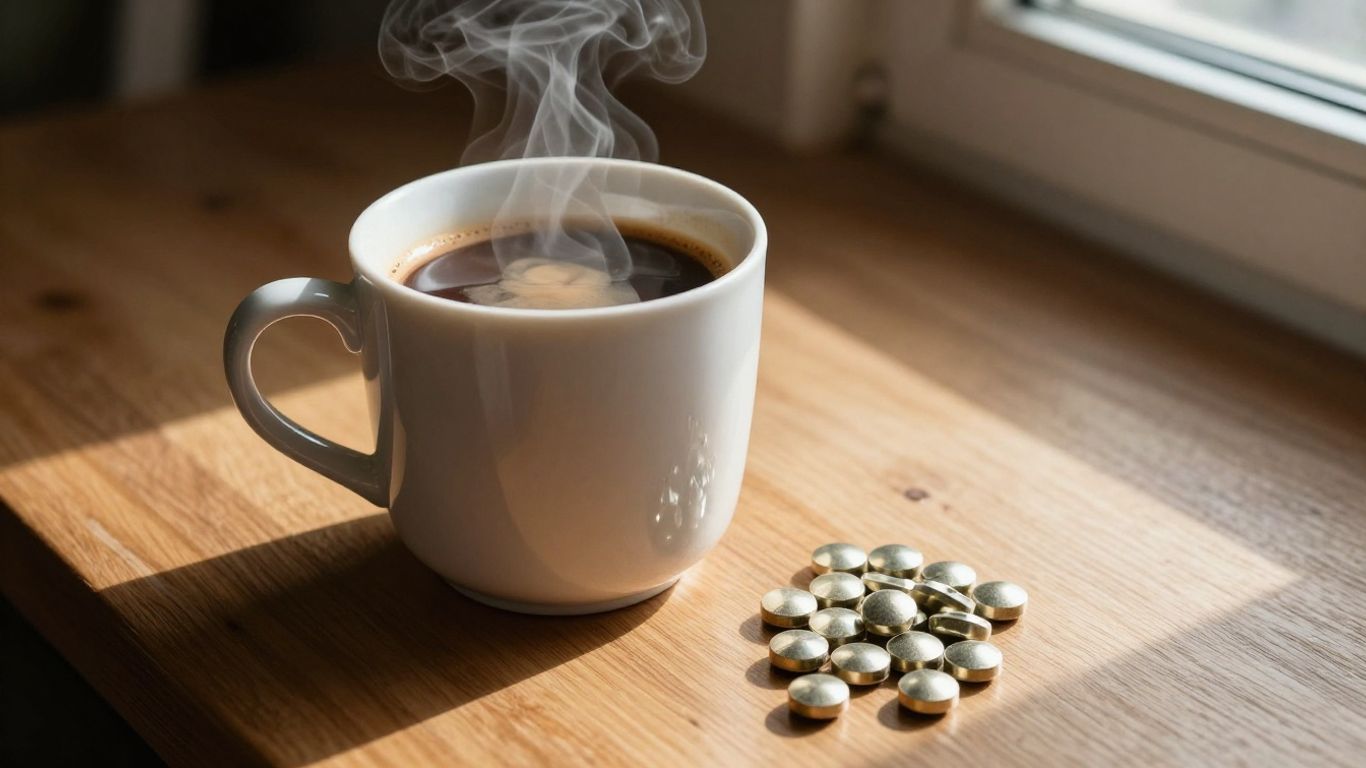
Coffee and tea can sharply reduce how much iron you absorb from plant foods and supplements when you drink them with or soon after a meal. The cause is mainly their polyphenols, not the caffeine. Timing is the practical fix: in one well-known study, coffee taken an hour before a meal didn’t reduce iron absorption, while coffee taken an hour after did.
What’s going on
There are two forms of iron in food:
- Heme iron in meat, poultry and fish, which is absorbed fairly well.
- Non-heme iron in beans, lentils, tofu, leafy greens, nuts, seeds, eggs and fortified cereals, which is absorbed less easily and is more affected by what you eat and drink alongside it.
Polyphenols in coffee and tea bind to non-heme iron in the gut and make it harder to absorb. This matters most if you eat little or no meat, have heavy periods, are pregnant, or have already been told your iron is low.
What the research shows
In a 1983 study using labelled iron, a cup of coffee with a hamburger meal reduced iron absorption by 39%, and tea reduced it by 64%. The effect grew with stronger coffee. The timing finding is the most useful part: no decrease occurred when coffee was consumed one hour before the meal, but the same degree of inhibition was seen when it was taken one hour after.
A later study of polyphenol-containing drinks found that coffee, black tea, cocoa and several herbal teas (including peppermint and chamomile) all reduced iron absorption from a bread meal, in proportion to their polyphenol content. Adding milk made little or no difference. So the issue isn’t caffeine as such, and switching to a caffeine-free drink doesn’t automatically make it iron-friendly.
The NHS lists tea, coffee, and milk and dairy foods among the things that, in large amounts, make it harder to absorb iron from foods and tablets.
A simple timing plan
| Situation | What to do |
|---|---|
| Iron-rich meal (beans, lentils, tofu, fortified cereal, leafy greens) | Drink water or a vitamin C-rich juice with it. Have coffee or tea at least an hour before, or wait a good while after. |
| Iron supplement | Follow your doctor’s or pharmacist’s instructions. Keep coffee, tea and dairy away from the dose. The NHS notes that orange juice after a tablet may help absorption. |
| Breakfast with fortified cereal | Pair it with berries, kiwi or a small glass of orange juice instead of a hot drink at the same time. |
| Habitual morning hot drink | Have it before breakfast or mid-morning between meals rather than with your most iron-rich meal. |
Boost absorption at the same meal
Vitamin C is the most practical enhancer. Dietitians of Canada’s Unlock Food site explains that vitamin C in foods can help increase absorption of non-heme iron, and that eating some meat, fish or poultry with plant iron sources also helps.
Easy pairings:
- Lentil or bean soup with tomatoes and a squeeze of lemon
- Spinach salad with strawberries or orange segments
- Fortified oatmeal with kiwi or a small glass of orange juice
- Tofu stir-fry with red pepper and broccoli
- Chili with beans, tomatoes and bell peppers
Our guide to iron without red meat covers enhancers and inhibitors in more depth.
Drinks to have with iron-rich meals
- Water or sparkling water, with lemon or lime
- Orange or other vitamin C-rich fresh juice (a small glass)
- A smoothie made with berries, citrus or kiwi
Save tea (including most herbal teas), coffee, cocoa and large glasses of milk for between meals if iron is a concern. Milk and dairy are still valuable for calcium and protein; it’s simply the timing that matters. For more on spacing calcium and iron, see calcium and vitamin D pairings.
A sample iron-friendly day
| Time | Eat | Drink |
|---|---|---|
| Breakfast | Iron-fortified cereal or oatmeal with strawberries and pumpkin seeds | Water or a small glass of orange juice |
| Mid-morning | Yogurt or a piece of fruit | Herbal tea, hot chocolate or another warm drink, well away from breakfast |
| Lunch | Lentil and vegetable soup with tomatoes, whole-grain bread | Water with lemon |
| Afternoon | Hummus with red pepper strips | Herbal tea or milk |
| Dinner | Tofu or chicken stir-fry with broccoli and peppers over rice | Water or sparkling water |
Caffeine itself: a few neutral facts
Separate from iron, caffeine affects sleep and, for some people, appetite and anxiety. Health Canada’s maximum suggested intake is 400 mg a day for healthy adults and 300 mg for people who are pregnant or breastfeeding. If you’re cutting back, herbal teas, hot milk, warm water with lemon and decaffeinated options are all choices; just keep them away from iron-rich meals when iron is a concern. Our article on caffeine timing and tolerance covers the sleep side.
Signs your iron might be low
The NHS lists common symptoms of iron deficiency anaemia as:
- Tiredness and lack of energy
- Shortness of breath
- Noticeable heartbeats (palpitations)
- Paler than usual skin
- Headaches
Less common signs include hair loss (more hair coming out when brushing or washing), a sore tongue, restless legs, spoon-shaped nails, and cravings for non-food items like ice. These symptoms have many possible causes, so they’re a reason to get checked, not to self-diagnose.
Who should pay most attention
- People who eat little or no red meat
- People with heavy periods
- People who are pregnant
- Frequent blood donors
- Anyone who has been told their iron or ferritin is low
When to check with a professional
- You have symptoms of low iron. A simple blood test can confirm it.
- You’re thinking of taking iron supplements. Too much iron can be harmful, and supplements should be kept out of reach of children.
- You’ve been prescribed iron and aren’t sure how to time it with meals, drinks or other medications.
- You have ongoing heavy periods, digestive symptoms or any signs of bleeding.
Takeaways
- Coffee, tea, cocoa and many herbal teas reduce non-heme iron absorption when taken with or after a meal.
- In research, coffee an hour before a meal didn’t affect iron absorption; an hour after did.
- Drink water or a vitamin C-rich juice with your most iron-rich meal.
- Add vitamin C foods (citrus, berries, kiwi, peppers, tomatoes) to plant-iron meals.
- If you suspect low iron, get a blood test before starting supplements.
FAQ
Does decaf solve the problem?
Not necessarily. The effect is linked to polyphenols rather than caffeine, so caffeine-free drinks with polyphenols can still reduce iron absorption.
Does adding milk help?
No. In the polyphenol study, adding milk had little or no effect on how much these drinks reduced iron absorption.
Does this affect iron from meat?
The biggest effect is on non-heme iron from plant foods and supplements. If most of your iron comes from plants, timing matters more for you.