

A morning activation ritual is a short, repeatable sequence of three things: get light, move your body, and set one or two goals for the day. It can take as little as 10 minutes. Light helps set your body clock, gentle movement wakes you up, and a clear intention makes healthy choices later in the day more likely.
Why light, movement and goals
Each part does a different job:
- Light tells your internal clock that the day has started.
- Movement raises alertness and adds to your daily activity.
- Goals give the day a direction before email, news and other demands take over.
Doing them in the same order, at roughly the same time, turns the sequence into a habit that needs little willpower. Habit research describes this as repeating an action in the same context until it becomes automatic.
Step 1: get light early

According to the U.S. National Institutes of Health, light and dark have the biggest influence on circadian rhythms, the daily cycles that affect sleep, alertness and other body functions. The brain’s master clock adjusts melatonin based on the light your eyes receive. A research review on light, circadian rhythms, sleep and mood explains that our internal clock is synchronised to the solar day through light reaching the eyes.
Practical ways to get morning light:
- Open the curtains as soon as you get up.
- Drink your morning water or eat breakfast next to a window.
- Step outside for a few minutes: the porch, balcony, or a walk to the end of the driveway.
- On dark Canadian winter mornings, turn on bright indoor lights, then get outside later in the morning when you can.
Never look directly at the sun. If you are considering a light therapy lamp for low mood in winter, talk to your healthcare provider first.
Step 2: move for 5 to 15 minutes
Morning movement does not need to be a workout. The aim is to wake up your muscles and joints and add some light activity to the day. Canada’s 24-hour movement guidelines note that several hours of light physical activity, including standing, matter alongside 150 minutes a week of moderate to vigorous activity.
Pick one of these
| Option | Time | What it looks like |
|---|---|---|
| Gentle mobility | 5 minutes | Neck rolls, shoulder circles, cat-cow, hip circles, calf raises |
| Outdoor walk | 10 minutes | A loop around the block, which also covers your light |
| Bodyweight wake-up | 8 minutes | Sit-to-stands, wall push-ups, glute bridges, marching on the spot |
| Stretch and breathe | 10 minutes | Slow stretches with long, easy breaths |
Combining steps 1 and 2 is the most efficient choice: a short walk outside gives you light and movement together.
Step 3: set one or two goals
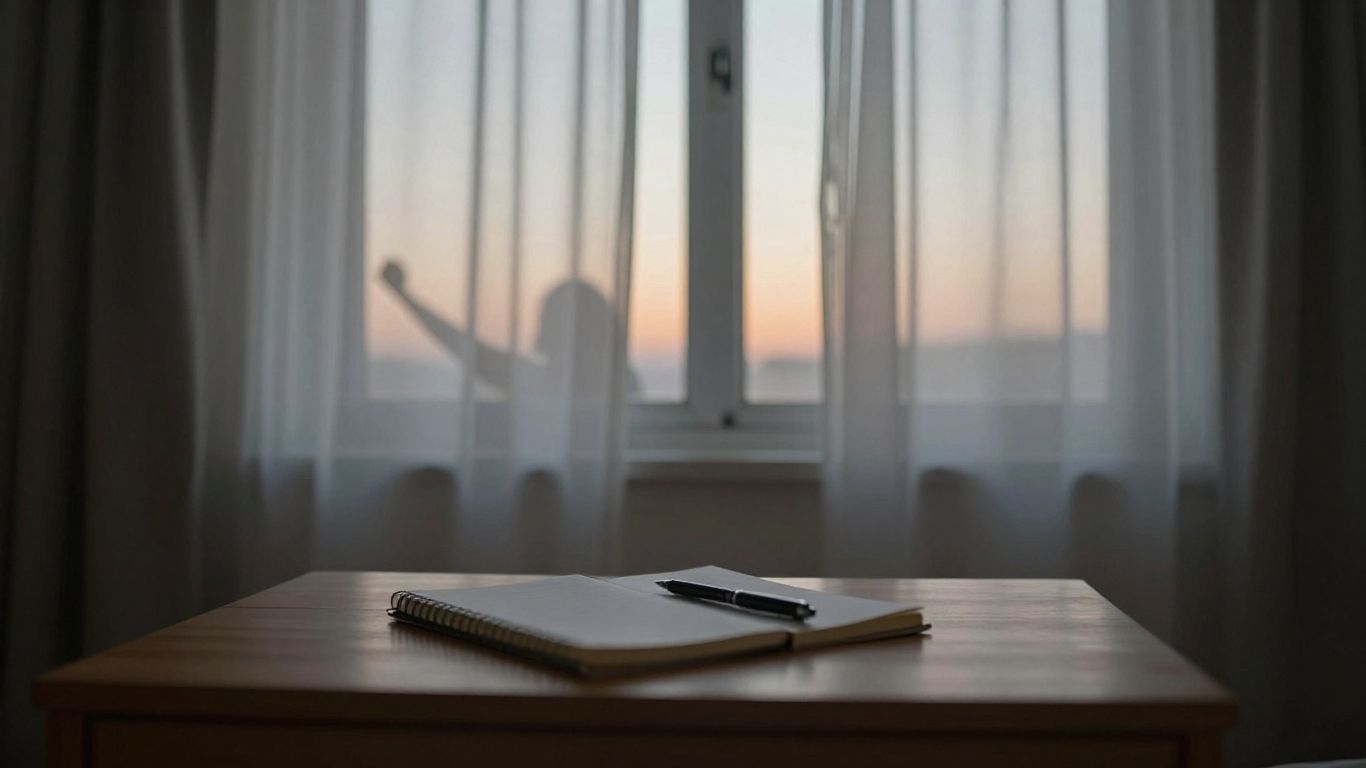
Keep a notebook where you will see it after moving. Write down:
- One health intention: “Protein at lunch,” “Walk after dinner,” “In bed by 10:30.”
- One priority task: the thing that would make the day feel worthwhile.
- One possible obstacle and your plan: “If I get stuck at work late, I’ll eat the snack in my bag before driving home.”
Short and specific beats long and inspiring. The NIH’s guide to changing your habits for better health recommends small, concrete goals and planning ahead for roadblocks.
A sample 10-minute ritual
- Minute 0: open curtains, drink a glass of water
- Minutes 1 to 7: walk outside, or do a mobility routine by a bright window
- Minutes 7 to 10: write one health intention, one priority and one if-then plan
Then have a breakfast that includes a protein and a fruit or vegetable, such as eggs with tomatoes, Greek yogurt with berries, or oatmeal made with milk and topped with nuts.
Fitting the ritual to your schedule
Parents of young children
Bring the kids into it. Open the curtains together, have a two-minute dance or stretch in the kitchen, and say one thing each person is looking forward to. Write your own intention while they eat breakfast.
Early commuters
Do the movement and goal-setting at home in five minutes, then get your light on the walk to the bus stop or car, or at a bright window when you arrive.
Shift workers
Your “morning” is whenever you wake for your shift. Use bright light and movement at that point, keep the goal-setting the same, and protect darkness when it is time to sleep. A healthcare provider can help if rotating shifts are disrupting your sleep.
Breakfast ideas that follow the ritual
| Time available | Idea |
|---|---|
| 2 minutes | Greek yogurt, berries and a sprinkle of oats |
| 5 minutes | Whole-grain toast with peanut butter and a banana, plus a glass of milk |
| 10 minutes | Scrambled eggs with spinach and tomatoes |
| Made the night before | Overnight oats with milk, chia seeds and fruit |
Protect the first hour from distraction
Much of the benefit disappears if the phone comes first. A few guardrails help:
- Charge your phone outside the bedroom and use a separate alarm clock.
- Do your ritual before opening email, news or social media.
- Lay out shoes, a jacket and your notebook the night before.
Our article on decision-light mornings has more night-before prep ideas.
Starting small and adapting
If 10 minutes feels like too much, start with one minute of each part: open the curtains, do five calf raises, write one word for the day. Once that feels automatic, expand one step at a time.
Consistency matters more than an early start. You do not need to wake at 5 am. Keep a wake time you can hold on weekdays and weekends; the movement guidelines recommend consistent bed and wake-up times for good-quality sleep.
Common pitfalls
- Too long a routine: a 60-minute ritual collapses on busy mornings. Have a 3-minute minimum version.
- Too many goals: a list of ten is a to-do list, not an intention.
- All-or-nothing thinking: if you sleep in, do the short version rather than skipping it.
Midday follow-through
Morning intentions are easier to keep with a quick check-in at lunch. Look at your note: did you get your protein, do you still plan to walk? A short walk after lunch also gives a second dose of daylight and movement. See our midday reset routine for a structured version.
Takeaways
- Get light soon after waking: curtains open, near a window or outdoors.
- Move gently for 5 to 15 minutes; a short outdoor walk covers light and movement at once.
- Write one health intention, one priority and one if-then plan.
- Keep the phone away until the ritual is done.
- Hold a steady wake time and have a short version for rushed mornings.
FAQ
What if I wake up before sunrise?
Turn on bright indoor lights, do your movement and goals, and get outside for daylight later in the morning when you can.
Should I exercise hard first thing?
You can if you enjoy it and have warmed up well, but the ritual itself only needs gentle movement. Save harder sessions for whenever you are most likely to do them consistently.