
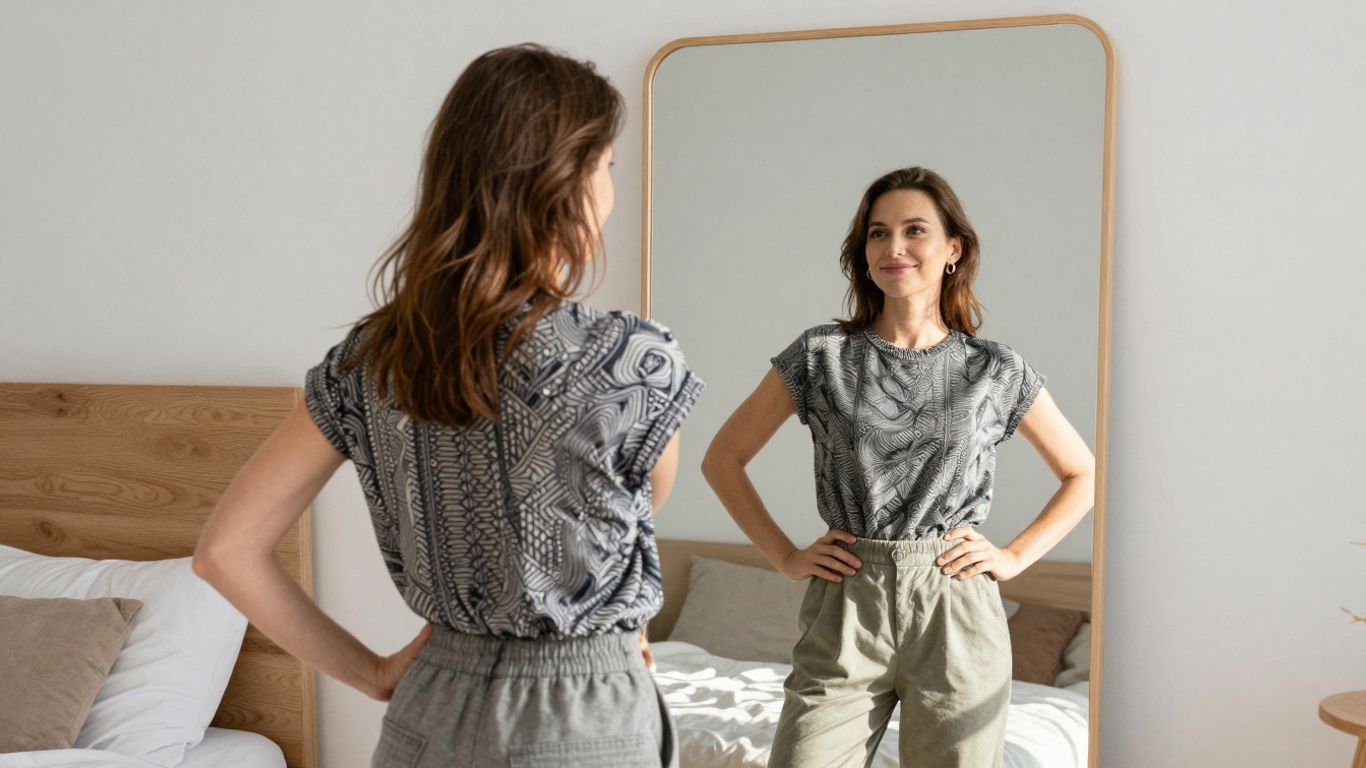
Body-image resilience is the ability to keep a steady, respectful relationship with your body even when your feed, your clothes or your reflection seem to push the other way. Three everyday areas make the biggest difference: what you see online, what you wear, and how you use the mirror. Small changes in each can reduce daily comparison and make it easier to care for your body instead of fighting it.
Why these three areas matter
Most of us encounter our bodies, and other people’s, dozens of times a day: scrolling, getting dressed, passing a mirror. Each of those moments is a chance either to compare and criticize or to observe and move on. Building resilience isn’t about forcing yourself to love every part of your body. It’s about reducing the inputs that wear you down and adding habits that keep you grounded.
Part 1: Run a media audit
Much of what appears on social media is filtered, posed, carefully lit or edited. Even knowing that, a steady stream of idealized images can shift what looks “normal.” A small experiment with young women found that taking a one-week break from social media led to higher body satisfaction and self-esteem compared with continuing as usual, especially for those who had more strongly absorbed thin ideals (Smith, Mills and Samson, 2024).
How to audit your feeds
- Scroll with a notepad for one session. After each account you see, note how you feel: better, neutral or worse about your body.
- Sort accounts into three groups. Keep, mute and unfollow. Anything that regularly leaves you feeling worse goes in mute or unfollow, even if the person seems kind.
- Look for “before and after” and diet content. Transformation photos, “what I eat in a day” videos and quick-fix ads are common triggers for comparison.
- Add variety on purpose. Follow accounts about hobbies, cooking, nature, learning and people of different ages, sizes and abilities doing things they enjoy.
- Repeat monthly. Feeds drift, so a quick check keeps them helpful.
Set screen boundaries
- Keep phones out of the bedroom and off the table at meals.
- Set app time limits on the platforms that bother you most.
- Try a planned break of a few days or a week, and notice how you feel.

Part 2: Build a clothing strategy
Clothes that pinch, ride up or need constant adjusting keep your attention on your body all day. Clothes that fit and feel good let you forget about your body and get on with life.
Wear clothes that fit the body you have today
Many people keep “goal” clothes in their closet as motivation. For a lot of people, though, those clothes become a daily reminder of not measuring up. Try this:
- Pull out anything that doesn’t fit now. Store it out of sight, donate it or give it away.
- Make sure you have at least a few comfortable, well-fitting outfits for work, home and going out.
- Choose fabrics and cuts that feel good when you sit, bend and move.
Find your “confidence outfits”
Notice which outfits make you stand a little taller or stop thinking about how you look. Write down what they have in common: a colour, a fit, a fabric. Use that list when you shop, and keep one or two of these outfits ready for days you expect to feel self-conscious.
Choose based on how you feel, not how you look
When getting dressed, ask: “Will I be comfortable in this for the whole day? Can I move freely? Does this feel like me?” These questions shift the focus from appearance to comfort and self-expression.
Part 3: Change your mirror routine
Many people use the mirror mainly to scan for flaws. That habit can reinforce negative feelings. A more helpful approach is to use the mirror on purpose, briefly, with neutral or kind language.
Mirror exposure, a technique used in body-image treatment, involves looking at your whole body and describing it. In one study of women, both positive and negative descriptions improved body satisfaction across sessions, but negative descriptions made people feel worse during each session while positive descriptions did not, and positive description was followed by higher self-esteem (Tanck and colleagues, 2021).
A simple daily mirror routine
- Set a time limit. One or two minutes, once a day, rather than repeated checking.
- Look at your whole body, not just the parts you usually zoom in on.
- Describe neutrally: “My shoulders are broad. My hair is curly today.”
- Name one thing your body does for you: “My legs carried me up the stairs. My arms carried the groceries.”
- Step away. Don’t go back to re-check.
If you notice yourself checking the mirror many times a day, try cutting back gradually. Covering a mirror you check often can help while you build new habits. For more practices, see our article on body appreciation practices.
Widen your sense of self
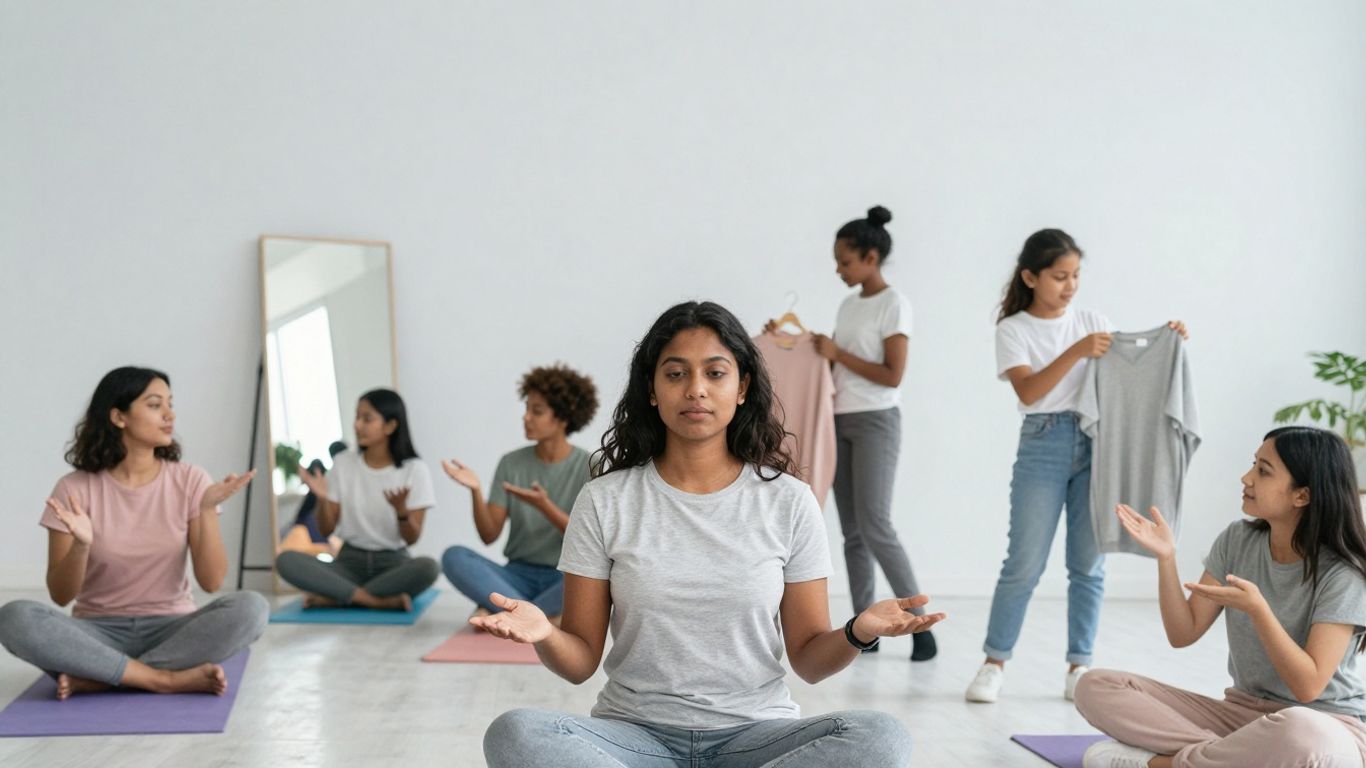
Resilience grows when appearance is only one small part of how you see yourself. Make a list of your strengths that have nothing to do with looks: how you treat people, skills you’ve learned, things you’ve built or fixed, ways you serve others. Spend time each week on activities that remind you of those strengths, such as a hobby, a class, volunteering or time with people who value you for who you are.
Movement can help too, when it’s chosen for enjoyment and function rather than to change your shape. Notice what your body lets you do: walk with a friend, play with kids, garden, swim, dance.
Handle body comments with a script
Comments about your weight or shape, even well-meant ones, can sting. Have a short reply ready: “I’d rather not talk about my body, but I’d love to hear about your trip.” You’re allowed to change the subject. Our guide to talking back to your inner critic covers the comments that come from inside your own head.
When to check with a professional
If thoughts about your body take up much of your day, you avoid activities or people because of how you look, you check or avoid mirrors constantly, or you’re restricting food, bingeing or exercising to compensate, talk with your doctor or a mental health professional. The National Eating Disorder Information Centre (NEDIC) offers Canadian information and support.
Key takeaways
- Audit your feeds monthly: keep, mute or unfollow based on how accounts make you feel.
- Try a short planned break from social media and notice the effect.
- Wear clothes that fit and feel good now; move “goal” clothes out of sight.
- Use the mirror briefly, describe your body neutrally or kindly, and name what it does for you.
- Build your identity around strengths beyond appearance.
- Have a ready reply for body comments.