

An implementation calendar is a weekly template that gives your workouts, meal planning, food prep and bedtime fixed slots, so they happen by default instead of when you find time. You build it once, repeat it every week and adjust only when life changes. The result is fewer daily decisions and steadier habits.
This guide shows you how to set one up in about 30 minutes, with a sample week you can copy.
Why a repeatable week works
When workouts, meals and sleep are planned day by day, they compete with everything else and often lose. A repeatable week turns them into appointments. You stop asking “Should I work out today?” and simply check the calendar.
Repetition also makes planning faster over time. Canada’s Food Guide suggests keeping old meal plans and favourite recipes so you can reuse them, and adjusting your plan for busy weeks. The same idea applies to your whole week.

Step 1: Set your weekly targets
Start with the basics, then fit them into your week.
- Movement: the CDC recommends adults get 150 minutes of moderate activity a week plus at least 2 days of muscle-strengthening activity. That could be five 30-minute walks and two short strength sessions.
- Sleep: the CDC recommends 7 or more hours a night for adults aged 18 to 60, with a consistent bed and wake time every day.
- Meals: one planning session and one or two prep sessions a week.
If you’re starting from very little activity, set a smaller target and build up. The calendar should fit the life you have now.
Step 2: Place your anchors first
Anchors are the things that don’t move: work hours, school runs, commutes, standing family commitments. Put those on the calendar first so you can see the real gaps.
Then add your sleep window. Work backwards from your wake time. If you get up at 6:30 and want 7.5 hours of sleep, lights out is around 11:00, and wind-down starts around 10:30. Put both on the calendar. Sleep is the foundation for the rest of the plan; when it slips, workouts and food choices usually follow.
Step 3: Schedule training
Choose specific days and times, not “three times this week.” Mix types so you’re not doing hard sessions back to back.
- Strength: two or three sessions, on non-consecutive days if possible (for example, Monday and Thursday).
- Cardio: brisk walks, cycling or swimming on other days. Short sessions count.
- Recovery: at least one easier day with stretching, a gentle walk or rest.
- Backup slot: one flexible window (often the weekend) to make up a missed session.
Step 4: Schedule meals and prep
Food goes more smoothly with three repeating blocks:
- Plan (15 minutes): choose meals for the week and write a grocery list. Repeating some meals is fine and makes this faster.
- Shop: same day each week, list in hand.
- Prep (60–90 minutes): cook a grain, roast a tray of vegetables, cook a protein, wash and cut produce, portion snacks. Canada’s Food Guide suggests making a little extra for the next day and pre-chopping vegetables when you have time.
A second, shorter prep session midweek keeps food fresh. If you’re new to this, our guide to meal prep for beginners covers the basics.
A sample repeatable week
| Day | Training | Meals and prep | Sleep |
|---|---|---|---|
| Sunday | Long walk or family activity | Plan meals, shop, main prep session | Wind-down 10:30, lights out 11:00 |
| Monday | Strength, 30 min | Prepped lunch; quick dinner from prepped parts | Same |
| Tuesday | Brisk walk, 30 min | Leftovers for lunch | Same |
| Wednesday | Stretching or rest | Short midweek prep (20–30 min) | Same |
| Thursday | Strength, 30 min | Prepped lunch; simple sheet-pan dinner | Same |
| Friday | Brisk walk or bike, 30 min | Use up remaining produce | Same |
| Saturday | Backup slot or active outing | Flexible; plan a simple meal | Within an hour of weekday times |
Swap days to fit your schedule. What matters is that each piece has a home.
Step 5: Add reminders and batching
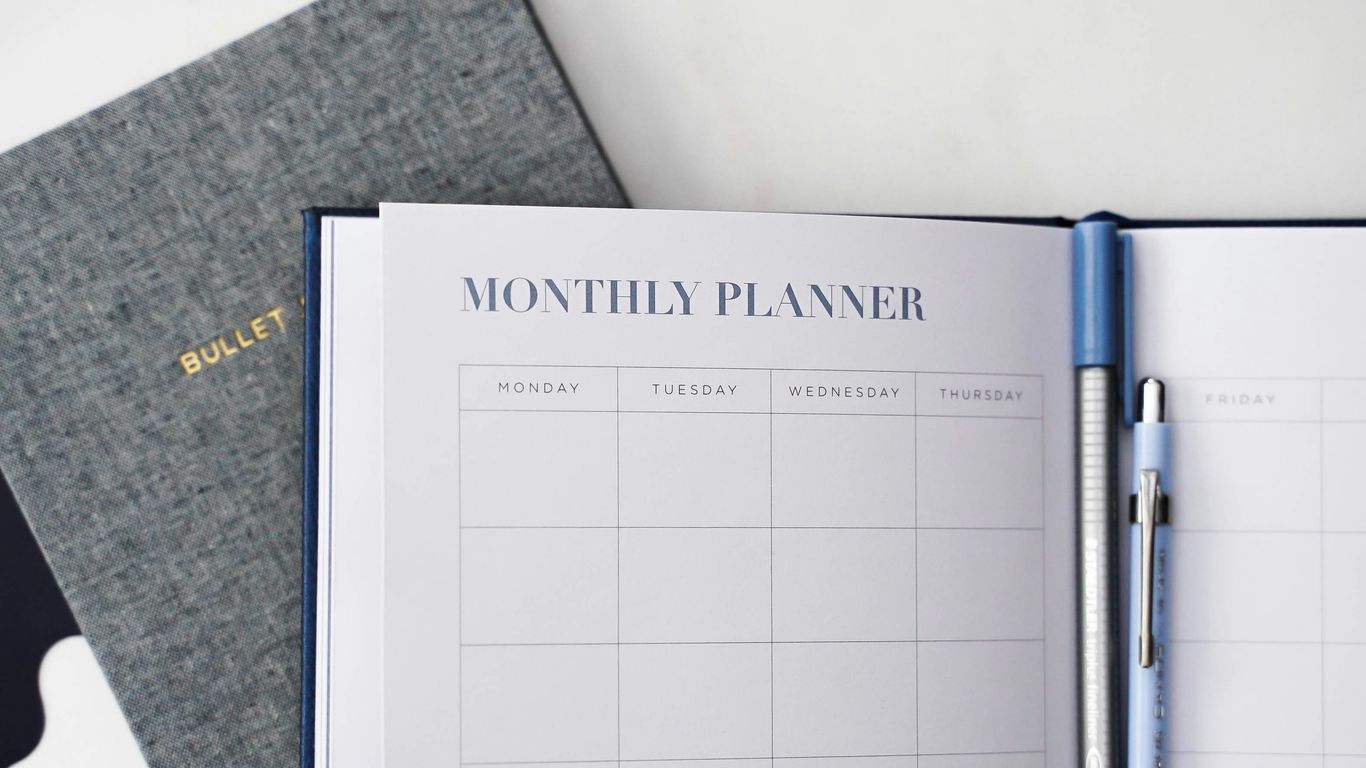
- Repeating calendar events for workouts, prep and bedtime, with a 10-minute warning.
- Batch similar tasks: pack all weekday lunches at once, lay out gym clothes for the week, fill water bottles for the day.
- Keep one place for everything: a notebook, a printed template or one app holding your meal plan, grocery list and training days.
- Post the grocery list where everyone can add to it, as Canada’s Food Guide suggests.
Fuel to match your training
You don’t need a complicated nutrition plan. Build each meal around the Canada’s Food Guide plate: half vegetables and fruits, a quarter whole grains, a quarter protein foods. On strength days, make sure you have protein at meals and a snack if dinner is far off. Eat according to your hunger, and drink water through the day.
Plan for busy and messy weeks

Some weeks won’t go to plan. Decide ahead what the stripped-down version looks like:
- Training: two short strength sessions and daily 10-minute walks.
- Meals: three easy go-to dinners and a stocked freezer.
- Sleep: keep the wake time steady even if bedtime slides.
At the end of each week, take five minutes to review: what happened, what didn’t, and one change for next week. For a simple process, see our guide to weekly, monthly and quarterly reviews. Give yourself a few weeks to settle in before judging the plan.
Quick takeaways
- Set weekly targets for movement, sleep and meals.
- Put fixed commitments and your sleep window on the calendar first.
- Give training, meal planning, shopping and prep specific repeating slots.
- Batch similar tasks and keep everything in one place.
- Have a stripped-down version ready for busy weeks.
- Review for five minutes each week and change one thing.
FAQ
How long does it take to set up?
About 30 minutes for the first template. After that, weekly planning usually takes 10 to 15 minutes because you’re reusing most of it.
Should I plan every meal?
Not necessarily. Many people plan dinners and lunches and keep breakfasts and snacks on a simple rotation. Canada’s Food Guide notes you can plan a full week or just a couple of days, whichever suits you. Start with the meals that cause the most stress.
What if I miss a workout?
Use your backup slot, or simply move on to the next scheduled session. Trying to make up every missed workout by doubling up often leads to fatigue. The calendar works because it repeats, so the next week is a fresh start.
What if my schedule changes every week, like with shift work?
Make two or three templates, one for each common shift pattern, and choose the one that fits each week. Keep sleep and meal times as steady as your shifts allow.