
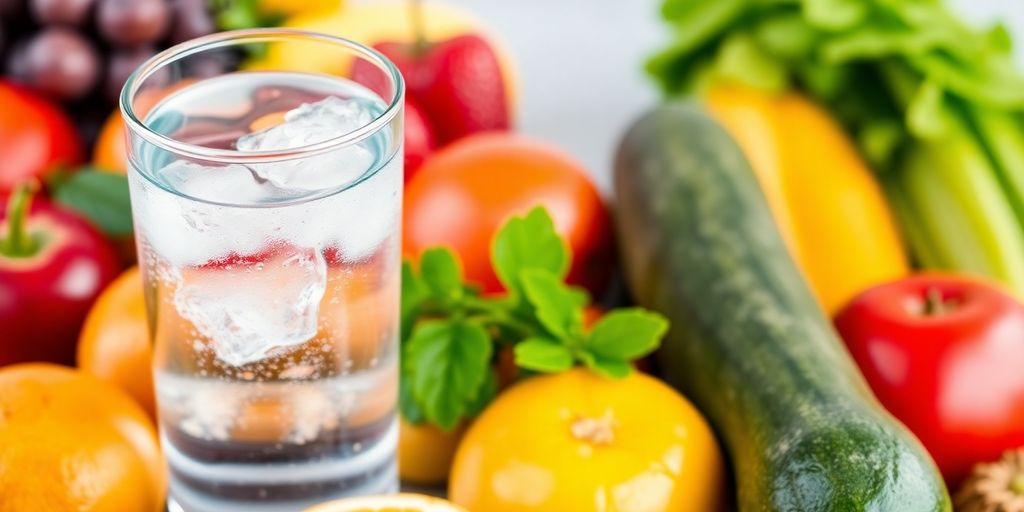
Water won’t melt fat on its own, but good hydration supports weight management in practical ways: it replaces sugary drinks that add calories without filling you up, it can help you feel fuller at meals, and it keeps your energy steady for daily movement. Most healthy adults do well by drinking regularly through the day, choosing water most often, and using urine colour as a simple check.

How hydration helps with weight management
1. It replaces calorie-heavy drinks
This is the biggest and best-supported benefit. Pop, sweetened iced drinks, specialty sweetened beverages and many juices add sugar and calories that don’t fill you up the way food does. Canada’s Food Guide points out that many drink choices are high in calories, sodium, sugars or saturated fat, and recommends that you make water your drink of choice as a way to stay hydrated without calories.
If you currently drink one or two sweetened drinks a day, swapping them for water or sparkling water is often the simplest change you can make.
2. It may help you eat a little less at meals
Drinking water before a meal can take the edge off hunger for some people. In a 12-week trial of adults aged 55 to 75 who were following a reduced-calorie diet, the group that drank 500 ml of water before each main meal lost about 2 kg more than the group following the diet alone. It was a small study in older adults, combined with a calorie-reduced diet, so it doesn’t mean water alone causes weight loss. Still, a glass of water before meals is a low-risk habit worth trying.
3. It helps you tell thirst from hunger
Mild thirst can feel like a vague urge to snack, especially in the afternoon. If you feel peckish soon after eating, try a glass of water and wait 10 to 15 minutes. If you’re still hungry, eat. If the feeling has passed, it may have been thirst or boredom.
4. It supports movement and energy
Even mild dehydration can leave you feeling tired or headachy, which makes a walk or workout less likely. Drinking water before, during and after activity helps you feel better while you move, and Canada’s Food Guide specifically suggests drinking water during and after physical activity.

How much fluid do you need?
There’s no single number that suits everyone. Mayo Clinic gives a general range for healthy adults of about 2.7 to 3.7 litres of total fluid a day, and notes that food supplies about 20% of the water you need. That total includes all drinks plus the water in foods like soup, fruit and vegetables, so it isn’t the amount of plain water you need to drink.
You’ll need more when you:
- exercise or sweat a lot
- spend time in hot or very dry weather (including heated homes in a Canadian winter)
- are pregnant or breastfeeding
- are ill with fever, vomiting or diarrhea
The easiest everyday check is your urine. The NHS suggests aiming to drink enough that your pee is a clear pale yellow colour. Dark yellow urine usually means you need more fluid.
Best and worst drink choices for weight goals
| Choose most often | Choose sometimes | Limit |
|---|---|---|
| Plain water, hot or cold | 100% fruit juice (small glass, with a meal) | Pop and sweetened iced drinks |
| Sparkling water, unsweetened | Smoothies made with whole fruit and milk or yogurt | Energy drinks and sports drinks (unless you’re doing long, intense exercise) |
| Water infused with fruit or herbs | Hot chocolate made with milk | Sweetened specialty drinks |
| Unsweetened lower-fat milk or fortified soy beverage | Alcohol | |
| Herbal teas (peppermint, rooibos, chamomile) |
Skipping alcohol helps on several fronts: it removes a source of empty calories, avoids the lowered resolve that often leads to late-night snacking, and supports better sleep.

Practical ways to drink more water
- Anchor it to habits you already have. A glass when you wake up, one with each meal, and one when you get home is already four glasses before you think about it.
- Carry a reusable bottle and refill it at set times, such as mid-morning and mid-afternoon.
- Keep a pitcher in the fridge or on the table so water is the easiest drink to reach.
- Add flavour without sugar. Canada’s Food Guide suggests combinations like blackberries and mint, raspberries and cucumber, strawberries and basil, or chopped apple with a cinnamon stick. Crushing berries and tearing herbs releases more flavour.
- Try it warm. In colder months, hot water with lemon or a mug of herbal tea can be more appealing than ice water.
- Order water when eating out instead of pop or a specialty drink.
- Eat water-rich foods like cucumber, watermelon, oranges, lettuce, soups and yogurt.
Common hydration myths
“Drinking more water burns a lot of fat.”
Not in any meaningful way. The benefits for weight come mainly from replacing sugary drinks and helping with fullness, not from water speeding up fat burning.
“If I retain water, I should drink less.”
Day-to-day scale swings of a kilogram or more are often water shifts from salt, carbohydrates, hormones or a hard workout. Cutting back on fluids doesn’t fix this. Steady hydration and less salty processed food usually help more.
“More is always better.”
Drinking very large amounts in a short time can be dangerous because it dilutes sodium in the blood. This is rare in everyday life, but there’s no need to force down huge volumes. Drink steadily and let thirst and urine colour guide you.

Signs you may be under-hydrated
- Dark yellow urine or going to the bathroom less often than usual
- Feeling thirsty, with a dry mouth or lips
- Headache, tiredness or feeling dizzy when you stand up
- Constipation
When to check with a professional
Talk to your doctor before changing how much you drink if you have heart failure, kidney disease or liver disease, or if you take medications such as diuretics, since some conditions require limiting fluids. Seek medical care for signs of severe dehydration, such as confusion, a very fast heartbeat, fainting or not urinating for many hours, and for vomiting or diarrhea that won’t let you keep fluids down.
Key takeaways
- Make water your main drink and swap out sugary drinks first.
- Try a glass of water before meals and when a snack craving hits soon after eating.
- Aim for clear, pale yellow urine rather than a fixed number of glasses.
- Drink more when you’re active, in the heat or unwell.
- Add flavour with fruit, herbs or sparkling water instead of sugar.
Small daily habits make a difference. For help turning changes like these into routines, read our article on building healthy habits, or see goal setting in health.
Frequently asked questions
Do other drinks count toward my fluid intake?
Yes. Milk, fortified soy beverages, herbal teas and the water in food all count. Water is simply the best everyday choice because it has no calories or sugar.
Are sports drinks better than water for exercise?
For most everyday workouts under an hour, water is enough. Sports drinks add sugar and calories that most people don’t need.