
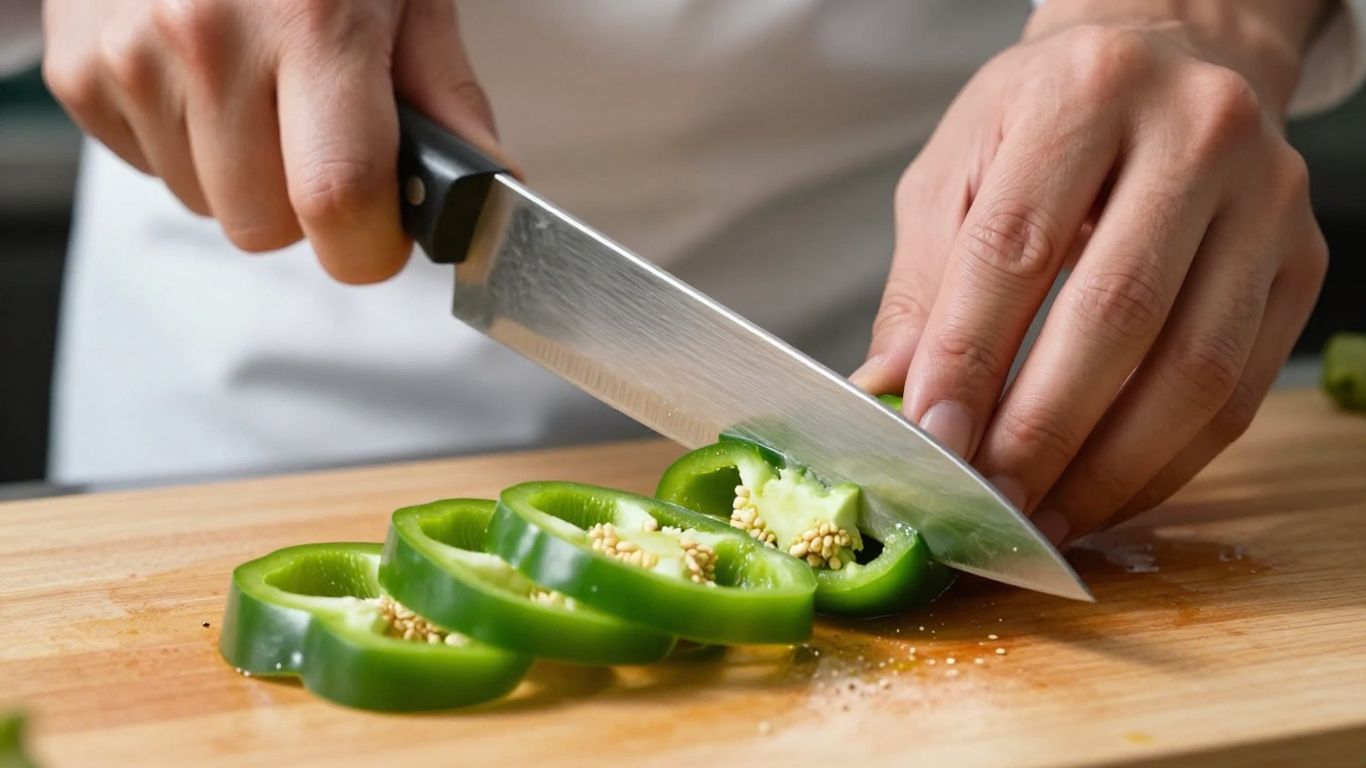
Fast knife skills come from safe technique practised slowly, not from rushing. Learn a stable setup, the pinch grip and the “claw” guide hand first, then progress through a few basic cuts in short, regular practice sessions. Speed follows naturally once the motions are consistent, and chopping vegetables quickly makes it much easier to eat more of them.
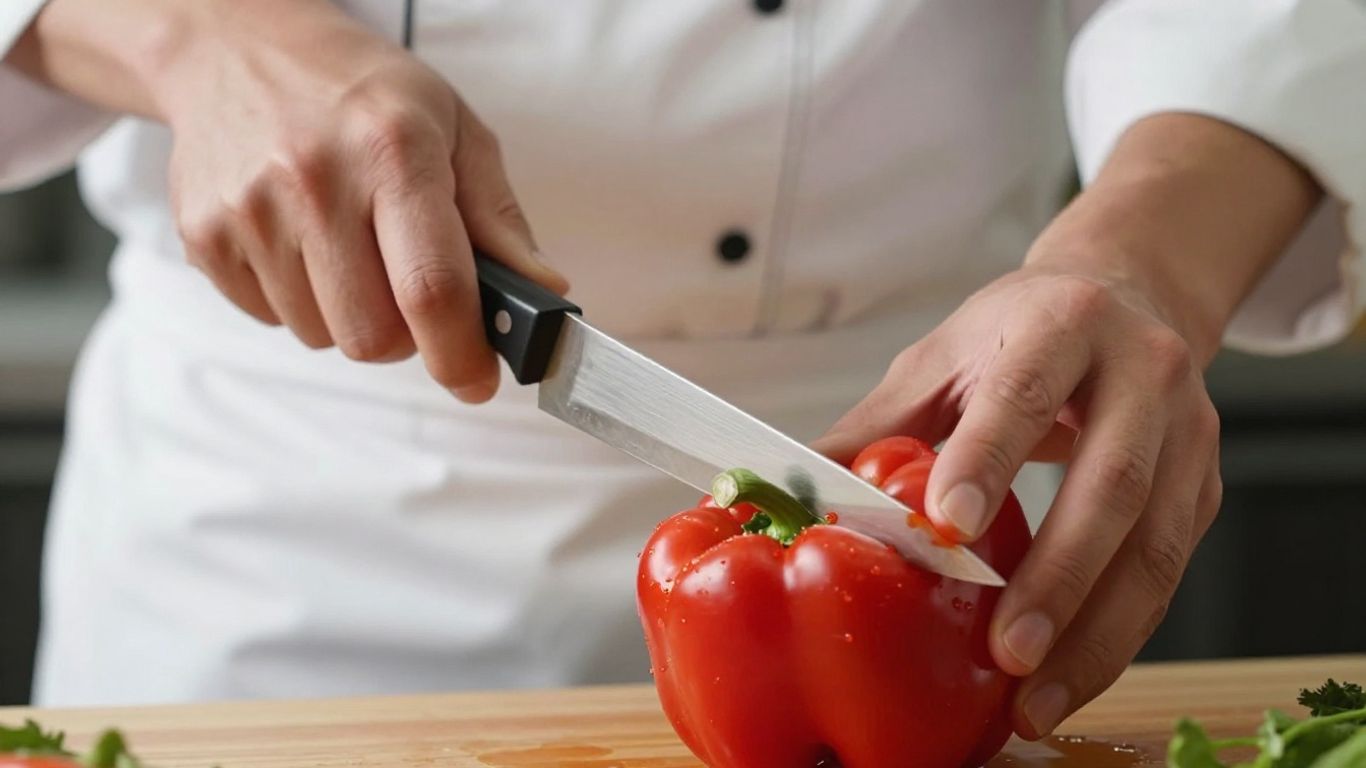
Why knife skills matter for healthy eating
Prepping produce is often the slowest part of a healthy meal. When washing and chopping a few vegetables feels like a chore, it is tempting to skip them. Canada’s Food Guide suggests making half your plate vegetables and fruits, and recommends washing and chopping extra vegetables when you prepare a meal so you have some ready for the next day. Confident knife skills make that habit realistic.
Set up before you cut
- A sharp knife. A sharp blade needs less force and is less likely to slip. One good chef’s knife (20 cm / 8 inch) and a small paring knife cover most home cooking.
- A stable board. Put a damp cloth or a non-slip mat under your cutting board so it can’t slide.
- Clear space. Keep the board free of clutter. Put a bowl for scraps on one side and a bowl or tray for cut food on the other, so food moves in one direction.
- Good posture. Stand square to the counter, about a fist’s width away, with your weight balanced. If the counter is low, a thicker board raises the work.
- Flat sides down. Round foods roll. Cut a thin slice off one side of an onion, carrot or potato to create a flat base before you do anything else.
The two grips that do most of the work
Knife hand: the pinch grip
Hold the handle with your last three fingers and pinch the base of the blade between your thumb and the side of your bent index finger. This gives far more control than holding the handle like a hammer or pointing your finger along the spine.
Guide hand: the claw
Curl the fingertips of your other hand under, so your knuckles stick out slightly further than your fingertips. Rest the flat side of the blade lightly against your knuckles. The knuckles guide the knife, and your fingertips stay tucked away. As you cut, walk the claw back along the food in small steps.
A five-stage practice progression
Practise for 10 to 15 minutes, a few times a week, using food you will actually eat. Move to the next stage only when the current one feels steady and relaxed.
| Stage | Practise on | Focus |
|---|---|---|
| 1. Slicing | Cucumber, zucchini, mushrooms | Pinch grip, claw, even slices |
| 2. Rocking chop | Herbs, celery, green onions | Keep the tip on the board; rock the heel up and down |
| 3. Batons and sticks | Carrots, peppers, potatoes | Square off, slice into planks, then sticks |
| 4. Dice | Onions, peppers, sweet potatoes | Turn sticks and cut across for even cubes |
| 5. Speed and volume | A full week of prep | Same technique, smooth rhythm, less hesitation |
Stage 1: slicing
Use a forward-and-down motion, letting the blade glide through rather than pressing straight down. Aim for slices of the same thickness. Consistency matters more than speed because even pieces cook evenly.
Stage 2: the rocking chop
Keep the tip of the knife touching the board and lift and lower the heel in a gentle rocking motion while your guide hand moves the food or gathers herbs into a pile.
Stage 3: batons
Square off the sides of a carrot or potato, slice it into flat planks, stack two or three planks, and cut them into sticks. These are perfect for snacks, roasting or the air fryer.
Stage 4: dicing an onion
- Cut the onion in half from root to tip and peel it, leaving the root end on.
- Lay one half flat. Make vertical cuts toward the root without cutting through it.
- Turn the onion and slice across those cuts to create a dice.
- Discard the root end.
Skip the horizontal cuts some chefs use; they add risk without much benefit for home cooking.
Stage 5: building speed
Once your cuts are even, gradually quicken the rhythm. Count strokes or time yourself dicing one pepper, and try to match or beat it next week while keeping the same quality. If your pieces become uneven or your claw slips, slow down again.
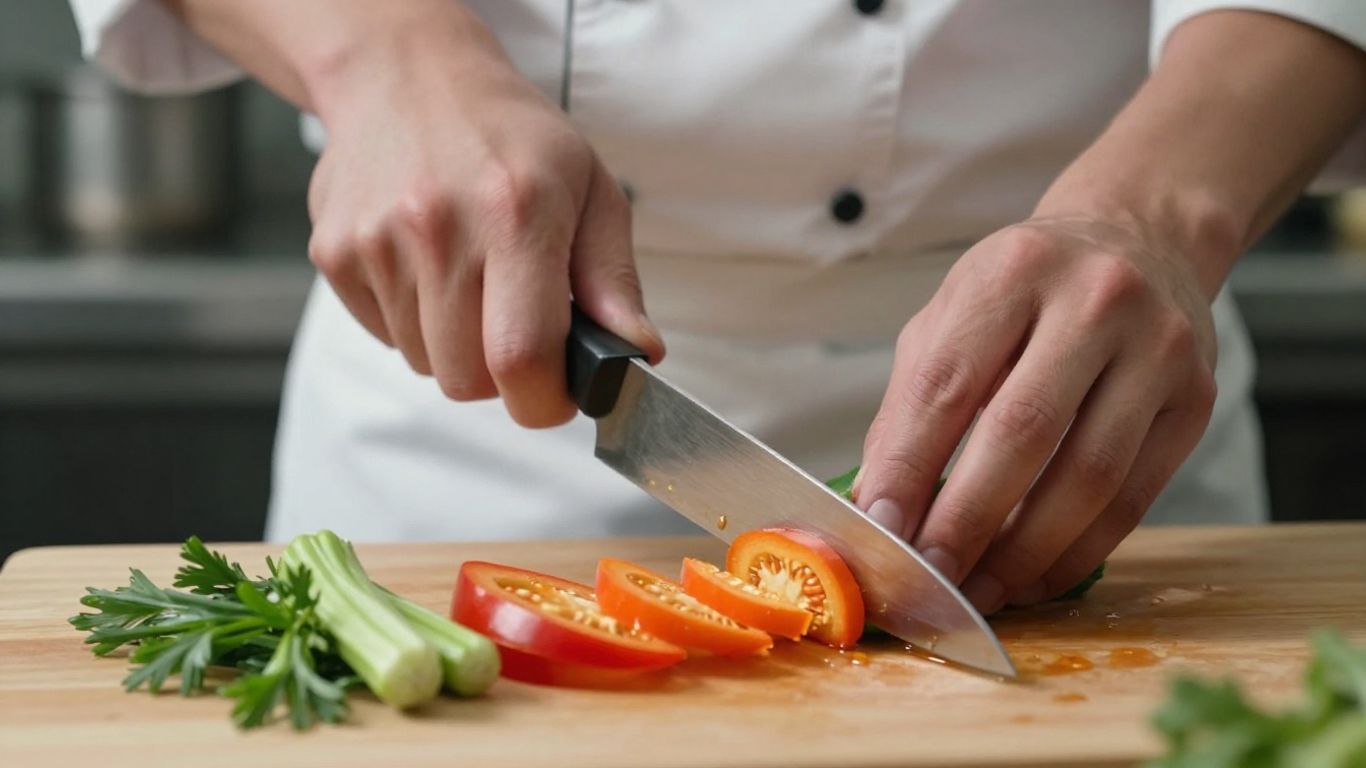
Five safety rules to keep every time
- Never catch a falling knife. Step back and let it drop.
- Keep your eyes on the blade. If someone talks to you, stop cutting before you look up.
- Don’t leave knives in a sink of soapy water. Wash, dry and put them away right after use.
- Carry a knife point down, close to your side, and say “knife behind” in a busy kitchen.
- Use the spine, not the edge, to scrape food off the board. Flip the knife over to protect your edge and fingers.
Avoiding fatigue during big prep sessions
- Keep your shoulders relaxed and let the knife do the work.
- Switch tasks every 10 to 15 minutes (chopping, then washing, then packing) to vary the motion.
- Shake out your hands and roll your shoulders between vegetables.
- Hone the edge with a steel before you start; dull knives require more grip and pressure.
Keeping your knife sharp
Honing and sharpening are different jobs. A honing steel straightens the edge and can be used every time you cook: hold the knife at a slight angle and draw it lightly down the steel a few times on each side. Sharpening removes metal to create a new edge and is needed only every few months for home cooks, using a whetstone, a simple pull-through sharpener or a professional service. Hand-wash and dry knives right away, since dishwashers dull edges and can damage handles.
Put your new skills to work
Once a week, set aside 30 minutes to wash and cut vegetables for the next few days: pepper strips, carrot sticks, diced onion, broccoli florets. Store them in clear containers at eye level in the fridge. For a full system, see mise en place for real life, which shows how to turn a single prep session into fast meals all week.
When to get medical help for a cut
Most small kitchen cuts can be treated at home: wash your hands, rinse the cut, apply firm pressure with a clean cloth until bleeding stops, and cover it. The NHS cuts and grazes guidance advises urgent care if you cannot stop the bleeding, blood spurts out, you lose feeling or movement near the wound, the cut is very large or deep, or there is a bad cut on the palm of the hand. Get advice promptly if a cut becomes red, swollen, more painful or shows pus.
Quick takeaways
- Stabilise your board and give round foods a flat side before cutting.
- Use the pinch grip and keep your guide hand in a claw.
- Progress from slicing to chopping to batons to dicing, a few short sessions a week.
- Prioritise even pieces; speed comes later.
- Keep knives sharp, dry and stored away from the sink.
- Use your skills for a weekly vegetable prep so healthy meals are faster.