
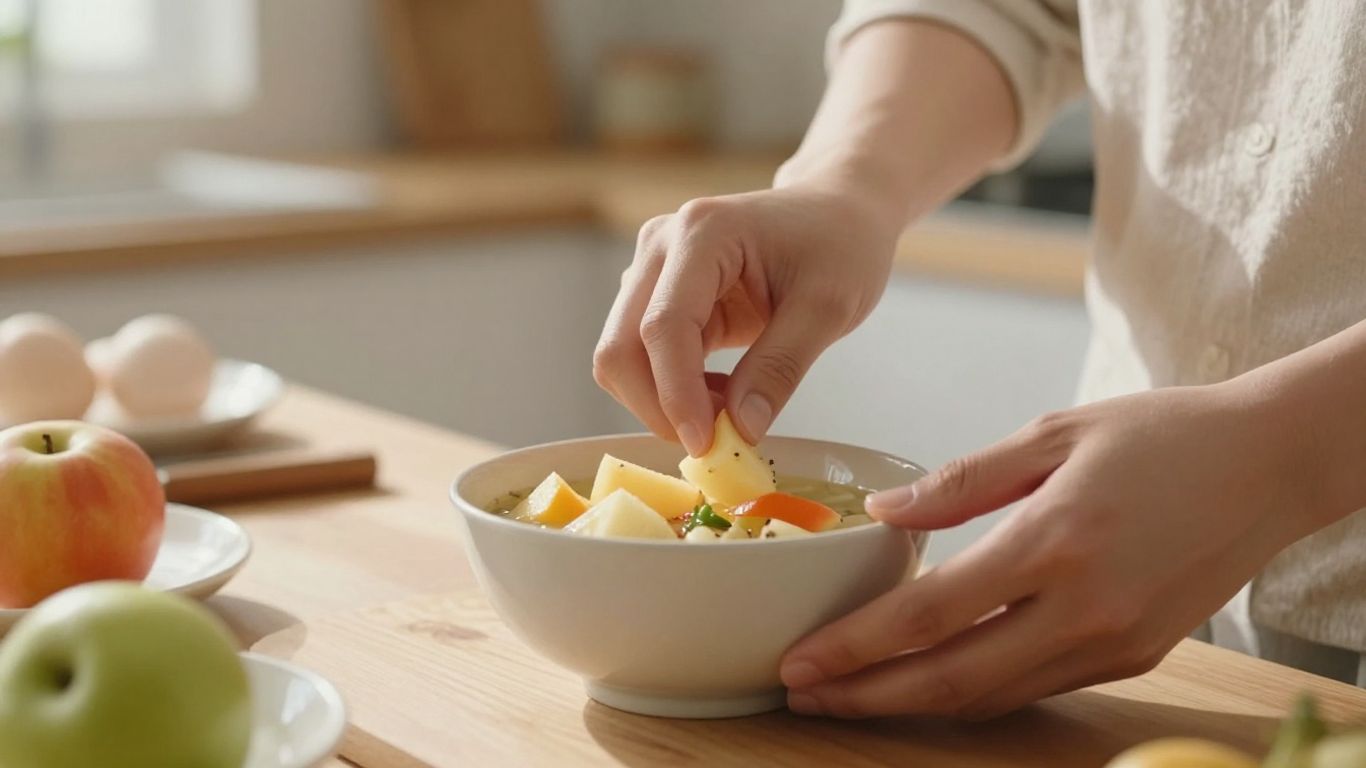
After an illness, the goal is to get enough fluid, energy and protein back into your body without forcing large meals your appetite isn’t ready for. Start with fluids and simple, easy-to-digest foods, then move to small, frequent meals and snacks that include protein, and build up portions and variety as your appetite returns. If you can’t keep fluids down, are losing weight, or aren’t improving, check in with a healthcare provider.
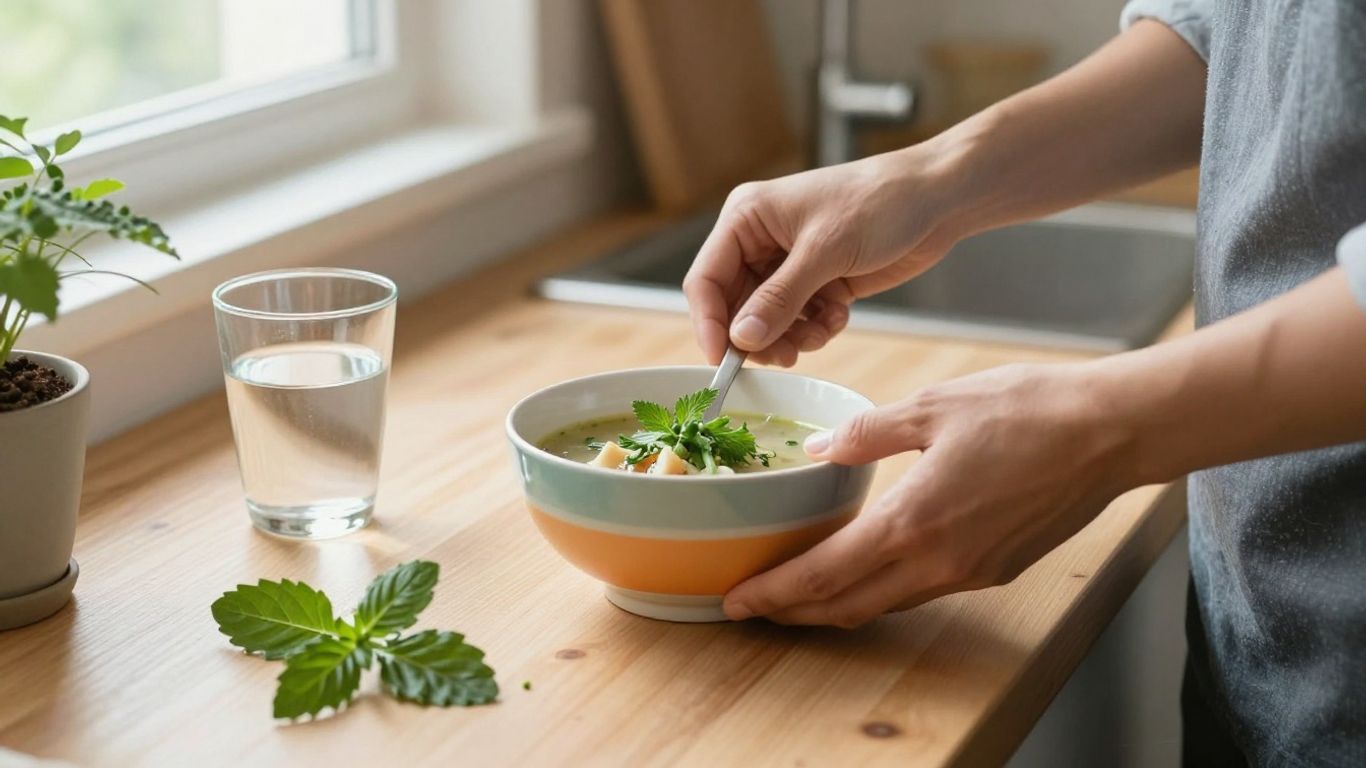
This article is general information for recovering from common short-term illnesses like a cold, flu or stomach bug. If you’re recovering from surgery, a hospital stay or a chronic condition, follow the advice of your care team first.
Step 1: rehydrate first
Fever, vomiting and diarrhoea all drain fluids, and dehydration can make you feel weaker and less hungry. The NHS suggests that if it’s hard to drink, you start with small sips and gradually drink more. It lists thirst and dark yellow, strong-smelling urine as common signs of dehydration, and notes that caffeine and alcohol both dehydrate you, so they’re best avoided while you recover. If you are losing a lot of fluid, a pharmacist can recommend an oral rehydration solution that replaces salts and minerals.
Gentle fluids to try:
- Water, sipped often
- Clear broth or soup
- Diluted fruit juice
- Herbal teas such as peppermint, ginger or chamomile
- Milk or a fruit smoothie once your stomach is settled
- Ice chips or frozen fruit pops if sipping is hard
Pale yellow urine is a simple sign you’re getting enough.
Step 2: reintroduce food gently
When you’re ready to eat, start with plain, soft foods that are easy on the stomach, then expand as you tolerate them.
| Stage | Examples | When to move on |
|---|---|---|
| Very gentle | Broth, crackers, toast, plain rice, applesauce, bananas | Once these stay down and feel comfortable |
| Soft and simple | Oatmeal, scrambled eggs, yogurt, mashed potatoes, soup with noodles or rice, cooked carrots | When your appetite starts to return |
| Building back | Chicken or lentil soup, fish, tofu, whole-grain toast with nut butter, cooked vegetables, fruit | As energy and hunger improve |
| Back to normal | Your usual balanced meals | When you’re eating comfortably again |
There is no set timeline. Some people move through these stages in a day; others take a week or more.
Step 3: eat small amounts, often
When appetite is low, three regular meals can feel overwhelming. MedlinePlus, from the U.S. National Library of Medicine, recommends eating when you’re hungry rather than only at mealtimes, having five or six small meals a day instead of three large ones, keeping healthy snacks handy, and not filling up on liquids before or during meals.
In practice, that might look like:
- A few bites every two to three hours rather than full plates
- Half a sandwich instead of a whole one
- A cup of soup with crackers, then yogurt an hour or two later
- Sipping drinks between meals rather than with them, so food fits
Step 4: prioritise protein
Being sick and resting in bed can mean losing some strength. Protein helps your body repair and rebuild, so try to include a little at most meals and snacks once you’re eating again. Easy, gentle options:
- Eggs, scrambled or soft-boiled
- Greek yogurt or cottage cheese
- Milk or soy beverage, or a smoothie made with either
- Soup with chicken, lentils, beans or tofu
- Peanut butter on toast or banana
- Soft fish such as salmon or white fish
MedlinePlus also suggests easy ways to add calories and protein when appetite is poor, if your provider agrees, such as peanut butter on fruit or vegetables, mixing milk into soups and drinking milkshakes between meals.
For soup ideas, see our recovery soups.
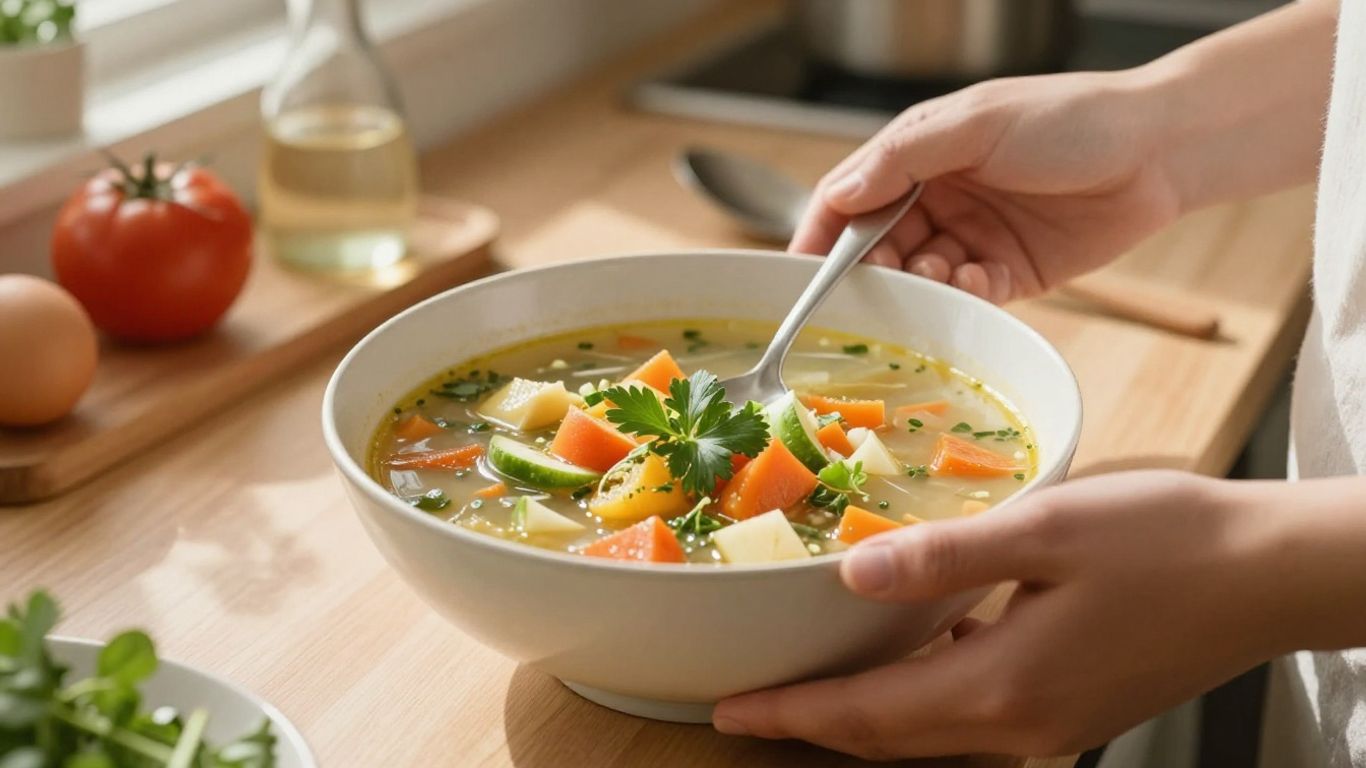
A sample gentle recovery day
| Time | Example |
|---|---|
| Morning | Water or herbal tea; a scrambled egg on toast, or oatmeal made with milk |
| Mid-morning | Half a banana with peanut butter |
| Lunch | A cup of chicken or lentil soup with crackers |
| Mid-afternoon | Greek yogurt with soft fruit, or a smoothie |
| Dinner | A small portion of fish or tofu with mashed potatoes and cooked carrots |
| Evening | Warm milk or a cup of broth |
Portions can be small. The aim is steady intake across the day, not finishing every plate.
When food tastes different
Illness and some medications can change taste and smell. Things that may help:
- If food tastes bland: add lemon, herbs, ginger or a little salt.
- If food tastes metallic: try plastic cutlery and cold foods.
- If smells bother you: choose cold or room-temperature foods, which smell less than hot ones, and let someone else cook if possible.
- If nothing appeals: eat what you can tolerate for now. Variety can come back later.
Make eating easier
- Keep ready-to-eat options within reach: yogurt cups, cheese, crackers, bananas, nut butter, soup.
- Accept help when people offer to cook or shop.
- Freeze small portions of soup and stews when you’re well, so you have them next time.
- Eat with someone or somewhere pleasant if that helps your appetite.
Our sick-day playbook covers what to keep on hand, and hydrating foods offers ideas for when plain water feels like a chore.
Rebuild strength with gentle movement
As you start feeling better, short walks and light stretching help you regain energy and appetite. Start with a few minutes and build up gradually. Rest when you need to; pushing too hard too soon can set you back. Sleep is part of recovery too.
Supplements
Most people recovering from a short illness don’t need special supplements; regular food usually does the job. If your appetite stays poor for a while or you’re losing weight, ask your doctor or a registered dietitian whether a nutrition drink or supplement makes sense for you.
When to check with a professional
Contact a doctor, nurse or pharmacist if:
- You can’t keep fluids down, or you have signs of dehydration such as dizziness, very dark urine or urinating much less than usual.
- Your appetite hasn’t improved after a week or so, or you’re losing weight without trying.
- Symptoms are getting worse instead of better.
- You have diabetes, kidney disease, are pregnant, or are caring for an older adult or young child who is ill.
If eating has become stressful or you’re worried about your relationship with food, talk to your healthcare provider or contact NEDIC.
Practical takeaways
- Rehydrate first with small, frequent sips.
- Start with plain, soft foods and expand as you tolerate them.
- Eat five or six small meals or snacks instead of three large ones.
- Add protein at most meals: eggs, yogurt, milk, soup with lentils or chicken.
- Drink between meals rather than with them if appetite is small.
- Skip caffeine and alcohol while recovering.
- Get help if you can’t keep fluids down or aren’t improving.