
Sleepy snacking is eating in the late evening because you’re tired, bored or looking for comfort rather than because you’re hungry. The fix has two parts: make sure dinner and, if needed, a small planned snack cover real hunger, then build a wind-down routine that gives you comfort without food. This guide covers timing, what to eat if you are hungry, and a simple pre-bed routine with non-food comforts.
Why tiredness turns into snacking
By late evening, many people have used up their patience and energy. Food is quick, reliable comfort, and the kitchen is close by. Short sleep can make the pull stronger: in a brain-imaging study, a night of sleep deprivation increased people’s desire for high-calorie foods and reduced activity in brain regions that weigh up food choices. That creates a loop: late snacking can disturb sleep, and poor sleep can make tomorrow’s late snacking more likely.
Breaking the loop starts with telling hunger apart from tiredness.
Step 1: Check whether it’s hunger or tiredness
| Signs of physical hunger | Signs of tired or comfort eating |
|---|---|
| It’s been 4 or more hours since you ate | You ate a full dinner within the last 2 hours |
| Stomach is empty or rumbling | You want a specific food (chips, sweets) |
| Most foods sound fine, including plain ones | Plain foods don’t appeal |
| Hunger builds gradually | The urge appears suddenly, often with screens or stress |
If it’s hunger, eat. Going to bed hungry isn’t the goal. Mayo Clinic’s sleep advice is simply not to go to bed hungry or stuffed, and to avoid heavy or large meals within a couple of hours of bedtime.
Step 2: Set up dinner and a planned snack
A lot of late-night snacking traces back to an under-filling dinner or a long gap between dinner and bed.
- Build a satisfying dinner: half the plate vegetables, a quarter protein (beans, lentils, tofu, fish, chicken, eggs) and a quarter whole grains.
- Mind the gap: if dinner is at 5:30 and bedtime is 11, a small planned snack around 8:30 or 9 may stop the grazing later.
- Keep the snack small and simple: pair a fibre-rich food with some protein or healthy fat.
Planned evening snack ideas:
- A banana with a spoonful of peanut butter
- Plain yogurt with berries
- A small bowl of oatmeal made with milk
- Whole-grain toast with a little nut butter
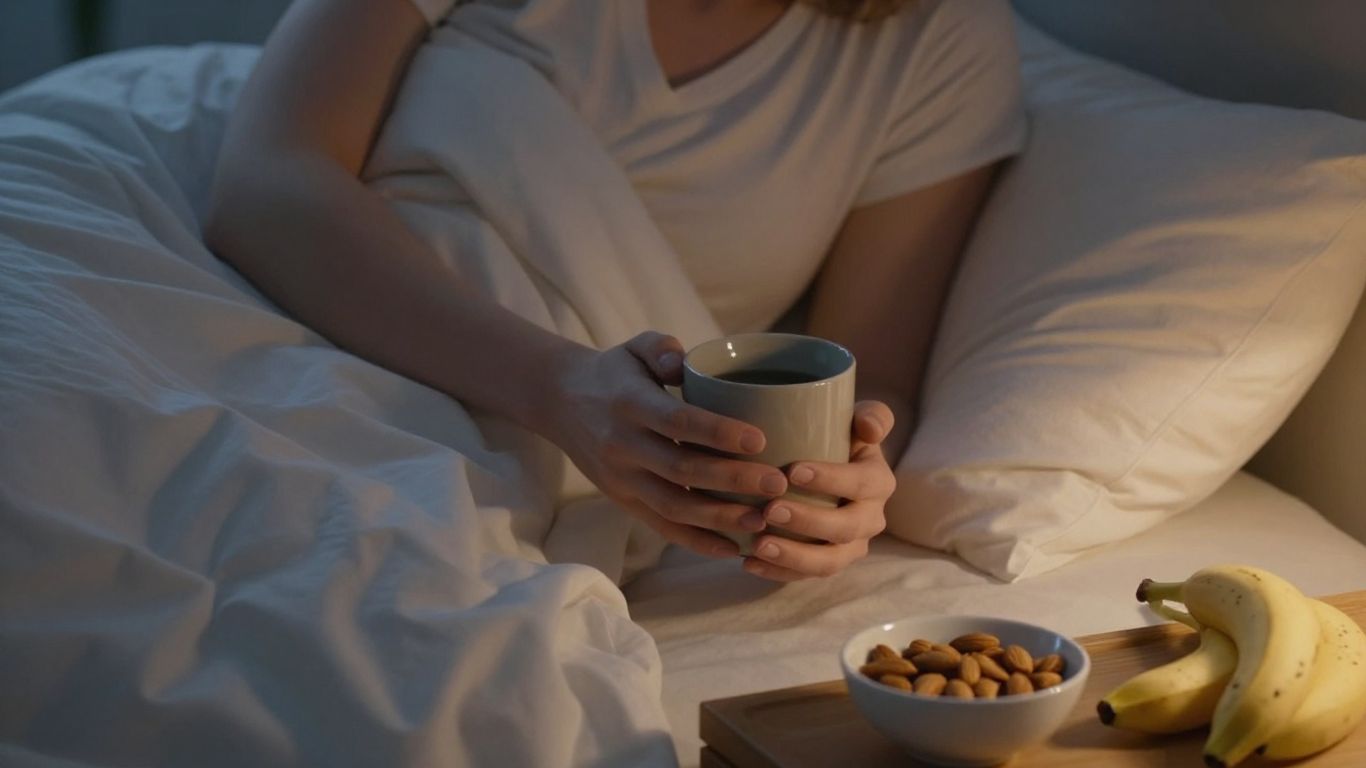
- A handful of almonds and an apple
- A warm mug of milk or fortified soy beverage
The NHS suggests that a warm milky drink can be a better evening choice than caffeinated drinks, and that heavy or hard-to-digest meals can affect sleep. It also recommends avoiding alcohol, tea and coffee for at least six hours before bed. Skipping alcohol altogether is one of the simplest ways to protect both sleep and weight goals.
If evenings tend to fall apart, have a fallback meal ready. Our guide to buffer meals shows how.
Foods and drinks to keep earlier in the day
- Caffeine: found in coffee, black and green tea, cola, energy drinks and chocolate. Caffeine can stay in your system for hours.
- Large, rich or very fatty meals: these take longer to digest.
- Spicy or acidic foods: these can trigger heartburn for some people when lying down.
- Big sugary snacks: easy to overeat when tired, and they rarely satisfy.
Step 3: Build a wind-down routine
A routine tells your body the day is ending and gives your hands and mind something to do besides snack. Mayo Clinic notes that calming activities before bed, such as a bath or relaxation techniques, may promote better sleep, and advises avoiding prolonged screen use just before bedtime.
A sample 45-minute routine:
- Close the kitchen (60 minutes before bed): Wipe the counter, turn off the kitchen light, fill a water glass for your bedside. A visible “closed” signal helps.
- Prepare for tomorrow (5 minutes): Pack lunch, lay out clothes, write a three-item to-do list so your mind can let go.
- Brush your teeth early: For many people, a fresh mouth is a clear cue that eating is done.
- Warm up (10–15 minutes): Shower, bath or a warm herbal tea such as chamomile or peppermint.
- Dim and quiet (20 minutes): Lower the lights, put your phone to charge outside the bedroom and read, stretch or listen to calm music.
Phones are a big trigger for mindless evening eating. See phone boundaries that protect sleep and meals for practical limits.
Non-food comforts that work
When the urge is really for comfort, match the comfort to the feeling.
| If you feel… | Try |
|---|---|
| Restless | Gentle stretching, a short walk around the house, folding laundry |
| Lonely | A short call or message to a friend or family member |
| Stressed | Slow breathing: in for 4, out for 6, for two minutes |
| Bored | A puzzle, a few pages of a book, a hobby kept by the couch |
| Cold or achy | A warm shower, a heating pad, cozy socks |
| Wanting a treat | A favourite lotion, a herbal tea you love, a nice playlist |
Pick two or three and keep their supplies where you usually sit in the evening.
Step 4: Track and adjust for two weeks
Use a quick note each morning: what time you ate last, what you had, how hungry you were, and how you slept. After two weeks, look for patterns. If you snack less on nights you ate a bigger dinner, that’s your answer. If phones or a specific TV show trigger it, move the activity or the snack. A short evening shutdown ritual can make these changes stick.
When to check with a professional
Talk to your doctor if you regularly wake up to eat, feel unable to stop eating at night, have ongoing insomnia, snore loudly or feel exhausted despite enough time in bed. Reflux, diabetes, medications and sleep disorders can all affect evening hunger and sleep. If night eating feels out of control or comes with guilt or secrecy, a healthcare provider can help, and NEDIC (nedic.ca) offers support in Canada.
Key takeaways
- Check: is it hunger, tiredness or a need for comfort?
- Eat a satisfying dinner and plan a small snack if the gap to bed is long.
- Avoid heavy meals and caffeine late in the day; skip alcohol.
- Close the kitchen, brush your teeth early and dim the lights.
- Keep two or three non-food comforts within reach.
- Track for two weeks and adjust one thing at a time.
FAQ
Is it bad to eat right before bed?
A small snack is fine for most people if you’re truly hungry. Large or heavy meals close to bedtime are more likely to disturb sleep.
What’s a good drink before bed?
Water, warm milk or a caffeine-free herbal tea are all good choices.