
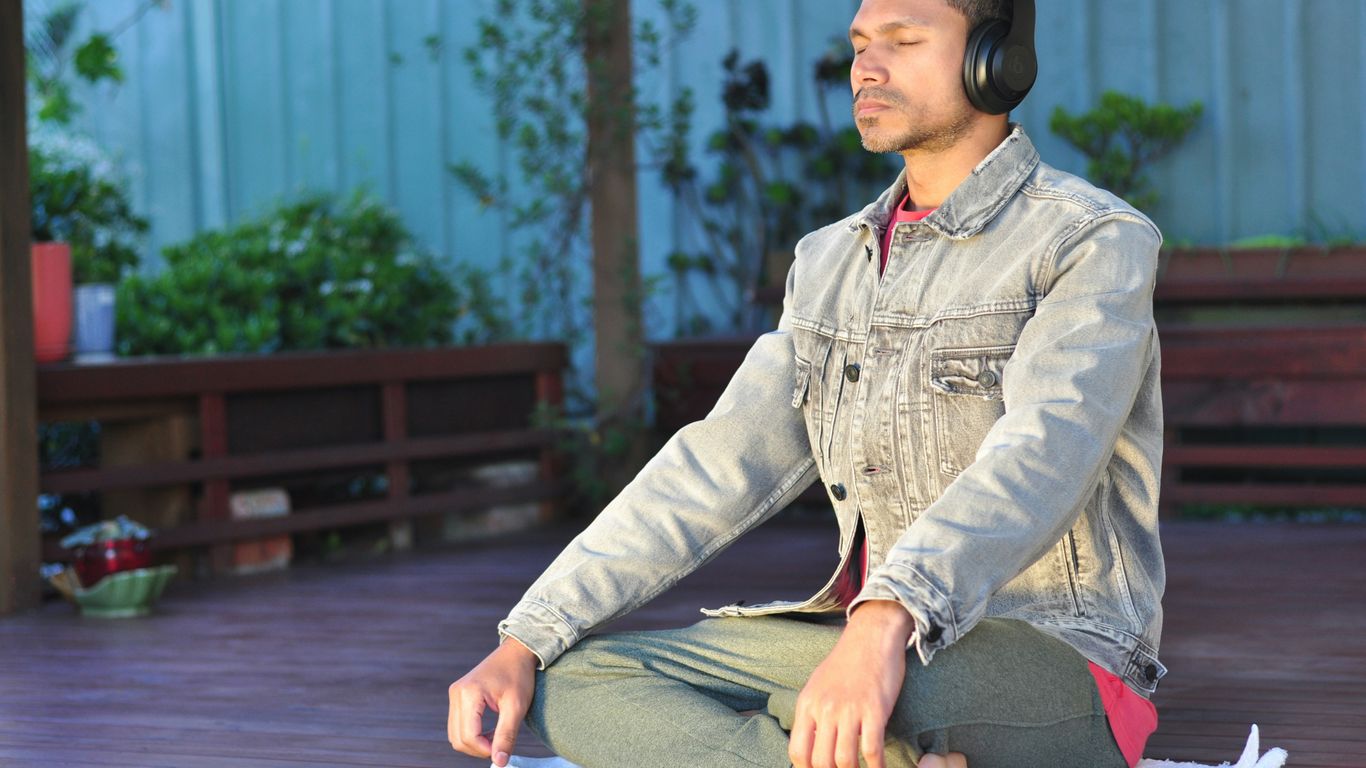
The One-Minute Reset is a quick routine of movement, breath and a few chosen words that helps you shift out of stress, frustration or autopilot before you make your next decision, including what and how much to eat. It won’t solve big problems, but it creates a short pause between feeling and acting. Used several times a day, those pauses add up to calmer choices.
Why a single minute can help
Stress narrows attention. When you’re tense, rushed or overwhelmed, it’s easy to grab whatever is quickest: a handful of snacks, another scroll, a sharp reply. A brief reset interrupts that loop. You can’t always change the situation, but you can change your physical state, and your state shapes your next choice.
The reset works on three levels at once:
- Movement releases tension and wakes up a body that’s been still.
- Breath, especially a slower exhale, helps settle the stress response.
- Words give your mind a simple anchor so it stops spinning.

The One-Minute Reset, step by step
| Time | Step | What to do |
|---|---|---|
| 0–20 seconds | Move | Stand up. Roll your shoulders back five times, reach your arms overhead, then shake out your hands and arms. |
| 20–50 seconds | Breathe | Breathe in gently through your nose, then out slowly through your mouth, making the exhale longer than the inhale. Repeat 3–4 times. |
| 50–60 seconds | Words | Say your anchor phrase, then ask, “What do I need next?” |
That’s it. You can do it at your desk, in the car before walking into the house, in the bathroom at a party, or in the kitchen before opening the pantry.
Step 1: Movement (20 seconds)
Any movement that changes your posture counts. Choose what fits the setting:
- At a desk: stand, stretch arms overhead, twist gently side to side.
- In public: press your feet into the floor, lengthen your spine, drop your shoulders away from your ears.
- At home: ten marching steps on the spot, or a few slow squats.
- Outside: a quick walk to the corner and back.
Movement has value beyond the moment, too. The CDC’s activity guidelines say that some physical activity is better than none and encourage adults to move more and sit less. Short movement breaks are an easy way to do both.
Step 2: Breath (30 seconds)
You don’t need a complicated technique. The NHS’s breathing exercise for stress suggests breathing gently into your belly, in through your nose and out through your mouth, and counting steadily from 1 to 5 if that helps. It recommends a longer practice of at least five minutes when you have time; the one-minute version is a quick taste of the same idea.
A focus on long exhales may be especially useful. In a month-long randomized study, five minutes a day of “cyclic sighing”, which emphasizes a slow, extended exhale, improved mood and lowered breathing rate more than the same time spent in mindfulness meditation. That study used five-minute sessions, so think of your one-minute reset as a mini version, and add longer sessions when you can.
Three breath options to try:
- Counted breath: in for 4, out for 6.
- Double-inhale sigh: breathe in through your nose, take a second small sip of air at the top, then exhale slowly through your mouth.
- Counting breaths: count each exhale from 1 to 5, then start over. If your mind wanders, simply start again at 1.
If any breathing practice makes you dizzy or uncomfortable, stop and breathe normally.
Step 3: Words (10 seconds)
An anchor phrase is a short sentence you repeat to steady your mind. It works best when it’s true, simple and kind. Some ideas:
- “I have time to choose.”
- “This feeling will pass.”
- “One thing at a time.”
- “I’m allowed to slow down.”
- “What do I really need?”
Write your favourite phrase on a sticky note for your fridge or desk, or set it as your phone’s lock screen, so it’s there when you need it. You can change it whenever a new one fits better.
Follow your phrase with the question, “What do I need next?” Sometimes the answer is food, and that’s fine. Other times it’s water, rest, a walk, a conversation, or simply finishing the task in front of you.
When to use the reset
The reset is most helpful at transition points and before decisions. Good moments include:
- Before opening the fridge or pantry when you’re not sure you’re hungry.
- After a stressful meeting, call or message.
- Between work and home, before you walk in the door.
- At a buffet or party, before filling your plate.
- When you notice you’re eating quickly or without tasting.
- Before bed, if your mind is racing.
To make it automatic, link it to cues you already have: every time you close your laptop, every time you park the car, every time you put the kettle on for herbal tea.
Add a sensory check if you have more time
If you have two or three minutes instead of one, add a quick grounding step:
- Notice the feeling of your feet on the floor.
- Rub your hands together and feel the warmth.
- Name three things you can see and two things you can hear.
- If you’re about to eat, take the first bite slowly and notice its taste and texture.
Make it a habit, not a rescue
The reset works best when you practise it on ordinary days, not only in a crisis. Try three planned resets a day for a week (mid-morning, mid-afternoon and before dinner) and jot down a quick note on how you felt before and after. For longer routines, see our 15-minute midday reset and the after-work transition ritual.
Your mind will wander. That’s normal and not a sign you’re doing it wrong. Each time you notice and come back, you’re practising the very skill the reset is meant to build.
When to check with a professional
Quick resets are helpful for everyday stress, but they’re not a treatment for anxiety, panic attacks or depression. If stress feels constant, affects your sleep or eating, or makes daily life hard, talk with your doctor or a mental health professional. If you have a heart or lung condition, check with your doctor before starting new breathing practices.
Key takeaways
- Move for 20 seconds, breathe with long exhales for 30 seconds, then use an anchor phrase.
- Ask, “What do I need next?” before eating or reacting.
- Use the reset at transitions: before the pantry, after stressful calls, before walking in the door.
- Practise on calm days so it’s ready on hard ones.
- Add longer breathing sessions when you can, and keep a quick before-and-after note to see what works best for you.