
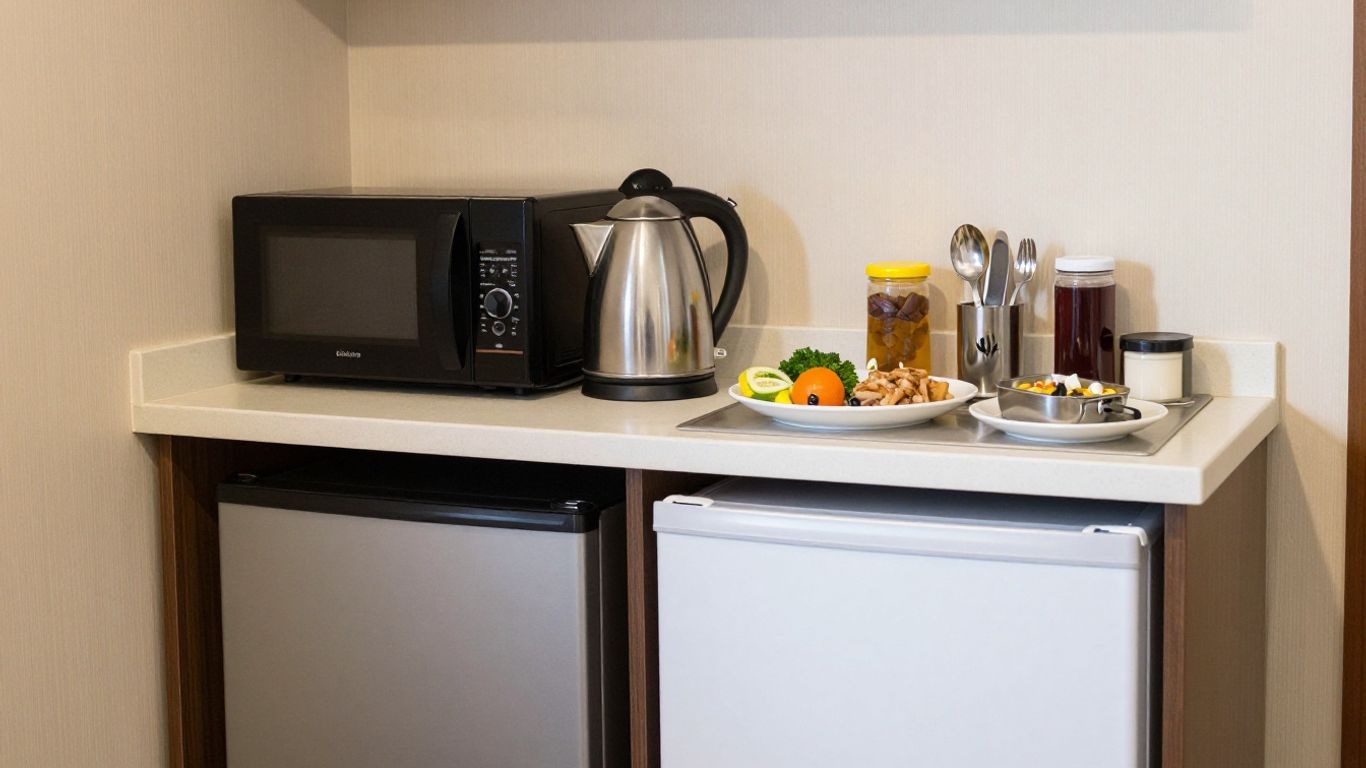
With just a kettle, a microwave and a mini-fridge, you can make balanced breakfasts, lunches and simple dinners in a hotel room. The approach is to buy foods that need only hot water, a few minutes in the microwave, or no cooking at all, and then add fresh produce and a protein to each meal. Keep perishables cold, reheat leftovers until steaming hot, and buy only what you’ll use in a day or two.
Below are what to buy, sample menus for each appliance, and the food-safety basics for cooking in a small space.
Check your setup first
- Ask before you book whether the room has a microwave and fridge, or whether one can be brought up. A “kitchenette” may have a two-burner cooktop and basic dishes; a standard room usually doesn’t.
- Read the hotel’s rules. Some don’t allow portable cooking appliances in rooms.
- Test the fridge. Health Canada recommends keeping a fridge at 4 °C or lower. Small hotel fridges aren’t always that cold, and some are only “minibars.” A small fridge thermometer will tell you; if it’s warmer, keep only short-term items in it.
The hotel-room shopping list
| Keep cold | Shelf-stable | Fresh, no fridge needed |
|---|---|---|
| Plain yogurt, milk, cheese portions, hummus, pre-cooked chicken or tofu, bagged salad, berries | Quick oats, instant whole grains, microwave rice or quinoa cups, canned beans and fish with pull-tab lids, low-sodium soup, nut butter, whole-grain crackers, nuts | Bananas, apples, oranges, avocados, cherry tomatoes, bell peppers |
Our travel grocery kit explains what to buy first when you arrive somewhere new.
Kettle menus
A kettle gives you safe boiling water, which is enough for more than you might think. Pour water into a bowl or mug rather than putting food in the kettle itself.
- Hot oats: quick oats with boiling water, then stir in milk, a spoon of nut butter and sliced banana.
- Couscous bowl: whole-wheat couscous covered with boiling water for 5 minutes, then add canned chickpeas, cherry tomatoes, cucumber, olive oil and lemon.
- Upgraded soup cup: low-sodium instant soup or miso with a handful of spinach and pre-cooked tofu or chicken.
- Warm drinks: herbal tea or hot chocolate made with milk heated in the microwave.
Microwave menus
- Burrito bowl: microwave rice, canned black beans, salsa, peppers and a little cheese. Heat, then top with avocado.
- Baked sweet potato: pierce it, microwave 5 to 8 minutes, turning halfway, and fill with beans and yogurt or with tuna and greens.
- Steamed vegetables: frozen vegetable steam bags or fresh broccoli in a covered bowl with a splash of water.
- Mug eggs: two eggs whisked with spinach and cheese, cooked in 30-second bursts and stirred until fully set.
- Restaurant leftovers: reheat with vegetables added to stretch them into a second balanced meal.
Mini-fridge, no-cook menus
- Yogurt parfait: plain yogurt, berries and a handful of nuts or oats.
- Snack plate: hummus, whole-grain crackers, cheese, baby carrots and cherry tomatoes.
- Wrap: whole-grain tortilla with pre-cooked chicken or canned salmon, bagged salad and a smear of avocado.
- Big salad: bagged greens, canned beans, chopped pepper, seeds and an oil-and-vinegar dressing.
Flavour boosters that travel well
Simple room meals can taste flat. A few small items make a big difference:
- A small jar of salsa, pesto or curry paste.
- Single-serve packets of low-sodium soy sauce, hot sauce or mustard.
- A lemon or lime to squeeze over salads, beans and fish.
- A travel spice blend such as Italian herbs, chili-lime or everything-bagel seasoning.
- Fresh herbs like cilantro or basil from a local market.
- Toasted seeds or nuts for crunch.
Sample day
- Breakfast: hot oats with milk, banana and peanut butter.
- Lunch: chickpea couscous bowl with vegetables.
- Snack: apple and cheese, or yogurt with berries.
- Dinner: burrito bowl with a side of steamed vegetables, or a restaurant meal with a vegetable side.
Food-safety basics in a hotel room
Health Canada’s tips for leftovers apply just as much on the road:
- Don’t leave cooked food at room temperature for more than two hours.
- Reheat leftovers to 74 °C (165 °F). In the microwave, loosen the lid, stop halfway and stir.
- Eat refrigerated leftovers within 2 to 3 days, and sooner if you can’t confirm your fridge is cold enough.
- When in doubt, throw it out.
If you’re travelling internationally, the CDC notes that fully cooked food served hot and food travellers carefully prepare themselves are generally the safest choices. Use bottled or boiled water where tap water may not be safe, and peel fruit yourself.
How much to buy
Mini-fridges are small, so shop in short bursts. For one person, a good one-day haul is one or two yogurts, a small bag of salad, two pieces of fruit, one protein for lunch and a vegetable for dinner. Keep shelf-stable staples (oats, rice cups, canned beans, nut butter) for the whole stay, and top up fresh items every day or two from a nearby grocery store. This keeps your fridge from overflowing and cuts waste on check-out day.
What to pack
- A collapsible bowl, a mug and a reusable fork, spoon and knife (check airline rules for knives).
- A small cutting board or sturdy plate.
- Travel-size dish soap, a sponge and a few zip-top bags.
- Salt, pepper and a small spice blend.
Clean-up in a small space
- Wash dishes right after eating so smells don’t linger.
- Use the bathroom sink only after cleaning it, and dry dishes on a clean towel.
- Take food scraps and packaging out to a proper bin each day.
Have a backup plan
Keep a few shelf-stable items in your bag (nuts, whole-grain crackers, a nut butter pouch, fruit) in case the microwave doesn’t work or a flight runs late. Our guide to five-minute balanced meals has more assembly ideas that work with almost no equipment.
Takeaways
- Plan meals around hot water, short microwave times and no-cook assembly.
- Check that your fridge holds 4 °C or less, and buy perishables a day or two at a time.
- Add a vegetable or fruit and a protein to every meal.
- Reheat to 74 °C, stirring halfway; discard food left out more than two hours.
- Pack a bowl, utensils, soap and a few backup snacks.
FAQ
Can I really make a whole meal with just a kettle, microwave and mini-fridge?
Yes. Combine a quick-cooking grain (oats, couscous or a microwave rice cup), a protein (canned beans, canned fish, yogurt, eggs or pre-cooked chicken) and a vegetable or fruit. That covers most balanced meals.
Is it safe to cook eggs in the microwave?
Yes, if they are whisked and cooked until fully set, stirring between short bursts. Don’t microwave eggs in their shells, as they can burst.
What if my room has no microwave?
Ask the front desk; many hotels have one in a lobby or breakfast area. Otherwise, lean on kettle and no-cook menus and buy fresh food one day at a time.