
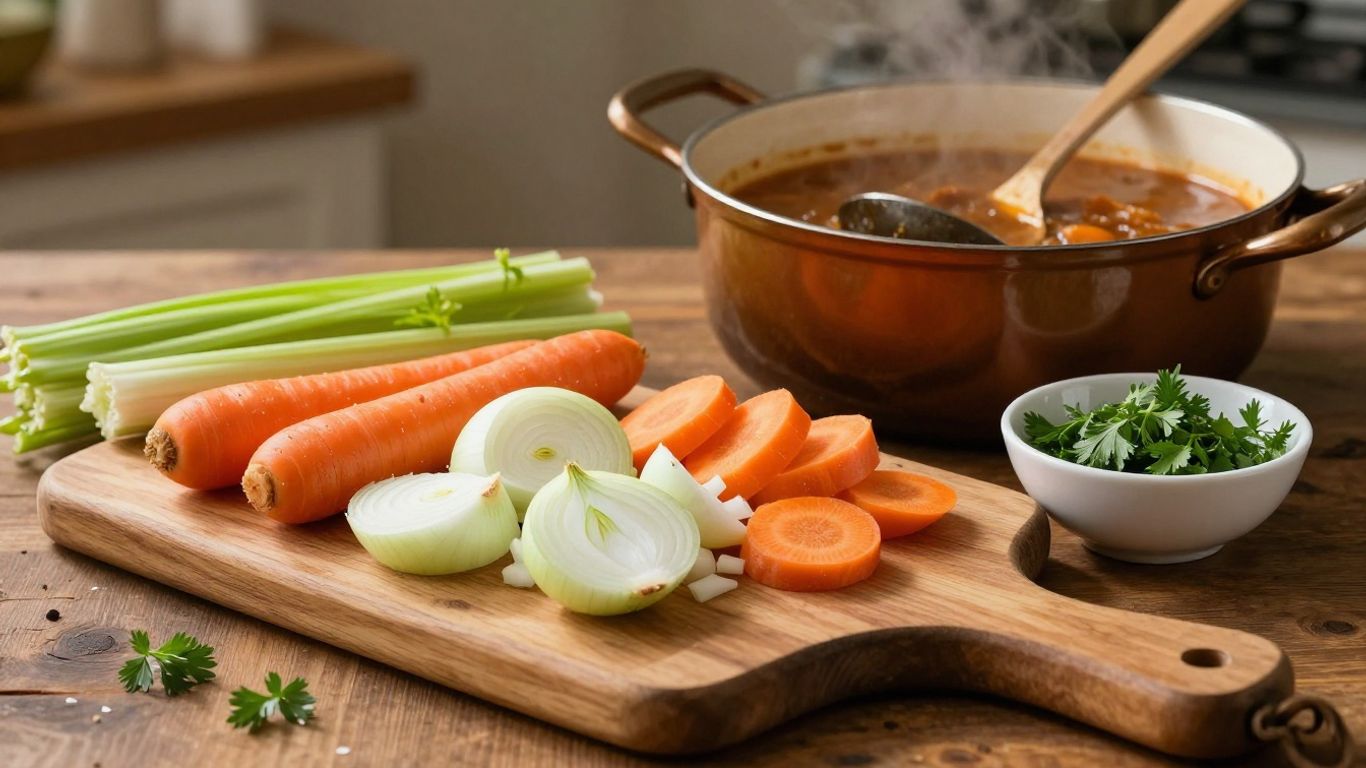
A great stew comes down to three building blocks: aromatics cooked slowly for a flavour base, a liquid that adds body without drowning everything, and finishers added at the end for brightness and texture. Get those right and you can make a satisfying stew from almost any mix of beans, lentils, vegetables, chicken, fish or lean meat, without relying on heavy cream or lots of salt.
The stew framework at a glance
| Stage | What it does | Examples |
|---|---|---|
| 1. Brown | Creates deep, savoury flavour | Searing meat, tofu or mushrooms; caramelizing tomato paste |
| 2. Aromatics | Builds the flavour base | Onion, carrot, celery, garlic, ginger, peppers, leeks |
| 3. Spices | Defines the style | Paprika, cumin, thyme, bay, curry powder, chili |
| 4. Liquid | Body and cooking medium | Broth, water, canned tomatoes, a little milk or coconut milk |
| 5. Main ingredients | Substance and protein | Beans, lentils, root vegetables, chicken thighs, fish |
| 6. Finishers | Brightness, freshness, texture | Lemon, vinegar, fresh herbs, yogurt, toasted seeds |
Block 1: aromatics, the flavour foundation
Aromatics are vegetables and seasonings that release fragrance and sweetness as they cook. Classic combinations include:
- Mirepoix (French): onion, carrot and celery.
- Holy trinity (Cajun and Creole): onion, celery and green pepper.
- Sofrito (Spanish and Latin American): onion, garlic, peppers and tomato.
- Ginger-garlic-onion (many South Asian dishes): often with green chili.
How to cook them
- Heat 1 tablespoon oil in a heavy pot over medium heat.
- Add onions first with a pinch of salt, which helps them release moisture and soften.
- Cook 8–10 minutes, stirring, until soft and golden. Add carrot and celery partway through.
- Add garlic and ginger in the last minute or two; they burn quickly.
- Toast dry spices in the pot for 30–60 seconds until fragrant.
- Stir in 1–2 tablespoons tomato paste and cook until it turns brick red.
Rushing this stage is the most common reason a stew tastes thin. If things start to stick, add a splash of water or broth instead of more oil and scrape up the browned bits, since that’s where much of the flavour lives.
Browning for depth
Searing meat, tofu or mushrooms before the aromatics creates browned, savoury flavours (the Maillard reaction). Work in batches so pieces don’t steam, and don’t move them until they release easily. For plant-based stews, browning mushrooms well adds a lot of meaty depth.
Block 2: liquids that add body
The liquid carries flavour into every bite. Use enough to just cover the ingredients; too much makes a soup instead of a stew.
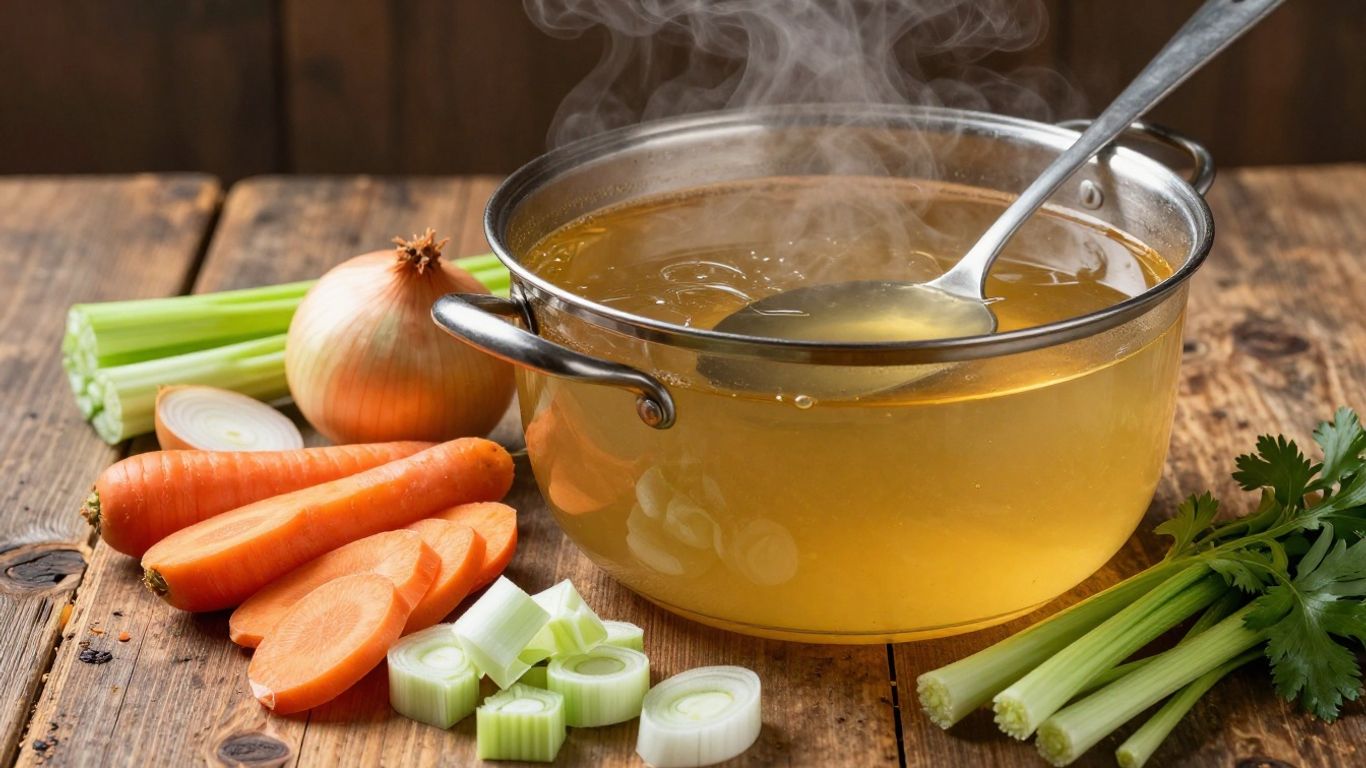
- Broth or stock: the most common choice. Low-sodium versions let you control salt.
- Water: perfectly fine when your aromatics and spices are strong.
- Canned tomatoes: add acidity, body and savoury flavour.
- Coconut milk or milk: for creamy curries and chowders. A little goes a long way; you can use part coconut milk and part broth.
- Bean cooking liquid: slightly thick and savoury.
- A splash of apple cider vinegar or fruit juice: for the bright, fruity note some recipes get from other ingredients.
Store-bought broth and canned beans can carry a lot of salt. The NHS suggests trying reduced-salt stock cubes and seasoning with herbs, spices, garlic and lemon instead of salt. Canada’s Food Guide recommends that you drain and rinse canned vegetables to lower sodium, and the same habit works for canned beans.
Thickening without cream
- Mash some beans or potatoes against the side of the pot.
- Blend a cup or two of the stew and stir it back in.
- Simmer uncovered for the last 15–20 minutes to reduce.
- Add red lentils, which break down and thicken naturally.
- Stir in a slurry of 1 tablespoon cornstarch and 2 tablespoons cold water.
Block 3: seasoning in layers
Season a little at each stage rather than all at the end: a pinch of salt with the onions, spices with the aromatics, then taste and adjust once the stew has simmered. Balance the five basic tastes:
- Salty: salt, soy sauce, miso, Parmesan rind (use modestly).
- Sour: lemon, lime, vinegar, tomatoes.
- Sweet: caramelized onions, carrots, sweet potato, a little fruit.
- Bitter: dark greens, cocoa, charred vegetables.
- Umami: mushrooms, tomato paste, miso, seaweed.
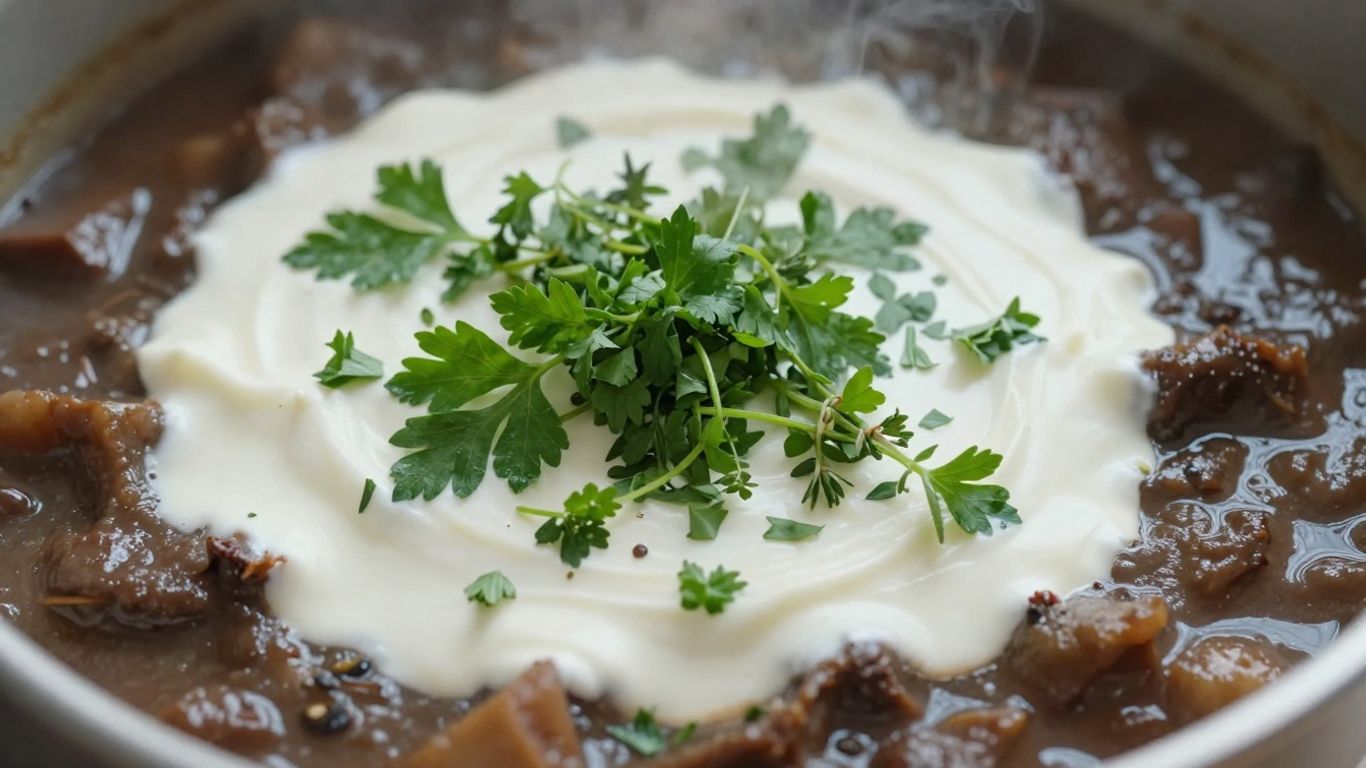
Block 4: finishers, the step most people skip
Long cooking mellows flavours. A finisher wakes them up just before serving.
- Acid: a squeeze of lemon or lime, or a teaspoon of vinegar. Start small and taste.
- Fresh herbs: parsley, cilantro, dill, basil or green onion stirred in or scattered on top.
- Something creamy: a spoon of plain yogurt or a little sour cream on each bowl instead of cream stirred through the whole pot.
- Crunch: toasted pumpkin seeds, chopped nuts or whole-grain croutons.
- Heat: chili flakes, hot sauce or a spoon of herb sauce such as zhug.
- Greens: a handful of spinach or kale stirred in for the last 2–3 minutes.
If your stew tastes flat, try acid before adding more salt. It usually fixes it.
Three stews from the same blocks
| Stew | Aromatics and spices | Liquid | Main | Finisher |
|---|---|---|---|---|
| Hearty lentil | Onion, carrot, celery, garlic, thyme, smoked paprika | Broth and canned tomatoes | Brown or green lentils, potato | Lemon, parsley |
| Chickpea curry | Onion, ginger, garlic, curry powder, cumin | Tomatoes and light coconut milk | Chickpeas, sweet potato, spinach | Lime, cilantro, yogurt |
| Chicken and white bean | Leek, celery, garlic, rosemary, bay | Low-sodium chicken broth | Chicken thighs, white beans, kale | Lemon zest, Parmesan |
Build a stew from what’s in the fridge
When you’re cooking without a recipe, run down this checklist:
- One or two aromatics: any onion, leek or shallot, plus garlic if you have it.
- One spice direction: smoky (paprika, cumin), herby (thyme, rosemary, bay) or warm (curry powder, ginger, cinnamon).
- One protein: a can of beans, a cup of lentils, leftover chicken or a block of tofu.
- Two or three vegetables: one sturdy (potato, squash, carrot) and one quick-cooking (zucchini, peppers, greens).
- One liquid: broth, water with tomato paste, or canned tomatoes.
- One finisher: lemon, vinegar, herbs or a spoon of yogurt.
Add sturdy vegetables early and quick-cooking ones near the end so nothing turns to mush.
Cooling and storing leftovers safely
Stews make excellent leftovers, but a big pot cools slowly. Health Canada advises that you refrigerate leftovers promptly in shallow containers, eat them within 2 to 3 days or freeze them, and reheat to 74°C (165°F). Divide the stew into smaller containers so it chills quickly. For more detail, see Batch-Cooking Food Safety.
If you enjoy cooking beans and lentils from scratch for stews, Bean Cooking Science covers texture and timing.
Quick takeaways
- Give aromatics 8–10 minutes; that’s where the depth comes from.
- Toast spices and tomato paste before adding liquid.
- Use just enough liquid to cover, and choose low-sodium broth.
- Thicken with beans, potatoes or blending instead of cream.
- Finish with acid, fresh herbs and something crunchy or creamy.
- Cool leftovers in shallow containers and eat within 2 to 3 days.
FAQ
What if I’m missing an ingredient?
Think in roles, not recipes. No celery? Use more onion or fennel. No broth? Use water with extra aromatics and a spoon of miso or tomato paste. No fresh herbs? A squeeze of lemon still brightens the pot.
How do I know if my stew is seasoned correctly?
Taste a spoonful with a piece of each main ingredient. If it tastes dull, add acid first, then salt in small pinches.