
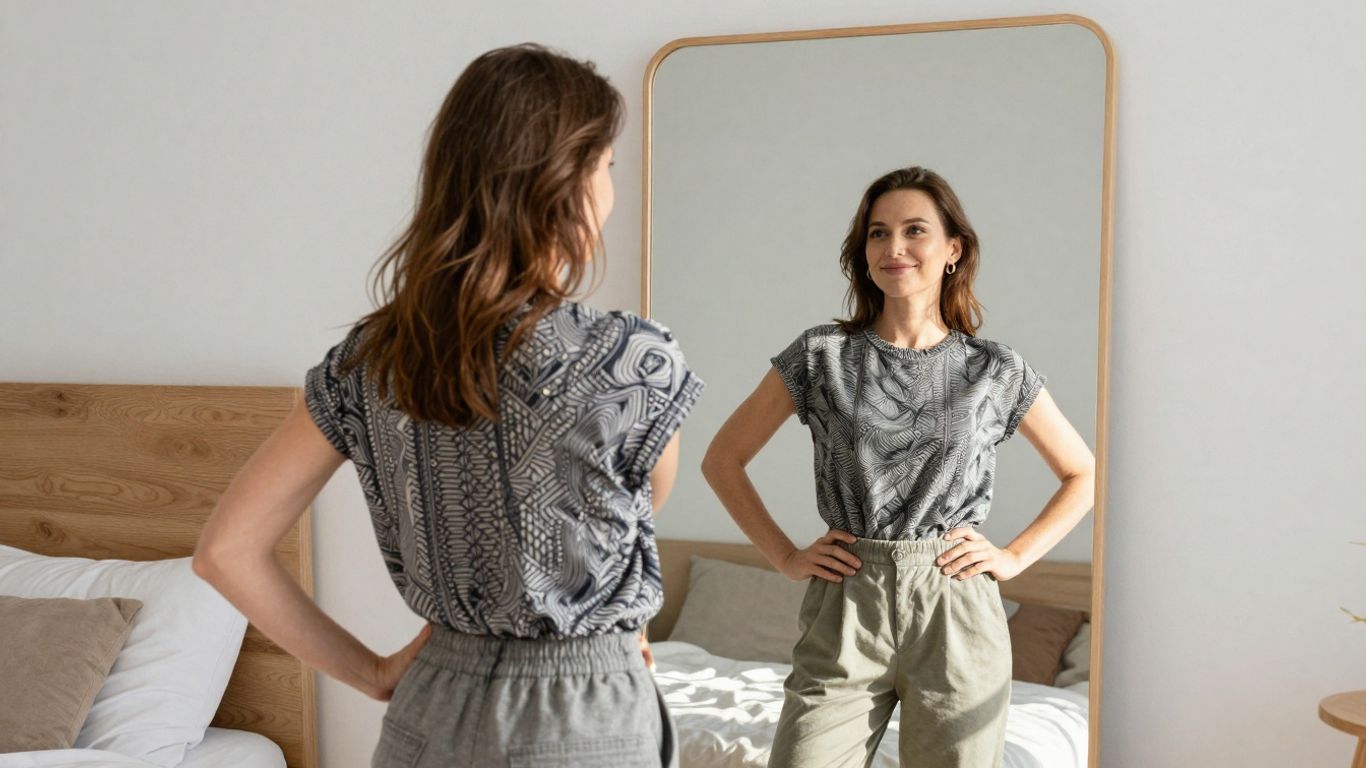
It can be tough to feel good about yourself these days, what with all the images we see everywhere. Building up your body image resilience is about creating a stronger sense of self that doesn’t get shaken by what’s on your phone or in the magazines. We’ll look at how to handle media, what to wear, and even how to look at yourself in the mirror differently. It’s all about feeling more comfortable and confident in your own skin, no matter what.
Key Takeaways
- Understand that media images are often edited and not real. Actively choose to follow accounts and content that show a variety of people and interests, moving away from those that make you feel bad.
- Choose clothes that feel good and let you be yourself. Don’t hold onto outfits that don’t fit or make you feel down; focus on what makes you feel comfortable and confident right now.
- Change how you use mirrors. Instead of judging your appearance, try observing your body’s function, noticing healing, and using positive words. It’s about acceptance, not criticism.
- Build your sense of worth from things other than how you look. Focus on your skills, kindness, and what you’re good at. Find groups of people who appreciate you for who you are, not just your appearance.
- Be kind to yourself, especially when you’re struggling with negative thoughts about your body. Small, consistent acts of self-care and setting boundaries can make a big difference in how you feel.
Cultivating Body Image Resilience Through Media Literacy
It feels like everywhere we look, there are images telling us how we should look. Social media, ads, even movies – they all seem to push a very specific idea of beauty. And honestly, it can be exhausting trying to keep up with something that’s often not even real. Understanding how these images are made is the first step to not letting them get to us.
Understanding Media Illusions: Lighting, Lenses, and Editing
Think about your favorite celebrity or influencer. Do they look exactly like that in real life, all the time? Probably not. Photos and videos we see are often carefully crafted. Good lighting can smooth out skin and create shadows that make features pop. Lenses can change proportions, making faces look slimmer or eyes bigger. And then there’s editing – filters, retouching, and digital manipulation are incredibly common. It’s not about tricking people, but it does mean that what we see is often a highlight reel, not everyday reality. Recognizing these techniques helps us see the image for what it is: a created picture, not a direct reflection of life.
Auditing Your Digital Feeds for Unrealistic Standards
Let’s be real, our phones are glued to our hands. What we scroll through has a big impact. Take a look at who you follow. Are they mostly people who look a certain way, promoting products that promise impossible results? If so, it might be time for a digital clean-up. Think about how certain posts make you feel. Do they leave you feeling inspired, or do they make you feel a bit down about yourself? It’s okay to unfollow accounts that consistently make you feel less-than. Your feed should be a place that lifts you up, not drags you down.
Here’s a quick way to check your feed:
- Identify: Scroll through your feed for 10 minutes. Note down any accounts that consistently show highly edited or unrealistic body types.
- Reflect: How do these posts make you feel? (e.g., inadequate, inspired, neutral, anxious)
- Act: Decide whether to unfollow, mute, or limit your exposure to these accounts.
Replacing Harmful Content with Diverse and Uplifting Voices
Once you’ve cleared out some of the noise, you can start filling your digital space with things that are actually good for you. Seek out accounts that celebrate different kinds of bodies, real stories, and genuine positivity. Look for people who talk about their hobbies, their work, or their passions – things that have nothing to do with how they look. This shift helps remind us that there’s so much more to life and to people than just their appearance. It broadens our idea of what’s normal and beautiful, making it easier to accept ourselves and others.
The constant stream of idealized images can create a distorted view of reality, making it hard to appreciate our own unique selves. By actively choosing what we consume online, we can build a more positive and realistic perspective.
Strategies for Clothing Choices That Empower

Sometimes, what we wear can feel like a costume, or worse, a uniform that doesn’t quite fit who we are. But it doesn’t have to be that way. Thinking about your clothes as tools for self-expression and comfort can make a big difference in how you feel day-to-day. It’s about choosing pieces that make you feel good, not just look good according to some external rulebook.
Dressing for Comfort and Authentic Self-Expression
This is all about tuning into your own needs and preferences. What fabrics feel nice against your skin? What silhouettes allow you to move freely? When you prioritize comfort, you’re already taking a step towards feeling more at ease in your own body. Think about your favorite t-shirt – it’s probably comfortable, right? That feeling of ease is what we’re aiming for with all our clothing choices. It’s about letting your clothes support you, rather than dictate how you should feel.
Identifying Outfits That Boost Confidence
We all have those few items in our closet that just feel right. Maybe it’s a particular color that makes your eyes pop, or a cut that you feel particularly good in. These are the outfits that give you a little extra pep in your step. It’s not about chasing trends or fitting into a certain mold; it’s about recognizing what makes you feel capable and put-together. Keep a mental note, or even jot down, what these outfits are and why they work for you. This can help you build a wardrobe that consistently makes you feel your best.
Letting Go of Clothes That No Longer Serve You
Our bodies change, our styles evolve, and sometimes, clothes just don’t fit the person we are anymore. Holding onto items that are too small, uncomfortable, or simply don’t reflect your current self can be a subtle drain on your confidence. It might feel tough to let go, especially if those clothes represent a past version of yourself. But making space in your closet can also make space in your mind. Consider donating items that no longer fit or make you feel good. This act can be freeing, allowing you to focus on clothes that truly support your present-day self.
Letting go of clothes that don’t fit or feel right isn’t about rejecting your past; it’s about making room for your present and future self to feel comfortable and confident. It’s a practical step towards aligning your external presentation with your internal sense of well-being.
Here’s a simple way to approach this process:
- Try it on: Put on the item and pay attention to how it feels. Does it pinch? Is it restrictive? Does it make you feel good?
- Check the fit: Does it fit your current body comfortably? If it requires significant effort to get into or stay in, it might be time to reconsider.
- Assess the feeling: Beyond the physical fit, how does it make you feel emotionally? Does it bring up negative comparisons or feelings of inadequacy?
If an item doesn’t pass these checks, it might be time to pass it on to someone who will love it.
Transforming Mirror Routines for Self-Acceptance
That daily check-in with the mirror. For a lot of us, it’s become this automatic, often critical, assessment. We scan for flaws, compare ourselves to some impossible standard, and then move on with our day, usually feeling a little worse. But what if we could change that? What if the mirror wasn’t a judge, but a tool for something much kinder?
Shifting the Mirror’s Purpose from Judgment to Observation
Let’s be real, the mirror has a reputation. It’s where we often go to pick ourselves apart. But we can retrain our brains to see it differently. Instead of looking for what’s ‘wrong,’ try just observing. Notice the details without assigning a value. Think of it like a scientist observing a specimen – just looking, not judging. This might feel weird at first, maybe even a little uncomfortable. You might catch yourself slipping back into old habits. That’s okay. The goal isn’t perfection, it’s practice. Try setting a timer for just 30 seconds. During that time, just look. Notice the color of your eyes, the shape of your nose, the way your hair falls. No commentary, just pure observation. It’s about separating seeing from evaluating.
Practicing Affirmations and Gratitude in Reflection
Once you’ve gotten a little more comfortable with just observing, you can start adding in some positive input. This is where affirmations and gratitude come in. Instead of focusing on what you don’t like, pick one thing you do appreciate, or one positive quality you possess. It doesn’t have to be about your appearance. Maybe it’s your kindness, your sense of humor, or your ability to listen. You could say something like, "I appreciate how my hands can create things," or "I’m grateful for my strong legs that carry me through the day." Even better, try a gratitude practice. Think of three things your body does for you each day. It could be as simple as breathing, or as complex as allowing you to enjoy a hug. Write them down, or say them out loud while looking in the mirror. It’s a way to shift your focus from what you see to what you experience.
Observing Healing and Functionality Beyond Appearance
This is where we really move beyond the surface. The mirror can be a powerful tool for noticing how your body works and heals. Think about any physical changes you’ve experienced, not just in terms of aesthetics, but in terms of function. Are you able to move more freely? Is a scar healing well? Is your body recovering from illness or injury? These are victories! Take a moment to acknowledge them. You can say, "I notice my knee has less swelling today," or "I’m able to walk further than last week." This isn’t about looking ‘good’; it’s about recognizing your body’s incredible capacity to function and heal. It’s about appreciating your body as a living, breathing, working entity, not just a collection of parts to be judged.
Building Value Beyond Physical Appearance
It’s easy to get caught up in how we look, especially with all the images we see every day. But our worth isn’t just about our outward appearance. We’re so much more than that. This section is about remembering and celebrating all the other parts of ourselves that make us, well, us.
Identifying and Valuing Inner Strengths and Qualities
Think about what you’re good at, not just in terms of skills, but also character. Are you a good listener? Do you have a knack for making people laugh? Are you dependable? These are the things that really matter in the long run. Making a list of these qualities can be a good start. Keep it somewhere you can see it, maybe by your mirror or on your fridge. When you catch yourself focusing too much on how you look, take a moment to read that list. It’s a reminder of your solid character.
Here are some qualities to consider:
- Kindness
- Curiosity
- Patience
- Creativity
- Humor
- Reliability
- Empathy
Engaging in Activities That Demonstrate Competence and Kindness
Doing things that show what you’re capable of, or that help others, is a fantastic way to build self-esteem. It’s about action, not just thinking. Maybe you volunteer at a local animal shelter, or perhaps you’re learning a new language. Taking a class, helping a neighbor, or even mastering a new recipe can all contribute to a sense of accomplishment. These activities give you tangible proof of your abilities and your impact on the world, which is far more lasting than any compliment about your looks.
True value comes from what we contribute and how we grow, not just from how we are perceived visually. Focusing on actions that align with our character and skills builds a more robust sense of self.
Seeking Communities That Appreciate Personality and Talent
It’s important to surround yourself with people who see and appreciate you for who you are, beyond the surface. Look for groups or friends where conversations go deeper than just appearances. When you’re with people who value your thoughts, your sense of humor, or your unique talents, it reinforces that your worth is multifaceted. These connections, built on shared interests and genuine understanding, are where you can truly feel seen and accepted for your whole self.
The Role of Self-Compassion in Body Image Resilience
Sometimes, when we’re feeling down about our bodies, our inner voice can be pretty harsh. It’s like having a constant critic pointing out every perceived flaw. This is where self-compassion comes in. It’s not about ignoring problems or pretending everything is perfect. Instead, it’s about treating yourself with the same kindness and understanding you’d offer a good friend when they’re struggling.
Understanding the Link Between Anxiety and Self-Compassion
It’s pretty common for anxiety about appearance to go hand-in-hand with a lack of self-compassion. When we’re hard on ourselves, any little worry about how we look can quickly spiral. Think about it: if you believe you need to be perfect to be accepted, any deviation from that ideal can feel like a major failure. This constant pressure fuels anxiety. Self-compassion acts as a buffer. By acknowledging that everyone has struggles and that it’s okay to not be okay, we can reduce that intense pressure. It helps us see that our worth isn’t tied to our appearance.
Gentle Interventions for Appearance Anxiety
Dealing with appearance anxiety doesn’t require grand gestures. Small, consistent actions can make a big difference. One simple technique is to pause when you notice a critical thought about your body. Instead of letting it run wild, try to identify it. Is it a thought about comparison? Or maybe a worry about how you look in a certain outfit? Once you’ve named it, you can try to normalize it by remembering that many people experience similar feelings, especially with the constant barrage of images we see daily. Then, offer yourself a kind word or a gentle touch, like placing a hand on your heart. You might say something like, "It’s okay to feel this way right now." This simple act can interrupt the cycle of self-criticism.
Responding to Intrusive Questions with Personal Boundaries
People sometimes ask questions about our bodies or appearance that feel intrusive. It can be uncomfortable, and we might feel pressured to answer. Having a plan for these moments can be really helpful. It’s about setting personal boundaries in a way that feels right for you. You don’t have to share details you’re not comfortable with. A simple, polite response can work wonders. For example, you could say, "I’ve made a personal choice that feels right for me, and I prefer not to discuss the specifics." Practicing a few variations of this can make it easier to use when the situation arises. The goal is to protect your peace and assert your right to privacy without needing to justify yourself.
Here are a few ways to practice self-compassion:
- Name the feeling: "I’m feeling worried about my appearance right now."
- Acknowledge common humanity: "Many people struggle with these kinds of thoughts."
- Offer kindness: "May I be gentle with myself in this moment."
It’s also helpful to shift your focus from just how your body looks to what it does. Think about how your legs carry you, how your arms allow you to hug loved ones, or how your lungs help you breathe. This shift can help you appreciate your body’s function and resilience.
Diversifying Identity to Enhance Resilience
Sometimes, we get so caught up in how we look that it feels like our entire worth is tied to it. It’s easy to fall into that trap, especially with all the images we see every day. But here’s the thing: you are so much more than your appearance. Building resilience means recognizing and valuing all the other parts of who you are. It’s about creating a strong sense of self that isn’t easily shaken by how you look on any given day.
Investing in Non-Appearance Related Interests and Passions
Think about what genuinely sparks your interest, what makes you lose track of time. Maybe it’s learning a new language, mastering a recipe, or getting lost in a good book. These activities are like building blocks for a richer identity. They give you something to focus on that has nothing to do with fitting a certain mold. When you’re passionate about something, it shines through and contributes to your overall sense of self.
- Gardening: The satisfaction of nurturing a plant from seed to bloom.
- Playing an Instrument: The challenge and reward of mastering a new song.
- Volunteering: The fulfillment of helping others and making a difference.
When you engage in activities that are purely for your own enjoyment and growth, you create a buffer against external pressures. These interests become a source of personal pride and accomplishment, independent of how you look.
Cultivating Strengths in Hobbies, Skills, and Relationships
Beyond just interests, actively developing skills and nurturing relationships adds even more depth to your identity. What are you good at? What do people come to you for? These are clues to your unique strengths. It could be your ability to listen, your knack for problem-solving, or your talent for making people laugh. Focusing on these areas helps you see yourself as capable and valuable in many different ways.
- Skill Development: Taking a class, practicing a craft, or learning a new software.
- Relationship Building: Being a supportive friend, a reliable family member, or a helpful colleague.
- Personal Growth: Working on patience, developing better communication, or practicing mindfulness.
Finding Fulfillment in Activities Beyond Physical Looks
Ultimately, the goal is to build a life where your sense of self-worth comes from a variety of sources, not just your reflection. This means actively seeking out experiences that highlight your character, your intellect, your kindness, and your contributions. When you have a well-rounded identity, you’re less likely to be knocked off balance by body image concerns. You have a solid foundation of who you are that is much harder to shake.
- Creative Pursuits: Writing, painting, pottery, or any form of artistic expression.
- Intellectual Engagement: Reading, debating, attending lectures, or pursuing further education.
- Community Involvement: Participating in local events, joining clubs, or contributing to causes you care about.
Mindful Media Consumption for a Healthier Outlook
It feels like we’re constantly plugged in these days, right? Social media, news feeds, endless streams of content – it’s a lot. And honestly, a lot of it isn’t exactly helping our body image. We see these perfectly filtered lives and bodies, and it’s easy to start comparing ourselves. But we can actually take control of what we see and how it affects us. It’s about being more intentional with our digital lives.
Implementing a Digital Reboot Plan
Think of this as a reset button for your online world. It’s not about quitting everything cold turkey, but more about making smart, gradual changes. You can start by just looking at what you’re actually following. Are those accounts making you feel good, or are they making you feel a bit down about yourself? It’s okay to hit ‘unfollow’ on things that don’t serve you anymore. Then, try setting up some boundaries. Maybe that means charging your phone outside your bedroom so you’re not scrolling right before bed or first thing in the morning. Small steps can make a big difference.
Here’s a possible way to approach a digital reboot:
- Days 1-3: Audit and Curate. Go through your feeds. Unfollow accounts that promote unrealistic standards or make you feel bad. Follow more diverse voices and positive content.
- Days 4-7: Schedule Phone-Free Time. Aim for at least an hour each day where your phone is put away. Use this time for something you enjoy offline.
- Days 8-10: Track Your Mood. Notice how you feel before and after scrolling. Does your mood change? Keep a simple log.
- Days 11-14: Reduce Overall Usage. Try cutting your social media time by a quarter or even half. See how it feels.
Setting Boundaries for Screen Time and Phone Usage
This is where we get practical. It’s easy to lose track of time when we’re online. Setting limits isn’t about punishment; it’s about reclaiming your time and attention. You can use built-in phone features to track your usage and set daily limits for certain apps. Another simple trick is to designate specific times for checking social media, rather than doing it constantly throughout the day. Think of it like scheduling appointments for your online browsing.
We often forget that the images we see online are carefully selected and edited. What looks effortless is usually anything but. Recognizing this illusion is the first step to not letting it get to you.
Tracking Mood and Well-being in Relation to Media Exposure
This part is about paying attention to yourself. When you spend time on certain apps or websites, how does it make you feel? Do you feel more anxious, more inspired, or just… drained? Keeping a simple journal, even just a few notes on your phone, can help you see patterns. You might notice that after scrolling through a particular type of content, your mood dips. This awareness is super helpful because it tells you where you might need to make adjustments. The goal is to use media in a way that supports your well-being, not detracts from it.
The Power of Embodied Movement and Nourishment
Choosing Movement for Mood Enhancement, Not Just Metrics
Sometimes, we get stuck thinking exercise is all about numbers – calories burned, miles run, or pounds lost. But what if we shifted that focus? Moving your body can be a fantastic way to lift your spirits and feel more connected to yourself, without any pressure to change your appearance. Think about activities that genuinely bring you joy. Maybe it’s dancing around your living room to your favorite songs, taking a leisurely walk in nature, or trying out some gentle yoga poses. The key is to tune into how the movement feels rather than how it looks or what it achieves in terms of physical change. Notice the simple pleasure of stretching, the rhythm of your breath, or the feeling of your muscles working. This approach helps reclaim movement as a source of positive experience and self-care.
Prioritizing Sleep and Regular Nourishment for Vulnerability Reduction
Getting enough sleep and eating regularly aren’t just about basic survival; they play a big role in how we feel about ourselves, especially our bodies. When we’re tired or haven’t eaten properly, we can become more sensitive to negative thoughts and less able to cope with stress. This can make us feel more vulnerable and critical of our appearance. Making sure you get consistent, quality sleep and eating balanced meals throughout the day can create a more stable foundation. This stability helps reduce those moments of heightened self-doubt and makes it easier to approach your body with kindness, even when things feel a bit tough. It’s about building a baseline of well-being that supports your resilience.
Connecting with Your Body Through Joyful Physical Activity
Let’s talk about finding movement that feels good. It’s not about pushing yourself to exhaustion or aiming for a specific physique. Instead, it’s about discovering activities that make you feel alive and present in your body. Consider these ideas:
- Explore different types of movement: Try dancing, swimming, cycling, gardening, or even just playing with a pet. See what sparks your interest.
- Focus on the experience: Pay attention to the sensations in your body. How does your heart rate change? What muscles are you using? What feels good?
- Listen to your body’s signals: Rest when you need to, and don’t force yourself to do something that feels painful or unpleasant. Your body is communicating with you.
When we engage in physical activities purely for the enjoyment they bring, we build a more positive and accepting relationship with our physical selves. This shift moves away from viewing the body as an object to be controlled or perfected, and towards appreciating it as a partner in experiencing life.
This way of engaging with your body can be incredibly freeing. It allows you to appreciate your physical capabilities and the simple pleasure of being in motion, separate from any external pressures or expectations about appearance.
Fostering Supportive Communities for Body Image
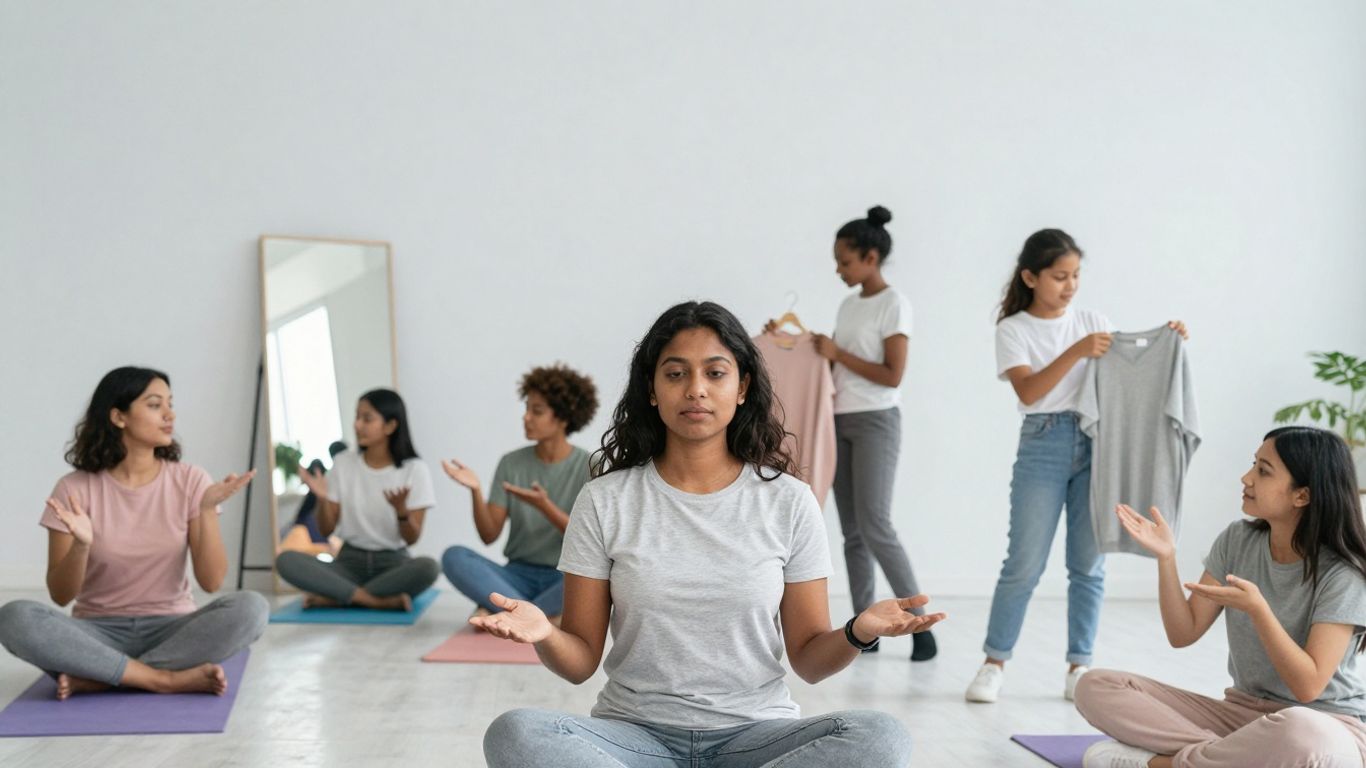
Sometimes, the stuff we see online or even hear from people can really mess with how we feel about ourselves. It’s like a constant stream of images and ideas that don’t always match up with reality, and it can be tough to shake off. That’s where having a good support system comes in. Connecting with others who get it, or who can offer a different perspective, makes a huge difference. It’s not about finding people who will just tell you you’re beautiful all the time; it’s about finding folks who see you for who you are, beyond just what you look like.
Prioritizing In-Person Connections and Diverse Role Models
While online communities can be helpful, there’s something special about real-life interactions. Meeting up with friends, joining a club, or even just chatting with a neighbor can provide a sense of belonging that’s hard to replicate digitally. Look for people who have different life experiences and backgrounds. Seeing how others live and thrive, regardless of their appearance, can really broaden your own view. These real-world connections offer a more grounded perspective and can help you feel more connected to the world around you.
Building Relationships Based on Shared Values and Experiences
When you build friendships around shared interests, values, or life experiences, your connection goes deeper than surface-level stuff. Think about joining a book club, a hiking group, or a volunteer organization. These activities naturally bring people together who care about similar things. When you spend time with people who appreciate your personality, your sense of humor, or your willingness to help, it shifts the focus away from how you look and more towards who you are as a person. These kinds of relationships are often more stable and fulfilling.
Finding Strength in Friends Who Know Your Principles
Having friends who understand your core beliefs and what you stand for is incredibly important. These are the people who will support you when you’re having a tough day, not because you look a certain way, but because they know your character. They can remind you of your strengths and help you see past temporary insecurities. When your friendships are built on mutual respect and understanding of each other’s values, you create a strong network that can help you stay grounded and confident, even when facing challenges related to body image. It’s about having people in your corner who truly see you.
Challenging Negative Self-Talk and Thoughts
We all have that inner voice, the one that pipes up with critiques about our appearance. It’s like a constant background hum, sometimes quiet, sometimes loud, telling us we’re not good enough. This section is all about learning to turn down the volume on that critical voice and replace it with something more helpful.
Interrupting Automatic Critical Thinking Patterns
Think of your negative self-talk like a reflex. You see a photo, and bam, the criticism starts. The first step is just noticing it. When you catch yourself thinking something harsh, like "I look awful in this," just pause. Acknowledge it without judgment: "Okay, there’s that thought again." It’s not about stopping the thought immediately, but about creating a tiny space between the thought and your reaction to it. This pause is where the real work begins.
Distinguishing Fact from Opinion in Self-Perception
Our thoughts often masquerade as facts. When you think, "My stomach looks huge," is that a verifiable fact, or is it your opinion based on a feeling or a comparison? Often, it’s the latter. Try to separate what you see from what you interpret. Maybe your stomach is a certain size, but the feeling that it looks "huge" is a judgment. We can practice asking ourselves: "Is this thought based on objective reality, or is it a personal interpretation?"
Reframing Thoughts with Balanced and Kind Perspectives
Once you’ve interrupted the automatic thought and identified it as an opinion, you can start to reframe it. This isn’t about forcing yourself to believe something untrue, but about finding a more balanced and realistic perspective. Instead of "I look awful," try something like: "This outfit isn’t my favorite, but my body is strong and allows me to do so many things." Or, "I’m having a tough body image day, and that’s okay. Many people feel this way sometimes." The goal is to speak to yourself with the same kindness you’d offer a friend who was struggling.
Here’s a simple way to practice reframing:
- Identify the critical thought: Write down what the negative voice is saying.
- Challenge its validity: Ask yourself if it’s a fact or an opinion. What evidence supports or contradicts it?
- Develop a balanced alternative: Create a neutral or kind statement that acknowledges the situation without harsh judgment.
- Practice regularly: The more you do this, the more natural it becomes.
It’s important to remember that this is a skill, and like any skill, it takes practice. Some days will be easier than others. Be patient with yourself. The aim isn’t perfection, but progress towards a more compassionate inner dialogue.
Feeling down on yourself? It’s easy to get stuck in a loop of negative thoughts, telling yourself you’re not good enough. But you can break free from that cycle! Learning to challenge these harsh inner voices is a powerful step towards feeling better about yourself. Ready to start changing your mindset? Visit our website to discover how you can build a more positive inner dialogue and truly love yourself.
Moving Forward with Confidence
Building resilience around body image isn’t a one-time fix; it’s an ongoing practice. By now, you’ve explored how to look critically at the media you consume, how to choose clothes that make you feel good, and how to use your reflection as a tool for self-acceptance rather than judgment. Remember, progress isn’t always linear. There will be days when it feels harder than others, and that’s perfectly okay. Be kind to yourself during those times. Focus on the small wins, like choosing an outfit that boosts your mood or catching yourself before engaging in negative self-talk. Keep experimenting with these strategies, find what truly works for you, and know that cultivating a more positive relationship with your body is a journey worth taking, one step at a time.
Frequently Asked Questions
What does ‘body-image resilience’ actually mean?
Body-image resilience is like having a strong shield for your feelings about your body. It means that even when you see things that make you feel bad about yourself, or when you have a tough day, you can bounce back and still feel okay about who you are. It’s about not letting negative thoughts about your looks get you down for too long.
How can I stop comparing myself to others on social media?
It’s tough, but you can start by unfollowing accounts that make you feel bad. Fill your feed with people who look different and who share things you like, not just how they look. Remember that most pictures online are edited or use special filters, so they aren’t real. Try setting limits on how much time you spend scrolling.
What’s the best way to make my clothes help me feel good?
Think about what makes you feel comfy and like yourself. Instead of wearing things just because they’re trendy or you think they’ll impress others, choose outfits that genuinely make you feel confident and happy. It’s about expressing your true style and feeling good in your own skin, no matter what you’re wearing.
How can I change how I feel when I look in the mirror?
Instead of using the mirror to judge yourself, try using it to just notice things. You can practice saying nice things to yourself, like thanking your body for what it can do. Look for signs of healing or strength, not just flaws. It’s about seeing yourself with kindness, not criticism.
Is it important to have interests outside of how I look?
Absolutely! Having hobbies, skills, or passions that have nothing to do with your appearance makes you a more well-rounded person. When you’re good at something or enjoy doing it, like playing an instrument or helping others, it builds your confidence in a way that looking good can’t. It shows you have value beyond just your looks.
What if I have a bad thought about my body? How do I stop it?
When a negative thought pops up, try to pause and ask yourself if it’s really true or just something you’re feeling. You can then try to rephrase it in a kinder way. For example, instead of thinking ‘I look awful,’ you could think, ‘This outfit isn’t my favorite, but my body is strong and helps me do things I enjoy.’
How can friends help with body image issues?
Good friends who like you for who you are, not just how you look, can be a huge help. Spending time with people who share your values and appreciate your personality makes you feel seen and accepted. They can remind you of your strengths and support you when you’re feeling down.
What are some simple things I can do every day to feel better about my body?
Start small! Try saying one nice thing to yourself in the mirror each morning. Write down three things you’re thankful your body can do today. Choose clothes that feel good. Move your body in a way that feels fun, not like a chore. Even little steps, done regularly, can make a big difference over time.