

It’s 2am. Your thumb scrolls mindlessly through an endless feed of videos, memes, and carefully curated highlight reels. Each swipe delivers a tiny hit—a fleeting spark of interest, a micro-dose of validation. Yet somehow, 90 minutes later, you feel worse than when you started. Empty. Restless. Wondering where the time went. This is the dopamine paradox. We’re more stimulated than ever before, yet less satisfied. Our brains are drowning in cheap dopamine hits from social media, junk food, and endless digital entertainment—but we’re starving for the kind of fulfillment that actually lasts. Dopamine boosting activities are pursuits that naturally increase this crucial neurotransmitter through exercise, creative expression, social connection, achievement, and novelty. Unlike artificial sources that leave you depleted, these activities create lasting satisfaction and build momentum across all areas of your life. I learned this the hard way. For years, I viewed my ADHD as a weakness; a condition that made me different, scattered, unable to focus like “normal” people. But everything changed when I discovered how to harness my brain’s dopamine mechanisms as a superpower rather than fighting against them. What started as a survival strategy became the foundation for an entirely new approach to building a fulfilling and balanced life. Here’s what you’ll gain from this article: Science-backed understanding of how dopamine actually works in your brain 10 dopamine boosting activities that create lasting satisfaction instead of temporary relief A proven implementation framework using behavioral science principles Real-world transformation example showing how these activities compound Let’s dive into how to reclaim your dopamine system—and your life.
Key Takeaways
- Dopamine is the brain’s motivation and reward chemical, signaling what’s worth pursuing. It’s not just about feeling good, but about driving action.
- Sustainable dopamine comes from activities like learning, creativity, social connection, and achieving goals, not from quick hits like sugar or endless scrolling.
- Novelty and challenge are powerful dopamine triggers. Trying new things and practicing skills at the edge of your ability keeps your brain engaged and motivated.
- Celebrating small wins builds momentum. Making progress visible, even in tiny steps, creates a compounding effect that fuels continued effort.
- Focus on dopamine alternatives that strengthen your reward system over time, rather than relying on sources that lead to a crash-and-crave cycle and downregulate your receptors.
Understanding Dopamine’s Role in Motivation and Reward

Dopamine. You’ve probably heard it called the "feel-good" chemical, but that’s only part of the story. It’s more like the brain’s motivation and reward messenger. Think of it as the signal that says, "Hey, this is important, pay attention, and do it again!" It’s deeply involved in how we learn, how we move, and how we feel driven to achieve things.
The Nuance of Dopamine: Beyond the ‘Feel-Good’ Chemical
While dopamine is linked to pleasure, it’s not just about chasing a high. It’s more about the anticipation of a reward and the drive to get there. When you’re working towards a goal, even a small one, dopamine is firing. It’s the spark that gets you moving, not necessarily the feeling of having arrived. This neurotransmitter plays a part in everything from regulating mood and sleep to helping us focus and learn new things. It’s a complex player in our brain’s orchestra.
The Dopamine Paradox: Stimulation Versus Satisfaction
We live in a world full of easy dopamine hits. Think endless scrolling on social media, sugary snacks, or binge-watching shows. These activities can give us quick bursts of dopamine, but they often leave us feeling empty afterward. It’s like eating candy – a quick sugar rush followed by a crash. This is the dopamine paradox: we’re constantly seeking stimulation, but these artificial sources don’t lead to lasting satisfaction. Our brains can become less sensitive to these quick hits, making us crave more and more just to feel something.
The problem isn’t that dopamine is bad; it’s how we get it. When our dopamine comes from sources that are easily accessible and don’t require much effort, our reward system can get a bit out of whack. We start to need bigger and bigger hits to feel the same effect, and the things that used to bring us joy might start to feel dull.
Why Your Brain Seeks Dopamine-Rich Activities
Your brain is wired to seek out activities that trigger dopamine release because, historically, these were the things that helped us survive and thrive. Think finding food, forming social bonds, or learning new skills. These activities naturally lead to a sense of accomplishment and well-being. The challenge today is distinguishing between these healthy, sustainable sources of dopamine and the quick, often unfulfilling, artificial ones. By understanding this, we can start making choices that support our brain’s natural reward system instead of hijacking it.
Here’s a quick look at what drives dopamine:
- Novelty: Experiencing new things, places, or ideas.
- Challenge: Engaging in tasks that push your abilities slightly.
- Achievement: Completing goals, big or small.
- Social Connection: Interacting positively with others.
- Learning: Acquiring new knowledge or skills.
Cultivating Sustainable Dopamine Through Novelty
Our brains are wired to pay attention to new things. It’s an ancient survival mechanism, really. If something is different, it might be a threat, or it might be a new opportunity for food or resources. This natural pull towards the unknown is a powerful source of dopamine, the neurotransmitter that signals reward and motivation. When we experience something new, our brain releases dopamine, making us feel curious, engaged, and more alive. It’s like a little internal ‘pay attention, this is interesting!’ signal.
Embracing the Unknown: The Power of New Experiences
Think about the last time you tried a completely new food, visited a place you’d never been, or learned a new skill. Remember that initial buzz? That’s dopamine at work. It’s not just about big adventures, either. Even small shifts can make a difference. Taking a different route to work, listening to a new genre of music, or trying a different coffee shop can introduce a spark of novelty into your day. These aren’t just fleeting moments; they actively train your brain to seek out and appreciate new stimuli, which can lead to a more consistently motivated and engaged state.
Integrating Novelty into Daily Routines
Making novelty a regular part of your life doesn’t require a complete overhaul. It’s about small, consistent changes. Here are a few ideas:
- Explore your local area: Visit a park, museum, or neighborhood you’ve never explored before.
- Try a new recipe: Pick a dish with ingredients or cooking methods you’re unfamiliar with.
- Learn something small: Dedicate 15 minutes to learning a few phrases in a new language or a basic chord on an instrument.
- Change your environment: Rearrange a room in your house or work from a different spot for a day.
The key is to intentionally break from routine. Even minor deviations can signal to your brain that there are interesting things to discover, prompting dopamine release and a sense of reward.
Novelty as a Catalyst for Learning and Growth
When we step outside our comfort zone and engage with something new, our brains are primed for learning. The dopamine released during novel experiences helps to consolidate memories and makes us more receptive to new information. This creates a positive feedback loop: novelty leads to dopamine, which enhances learning, which in turn makes us more likely to seek out further novel experiences. It’s a powerful engine for personal development, pushing us to grow and adapt in ways that feel rewarding rather than like a chore.
The Pursuit of Mastery for Lasting Dopamine
We often think of dopamine as the reward for finishing something, but research suggests our brains actually light up more when we’re making progress toward a goal. It’s that feeling of moving forward, of getting a little bit better each day, that really gets the dopamine flowing. This is where the pursuit of mastery comes in. It’s not just about being good at something; it’s about the journey of becoming good.
Deliberate Practice: Engaging Your Brain at the Edge of Ability
Think about learning a new skill, like playing an instrument or coding. If you just noodle around or do the same basic exercises every time, you won’t see much improvement, and your brain won’t get that satisfying dopamine hit. Deliberate practice is different. It means actively pushing yourself just beyond what you can easily do right now. It’s challenging, sure, but that’s the point. When you’re working at that sweet spot – not too easy to be boring, not too hard to be frustrating – your brain is fully engaged. This focused effort is a powerful way to build skills and keep your motivation high.
- Identify a specific skill to improve.
- Break it down into smaller, manageable steps.
- Focus intensely on one step at a time, pushing your limits.
- Seek feedback to understand where you can improve further.
The Flow State: Effortless Engagement and Dopamine Optimization
Ever been so absorbed in an activity that time just melts away? That’s often called the
Micro-Celebrations: Marking Progress and Building Momentum
You know that feeling when you finally cross something off your to-do list? It’s a small thing, but it feels good, right? That’s your brain giving you a little dopamine high. Turns out, our brains are wired to reward progress, not just the final outcome. Think about video games – they’re masters at this, constantly giving you points, levels, and little celebratory animations. We can use that same trick in our everyday lives.
The Significance of Small Wins in Sustained Performance
It’s easy to get discouraged when you’re working towards a big goal. The finish line seems so far away. But what if you broke it down? Teresa Amabile, a researcher at Harvard, found that seeing even small bits of progress is a huge motivator. It’s like building a wall, brick by brick. Each brick laid is a win. These little victories add up, keeping you going when the big picture feels overwhelming. They remind you that you are moving forward, even if it’s just a little bit each day.
Making Progress Visible: Habit Trackers and Project Boards
So, how do you actually see this progress? One way is through visual aids. Think about a habit tracker. Just putting a checkmark next to your name each day you stick to your routine can be surprisingly satisfying. Or maybe a project board, where you move tasks from a ‘To Do’ column to a ‘Done’ column. Seeing those tasks shift gives you a tangible sense of accomplishment. It’s not just about doing the work; it’s about acknowledging that you did the work. This visual feedback loop is powerful.
The Compounding Effect of Consistent Achievement
When you start celebrating these small wins, something interesting happens. It builds momentum. Each little success makes the next step feel a bit easier. You get a little boost of dopamine, which makes you more likely to take the next action. And that action leads to another win, which fuels more momentum. It’s like a snowball rolling downhill. Before you know it, you’ve achieved things that once seemed impossible, simply by stringing together a series of small, celebrated achievements. It’s about creating a positive cycle where progress breeds more progress.
Creative Expression as a Dopamine Alternative
Creativity’s Multifaceted Dopamine Pathways
Think about that feeling when you finally figure out a tricky puzzle, or when a song you’re learning just clicks. That’s dopamine at work, and creativity taps into it in a bunch of ways. It’s not just one thing; it’s a mix of novelty, the thrill of not knowing exactly what will come out, figuring out patterns, and the pure joy of discovery. It’s like your brain’s reward system gets a full workout.
Studies show that when we’re creating something, the same parts of our brain light up as when we eat good food, connect with others, or achieve a goal. But here’s the cool part: the satisfaction from creating tends to stick around. It doesn’t fade away as quickly as some other rewards.
Generative Versus Consumptive Activities
There’s a big difference between making something and just consuming it. Scrolling through social media or binge-watching a show is mostly consumptive. You’re taking things in, but not really putting anything out. Generative activities, on the other hand, involve actively producing something. This could be anything from writing a poem, sketching an idea, composing a melody, or even building something with your hands. The act of bringing something new into existence is inherently rewarding.
- Writing: Journaling, fiction, poetry, scripts.
- Visual Arts: Drawing, painting, sculpting, digital art.
- Music: Playing an instrument, composing, singing.
- Crafting: Knitting, woodworking, pottery, DIY projects.
Finding Joy in the Creative Process Itself
It’s easy to get caught up in the end result, but the real dopamine magic often happens during the process. When you allow yourself to experiment without pressure, to play with ideas, and to simply enjoy the act of making, you’re building a more sustainable source of motivation. It’s about embracing the journey, not just the destination. Even if the final product isn’t perfect, the engagement and exploration along the way can be incredibly fulfilling.
The focus shifts from seeking external validation to finding satisfaction within the act of creation itself. This internal reward loop is far more resilient and less prone to the ups and downs of outside opinions or outcomes.
Strategic Nutrition for Dopamine Production
You know, it’s easy to think about dopamine as something you just get from doing exciting stuff, but what you eat plays a surprisingly big role. It’s not just about avoiding sugar crashes; it’s about giving your brain the actual building blocks it needs to make the stuff that keeps you motivated.
Essential Nutrients for Dopamine Synthesis
Think of your brain like a tiny, super-complex factory. To produce dopamine, it needs specific raw materials. One of the most important is an amino acid called tyrosine. You find this in protein-rich foods. So, things like lean meats, poultry, fish, eggs, and even dairy products are good starting points. Without enough tyrosine, the factory just can’t churn out the dopamine you need.
Beyond tyrosine, certain vitamins and minerals act like the specialized tools or energy sources for this factory. For instance, B vitamins, especially B6 and B9, are really important for converting tyrosine into dopamine. You’ll find these in leafy greens, whole grains, and some fruits. Antioxidants are also key players. They help protect the dopamine-producing cells from damage, kind of like keeping the factory machinery in good working order. Berries, colorful vegetables, and dark chocolate (the good kind, with high cacao content) are packed with these.
The Impact of Processed Foods on Dopamine Cycles
Now, let’s talk about the flip side: processed foods. These are often loaded with refined sugars, unhealthy fats, and artificial ingredients. While they might give you a quick, temporary dopamine hit, they can actually mess with your system in the long run. Eating a lot of these can lead to inflammation, which isn’t great for brain health overall. Plus, the rapid blood sugar spikes and crashes they cause can create a roller-coaster effect on your mood and motivation. It’s like flooding the factory with cheap, low-quality materials – it might run for a bit, but it’s not sustainable and can cause breakdowns.
Avoiding processed foods and focusing on whole, unprocessed ingredients helps stabilize your blood sugar and reduces inflammation, creating a much more stable environment for your brain to produce dopamine consistently.
Gut Health and Its Connection to Dopamine Function
This is where things get really interesting. Did you know a significant amount of dopamine is actually produced in your gut? Yep, your gut microbiome, the trillions of bacteria living in your digestive system, plays a role in neurotransmitter production. A healthy gut, rich in diverse beneficial bacteria, can support better dopamine synthesis. This means focusing on gut-friendly foods like fermented products (yogurt, kefir, sauerkraut), fiber-rich vegetables, and fruits is also a way to support your brain’s dopamine factory.
So, what does this all mean for your plate? It’s about making conscious choices. Prioritizing homemade meals with fresh ingredients, ensuring you’re getting enough protein, and including plenty of colorful fruits and vegetables can make a real difference. It’s not about strict diets, but about understanding that what you fuel your body with directly impacts your brain’s ability to produce the chemicals that drive motivation and reward.
Mindfulness and Meditation for Baseline Dopamine
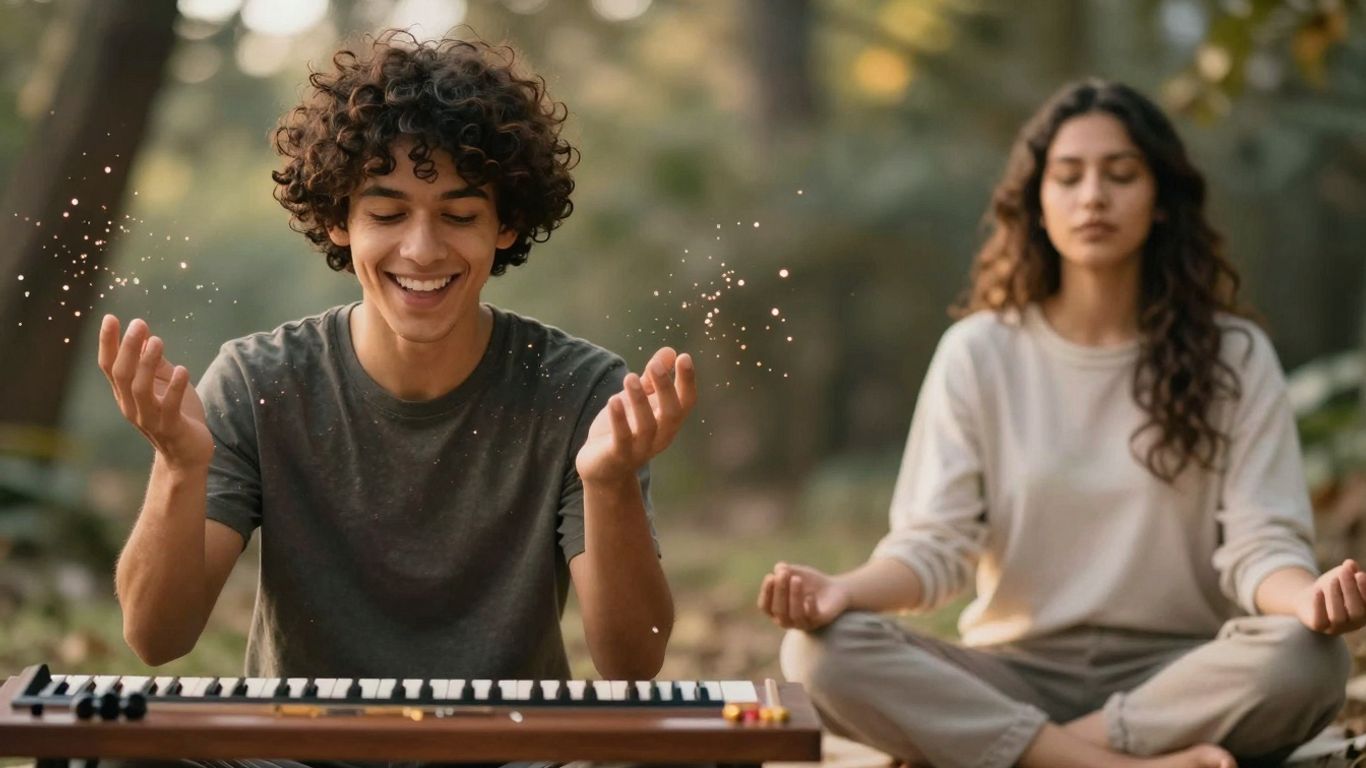
It might seem a bit counterintuitive, right? We’re talking about building dopamine without sugar, focusing on things like novelty and mastery, and then we bring up mindfulness and meditation. These practices aren’t about chasing a quick thrill or a big reward. Instead, they work on a deeper level, helping to reset and recalibrate your brain’s natural reward system.
Rewiring the Reward System Through Present Moment Awareness
Think about it: our brains are often wired to constantly seek the next big thing, the next hit of pleasure. This can leave us feeling drained and unsatisfied, always chasing something that’s just out of reach. Mindfulness and meditation offer a different path. By focusing on the present moment – your breath, the sensations in your body, the sounds around you – you start to train your brain to find contentment in what’s happening now. It’s like teaching your brain to appreciate the quiet hum of everyday life instead of always needing the loud music.
Increasing Baseline Dopamine and Receptor Sensitivity
Unlike activities that give you a quick dopamine spike, regular meditation doesn’t create a rush. Instead, studies suggest it can actually increase your baseline dopamine levels over time. It’s also thought to improve the sensitivity of your dopamine receptors. This means your brain becomes more responsive to the dopamine it naturally produces, making everyday experiences feel more rewarding. You’re not just getting more dopamine; your brain gets better at using what it has.
Finding Satisfaction in Everyday Experiences
This shift can be profound. When your reward system is more balanced, things you might have overlooked before can start to feel genuinely satisfying. A simple conversation can feel more engaging, a meal can taste richer, or a walk outside can feel more invigorating. It’s about cultivating an inner sense of reward rather than constantly relying on external stimuli. This doesn’t mean you stop enjoying exciting activities, but rather that your capacity for joy expands to include the ordinary.
Here’s a simple way to start:
- Find a quiet spot: Doesn’t need to be fancy, just somewhere you won’t be interrupted.
- Set a timer: Start small, maybe 5-10 minutes. Consistency is key.
- Focus on your breath: Just notice the sensation of air entering and leaving your body. When your mind wanders (and it will!), gently guide your attention back to your breath.
The goal isn’t to empty your mind or achieve a perfect state of calm. It’s about practicing the gentle art of returning your attention, again and again. Each return is a small victory, strengthening your ability to be present and find satisfaction in the moment.
The Role of Social Connection and Kindness
Reciprocity and Purpose in Dopamine Release
Humans are wired for connection. It’s not just a nice-to-have; it’s a fundamental need that plays a significant role in our brain’s reward system. When we engage in meaningful social interactions, our brains release a cocktail of neurochemicals, including dopamine, oxytocin, and serotonin. This isn’t about superficial likes on social media or brief pleasantries. True social bonding, the kind that involves mutual understanding and emotional resonance, taps into deeper reward pathways. Think about those deep conversations with a close friend or the shared laughter during a family dinner. These moments aren’t just enjoyable; they’re neurochemical feasts that reinforce our social bonds and contribute to our overall well-being. Our brains evolved to thrive in communities, and genuine connection is a powerful, sustainable source of dopamine.
The Impact of Small Acts of Kindness
Performing acts of kindness, even small ones, can trigger a significant dopamine release. This phenomenon is often referred to as the "helper’s high." When you help someone else, especially when it requires a bit of effort or sacrifice, your brain rewards you. It’s a biological mechanism that encourages prosocial behavior, as cooperation and mutual support were vital for our ancestors’ survival. This means that simple gestures like holding a door open, offering a genuine compliment, or assisting a colleague with a task can provide a tangible dopamine boost. The key is the intention and the act of contributing to another’s well-being. It’s a reminder that making someone else’s day better can, in turn, make yours brighter.
Strengthening Community Through Consistent Engagement
Building and maintaining strong social connections requires consistent effort. Scheduling regular device-free time with loved ones, participating in community events, or volunteering can all contribute to a robust social support system. These consistent engagements provide ongoing opportunities for dopamine release and reinforce the positive feelings associated with belonging and contribution. It’s about showing up, being present, and actively participating in the lives of others. This consistent investment in relationships and community not only benefits our dopamine levels but also cultivates a sense of purpose and belonging, which are vital for long-term fulfillment.
Here’s a simple way to think about integrating these practices:
- Schedule Social Time: Treat meaningful connections like important appointments. Put them on your calendar.
- Practice Random Acts of Kindness: Look for opportunities daily to help someone, no matter how small.
- Engage in Community: Join a club, volunteer, or attend local events to connect with others.
The drive for social connection is deeply ingrained. By prioritizing genuine interactions and acts of kindness, we tap into a powerful and sustainable source of dopamine that nourishes both our individual well-being and the fabric of our communities.
Distinguishing Between Sustainable and ‘Junk’ Dopamine
It’s easy to get caught up in the chase for that next dopamine hit, but not all dopamine sources are created equal. Think of it like the difference between a gourmet meal and a fast-food burger. Both might satisfy a craving in the moment, but one nourishes you long-term, while the other leaves you feeling sluggish and wanting more. We need to learn to tell these apart.
Identifying Sources of Temporary Dopamine Spikes
These are the quick fixes, the things that give you an immediate rush but often lead to a crash. They’re like a sugar high – intense at first, then followed by a slump. You know the ones: endless scrolling through social media feeds, binge-watching your favorite show until 2 AM, or indulging in sugary snacks. These activities trigger a rapid release of dopamine, making your brain light up with reward signals. It feels good, sure, but it’s a fleeting sensation.
- Social Media Scrolling: The endless feed offers constant novelty, but it’s often superficial. Each like or notification provides a tiny dopamine ping.
- Binge-Watching: The narrative drive of a series can keep you hooked, with each episode ending on a cliffhanger designed to make you want the next one immediately.
- Processed Foods & Sugary Treats: These are engineered to be highly palatable, leading to quick dopamine surges.
The Hedonic Treadmill and Downregulated Receptors
This is where things get tricky. When you constantly chase these quick dopamine hits, your brain starts to adapt. It’s like your reward system gets a bit desensitized. The more you engage in these high-stimulation activities, the more your dopamine receptors can become less sensitive. This means you need more of the same stimulus to get the same feeling of satisfaction. It’s a cycle that can leave you feeling perpetually unsatisfied, always needing the next bigger, better, or more intense hit. This is often called the hedonic treadmill – you’re running faster and faster but not really getting anywhere more rewarding.
Over time, relying on these "junk dopamine" sources can actually change how your brain functions. It’s not just about needing more; it’s about your brain’s capacity to feel pleasure from less intense, more natural sources diminishing. This makes it harder to enjoy simpler things.
Choosing Activities That Strengthen Your Reward System
On the flip side, there are activities that provide a more sustained, healthy dopamine response. These are the things that build you up rather than burn you out. They might not always give you that immediate, intense rush, but they contribute to a sense of accomplishment, growth, and well-being over time. These are the activities that help recalibrate your reward system, making it more resilient and responsive to genuine sources of satisfaction.
Here’s how to start shifting your focus:
- Engage in Skill-Building: Learning a new instrument, practicing a language, or mastering a craft. These activities involve effort and focus, leading to a sense of achievement.
- Physical Activity: Exercise, from a brisk walk to a challenging workout, releases endorphins and dopamine, improving mood and energy levels.
- Meaningful Social Connection: Deep conversations, spending quality time with loved ones, or contributing to your community. These interactions provide a sense of belonging and purpose.
- Creative Pursuits: Writing, painting, coding, or any form of creative expression can be incredibly rewarding, tapping into intrinsic motivation.
The key is to consciously choose activities that offer a sense of purpose and growth, rather than just immediate gratification. This shift helps build a more robust and balanced dopamine system for lasting fulfillment.
Harnessing Dopamine Alternatives for a Balanced Life
Shifting from External Validation to Intrinsic Motivation
It’s easy to get caught up in chasing external rewards – the likes, the praise, the promotions. These can give us a quick dopamine hit, sure, but they often leave us feeling empty in the long run. The real trick is learning to find that satisfaction from within. Think about it: when you’re truly absorbed in something you love, like playing an instrument or solving a tricky puzzle, the joy comes from the activity itself, not necessarily from someone else telling you you’re good at it. This internal drive, this intrinsic motivation, is where sustainable fulfillment lives. It’s about doing things because they genuinely interest you and make you feel good about your own effort and progress.
Building Momentum Through Sustainable Dopamine Activities
So, how do we actually build this internal drive? It’s about choosing activities that naturally give us that dopamine boost without the crash. Instead of relying on quick fixes, we can focus on things that engage our brains in a more meaningful way. This could be anything from learning a new skill, like coding or pottery, to getting lost in a good book, or even just having a deep conversation with a friend. These activities don’t just give you a temporary high; they build on themselves. Each small success, each bit of knowledge gained, adds up, creating a positive cycle that keeps you motivated and moving forward. It’s like building a strong foundation for a house, rather than just slapping on some paint.
Here are a few ideas to get you started:
- Engage in creative pursuits: Painting, writing, composing music, or even cooking a new recipe can be incredibly rewarding.
- Pursue mastery in a skill: Whether it’s a sport, a craft, or an academic subject, the process of getting better provides consistent dopamine.
- Connect with nature: Spending time outdoors, hiking, gardening, or simply observing the world around you can be surprisingly satisfying.
- Practice mindfulness and gratitude: Regularly taking stock of what you appreciate and being present in the moment can recalibrate your reward system.
Reclaiming Your Dopamine System for Lasting Fulfillment
Ultimately, this is about taking back control. Our dopamine systems are powerful tools, designed to guide us toward things that are good for us. When we flood them with artificial, high-intensity stimuli, we can actually dull their sensitivity. It’s like turning the volume up so high on a speaker that you can’t hear the subtle nuances anymore. By consciously choosing activities that provide a more balanced, natural dopamine release – activities that involve effort, learning, and genuine connection – we retrain our brains. We start to find satisfaction in the process, not just the outcome. This shift is key to moving away from a cycle of seeking constant external validation and towards a more stable, deeply felt sense of accomplishment and happiness. It’s about building a life that feels good, not just in the moment, but for the long haul.
The goal isn’t to eliminate dopamine, but to redirect its flow towards activities that genuinely enrich our lives and build lasting capabilities. By understanding how our reward system works, we can make intentional choices that lead to sustained well-being and a greater sense of purpose.
Feeling overwhelmed by the constant chase for quick happiness fixes? Our section, "Harnessing Dopamine Alternatives for a Balanced Life," explores healthier ways to find joy and satisfaction. Discover simple, everyday strategies that can lead to lasting contentment without the crash. Ready to build a more stable and fulfilling life? Visit our website to learn more and start your journey today!
Moving Forward: Your Dopamine Toolkit
So, we’ve talked about how our brains crave that dopamine hit, but how the usual suspects – like endless scrolling or sugary snacks – leave us feeling empty. The good news is, there’s a better way. By focusing on things like learning something new, getting creative, or even just celebrating small wins, we can build that feel-good chemical without the crash. It’s not about deprivation; it’s about smart choices. Think of it as upgrading your reward system. Start small, be consistent, and notice how these healthier habits can lead to a more balanced and fulfilling life. You’ve got the tools now; it’s time to put them to use and see what happens.
Frequently Asked Questions
What exactly is dopamine, and why should I care about it?
Dopamine is like your brain’s motivator. It’s not just about feeling good; it’s what makes you want to do things, learn new stuff, and go after your goals. When you understand how it works, you can learn to get those good feelings from things that are actually good for you, instead of just quick fixes.
How can trying new things help my dopamine levels?
Your brain loves surprises! When you experience something new, like visiting a new place or trying a new hobby, your brain releases dopamine. It’s like a little reward for exploring and learning. Even small changes, like taking a different route to school, can add a spark of novelty.
What’s the deal with ‘mastery’ and dopamine?
Mastery is all about getting really good at something. When you practice and improve, especially when you’re challenged but not totally overwhelmed, your brain rewards you with dopamine. It’s that awesome feeling when you finally nail a difficult skill or solve a tough problem.
Why are ‘micro-celebrations’ important for motivation?
Think of micro-celebrations as high-fives for yourself. When you achieve a small goal or make progress on a bigger one, taking a moment to acknowledge it gives you a dopamine boost. It’s like collecting little wins that build up and keep you going, making you feel good about your progress.
Can eating certain foods really affect my dopamine?
Yes, absolutely! Your brain needs certain building blocks, like those found in protein-rich foods, to make dopamine. Eating healthy foods and avoiding too much processed stuff helps your brain work better and keeps your dopamine levels more stable, preventing those energy crashes.
How does mindfulness or meditation help with dopamine?
Mindfulness is like training your brain to appreciate the present. Instead of always chasing the next big thing, it helps you find satisfaction in everyday moments. Regular practice can actually make your brain more sensitive to dopamine, so normal activities feel more rewarding.
Is there a difference between ‘good’ dopamine and ‘bad’ dopamine?
Definitely. ‘Junk dopamine’ comes from things like endless scrolling or sugary snacks – they give you a quick rush but leave you feeling drained and wanting more. ‘Sustainable dopamine’ comes from activities like learning, creating, or exercising. These build you up and create lasting satisfaction without the crash.
How can I use this information to feel more motivated overall?
The key is to focus on activities that provide lasting rewards. Try mixing novelty, like exploring a new park, with mastery, like practicing a skill. Sprinkle in small celebrations for your wins, eat well, and be mindful. By choosing these healthier dopamine sources, you build momentum and find more fulfillment in your daily life.