
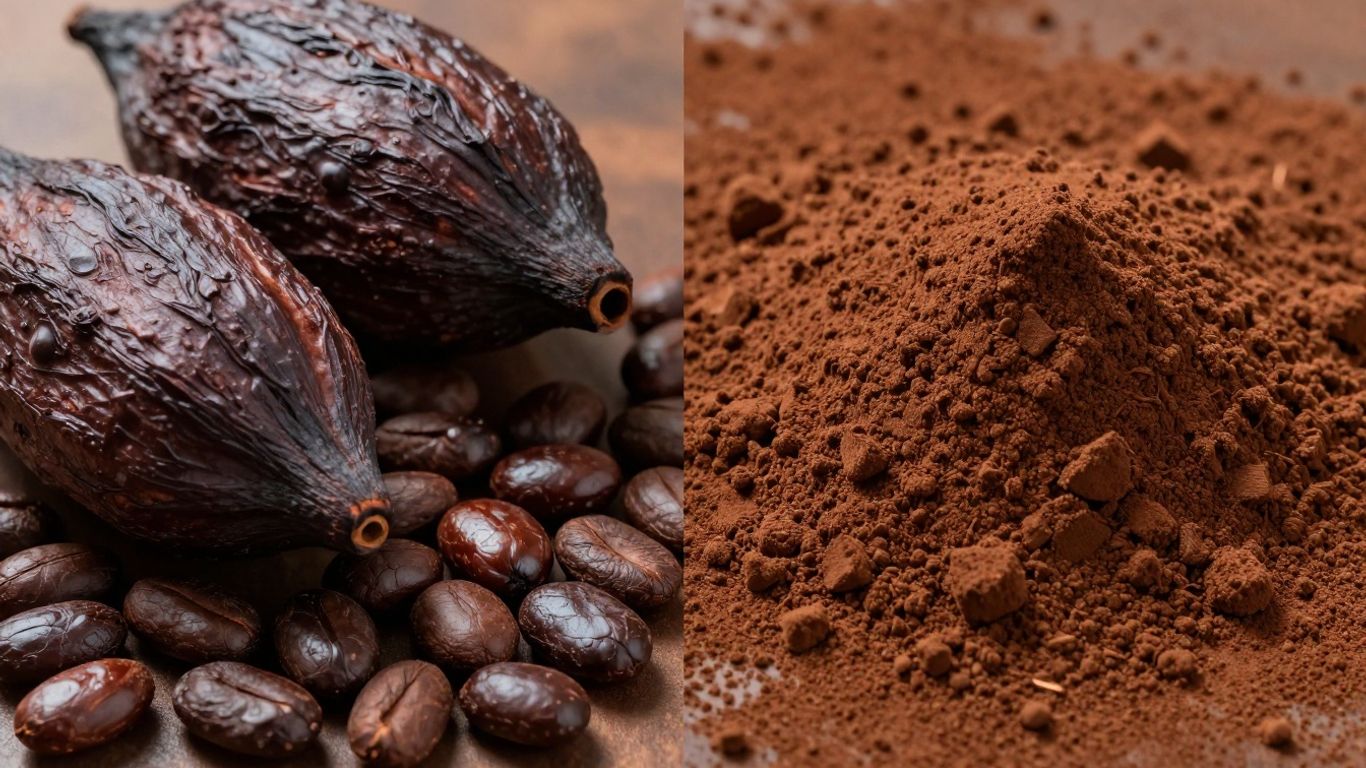
Cacao and cocoa come from the same bean. “Cacao” usually refers to less-processed products made at lower temperatures, while “cocoa” is typically roasted and sometimes alkalized (Dutch-processed). The step that most affects polyphenols is alkalization: natural, non-alkalized cocoa keeps far more flavanols than Dutch-processed cocoa, and for everyday use it is often just as good a choice as pricier “raw cacao.”
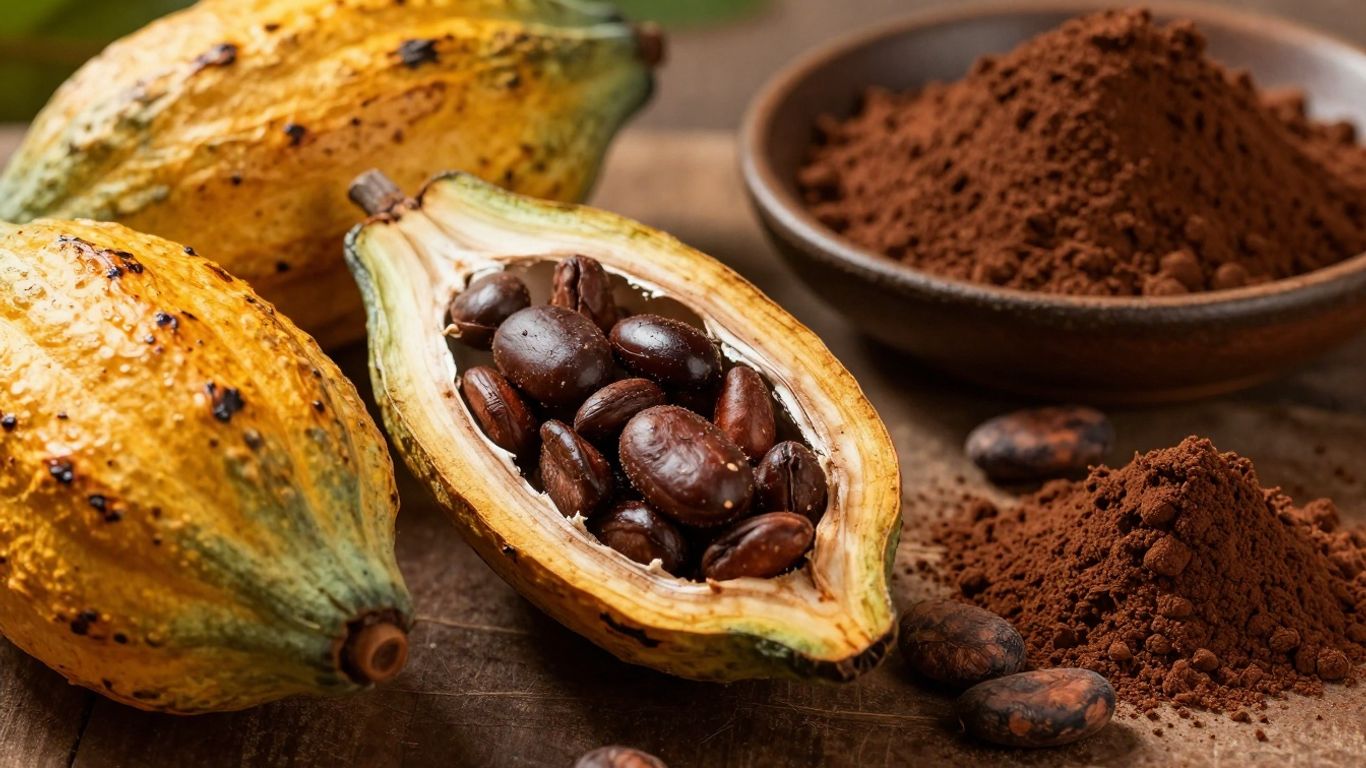
From pod to powder
Cacao beans grow in pods on the cacao tree. After harvest, the beans are fermented and dried. From there, processing splits:
- Cacao powder and nibs: beans are usually processed at lower temperatures, then crushed (nibs) or pressed to remove most of the fat and milled (powder).
- Natural cocoa powder: beans are roasted, then pressed and milled. It’s acidic and has a sharp, fruity chocolate flavour.
- Dutch-processed (alkalized) cocoa: cocoa treated with an alkaline solution to reduce acidity. It’s darker, smoother and milder.
Label terms aren’t used consistently, so the words “raw” or “cacao” don’t guarantee a particular process. The more reliable clue is whether the ingredient list says processed with alkali or Dutch-processed.
Polyphenols: where the real difference is
Cocoa is rich in flavanols, a type of polyphenol that is the main focus of cocoa health research. A survey of commercial cocoa powders found that natural, non-alkalized powders had the highest total polyphenols and flavanols, and that flavanol content dropped steadily as alkalization increased. In other words, the light-versus-heavy Dutch processing matters more than the name on the bag.
What do flavanols do? Harvard Health summarized a review of 19 clinical trials in which people consuming 200 to 600 mg of cocoa flavanols daily (from cocoa drinks, chocolate or supplements) had favourable changes in blood lipids and lower inflammation markers. Whether that translates into fewer heart attacks and strokes was the question the large COSMOS trial was designed to answer. The practical point: the evidence is about flavanols, not about chocolate bars, which also bring sugar, fat and calories.
Flavour and how to use each
| Product | Flavour | Best uses |
|---|---|---|
| Cacao powder | Intense, bitter, fruity | Smoothies, energy bites, oatmeal, no-bake recipes |
| Cacao nibs | Crunchy, bitter, nutty | Sprinkled on yogurt, oatmeal, trail mix or muffins |
| Natural cocoa | Sharp, classic chocolate | Baking with baking soda, hot chocolate, chili and mole-style sauces |
| Dutch-processed cocoa | Smooth, mellow, dark | Baking with baking powder, rich-looking cakes and cookies |
Baking swaps
Natural cocoa and cacao powder are acidic, so they react with baking soda to help baked goods rise. Dutch-processed cocoa isn’t acidic, so recipes using it usually rely on baking powder. If you swap one for the other in a recipe that depends on the leavening, the texture and colour can change. In recipes without much leavening (brownies, frosting, hot chocolate), swapping is usually fine. Cacao powder is more bitter, so start with a little less and taste.
Practical, lower-sugar ways to use it
Simple hot chocolate
- Whisk 1–2 tablespoons of natural cocoa or cacao powder with a splash of hot milk (dairy or fortified soy) to make a smooth paste.
- Add the rest of a mug of hot milk.
- Sweeten lightly with a teaspoon of honey or maple syrup, or a few dates blended in.
- Add a pinch of cinnamon or a drop of vanilla.
Because the cocoa provides strong flavour, you can usually use much less sweetener than in a packaged mix.
Other easy ideas
- Stir a spoonful into oatmeal with sliced banana.
- Blend into a smoothie with frozen banana, milk and peanut butter.
- Mix into plain Greek yogurt with berries and a drizzle of honey.
- Add to chili or a bean stew for depth.
- Roll oats, nut butter, dates and cacao into energy bites.
For more ideas, see our guide to low-sugar dessert engineering, and post-dinner sweets that won’t spike sleep.
Savoury uses
Cocoa isn’t only for sweets. A teaspoon or two of unsweetened cocoa adds depth to:
- Black bean or lentil chili
- Mole-style sauces with tomatoes, chili, cinnamon and a little peanut butter
- Spice rubs for roasted chicken or sweet potatoes (with chili powder, cumin and smoked paprika)
- Barbecue-style sauces made with tomato, vinegar and onion
Storing cocoa and cacao
Keep powders and nibs in an airtight container in a cool, dark cupboard. Humidity makes powder clump, and light and heat dull the flavour over time. Nibs contain more fat than powder, so buy them in amounts you’ll use within a few months.
Things to know
Stimulants
Cocoa contains caffeine and a related stimulant, theobromine. Health Canada lists unsweetened baking chocolate at 25 to 58 mg of caffeine per 28 g, compared with about 8 mg in a cup of chocolate milk. A tablespoon or two of cocoa in a drink is modest, but if you’re sensitive to caffeine, have cocoa earlier in the day.
Iron absorption
Cocoa’s polyphenols can reduce iron absorption from a meal, as tea and coffee do. If iron is a concern, enjoy cocoa drinks between meals rather than with iron-rich foods.
Oxalates
Cocoa is relatively high in oxalate. If you’ve had kidney stones or been told to limit oxalate, ask your healthcare provider how much is right for you.
Sugar and calories
Products labelled “cacao” can still be sweetened. Check the ingredient list and Nutrition Facts table, especially on drink mixes, bars and “superfood” blends.
Choosing a product
- For the most flavanols: choose natural (non-alkalized) cocoa or cacao powder.
- For classic, mellow baking: Dutch-processed cocoa, knowing it has fewer flavanols.
- For value: natural cocoa powder offers the flavanol advantage of non-alkalized processing at a lower price than most cacao powders.
- Check: the ingredient list should be just cocoa or cacao; avoid added sugar in plain powders.
When to check with a professional
- You have a history of kidney stones or have been told to limit oxalate.
- You’re sensitive to caffeine, pregnant, or have heart rhythm concerns.
- You’re considering cocoa flavanol supplements, especially if you take medications.
Takeaways
- Cacao and cocoa come from the same bean; processing makes the difference.
- Alkalization (Dutch processing) reduces flavanols. Look for “natural” or non-alkalized.
- Natural cocoa powder is an affordable, flavanol-rich everyday choice.
- Match cocoa type to leavening in baking: natural with baking soda, Dutch with baking powder.
- Use cocoa to add flavour with little sugar: hot chocolate, oatmeal, smoothies, yogurt.
FAQ
Is raw cacao healthier than cocoa?
Non-alkalized products keep more flavanols, but natural cocoa powder is also non-alkalized. The bigger difference is between natural and Dutch-processed, not between “cacao” and “cocoa.”
Does dark chocolate count?
Dark chocolate contains cocoa solids, but also sugar and fat. Enjoy it as a treat in small amounts rather than as a health food.
Can kids have cocoa drinks?
A homemade hot chocolate with milk and a little sweetener is a common treat for children. Because cocoa contains some caffeine, keep portions small and serve it earlier in the day.