
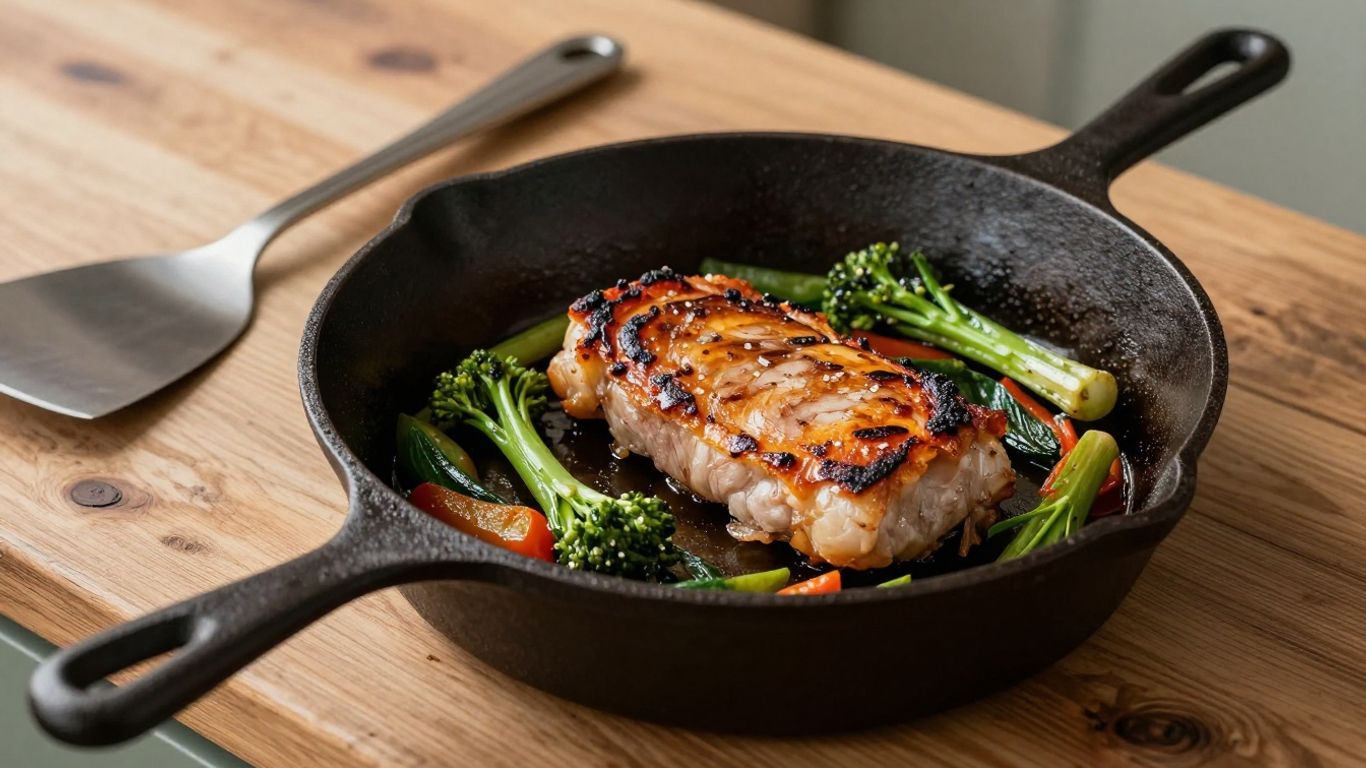
Caring for cast iron comes down to three things: keep a thin layer of seasoning on it, clean it gently and dry it completely, and rub in a little oil before you put it away. Follow that routine and a cast-iron skillet becomes a naturally slick, nearly indestructible pan that is ideal for searing, roasting vegetables and cooking with less oil.
Here is how to season, clean, restore and cook with cast iron, and a few myths you can stop worrying about.
What seasoning actually is
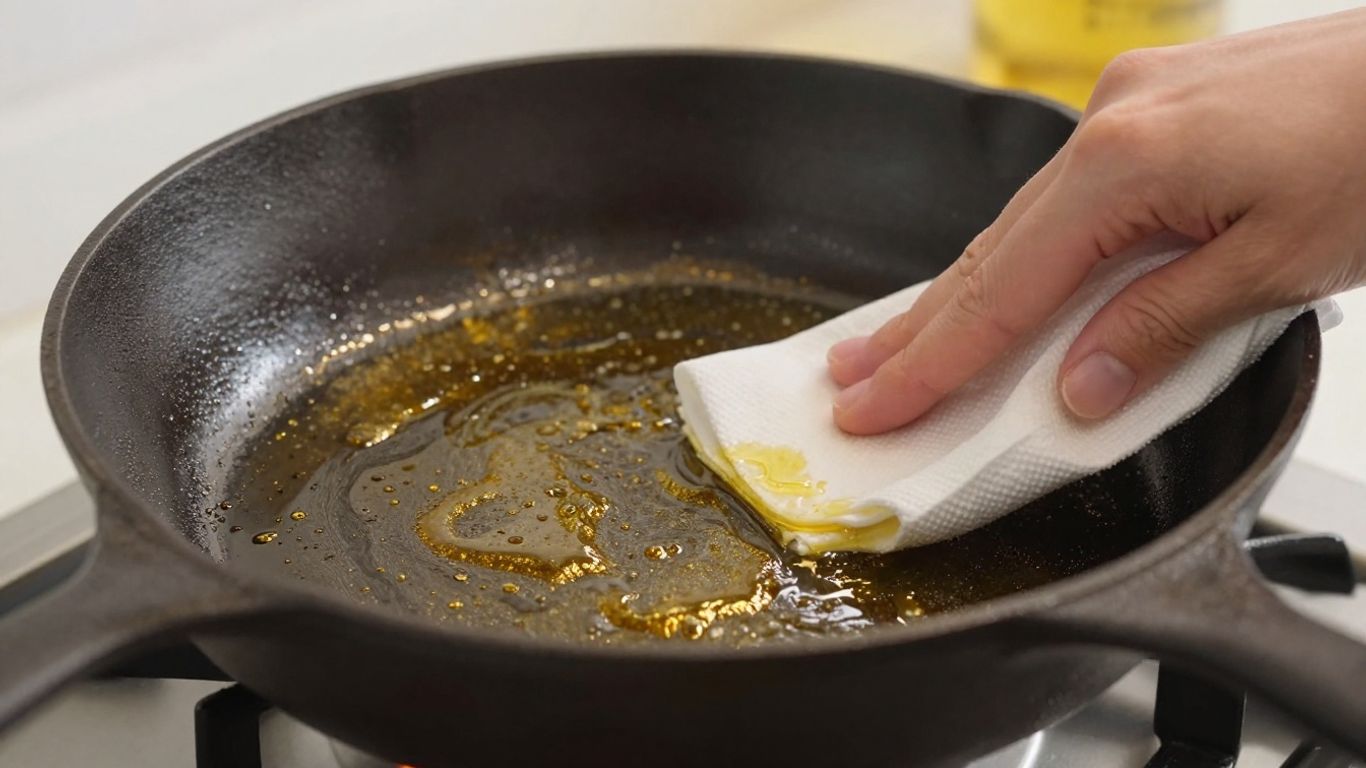
Seasoning is not a flavour. It is a thin coating of oil that has been heated past its smoke point until it bonds to the iron and hardens into a smooth, dark layer (a process called polymerization). Each time you cook with a little fat or re-oil the pan, that layer builds. Good seasoning protects the iron from rust and makes food release easily.
Choosing an oil
Use a neutral oil that you have on hand, such as canola, vegetable, sunflower or shortening. The most important factor is not the brand of oil but applying it in very thin coats. Thick coats turn sticky.
How to season a skillet, step by step
Use this for a new bare pan, a pan you have stripped, or one that looks dull and patchy.
- Wash and dry. Scrub with warm soapy water, rinse and dry thoroughly. Set it on a low burner for a few minutes to drive off any remaining moisture.
- Oil very lightly. Rub a small amount of oil over every surface, inside and out, including the handle.
- Wipe it off. With a clean cloth or paper towel, wipe away as much oil as you can, as if you made a mistake. The pan should look almost dry.
- Bake upside down. Place it upside down in an oven at about 230 to 260°C (450 to 500°F) for one hour, with a sheet of foil or a tray on the rack below to catch drips.
- Cool in the oven. Turn off the heat and let the pan cool inside.
- Repeat. Two to four rounds build a durable base layer.
Most new cast iron comes pre-seasoned, so you can usually start cooking right away and let regular use build the surface.
Everyday cleaning
- Clean while warm. Rinse with hot water and scrub with a brush or non-scratch scraper.
- A little soap is fine. Modern dish soap will not strip polymerized seasoning. Avoid soaking the pan or leaving it in the sink.
- Dry immediately and completely. Towel dry, then warm on the stove for a minute or two.
- Oil lightly. While it is still warm, rub in a few drops of oil and wipe off the excess.
Stuck-on food
- Coarse salt scrub: sprinkle kosher salt into the warm pan with a little oil and scrub with a folded paper towel, then rinse.
- Deglaze with water or broth: pour a little water into the hot pan, let it simmer for a minute and scrape with a wooden spatula.
- Chain-mail scrubber: removes stubborn bits without harming good seasoning.
What to avoid
- The dishwasher
- Soaking in water
- Steel wool and harsh abrasive pads for routine cleaning (save them for rust removal)
- Putting the pan away wet
Fixing rust, stickiness and dull spots
| Problem | Cause | Fix |
|---|---|---|
| Light surface rust | Left wet or stored in humidity | Scrub rust off with steel wool, wash, dry on the stove, then oil and bake once or twice |
| Sticky or tacky surface | Too much oil, not heated long enough | Bake upside down at high heat for an hour; next time wipe off more oil |
| Food sticking | Thin seasoning or pan not preheated | Preheat properly, cook with a little fat, and do a seasoning round in the oven |
| Flaking black bits | Thick, uneven old seasoning | Scrub off the loose layer and re-season in thin coats |
| Heavy rust or crusted buildup | Long neglect | Strip back to bare iron (scrubbing, or an oven self-clean cycle used with care), then season from scratch |
Cooking with cast iron
Preheat patiently
Cast iron heats slowly and unevenly at first. Warm it over medium heat for five to ten minutes before adding food. A drop of water should sizzle and skitter across the surface.
Great uses for healthy cooking
- Searing chicken, fish or tofu with very little oil
- Roasting vegetables in the oven
- Cooking eggs, pancakes and frittatas in a well-seasoned pan
- Charring peppers, corn and onions for tacos and bowls
- Baking cornbread or skillet fruit crisps
Acidic foods
Tomato sauce, citrus and vinegar can wear down seasoning and pick up a metallic taste if simmered for a long time. A quick tomato sauté or a squeeze of lemon at the end is fine in a well-seasoned pan. For long-simmering tomato dishes, use stainless steel or enamelled cast iron.
Utensils
Metal spatulas are fine on well-seasoned cast iron and help scrape the surface smooth. Wooden and silicone tools also work well.
Does cooking in cast iron add iron to food?
It can. A study that cooked 20 foods in iron and non-iron utensils found that 90% of the foods contained significantly more iron when cooked in iron, with acidity, moisture and cooking time all affecting how much. A later systematic review found that cooking in iron pots raised the iron content of food, though effects on blood hemoglobin varied between studies, with several showing only a minor increase.
For most people this is a small bonus, not a treatment. Iron cookware is not a substitute for medical care if you have low iron.
When to check with a professional
If you have been diagnosed with iron deficiency, talk with your doctor about treatment rather than relying on cookware. If you have haemochromatosis, an inherited condition in which iron slowly builds up in the body, or another condition that affects iron levels, ask your healthcare provider whether cooking often in cast iron is a concern for you.
Storage
- Store in a dry cupboard, not in the oven drawer where moisture can collect.
- If you stack pans, place a paper towel or pan protector between them to protect the surface and absorb moisture.
- Leave lids off or slightly ajar so air can circulate.
Common myths
- “Never use soap.” A little dish soap is fine. Soaking is the real problem.
- “Cast iron heats evenly.” It holds heat well but heats unevenly, which is why preheating matters.
- “A rusty pan is ruined.” Almost any rusty pan can be scrubbed and re-seasoned.
- “It needs special oil.” Thin coats of an ordinary neutral oil work well.
For the rest of a fast, practical kitchen setup, see our guide to kitchen equipment basics.
Key takeaways
- Season with very thin coats of oil baked at high heat.
- Clean while warm, use a little soap if you like, never soak, and dry completely.
- Rub in a few drops of oil after each wash.
- Preheat before cooking and save long tomato simmers for other pans.
- Rust and stickiness are fixable with a scrub and a re-season.