
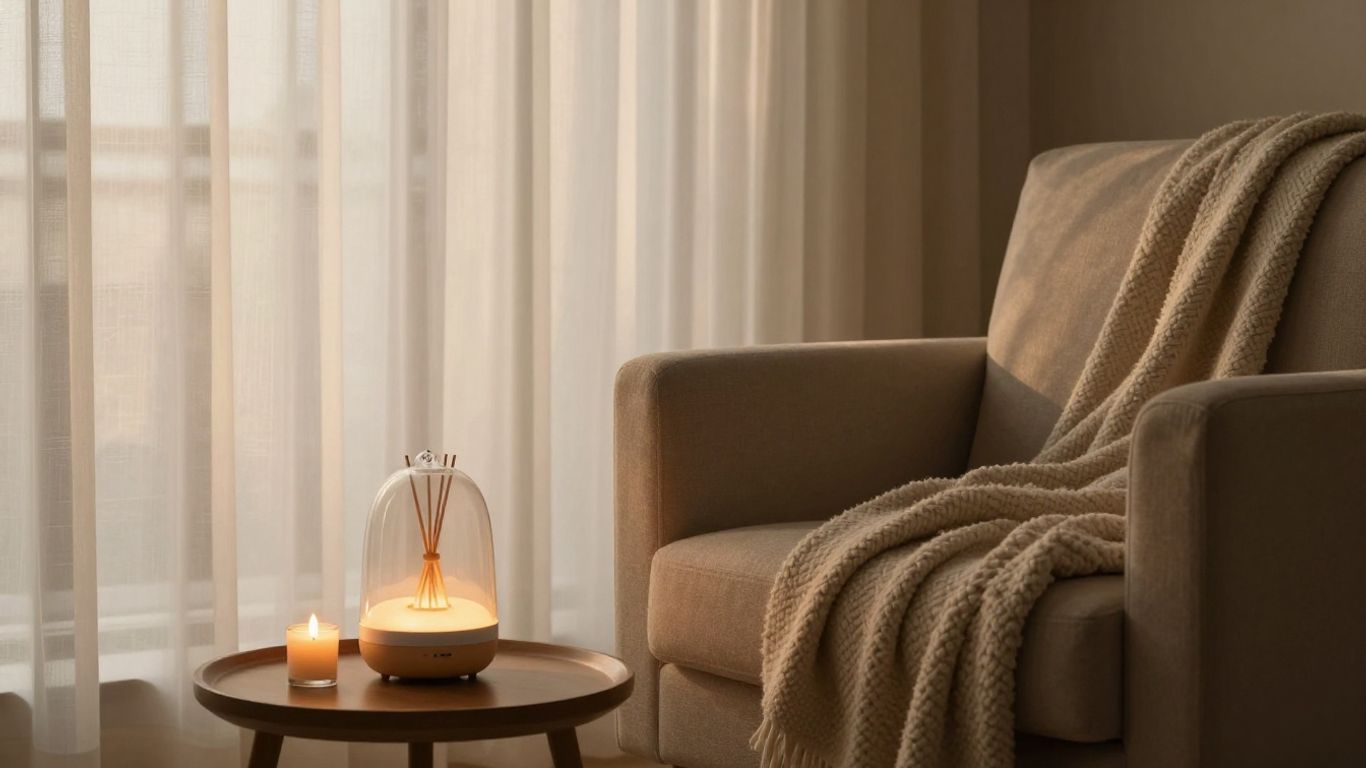
Safety signals are cues in your environment, such as a familiar scent, a soft sound or warm low light, that your body learns to associate with rest. Setting a few of them up at home gives you a quick, non-food way to calm down after a stressful day, which can make evening stress eating less tempting. This guide covers simple changes to what you see, hear, smell and touch, plus a calm corner you can set up this week.
How environmental cues help you settle
Your nervous system is always scanning for signs of threat or safety. Noise, clutter, harsh light and constant notifications keep it on alert. Familiar, gentle cues signal that it’s safe to slow down.
Slowing down has a physical side. The U.S. National Center for Complementary and Integrative Health describes the relaxation response as slower breathing, lower blood pressure and a reduced heart rate, the opposite of the stress response. Safety signals don’t create that response on their own, but they make it easier to start a calming habit like slow breathing, stretching or reading.
The key is repetition. A scent or song becomes a signal because you pair it with rest over and over. Use the same few cues each time you wind down.
Sights: light, colour and clutter
Lighting
- Use warm, dimmable lamps in the evening rather than bright overhead lights.
- Turn lights down about an hour before bed as a cue that the day is ending.
- Avoid flickering or very bright light in your calm spaces.
Light is also tied to sleep. Mayo Clinic advises avoiding prolonged screen use just before bedtime and notes that calming activities before bed may promote better sleep.
Colour and objects
- Soft, muted colours (warm neutrals, gentle greens and blues) tend to feel restful.
- Keep one or two meaningful objects in view: a family photo, a plant, a favourite picture or a meaningful quote.
- A view of greenery, even a single houseplant, gives your eyes somewhere gentle to rest.
Visual clutter
Piles of mail, laundry and dishes are constant reminders of unfinished tasks. You don’t need a perfectly tidy home. Choose one surface, such as the coffee table or nightstand, and keep it clear. A ten-minute reset each evening can help the whole room feel calmer.
Sounds: reduce the jarring, add the gentle
- Cut sudden noise: turn off notification sounds after a set hour, use felt pads on chair legs, close a door to a noisy room.
- Add a steady sound: a fan, white noise, soft instrumental music or nature recordings can mask unpredictable sounds.
- Pick a “wind-down” playlist: use the same few songs each evening so they become a cue.
- Create quiet: sometimes the best sound signal is silence for 10 minutes.
Think about how home sounds when you walk in the door. If the TV is blaring, try starting with calm music instead and see how it changes the evening.
Scents: subtle and familiar
Scents can become strong cues because smell is closely tied to memory. Keep them light; strong fragrances can cause headaches or irritate breathing for some people.
- Fresh options: open a window, hang laundry to dry, keep fresh herbs or citrus peel in a bowl.
- Simmer water with cinnamon sticks, orange slices or cloves on the stove.
- Use a diffuser with a mild scent you like, such as lavender or citrus, for short periods.
It’s worth being realistic about aromatherapy. NCCIH says it is unclear whether lavender aromatherapy helps anxiety, stress or sleep, though some people report it improves their quality of life. Treat scent as a personal cue that helps you relax, not as a treatment.
Safety notes: never leave candles burning unattended, keep essential oils away from children and pets, and stop using any scent that causes symptoms.
Touch: comfort you can feel
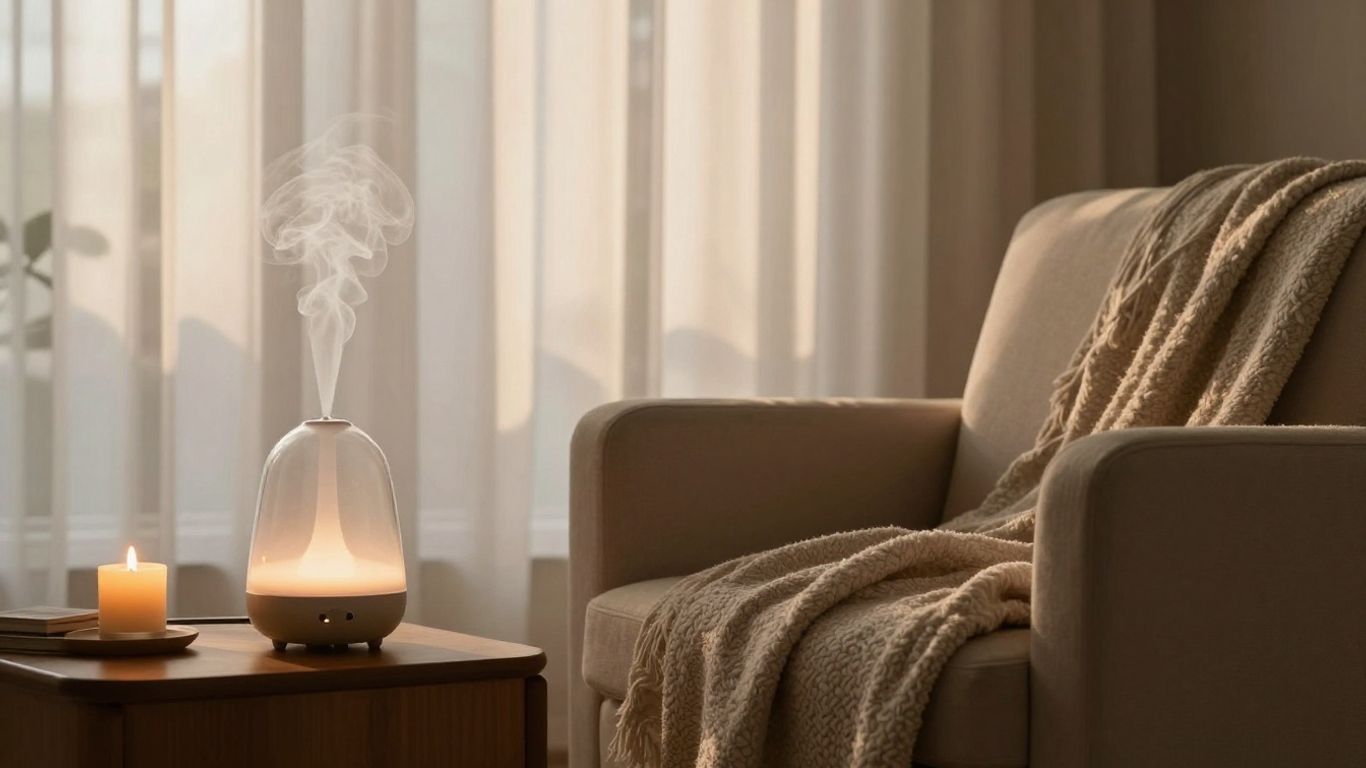
- A soft throw blanket on the couch or a chair.
- Natural fibres like cotton or wool for cushions and bedding.
- A rug or slippers for cold floors.
- A heavier blanket if you find gentle pressure calming.
- Something to hold: a smooth stone, a warm mug of herbal tea, a stress ball.
Set up a calm corner
A calm corner is one small spot set aside for winding down. It doesn’t need a whole room.
- Choose the spot: a chair by a window, one end of the couch, a corner of the bedroom.
- Add comfort: a cushion and a blanket.
- Add one cue for each sense: a lamp (sight), a playlist or small speaker (sound), a mild scent (smell), a soft texture (touch).
- Add a calm activity: a book, journal, puzzle, colouring pages or a printed breathing exercise.
- Keep it screen-free as much as possible.
- Use it at the same time daily, for example right after dinner or when you get home.
Use your safety signals instead of snacking
Evening stress often shows up as a trip to the pantry. When you notice that pull, try this sequence first:
- Dim the lights and start your wind-down playlist.
- Sit in your calm corner with a blanket.
- Breathe slowly for two minutes: in for 4, out for 6.
- Check in: “Am I hungry, or am I tired and wound up?”
If you’re hungry, eat something satisfying. If not, stay with the calm activity for 10 more minutes. Pair this with an evening shutdown ritual to make the transition smoother, and see rumination-proof evenings if a busy mind is the main problem. For a daytime reset, try a midday energy ritual.
Check in every month
Cues lose their effect if they become background noise or the season changes. Once a month, ask:
- Which cues am I still using? Which have I stopped noticing?
- Is anything causing tension, like a buzzing light, a draft or clutter that’s crept back?
- Does the season call for changes (lighter blankets in summer, more lamps in winter)?
- How does my body feel in this space: relaxed shoulders, or headaches and restlessness?
When to check with a professional
A calming home helps with everyday stress, but it isn’t a treatment for anxiety disorders, trauma, depression or insomnia. If stress or anxiety is affecting your sleep, eating or daily life, talk to your doctor or a mental health professional. If you have asthma or allergies, ask your doctor before using scented products.
Key takeaways
- Safety signals work through repetition: use the same cues each time you wind down.
- Dim warm lights in the evening and clear one surface.
- Cut sudden noise and add a steady, gentle sound.
- Keep scents light and familiar; treat them as cues, not treatments.
- Set up a small calm corner with one cue for each sense.
- Try your calm routine before reaching for an evening snack.