
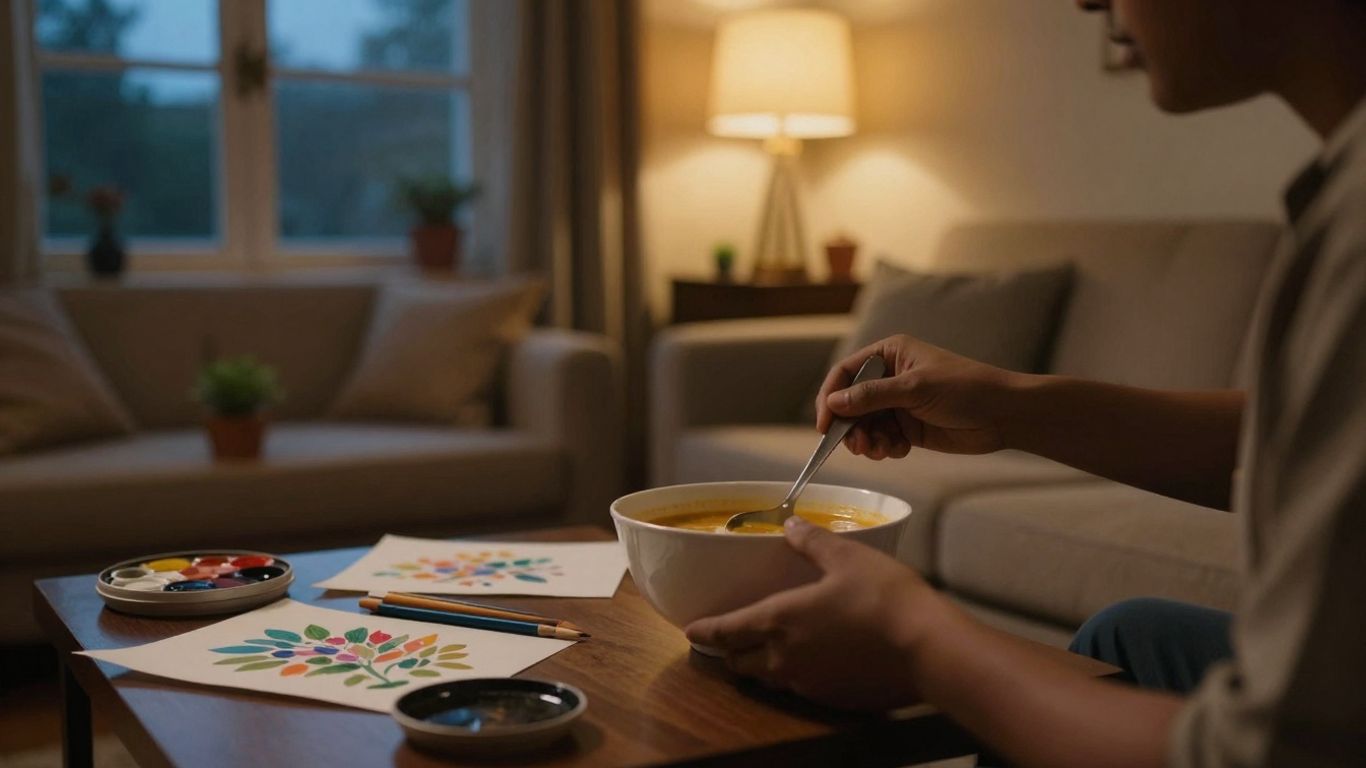
Evenings can sometimes feel a bit quiet, and that’s okay. Instead of letting evening loneliness get you down, think of it as a chance to connect with yourself and others in new ways. This plan is all about making your evenings fulfilling, whether that means diving into a creative project, enjoying some calming food, or simply finding peace in your own company. Let’s turn those quiet hours into something special.
Key Takeaways
- Build connections by sharing meals and conversations, or by using digital tools to stay in touch with people far away. Being present for others makes a difference.
- Get creative to express yourself and have fun. Whether it’s art or hands-on projects, creativity is a great way to handle feelings and enjoy your time.
- Eat well to feel good. Simple, comforting recipes and mindful eating can help you relax, and staying hydrated is important for overall well-being.
- Set up routines that help you relax before bed. Making your space calm and having a wind-down plan can lead to better sleep.
- Embrace time alone as a chance to grow. Discovering new things on your own and understanding yourself better can boost your confidence.
Cultivating Connection During Evening Loneliness
Evenings can sometimes feel quiet, and that’s when the desire for connection might feel strongest. It’s easy to feel a bit adrift when the day winds down, but this is also a prime time to intentionally build bridges with others. Think about it: the hustle of the day is over, leaving more space for genuine interaction. Making time for shared meals, even simple ones, can transform a solitary evening into a shared experience.
Shared Meals and Meaningful Conversations
Sharing food is a timeless way to connect. It doesn’t have to be a grand affair. A simple dinner, perhaps with a neighbor or a friend you haven’t spoken to in a while, can open doors to deeper conversations. When you’re both focused on the food and the act of eating, it often loosens tongues and makes it easier to talk about what’s really on your mind. Consider these ideas:
- Theme Dinners: Pick a cuisine (Italian, Mexican, Thai) and cook a simple dish together or separately and share photos and recipes.
- Potluck by Proxy: If you can’t be together physically, coordinate a meal. You both make the same dish and then share your experiences and photos.
- Dessert Swap: If a full meal feels like too much, arrange to share a dessert. It’s a sweet way to end the day with someone.
The act of preparing and sharing food, even from a distance, creates a shared ritual that can combat feelings of isolation. It’s about the intention to connect, not necessarily the perfect execution.
Bridging Distance Through Digital Connection
Technology, often blamed for isolation, can actually be a powerful tool for connection when used mindfully. Video calls allow for face-to-face interaction, letting you see expressions and body language, which are vital parts of communication. Think beyond just quick texts.
- Virtual Coffee Dates: Schedule a 15-30 minute video call just to chat, like you would over coffee.
- Watch Parties: Use streaming service features or apps to watch a movie or show simultaneously with friends or family, chatting in real-time.
- Online Games: Many games offer cooperative or social modes that can be played with others remotely.
The Power of Presence in Relationships
Sometimes, connection isn’t about grand gestures or constant communication, but about simply being present. This means being fully engaged when you are interacting, whether in person or virtually. Put away distractions, listen actively, and show genuine interest in what the other person is saying. Even a short, focused conversation where you feel truly heard can make a significant difference in combating loneliness. It’s about quality over quantity, making each interaction count.
Igniting Creativity to Combat Evening Loneliness

When the evening stretches out and you find yourself alone, it’s easy to fall into a rut. But this quiet time can actually be a fantastic opportunity to tap into your creative side. Engaging in creative activities isn’t just about making something pretty or interesting; it’s a powerful way to process feelings, explore new ideas, and simply have some fun.
Artistic Expression as Emotional Outlet
Sometimes, the best way to deal with feelings you can’t quite put into words is to let them out through art. This doesn’t mean you need to be a professional painter or sculptor. Grab some colored pencils and a notebook, try a digital drawing app on your tablet, or even just doodle while listening to music. The act of creating can be incredibly therapeutic. It allows you to externalize your inner world, giving you a clearer perspective on your emotions. Think of it as a visual journal, but way more colorful.
Engaging in Hands-On Creative Projects
Getting your hands busy with a project can be incredibly grounding. This could be anything from knitting a scarf, building a small model, trying out a new recipe, or even rearranging your living space. These activities require focus and a different kind of problem-solving than our daily tasks. They offer a sense of accomplishment as you see a project take shape. It’s a tangible way to spend your time that can leave you feeling productive and satisfied.
Here are a few ideas to get you started:
- Clay Modeling: Simple air-dry clay can be molded into small figures or decorative items.
- Collage Making: Cut out images and text from old magazines to create a unique piece of art.
- DIY Crafts: Look up simple tutorials for making candles, bath bombs, or personalized stationery.
- Gardening: Even a small indoor herb garden can be a rewarding creative project.
The Joy of Spontaneous Creative Play
Don’t feel pressured to create a masterpiece every time. Sometimes, the most enjoyable creative moments come from simply playing around. Put on some music and dance like nobody’s watching, try writing a silly poem, or build a blanket fort just for the fun of it. This kind of playful exploration is about the process, not the outcome. It helps you reconnect with a sense of childlike wonder and can bring unexpected moments of joy and lightness into your evening.
Nourishing the Body and Mind with Calming Foods
Evenings can sometimes feel like a quiet space, and how we fill that space with food can make a big difference in how we feel. It’s not just about eating; it’s about choosing foods that help us relax and feel good, both physically and mentally. Think of your evening meal as a chance to wind down, not just refuel.
Comforting Recipes for Solitary Evenings
When you’re on your own, cooking can feel like a chore, but it doesn’t have to be. Opting for simple, warming dishes can turn a quiet evening into a cozy experience. Consider a hearty lentil soup, a creamy bowl of oatmeal with berries, or even a simple baked sweet potato topped with a dollop of yogurt and a sprinkle of cinnamon. These kinds of meals are easy to prepare, often require minimal ingredients, and provide a sense of comfort without being heavy.
- Warm Lentil Soup: A classic for a reason. Easy to make a big batch and reheat.
- Overnight Oats: Prepare the night before for a no-fuss breakfast or light dinner.
- Baked Sweet Potato: Simple, nutritious, and versatile with toppings.
Mindful Eating for Relaxation
How we eat is just as important as what we eat. Mindful eating means paying attention to your food – its taste, texture, and smell – without distraction. This practice can help slow down your digestion and signal to your body that it’s time to relax. Try to put away your phone, turn off the TV, and just focus on your meal. Notice the warmth of the bowl in your hands, the aroma rising from your plate, and the sensation of chewing and swallowing. This simple shift can transform a meal from a hurried necessity into a moment of peace.
Taking a few extra minutes to truly savor your food can significantly impact your evening’s tranquility. It’s a small act of self-care that nourishes more than just your body.
The Role of Hydration in Well-being
Staying hydrated is key to feeling good, and it plays a role in our evening calm too. While water is always a good choice, warm beverages can be particularly soothing. Herbal teas like chamomile, peppermint, or ginger can aid digestion and promote relaxation. Avoid caffeine in the late afternoon and evening, as it can interfere with sleep. A warm mug of herbal tea can be a comforting ritual that signals the end of the day and prepares you for rest.
Establishing Restorative Evening Rituals

Evenings can sometimes feel like a vast, empty space, especially when you’re on your own. But this time doesn’t have to be a source of dread. Instead, think of it as an opportunity to build a personal sanctuary, a space where you can intentionally wind down and prepare for a peaceful night. Establishing a few simple, consistent rituals can make a world of difference in how you feel, transforming those solitary hours into a time of calm and self-care.
Creating a Tranquil Home Environment
Your living space plays a big role in your mood. Before you even start to relax, take a few minutes to tidy up. Clearing clutter isn’t just about aesthetics; it can actually clear your mind. Put away stray items, straighten cushions, and maybe light a calming candle or diffuse some essential oils. Dimming the lights can also signal to your brain that it’s time to slow down. Think about creating a cozy corner with soft blankets and comfortable seating – a dedicated spot just for your evening unwinding.
The Benefits of a Consistent Wind-Down Routine
Having a predictable sequence of activities before bed can significantly improve your sleep quality and overall well-being. It helps your body and mind transition from the day’s activities to a state of rest. This routine doesn’t need to be complicated. It could be as simple as:
- A warm bath or shower to relax muscles.
- Reading a few pages of a book (not on a screen!).
- Listening to calming music or a podcast.
- Gentle stretching or a short meditation.
Consistency is key here; the more regular you are, the more effective the routine will become.
Preparing for a Peaceful Night’s Sleep
Your evening rituals should ultimately lead you towards restful sleep. This means being mindful of what you consume in the hours before bed. Try to avoid heavy meals, excessive caffeine, or alcohol close to bedtime. Instead, opt for a light, soothing snack if you’re hungry. Also, consider limiting screen time an hour or two before you plan to sleep. The blue light emitted from devices can interfere with melatonin production, making it harder to fall asleep. Instead, use this time for one of your wind-down activities.
A well-structured evening routine is like a gentle hand guiding you towards a night of deep, restorative sleep. It’s about creating intentional moments of peace that build upon each other, leading you away from the day’s stresses and into a state of calm readiness for slumber.
Embracing Solitude for Personal Growth
The Value of Alone Time for Recharge
Sometimes, the quiet moments we spend by ourselves are the most productive. It’s in these times that we can truly disconnect from the noise of the world and reconnect with our inner selves. Think of it like charging a battery; solitude allows us to replenish our energy reserves, both mentally and emotionally. This isn’t about being lonely; it’s about choosing to be present with yourself, which can lead to a clearer perspective and a renewed sense of purpose.
Discovering Independence Through Solo Activities
Engaging in activities alone can be a powerful way to build self-reliance. Whether it’s trying a new restaurant, visiting a museum, or taking a solo trip, these experiences teach us that we are capable of enjoying ourselves and navigating the world independently. It’s an opportunity to step outside your comfort zone and discover new facets of your personality. Each solo adventure, big or small, adds to your confidence and sense of capability.
Here are a few ideas to get you started:
- Explore your local area: Visit a park, library, or neighborhood you haven’t been to before.
- Indulge in a solo meal: Enjoy a leisurely dinner or coffee, focusing on the food and your surroundings.
- Learn something new: Take an online class, attend a workshop, or pick up a new skill.
- Engage in creative pursuits: Dedicate time to painting, writing, playing music, or any other creative outlet.
Enhancing Self-Awareness and Confidence
Spending time alone provides a unique space for introspection. Without external influences or the need to cater to others, you can more easily identify your thoughts, feelings, and desires. This self-reflection is key to personal growth. Understanding yourself better naturally boosts your confidence, as you become more comfortable with who you are. It’s about recognizing your strengths, acknowledging your areas for development, and accepting yourself fully.
Engaging the Mind with Gentle Activities
Sometimes, when the evening stretches out, our minds can start to wander into less helpful places. Instead of letting that happen, we can choose to fill that time with activities that are both gentle and stimulating. It’s about finding that sweet spot where you’re not overtaxing yourself, but you’re also not letting your brain go completely idle. Think of it as a soft workout for your mind, keeping it sharp and engaged without the pressure of a big project.
Light Work Projects for Mental Stimulation
This doesn’t mean taking on extra tasks from your job. Instead, consider small, manageable projects that tickle your brain. Maybe it’s organizing digital photos, sorting through a collection of old letters, or planning a future event like a small gathering or a trip. These kinds of tasks require a bit of focus and problem-solving, but they’re usually low-stakes and can provide a sense of accomplishment when completed. It’s a way to feel productive without the stress of deadlines.
Exploring Hobbies and Learning New Skills
Evenings are a perfect time to pick up a hobby you’ve always been curious about or to learn a new skill. This could be anything from learning a few phrases in a new language using an app, practicing a musical instrument, trying out some basic coding, or even learning to knit. The key is to choose something that genuinely interests you. The process of learning itself is a great mental exercise, and acquiring a new skill can be incredibly rewarding.
The Comfort of Familiar Pastimes
There’s a lot to be said for the comfort found in activities you already know and love. Re-reading a favorite book, watching a documentary on a topic you enjoy, listening to a podcast, or working on a jigsaw puzzle can be incredibly soothing. These familiar activities don’t demand a lot of mental energy, but they still keep your mind occupied in a pleasant way. They offer a sense of predictability and calm, which can be very welcome during an evening that might otherwise feel a bit uncertain.
Engaging your mind with gentle activities in the evening isn’t about adding more to your to-do list. It’s about choosing activities that bring a quiet sense of purpose and enjoyment, helping to fill the hours with something positive and engaging without adding to your stress levels.
Finding Joy in Simple Evening Pleasures
Sometimes, the most profound moments of peace and happiness aren’t found in grand gestures, but in the quiet appreciation of everyday things. As the day winds down, it’s easy to get caught up in what we should be doing, or what we feel we’re missing. But what if we shifted our focus to the simple pleasures that are already available to us?
The Serenity of a Quiet Evening
A quiet evening doesn’t have to mean an empty one. It’s an invitation to slow down. Think about the gentle hum of the refrigerator, the soft glow of a lamp, or the distant sounds of the neighborhood settling in. These aren’t signs of absence, but rather the background music to your own personal space. Embracing this quiet allows for a deep sense of calm to wash over you. It’s a chance to simply be, without the pressure of constant engagement.
Appreciating Small Moments of Happiness
What are those little things that bring a smile to your face? Maybe it’s the warmth of a mug of tea in your hands, the satisfying click of a book closing after a good chapter, or the way the moonlight filters through your window. These aren’t insignificant; they are the building blocks of a contented evening. Consider keeping a small notebook by your bedside to jot down these moments. It’s a simple practice that can highlight the abundance of joy present, even in solitude.
- The aroma of a favorite candle
- The comfort of soft pajamas
- A perfectly brewed cup of coffee or tea
- The feeling of clean sheets
Cultivating Gratitude for the Present
Gratitude is a powerful tool for shifting perspective. Instead of focusing on what might be lacking, we can actively choose to acknowledge what we have. This evening, take a moment to think about three things you’re thankful for. They could be as simple as a comfortable chair, a moment of uninterrupted thought, or a pleasant memory from the day. This practice trains your mind to seek out the positive, transforming ordinary evenings into opportunities for contentment.
Transforming Evening Loneliness into Opportunity
Reframing Solitude as a Positive Experience
It’s easy to fall into the trap of seeing evenings alone as a sign of something missing. But what if we shifted that perspective? Instead of focusing on what’s not happening, let’s look at what is happening. Your evenings can become a dedicated time for personal exploration and growth, a space free from the demands of others. Think of it as a blank canvas. You get to decide what art goes on it. This isn’t about pretending loneliness doesn’t exist; it’s about actively choosing how you respond to it. By reframing these hours, you can turn a potentially difficult time into a period of genuine self-discovery and quiet contentment.
Intentional Planning for Evening Fulfillment
Making your evenings fulfilling doesn’t require grand gestures. It’s about small, intentional choices. Consider what activities genuinely bring you a sense of peace or engagement. This might involve setting aside time for a hobby you love, learning a new skill online, or even just enjoying a quiet meal without distractions. Planning even one or two activities can make a significant difference.
Here are a few ideas to get you started:
- Creative Pursuits: Dedicate 30 minutes to sketching, writing, or playing a musical instrument.
- Learning & Growth: Watch a documentary, read a chapter of a non-fiction book, or practice a new language.
- Mindful Relaxation: Engage in gentle stretching, listen to a calming podcast, or practice deep breathing exercises.
Building Resilience Against Feelings of Isolation
Developing resilience means building up your internal resources so that feelings of isolation don’t overwhelm you. This involves cultivating a strong sense of self and recognizing that your worth isn’t tied to constant social interaction. When you consistently engage in activities that nourish your mind and spirit during solitary evenings, you’re actively building this inner strength. It’s like training a muscle; the more you practice self-care and intentional engagement, the stronger your ability to handle moments of loneliness becomes. This proactive approach helps ensure that your evenings are not just about passing time, but about actively strengthening your well-being.
Feeling alone when the sun goes down? Don’t let those quiet hours slip away. Turn your evenings into a time for growth and new beginnings. Discover how you can use this time to build something amazing. Ready to make a change? Visit our website today to learn how!
Embracing Your Evenings
So, as the day winds down, remember that your evenings are a valuable space for connection, creativity, and calm. Whether it’s sharing a meal, diving into a creative project, or simply enjoying a quiet moment with a comforting snack, these simple acts can make a big difference. Don’t feel pressured to fill every moment; sometimes, the most rewarding evenings are the ones where you intentionally choose activities that nourish your mind and spirit. Experiment with these ideas, find what works for you, and start building your own personal plan for more fulfilling nights.
Frequently Asked Questions
What’s the main idea of the Evening Loneliness Plan?
The plan is all about turning lonely evenings into good times by focusing on connecting with others, getting creative, and eating yummy, calming foods. It’s about making your evenings feel full and happy.
How can I connect with people when I feel lonely in the evening?
You can connect by sharing meals and having real talks with people you care about. Even if they’re far away, video calls or messages can help. Sometimes, just knowing someone is there for you makes a big difference.
How does creativity help with loneliness?
Getting creative, like drawing, painting, or building things, is a great way to let out your feelings. It’s like talking about your emotions without using words. Plus, doing fun, hands-on projects can be really enjoyable and distract you from feeling alone.
What kind of foods are good for calming evening loneliness?
Think about warm, comforting foods that make you feel good, like a hearty soup or a baked dish. Eating slowly and really tasting your food, also known as mindful eating, can help you relax. Staying hydrated is important too, as it keeps your body and mind feeling their best.
What are ‘restorative evening rituals’?
These are like special routines you do before bed to help you relax and get ready for sleep. This could mean making your room cozy, doing something calming like reading, and sticking to a regular bedtime so your body knows when it’s time to rest.
Can being alone actually be good?
Yes! Spending time alone can be a chance to recharge your batteries and discover more about yourself. It helps you become more independent and confident because you learn to enjoy your own company and do things you like on your own.
What are some simple activities to do when I’m alone in the evening?
You can keep your mind busy with light tasks, like planning something fun for the next day, or explore hobbies you enjoy. Sometimes, just doing familiar, comforting things like watching a favorite show or listening to music can make you feel better.
How can I make my evenings feel less lonely and more positive?
Try to see being alone not as loneliness, but as an opportunity for yourself. Plan your evenings so they are filled with things you enjoy, whether it’s connecting with others, being creative, or just relaxing. This helps you build strength and feel happier, even when you’re by yourself.