
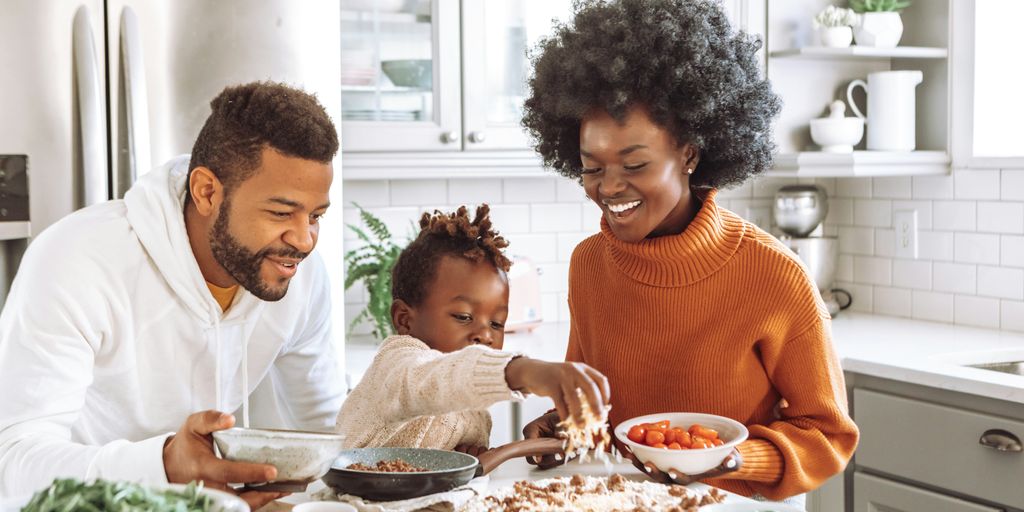
To make meal prep a family activity, plan the week’s meals together, give everyone an age-appropriate job, keep the first sessions short and simple, and focus on a few building blocks (a grain, a protein, chopped vegetables) that can be mixed into different meals. Cooking together takes a little more time at first, but it shares the workload, builds kids’ skills and makes healthy weeknight meals much easier.
Canada’s Food Guide encourages families to cook more often by planning what you eat and involving others in planning and preparing meals. Here’s a practical way to do it.
Step 1: Plan the week together
Ten minutes on the weekend is enough.
- Look at the calendar first. Mark the busy nights (sports, late work, appointments) and plan your quickest or make-ahead meals for those days.
- Let each person choose one meal or side for the week from a short list of options you’re happy with. Kids are more likely to eat what they helped choose.
- Keep a running list of family favourites so planning gets faster each week.
- Write the grocery list together. Older kids can check what’s already in the fridge and pantry.
Step 2: Give everyone a job that fits their age

Health Canada offers age-specific ideas for kids in the kitchen. Here’s a summary:
| Age | Tasks they can help with |
|---|---|
| 2–3 years | Count ingredients, add ingredients to a bowl, wash vegetables and fruit |
| 3–4 years | Gather ingredients, mix in a bowl, pour from measuring cups, mash bananas or sweet potatoes |
| 4–6 years | Set the table, stir ingredients, use a children’s knife to slice tofu, soft fruit or cooked vegetables |
| 6–8 years | Crack and beat eggs, toss salads, make an easy breakfast, use a blender or can opener |
| 8–11 years | Cut bread, cooked meat and easy-to-grip produce, pack their school lunch, use the microwave and stove with help |
| Pre-teens and teens | Follow more complex recipes and be in charge of a meal on specific days |
Adults can handle the sharp knives, hot oven and stovetop until kids are ready, and take on jobs like portioning and labelling containers.
Step 3: Prep building blocks, not full menus
The most flexible approach is to prepare components that can become several meals. In one hour you might:
- Cook a big pot of a whole grain such as brown rice, quinoa or whole grain pasta.
- Cook one or two proteins: a tray of chicken thighs, a pot of lentils, hard-boiled eggs or baked tofu.
- Wash and chop vegetables: peppers, carrots, cucumbers, broccoli and lettuce.
- Make one sauce or dip: hummus, a yogurt-herb sauce or a simple vinaigrette.
During the week those pieces turn into burrito bowls, stir-fries, wraps, pasta salads and snack boxes. Kids can build their own bowls from the containers, which helps with picky eating too.
Step 4: Start small and build up
If the idea of a three-hour prep session sounds exhausting, it probably will be. Instead:
- Start with one task, such as washing and chopping vegetables for the week, or making breakfast for three days.
- Prep the easiest meals first, like overnight oats, a pasta salad or a big batch of soup.
- Cook once, eat twice. Make double portions at dinner so leftovers become tomorrow’s lunch.
- Split it up. A short weekend session plus a quick mid-week top-up keeps food fresher than one big day.
Step 5: Make it enjoyable

- Play music or a family playlist while you work.
- Let kids name a dish or design the week’s menu board.
- Try a “new food of the week” that everyone tastes at least once.
- Let kids arrange vegetable platters or decorate their own wraps and bowls.
- Praise effort, not perfection. Lopsided muffins still count.
Health Canada also suggests family food adventures, like visiting a farmers’ market or an apple orchard, to connect kids with where food comes from.
Step 6: Eat together when you can
Meal prep makes it easier to sit down together on busy nights. Canada’s Food Guide notes that eating with others lets you enjoy quality time together, share food traditions across generations and explore new healthy foods you might not otherwise try. Family meals don’t have to be dinner; breakfast or a weekend lunch works too.
Handling common challenges
Picky eaters
Serve at least one food you know they’ll eat alongside new ones, and let them build their own plates from prepped components. Keep offering new foods over time without pressure, so mealtimes stay calm rather than becoming a battle.
Different dietary needs
Keep the base the same and vary the toppings: one pot of chili can have a bean-only portion set aside, or a grain bowl can come with two protein options. Label containers clearly if someone has an allergy.
Not enough time
Use shortcuts: canned beans, frozen vegetables, pre-washed greens and a rotisserie chicken. A slow cooker or sheet-pan dinner does most of the work for you. Our list of healthy cooking tools has more ideas.
Food fatigue
Change the sauce or seasoning instead of the whole meal. The same chicken and rice becomes a stir-fry with ginger and garlic one night and a burrito bowl with salsa the next.
Food safety basics to teach kids
- Wash hands before cooking and after handling raw meat, poultry, fish or eggs.
- Use separate cutting boards for raw meat and for produce.
- Cook foods to a safe internal temperature; Health Canada’s safe internal cooking temperatures chart lists 74°C (165°F) for poultry pieces and ground poultry.
- Cool cooked food and get it into the fridge promptly, in shallow containers.
- Label containers with the date so everyone knows what to eat first.
A sample family prep hour
| Who | Job |
|---|---|
| Adult 1 | Roast chicken or tofu and a tray of vegetables |
| Adult 2 or teen | Cook rice or quinoa and a pot of soup |
| School-age child | Wash and portion fruit, make overnight oats |
| Young child | Wash vegetables, count snacks into containers |
| Everyone | Clean up together and fill the fridge |
Key takeaways
- Plan the week together and let everyone pick something.
- Match jobs to age so kids build real skills safely.
- Prep building blocks (grains, proteins, chopped vegetables, a sauce) that mix into many meals.
- Start with one small task and grow from there.
- Teach basic food safety as part of the routine.
- Use the time you save to eat together more often.
For more planning ideas, see our meal prep tips.
FAQ
How long should a family prep session be?
Start with 30 to 60 minutes. Short sessions keep kids interested and make it easier to repeat every week. You can always add more once the routine is set.
What if my kids don’t want to help?
Offer a choice of two jobs rather than an assignment, start with fun tasks like mixing or assembling, and let them choose one meal for the week. Seeing the family enjoy something they made can be its own reward.