
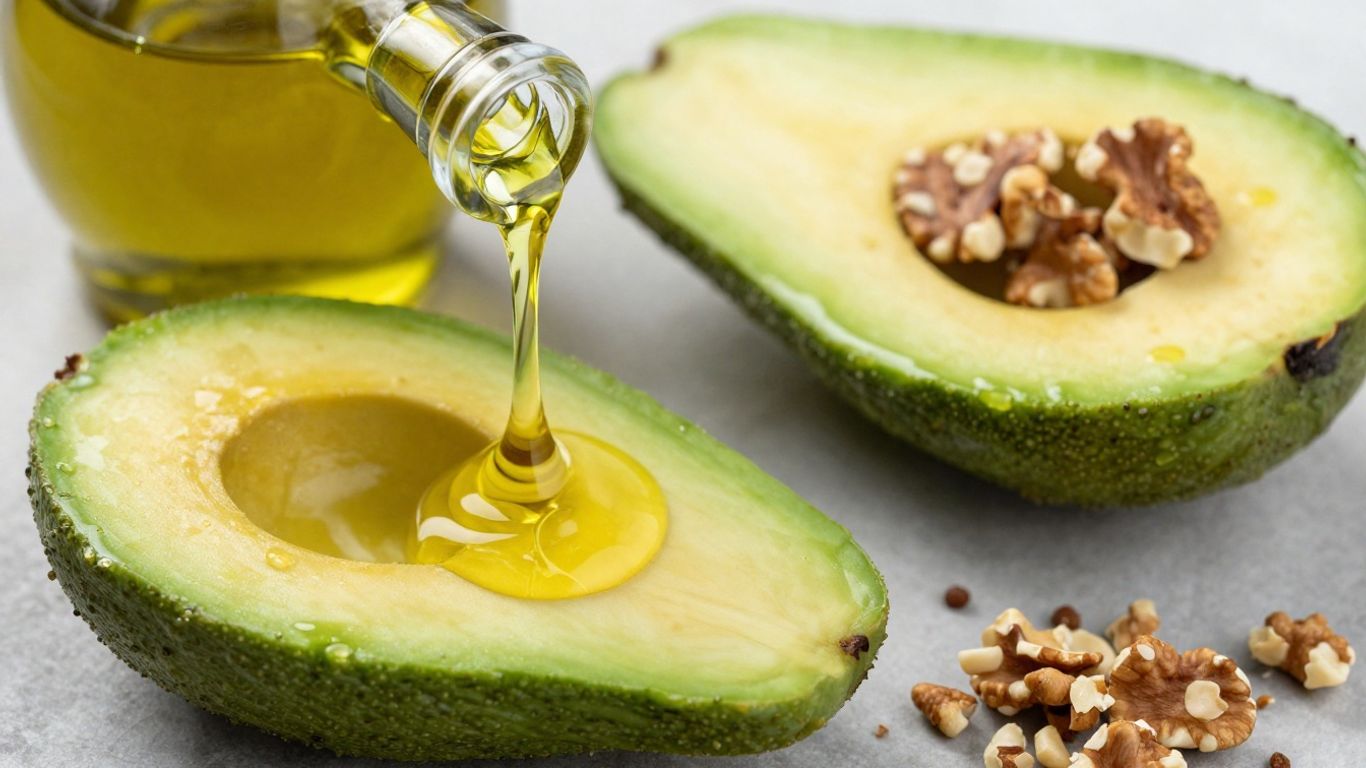
A fat quality upgrade means swapping foods high in saturated and trans fats for foods rich in unsaturated fats, with monounsaturated sources like olive oil, canola oil, avocados, nuts and seeds leading the way. Health authorities agree the type of fat you eat over time matters more for heart health than the total amount. Because all fats are energy-dense, the aim is to swap, not add, so you improve quality without quietly increasing calories.
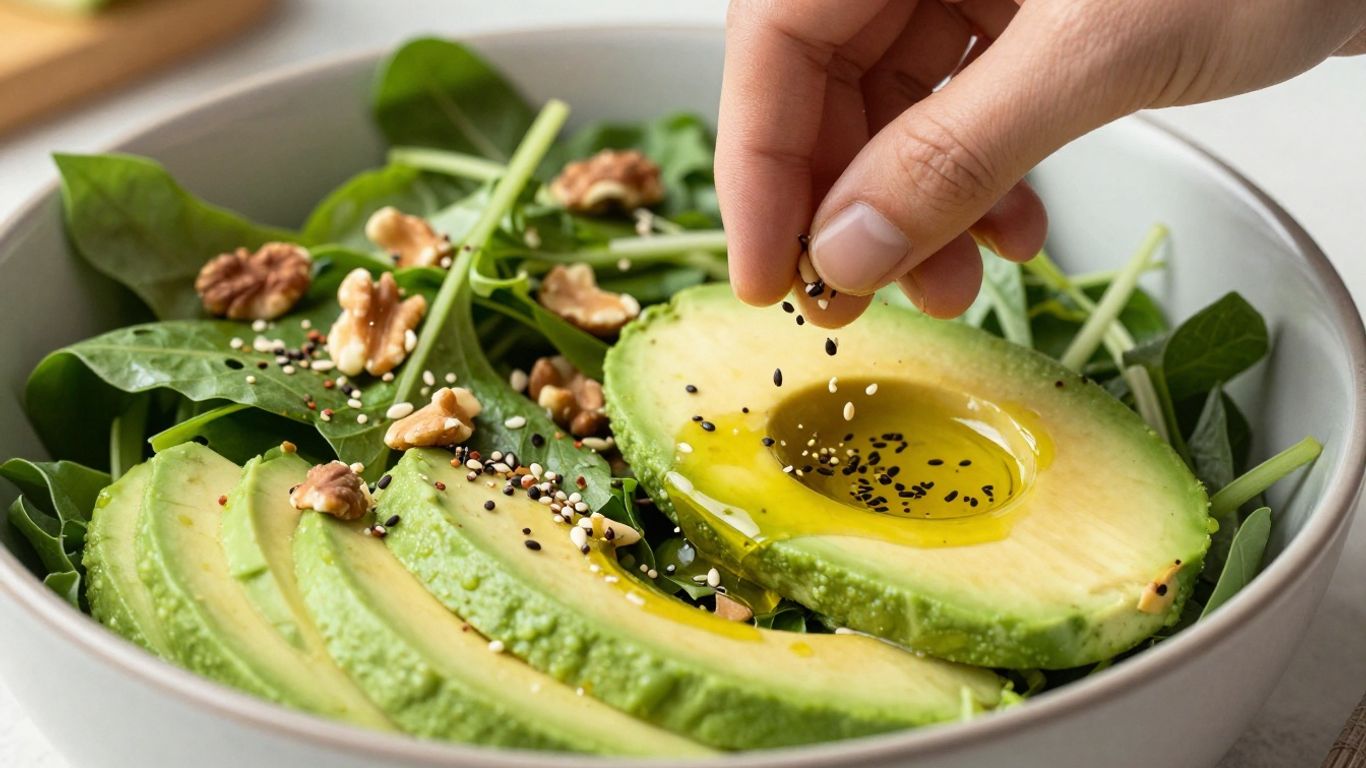
The types of fat in plain language
- Monounsaturated fats are liquid at room temperature and found in olive oil, canola oil, avocados, almonds, peanuts and many other nuts.
- Polyunsaturated fats include omega-3s (salmon, trout, sardines, walnuts, flaxseed, chia) and omega-6s (sunflower, corn and soybean oils, many nuts and seeds).
- Saturated fats are mostly solid at room temperature and found in fatty meats, butter, cheese, cream, and palm and coconut oils.
- Industrial trans fats came from partially hydrogenated oils. Canada has banned adding them to foods, but small amounts occur naturally in meat and dairy.
Harvard Health summarizes it this way: good fats include monounsaturated and polyunsaturated fats, industrial trans fats are harmful, and saturated fats fall somewhere in the middle.
Why monounsaturated fats deserve the spotlight
The NHS explains that monounsaturated fats help protect your heart by maintaining “good” HDL cholesterol while reducing “bad” LDL cholesterol, and that replacing saturated fats with unsaturated fats can help lower cholesterol. Canada’s Food Guide similarly advises choosing foods that contain mostly healthy fats instead of foods that contain mostly saturated fat to help lower the risk of heart disease, and notes that the type of fat you eat over time matters more than the total amount.
Monounsaturated fats are also practical. Olive and canola oils are versatile, nuts and avocados are easy to add to meals, and these foods come with fibre, vitamin E and plant compounds.
Keep portions in view
Every fat, healthy or not, provides about 9 calories per gram, more than double carbohydrate or protein. One tablespoon of oil is roughly 120 calories. Simple portion guides:
| Food | Practical portion |
|---|---|
| Olive or canola oil | 1 to 2 teaspoons per person for cooking; measure rather than pour |
| Salad dressing | About 1 tablespoon |
| Nuts or seeds | A small handful (about ¼ cup) |
| Nut or seed butter | About 1 tablespoon |
| Avocado | About one-third to one-half of a medium avocado |
A thumb-sized portion of added fat per meal is an easy visual check.
Practical swaps
| Instead of | Try |
|---|---|
| Butter or lard for sautéing | Olive or canola oil |
| Butter on toast | Avocado, peanut or almond butter, or soft non-hydrogenated margarine |
| Creamy bottled dressings | Olive oil, lemon or vinegar, mustard and herbs |
| Chips or cheese crackers | Unsalted nuts, roasted chickpeas or seeds |
| Sausages, bacon and processed meats | Fish, poultry, beans, lentils or tofu |
| Fatty ground beef | Lean ground meat mixed half-and-half with lentils or mushrooms |
| Sour cream | Plain Greek yogurt |
| Pastries and store-bought baked goods | Homemade muffins made with canola oil, or fruit with nuts |
| Deep-fried foods | Oven-roasted or air-fried with a light coating of oil |
| Cheese as the main protein | Smaller amounts of strong-flavoured cheese as a topping |
Build healthy fats into each meal
- Breakfast: Oatmeal with walnuts and ground flaxseed, or whole-grain toast with avocado and tomato.
- Lunch: A salad with chickpeas, vegetables and an olive oil-lemon dressing, or a tuna or salmon sandwich made with a little olive oil and mustard instead of lots of mayonnaise.
- Snack: An apple with almond butter, or a small handful of pistachios.
- Dinner: Baked trout or tofu with vegetables roasted in olive oil, or a stir-fry made with canola oil and finished with sesame seeds.
Simple homemade dressing
Whisk 3 tablespoons olive oil, 1 tablespoon vinegar or lemon juice, 1 teaspoon mustard, a little garlic, salt and pepper. Store in a jar in the fridge for up to a week, and use about a tablespoon per salad.
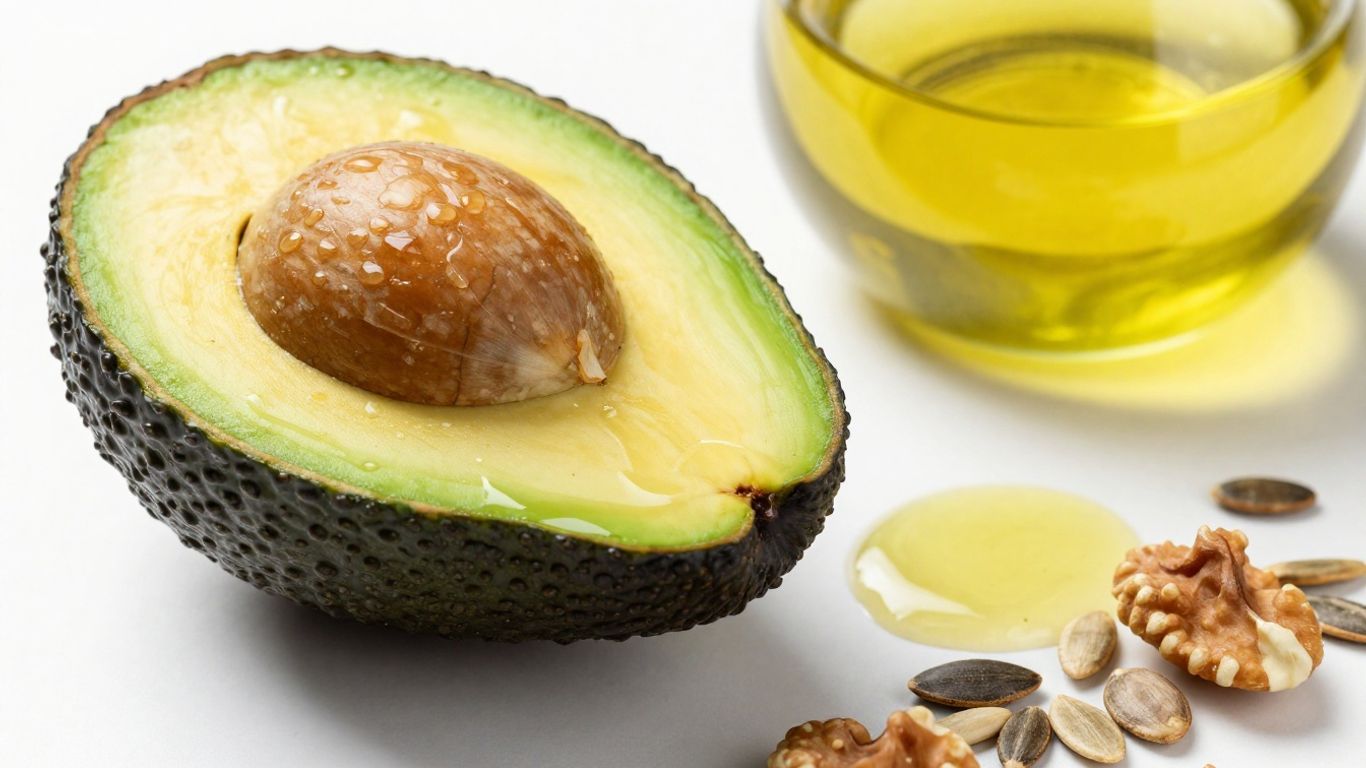
Choosing and using oils
- Extra-virgin olive oil is great for dressings, drizzling and everyday sautéing.
- Canola oil has a neutral taste, a good mix of monounsaturated fat and some omega-3, and suits baking and higher-heat cooking.
- Peanut and sesame oils work well in stir-fries; toasted sesame oil is best as a finishing flavour.
- Coconut and palm oils are high in saturated fat, so use them occasionally rather than as your main cooking fat.
Store oils in a cool, dark place and use within a few months of opening to avoid rancid flavours.
A four-week upgrade plan
- Week 1: Switch your main cooking fat to olive or canola oil, and start measuring it.
- Week 2: Make a jar of homemade dressing and swap out creamy bottled versions.
- Week 3: Replace one processed-meat meal and one fried meal with fish, beans or tofu.
- Week 4: Trade one daily packaged snack for nuts, seeds or a piece of fruit with nut butter.
Small, steady changes like these tend to stick better than overhauling your whole pantry in a weekend.
Reading labels
- On the Nutrition Facts table, compare saturated and trans fat between similar products and choose the lower one.
- Scan ingredient lists for palm oil, coconut oil, shortening or hydrogenated oils in packaged snacks and baked goods.
- Do not be put off by a higher total fat number in nuts, seeds, avocado or fish; the type of fat is what matters.
For more, see our guides to omega-3 fatty acids, building a five-part meal salad, and pairing protein, fat and fibre for steadier blood sugar.
When to check with a professional
If you have high LDL cholesterol, heart disease, diabetes, fatty liver disease or a family history of early heart disease, ask your doctor or a registered dietitian for personalized fat and cholesterol targets. If you have a nut or sesame allergy, follow your allergist’s advice and lean on oils, avocado, fish and seeds you tolerate.
Practical takeaways
- Make olive or canola oil your default cooking fat.
- Swap processed meats, butter-heavy and fried foods for fish, beans, nuts, seeds and avocado.
- Measure oils and use small portions of nuts and nut butters.
- Include oily fish or plant omega-3 sources such as walnuts and flaxseed regularly.
- Compare saturated fat on labels and choose the lower option.
- Upgrade one meal at a time until the swaps feel normal.
FAQ
Will eating more healthy fat help me lose weight?
Not by itself. Healthy fats can make meals more satisfying, but they are calorie-dense. The benefit comes from swapping them in for less healthy fats, not adding them on top.
Is dark chocolate a healthy fat?
Dark chocolate contains cocoa butter, which is mostly saturated fat, along with some beneficial plant compounds. Enjoy a small square as a treat rather than a fat source.