
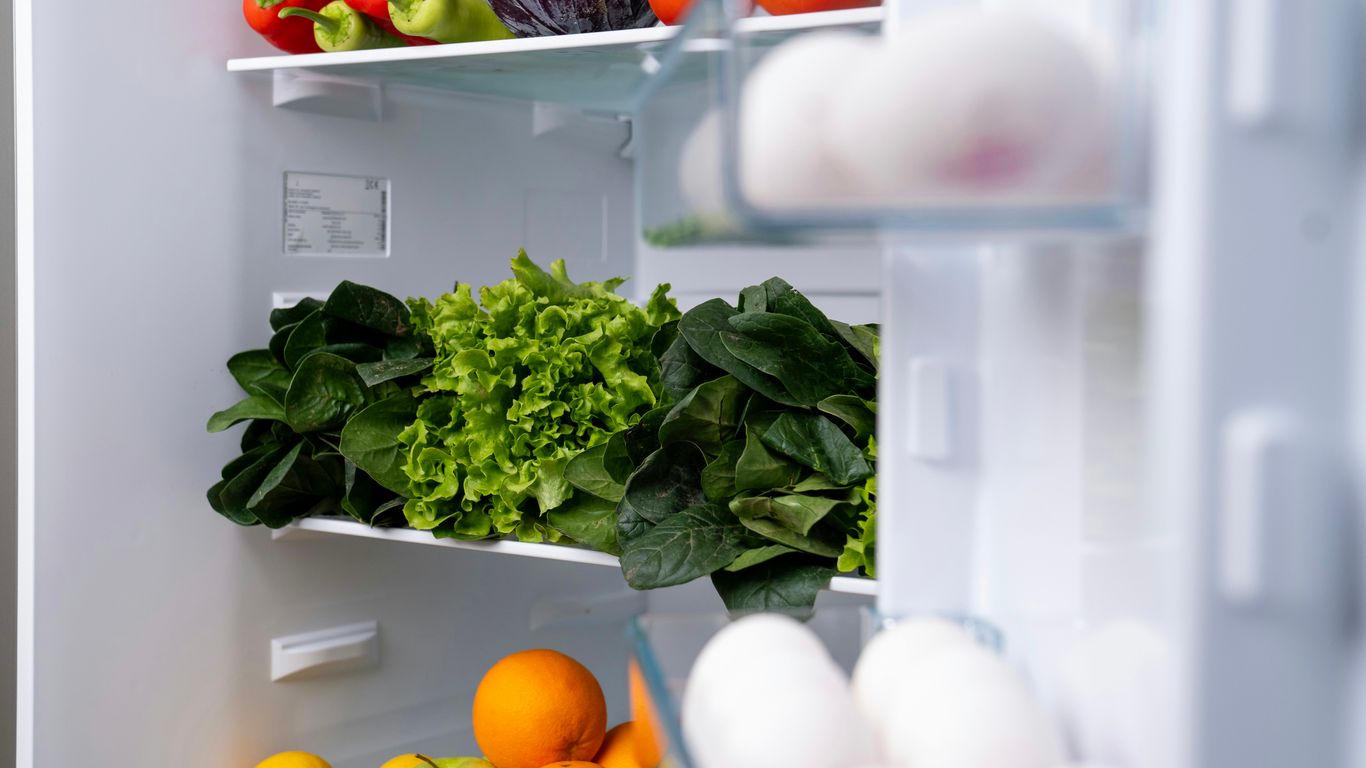
Fridge zoning means giving every shelf and bin a job, so washed, ready-to-eat healthy foods sit at eye level and raw meat sits safely at the bottom. When the first thing you see is cut vegetables, fruit and a container of cooked protein, the easy choice and the helpful choice become the same. It also cuts food waste because nothing gets lost in the back.
Why placement matters
We tend to eat what is visible and convenient. A systematic review in the British Journal of Nutrition found that changing the order or proximity of foods can influence which foods people choose, though the authors note that more high-quality, longer-term research is needed. Your fridge is a small food environment you fully control, which makes it one of the simplest places to apply this idea.
Zoning also supports food safety. Health Canada advises keeping your refrigerator at 4 °C (40 °F) or lower and placing raw meat, poultry, fish and seafood in sealed containers or bags on the bottom shelf, so nothing drips onto ready-to-eat food. A fridge thermometer is an inexpensive way to check yours.
A zone map for a standard fridge
| Zone | What goes there | Why |
|---|---|---|
| Top shelf (eye level) | Ready-to-eat: washed and cut vegetables, fruit, hummus, yogurt, hard-boiled eggs, cooked grains and proteins | First thing you see when you open the door |
| Middle shelf | Leftovers and prepped meal components, eggs, milk, cheese | Easy to reach; leftovers stay in view so they get eaten |
| Bottom shelf | Raw meat, poultry, fish and seafood in sealed containers or on a tray | Prevents drips onto other foods |
| Crisper drawers | Whole vegetables in one, fruit in the other | Separating them helps produce last |
| Door | Condiments, sauces, dressings, water and sparkling water | Door is the warmest part of the fridge, so keep milk and eggs on shelves |
Step-by-step: zone your fridge in 30 minutes
- Empty it. Put perishable items in a cooler or on the counter briefly while you work.
- Toss what’s past its best. Health Canada’s leftover guidance is to eat refrigerated leftovers within 2 to 3 days or freeze them. When in doubt, throw it out.
- Clean shelves and drawers with warm, soapy water and dry them.
- Assign zones using the map above. Adjust shelf heights if you can, so tall containers fit at eye level.
- Add bins. Clear bins make categories obvious: a “snack prep” bin, a “lunch kit” bin, a “use first” bin.
- Load it back, placing the foods you want to eat most at the front of the top shelf.
The bins that do the heavy lifting
The “eat me first” bin
Anything that needs using up soon goes here: half an avocado, the last of the spinach, yesterday’s roasted vegetables. Check it before you cook or snack. This one bin can noticeably cut how much food you throw away.
The snack bin
Pre-cut carrots, peppers and cucumbers, small containers of hummus or yogurt, grapes, cheese portions and hard-boiled eggs. When a snack is already prepped, it competes fairly with packaged options.
The lunch-kit bin
Cooked grains, a cooked protein, washed greens and a dressing. Packing lunch becomes a two-minute assembly instead of a decision.
Prep that makes the zones work
Zoning only helps if the top shelf is stocked with food that is actually ready. Set aside 30 to 45 minutes after shopping:
- Wash and dry greens; store them in a container lined with a clean towel.
- Cut two or three vegetables into sticks or bite-sized pieces.
- Cook a grain and a protein to use across several meals.
- Wash fruit that won’t spoil quickly once washed, such as apples and grapes. Wash berries just before eating.
- Portion yogurt or cottage cheese into small containers if that helps you grab and go.
For a bigger weekly prep system, see mise en place for real life.
Containers and labels
- Clear containers so you can see what’s inside without opening lids.
- Shallow containers for leftovers. Health Canada recommends refrigerating leftovers promptly in shallow containers so they cool quickly, and dating them so they are not stored too long.
- Masking tape and a marker are the simplest labelling system. Write what it is and the date.
- Glass jars work well for cut vegetables, overnight oats, salad dressings and cooked beans.
- A turntable on a deep shelf keeps sauces and jars from getting lost at the back.
Drinks: make water the default
Put a pitcher of water at the front of a shelf or in the door, and add lemon, cucumber, mint or frozen berries for flavour. Sparkling water, milk or a fortified soy beverage can sit next to it. Keep sugary drinks out of the prime spots, or skip buying them.
Zoning for households
When several people share a fridge, a few extra rules keep the system working:
- Make a kids’ shelf or bin at their eye level, stocked with snacks you’re happy for them to take without asking: cut fruit, vegetable sticks, yogurt cups, cheese portions.
- Label the zones themselves, not just the containers, for the first few weeks so everyone learns where things go.
- Give special-diet foods their own bin (for example, gluten-free or allergy-safe items) to avoid mix-ups and cross-contact.
- Agree on one rule for leftovers: they go in the “eat me first” bin, dated, and whoever finishes them washes the container.
- Keep treats in the back or lower drawer. They are still available, just not the default.
A weekly five-minute reset
- Pull everything from the “eat me first” bin and plan it into the next day or two.
- Toss anything spoiled and wipe any spills.
- Move older items forward and newer items back.
- Note what’s running low for your grocery list.
- Restock the snack and lunch bins.
Fridge zoning is one example of using cues in your surroundings to make habits easier. Our article on environmental cues explores more ways to do this at home.
Quick takeaways
- Keep the fridge at 4 °C or lower and store raw meat on the bottom shelf.
- Put ready-to-eat vegetables, fruit and proteins at eye level.
- Use three bins: “eat me first,” snacks and lunch kits.
- Store leftovers in shallow, dated containers and eat them within 2 to 3 days.
- Do a five-minute reset each week before you shop.
FAQ
Do I need special organizers?
No. Clear containers and a couple of inexpensive bins are enough. Start with what you already have and buy only what solves a real problem.
Will this really help me eat better?
It removes friction. You still choose what to eat, but when prepared vegetables and protein are the first things you see, they are much more likely to be what you reach for.