
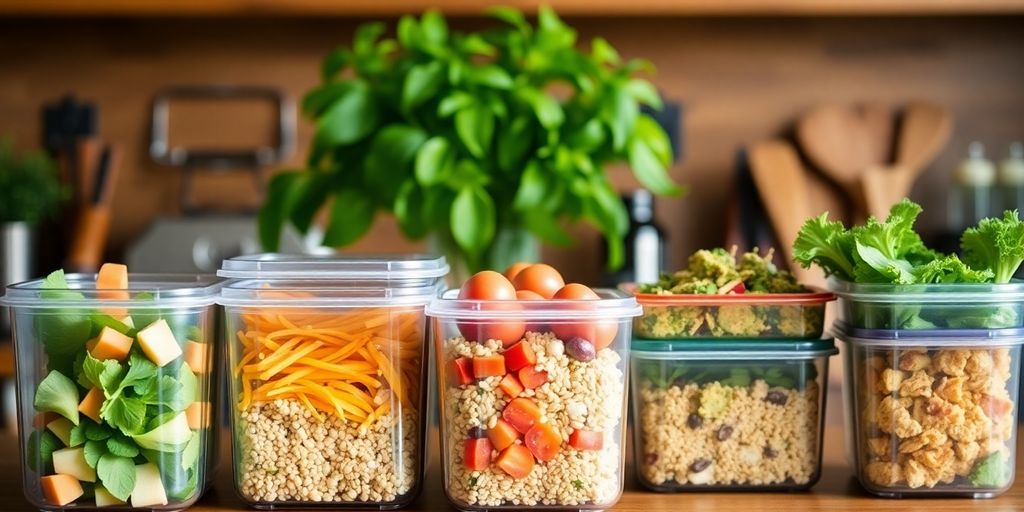
Easy meal prep comes down to three steps: plan a few meals, cook or chop the time-consuming parts in one session, and store them safely so healthy food is the fastest option on busy days. You don’t need fancy containers or a whole Sunday in the kitchen. An hour or two a week is enough to support weight and health goals.
What meal prep is (and isn’t)
Meal prep simply means doing some of your cooking ahead of time. It can take different forms:
- Full meals: cooking and portioning complete lunches or dinners into containers.
- Batch cooking: making a large pot of soup, chili or a casserole to eat over several days or freeze.
- Ingredient prep: washing and chopping vegetables, cooking grains and proteins, and mixing a sauce, then combining them into different meals during the week.
It doesn’t mean eating the same bland chicken and rice every day. Ingredient prep in particular gives you variety with very little extra work.
Step 1: Set a goal for your prep
Decide what problem you want meal prep to solve, so you prep the right things:
- Skipping breakfast? Prep overnight oats, egg muffins or smoothie packs.
- Buying lunch every day? Prep four lunches.
- Takeout on weeknights? Prep components for three or four quick dinners.
- Afternoon snacking? Portion fruit, cut vegetables, hummus and nuts.
- Weight loss? Pre-portioned meals make it easier to eat balanced amounts without measuring at every meal.
Start with one meal of the day. Once that feels easy, add another.

Step 2: Plan a simple, balanced menu
Canada’s Food Guide recommends eating plenty of vegetables and fruits, whole grains and protein foods, and choosing plant-based proteins more often. That gives you an easy template for every prepped meal:
| Component | Prep-friendly options |
|---|---|
| Vegetables and fruits (the biggest portion) | Roasted vegetables, raw peppers, carrots, cucumbers, leafy greens, frozen mixed vegetables, berries, apples |
| Protein foods | Baked chicken, ground turkey, hard-boiled eggs, lentils, chickpeas, black beans, tofu, salmon, Greek yogurt |
| Whole grains | Brown rice, quinoa, whole-grain pasta, barley, oats, whole-wheat wraps |
| Flavour | Herbs, spices, garlic, lemon, salsa, a homemade vinaigrette or yogurt sauce |
Choose recipes that reheat well (soups, stews, curries, grain bowls, sheet-pan dishes) and use seasonal produce when you can; it’s often cheaper and tastes better. Planning also helps you cook more often. Canada’s Food Guide notes that planning what you eat makes it easier to cook at home, and suggests saving meal plans and recipes you liked so you can reuse them.
Step 3: Shop with a list
Write your grocery list from your menu, grouped by store section, and check what you already have before you go. Ways to save money:
- Plan meals that share ingredients, such as one bag of spinach for omelettes, wraps and soup.
- Buy frozen and canned vegetables, fruits, beans and fish. They’re nutritious, cheap and last.
- Buy grains, oats and dried legumes in bulk.
- Build part of your menu around what’s on sale that week.
Step 4: Gather a few basic tools
You likely have most of what you need already:
- A large sheet pan and a big pot
- A sharp knife and a cutting board
- Glass or BPA-free containers in a few sizes, with tight lids
- Freezer bags and a marker for labelling
- Optional: a slow cooker or pressure cooker for hands-off batch cooking
In a small kitchen, prep in stages. Roast vegetables while the grain simmers, then use the cleared counter to portion everything out.

Step 5: Run an efficient prep session
Pick a regular prep time that suits your week. Sunday is popular, but a midweek mini-session works well too. A sample 90-minute session:
- Start the slowest items first (0 to 10 minutes): put grains on the stove and preheat the oven.
- Roast (10 to 40 minutes): toss chopped vegetables and a protein with oil and spices on sheet pans.
- Chop and wash (while things cook): raw vegetables for snacks and salads, fruit for breakfasts.
- Make a sauce or dressing to keep flavours interesting.
- Cool and portion (last 20 minutes): divide food into containers and label them with the date.
- Clean as you go so you’re not left with a pile of dishes.
Step 6: Store and reheat safely
Food safety matters when food sits in the fridge for days. Health Canada’s food safety tips for leftovers include:
- Throw away cooked food left at room temperature for more than two hours.
- Refrigerate food promptly in shallow containers so it cools quickly.
- Eat refrigerated leftovers within 2 to 3 days, or freeze them for later.
- Date your containers so you know what to use first.
- Reheat leftovers to an internal temperature of 74°C (165°F), and bring soups and sauces to a full boil.
A practical approach: refrigerate meals for the next two or three days and freeze the rest. Move a frozen meal to the fridge the night before you plan to eat it.

Keep it interesting
Boredom is the main reason people stop meal prepping. Prepping ingredients rather than identical meals helps. The same roasted vegetables, chickpeas and quinoa can become:
- A grain bowl with lemon-tahini dressing on Monday
- A whole-wheat wrap with hummus and greens on Tuesday
- A soup with broth and canned tomatoes on Wednesday
- A frittata filling with eggs on Thursday
Rotate spice blends (Mexican-style, Italian herbs, curry, garlic and ginger) and try one new recipe a week.
Common problems and fixes
| Problem | Fix |
|---|---|
| No time for a long session | Do two 30-minute sessions, or double tonight’s dinner for tomorrow’s lunch |
| Food goes to waste | Prep for three or four days, not seven, and freeze extras right away |
| Meals get soggy | Store dressings and sauces separately; add crunchy toppings when you eat |
| Family members have different needs | Prep components and let each person build their own plate |
| Dietary restrictions | Choose naturally suitable recipes rather than adapting ones that don’t fit |
Review and adjust each week
At the end of the week, notice what you ate, what you skipped and what went to waste. Keep the recipes that worked, drop the ones that didn’t, and adjust portions if you were too hungry or too full. Meal prep works best alongside eating with attention, so you notice hunger and fullness; see our guide on mindful eating. For fitting prep into a packed schedule, read balancing a busy schedule with healthy living, and for the long view, see sustainable weight loss.

Key takeaways
- Start by prepping one meal of the day, for three or four days.
- Build each container from vegetables and fruits, protein foods and whole grains.
- Shop from a list and choose recipes that share ingredients.
- Cool food quickly, eat refrigerated leftovers within 2 to 3 days, and freeze the rest.
- Prep ingredients, not just identical meals, to keep things interesting.
Frequently asked questions
Can meal prep help with weight loss?
It can make it easier. Having balanced, pre-portioned meals ready reduces the chance of grabbing takeout or snacks when you’re hungry and short on time.
Which foods freeze well?
Soups, stews, chili, curries, cooked grains, cooked beans, meatballs and casseroles generally freeze well. Salads, raw cucumbers and dishes with crisp textures don’t.