
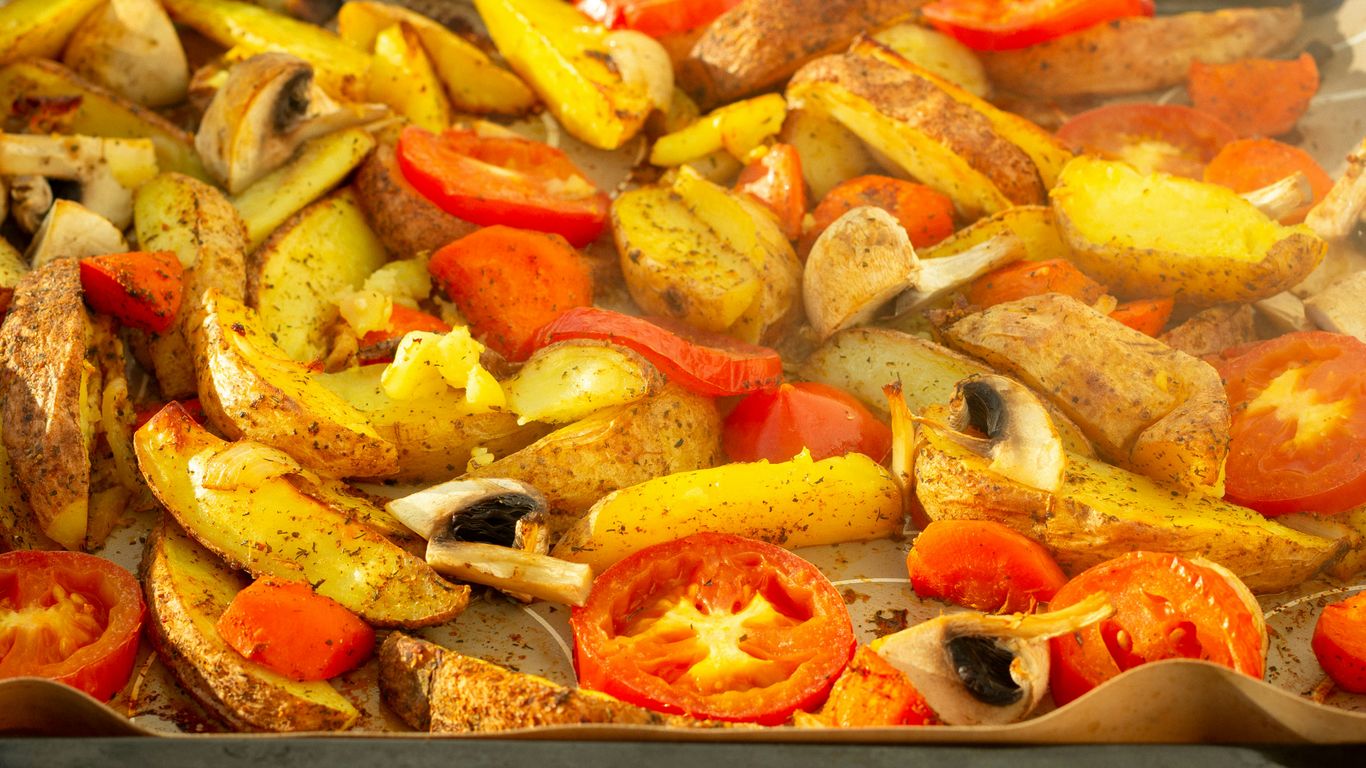
A great sheet-pan dinner comes down to three decisions: a protein and vegetables that finish at about the same time, roughly twice as much vegetable as protein by volume, and a layout that respects your oven’s hot and cool zones. Get those right and you have a balanced, one-pan meal with crisp edges instead of a steamed, half-raw tray.
This guide gives you the ratios, a cook-time chart, a simple way to map your oven’s heat, and fixes for the most common problems.
Start with the plate, then build the pan
A useful target for any mixed meal is Canada’s Food Guide plate: half vegetables and fruits, one-quarter protein foods, and one-quarter whole grain foods. The guide notes that the plate still works when foods are cooked together, so it translates neatly to a sheet pan.
For a standard rimmed half-sheet pan (about 33 x 46 cm) feeding two to three people, a reliable starting point is:
- Vegetables: 6 to 8 cups chopped, filling about two-thirds of the pan
- Protein: 450 to 675 g (1 to 1½ lb) of chicken, fish or tofu, or two cans of drained chickpeas
- Whole grain: cooked separately (brown rice, quinoa, whole grain pitas), or use potatoes or sweet potatoes on the pan as your starch
- Fat: 1 to 2 tablespoons of oil for the whole tray, enough to coat lightly
If the pan looks crowded, it is. Food needs space between pieces so moisture can escape. When in doubt, use two pans.
Match proteins and vegetables by cook time
The single biggest reason sheet-pan dinners fail is pairing a 15-minute protein with 40-minute vegetables. Group your ingredients by how long they need at about 220°C (425°F), and either choose items from the same row or stagger them.
| Roast time at 220°C / 425°F | Proteins | Vegetables |
|---|---|---|
| 10–15 minutes | Shrimp, thin fish fillets | Asparagus, cherry tomatoes, snap peas, sliced zucchini |
| 15–25 minutes | Salmon, firm tofu cubes, chickpeas, thin chicken cutlets | Broccoli, cauliflower florets, bell peppers, green beans, mushrooms, red onion wedges |
| 25–40 minutes | Bone-in chicken thighs, drumsticks, pork tenderloin | Cubed potatoes, sweet potatoes, carrots, parsnips, butternut squash, Brussels sprout halves |
These are typical ranges, not promises. Size of the cut, starting temperature and your oven all matter, which is why a thermometer is your best tool.
Check doneness with a thermometer
Colour is not a safe test for meat, poultry or fish. Health Canada’s safe internal cooking temperatures include:
- Poultry pieces (breasts, thighs, legs, wings): 74°C (165°F)
- Fish: 70°C (158°F)
- Pork chops: 71°C (160°F)
- Ground meat (beef, pork): 71°C (160°F); ground poultry: 74°C (165°F)
Insert the probe into the thickest part, away from bone.
The two-stage method for mismatched timing
When you want potatoes with salmon, you do not need two pans. Stagger them:
- Roast the long-cooking item first (potatoes, carrots, squash) for 15 to 20 minutes.
- Pull the pan, push the vegetables to the outer edges, and add the quicker protein and vegetables to the centre.
- Return to the oven until the protein reaches its safe temperature and the vegetables are browned.
The reverse also works for bone-in chicken: start the chicken alone, then add broccoli or peppers for the last 15 to 20 minutes.
Map your oven’s heat
Most home ovens have hot spots, often toward the back or near the heating element. A “heat map” is just a quick test that shows you where they are, so you can place food on purpose.
The bread test
- Preheat to 180°C (350°F) with a rack in the middle.
- Cover a sheet pan with slices of plain white bread, edge to edge.
- Bake for 5 to 10 minutes, watching closely.
- Note which slices darken first. Those areas are your hot zones.
Sketch the result on a sticky note and keep it inside a cupboard door. Every oven is different, so trust your own map over general rules.
Use the map
- Hot zones: dense, slow-cooking vegetables like potato and squash cubes, or anything you want deeply browned.
- Cooler zones: delicate proteins like fish, and tender vegetables like asparagus or tomatoes.
- Rotate: turn the pan 180 degrees halfway through if your map shows a strong front-to-back difference.
Prep for browning, not steaming
- Dry everything. Pat washed vegetables and proteins dry. Surface water turns to steam and blocks browning.
- Cut to match. Cut dense vegetables smaller (2 cm cubes) and tender ones larger, so they finish together.
- Flat side down. Place cut sides of Brussels sprouts, squash and potatoes against the pan for the best colour.
- Preheat the pan. Putting vegetables onto a hot pan gives an immediate sear.
- Oil lightly and evenly. Toss in a bowl rather than drizzling on the pan, so every piece gets a thin coat.
- Leave gaps. Pieces should not touch. Crowding traps moisture.
Layer flavour in three steps
Before roasting: salt, oil and a dry rub. Good combinations include smoked paprika, garlic powder and cumin; dried oregano, lemon zest and garlic; or ginger, garlic and a little soy sauce for a quick glaze on tofu or salmon. Sugary glazes burn easily, so brush them on during the last 5 to 10 minutes.
During roasting: nestle lemon halves, whole garlic cloves or onion wedges among the vegetables. They soften and caramelize, and you can squeeze or mash them into a quick sauce at the end.
After roasting: this is where a good tray becomes a great one. Add something fresh and something tangy, such as chopped parsley or cilantro, a squeeze of lemon or lime, a spoon of plain yogurt mixed with garlic, a drizzle of tahini thinned with lemon juice, or a splash of vinegar over the vegetables.
Scrape up browned bits from the pan with a few tablespoons of hot broth or lemon juice for an easy pan sauce.
Five balanced combinations
| Protein | Vegetables | Seasoning and finish |
|---|---|---|
| Chicken thighs | Sweet potato, red onion, Brussels sprouts | Smoked paprika, garlic; finish with lemon and parsley |
| Salmon | Baby potatoes (two-stage), asparagus | Dill, lemon zest; finish with yogurt-dill sauce |
| Chickpeas | Cauliflower, red pepper, red onion | Cumin, coriander, turmeric; finish with tahini and lime |
| Firm tofu | Broccoli, mushrooms, carrots | Garlic, ginger, soy sauce; finish with green onion and sesame seeds |
| Shrimp | Zucchini, cherry tomatoes, bell peppers | Oregano, garlic, chili flakes; finish with lemon and basil |
Serve with a quarter plate of whole grains if your tray has no potatoes, and use any leftovers in wraps, grain bowls or a quick soup.
Troubleshooting
- Soggy vegetables: too crowded, too wet, or oven too cool. Use two pans, dry well, and roast at 200 to 230°C (400 to 450°F).
- Burnt edges, raw centres: pieces too large or the pan sits in a hot zone. Cut smaller and check your heat map.
- Dry chicken breast: pull it at 74°C and rest it 5 minutes, or switch to thighs, which stay juicy longer.
- Bland result: salt before roasting, and always add an acid at the end.
- Sticking: use parchment paper, or make sure the pan is hot and the food lightly oiled.
Sheet-pan meals pair well with a weekly prep routine. If you like cooking in batches, see task batching for meals and training, and for portion guidance without scales, meal math portion frameworks.
Quick takeaways
- Fill about two-thirds of the pan with vegetables and one-third with protein.
- Pair foods with similar roast times, or use the two-stage method.
- Run the bread test once so you know your oven’s hot and cool zones.
- Dry, space out and lightly oil everything for real browning.
- Use a thermometer for proteins and finish every tray with something fresh and acidic.