
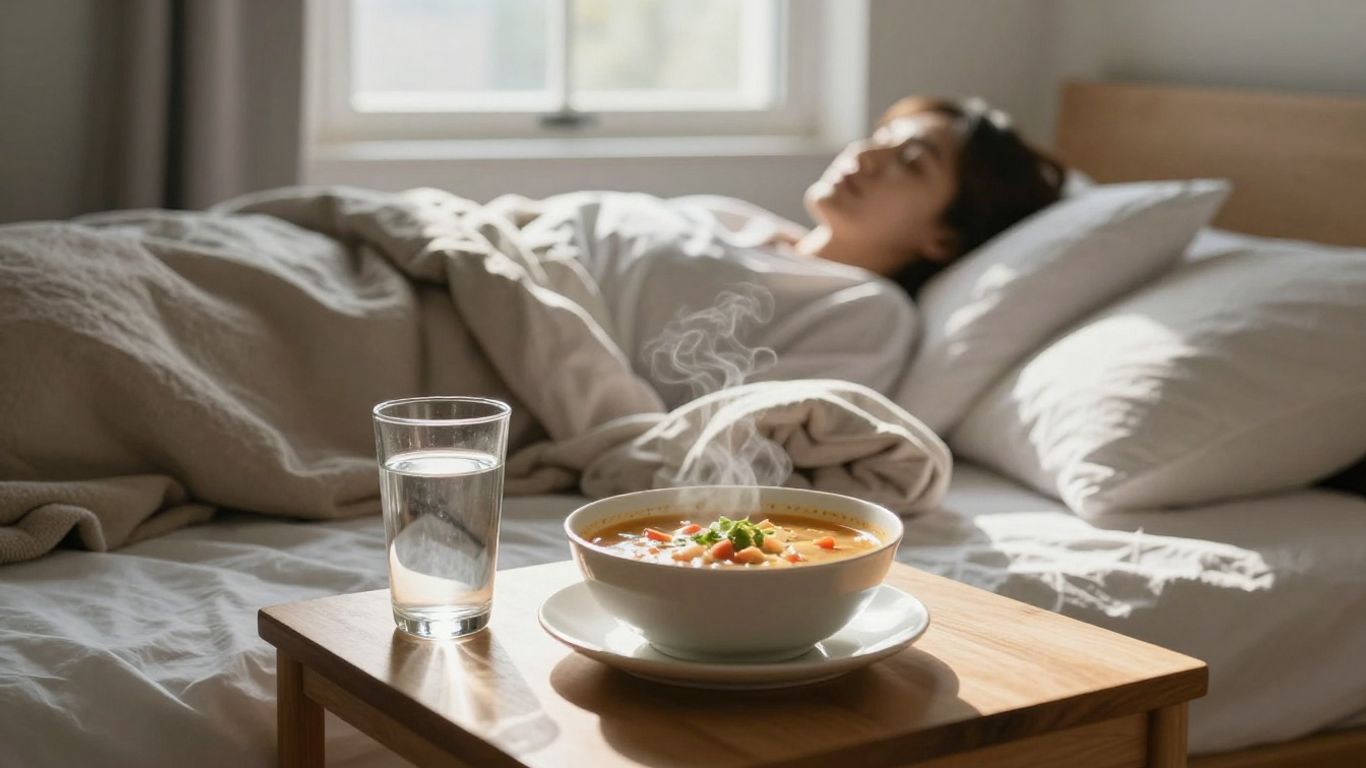
When you are sick, the goal shifts from making progress to protecting recovery. That means resting more, drinking plenty of fluids, eating simple foods you can tolerate, and only moving gently if your symptoms are mild. This playbook covers what to do with movement, meals and mindset on sick days so you can heal and return to your routine without guilt.
First, change the goal
On a normal day you might aim for a step count, a workout and balanced meals. On a sick day those targets stop being useful. A better goal is simple: rest, stay hydrated, eat what you can, and get better. Missing a few workouts or eating more toast than vegetables for two days will not undo weeks of good habits. Trying to push through often makes illness last longer.
A helpful way to think about it is that sick days have their own plan. Following that plan is still following your plan.
Movement: when to rest and when gentle activity is fine
Mayo Clinic’s guidance on exercising when you are sick uses a simple “above the neck” check:
- Above-the-neck symptoms (runny nose, sneezing, mild sore throat): light activity is usually fine. Choose something gentler than usual, like a walk instead of a run, and shorten it.
- Below-the-neck symptoms (chest congestion, hacking cough, upset stomach): skip exercise.
- Fever: do not work out.
If you do move, keep it easy. Good options include:
- A slow 10-minute walk around the house or block
- Gentle stretching for a stiff back and neck after lying down
- Ankle circles and leg stretches if you are in bed for long periods
Stop if you feel worse. Fatigue, dizziness or shortness of breath are signs to rest.
Returning to exercise
Once symptoms clear, ease back in. Start with shorter, lighter sessions for a few days before returning to your usual intensity. Our 10-minute buffer workouts work well as a bridge.
Meals: hydration first, then simple food
Fluids
Mayo Clinic’s cold remedies guide recommends drinking plenty of fluids such as water, juice and broth, and advises avoiding alcohol, coffee and caffeinated sodas, which can make dehydration worse. It also notes that warm liquids may ease congestion.
Easy options to keep within reach:
- A large water bottle by the bed or couch
- Warm broth or soup
- Herbal tea with honey (honey is not safe for babies under one year)
- Warm apple juice or diluted fruit juice
- Oral rehydration solution if you have vomiting or diarrhea
A practical check: if your urine is pale and you are going regularly, your fluids are probably on track.
Food
Appetite often drops when you are unwell. That is fine for a day or two. Eat small amounts when you are hungry and choose foods that are easy on the stomach.
| If you have | Try |
|---|---|
| A cold or flu with low appetite | Soup with vegetables and beans or chicken, oatmeal, toast with nut butter, yogurt, bananas |
| A sore throat | Smoothies, applesauce, scrambled eggs, mashed potatoes, warm cereal |
| Nausea or an upset stomach | Small sips of fluid, plain crackers, rice, bananas, toast, then slowly add other foods as you feel better |
| Recovery days | Return to your usual balanced meals with protein, vegetables, fruit and whole grains |
Stock a sick-day shelf
The best time to prepare for being sick is when you are well. Keep a small supply of:
- Low-sodium broth and canned soup
- Plain crackers, oatmeal and rice
- Applesauce cups and frozen fruit for smoothies
- Herbal tea and honey
- Oral rehydration packets
- A thermometer and your usual pain and fever reliever
A few frozen homemade soups or meals also mean you do not have to cook when you feel awful.

Rest and comfort
Rest is the main treatment for most minor illnesses. Mayo Clinic lists rest as a key part of recovery from a cold. Some ways to make rest easier:
- Clear your schedule as much as you can and let others know you are offline.
- Nap when you are tired, but try to keep a rough bedtime so sleep does not fall apart.
- Use a humidifier and saltwater gargles for congestion and sore throat, as Mayo Clinic suggests.
- Choose low-effort comfort: audiobooks, podcasts, a favourite show or simply quiet time.
Mindset: skip the guilt
Many people who are working on their health feel guilty about sick days. They worry about lost progress or the scale going up. A few reminders help:
- Scale changes during illness are mostly water. Changes in fluid, food volume and digestion can move the number either way. Consider skipping weigh-ins until you feel well.
- Habits survive a short break. A few days off does not erase what you have built. What matters is returning.
- Keep one tiny anchor. If it helps, keep one very small habit, like filling your water bottle each morning, so the routine feels continuous.
- Plan the restart. When you feel about 80 percent better, write down the first two habits you will bring back, such as your usual breakfast and a short walk.
When to check with a professional
Contact a healthcare provider if you have a high or lasting fever, trouble breathing, chest pain, signs of dehydration (very little urine, dizziness, confusion), symptoms that do not improve or that get worse after improving, or if you have a chronic condition such as diabetes that may need a sick-day plan from your care team. Seek emergency care for severe symptoms.
Your restart plan
Coming back after illness works best in stages. A simple three-step restart:
- Day one feeling better: go back to regular meal times and your usual breakfast. Keep drinking plenty of fluids.
- Next few days: add short walks and light stretching. Go to bed at your usual time.
- Once your energy is back: return to strength training and longer workouts at a lighter level, then build up over a week or so.
Restock your sick-day shelf once you are well, so it is ready next time.
Quick takeaways
- Make recovery the goal on sick days.
- Use the above-the-neck check for movement, and skip exercise with a fever or chest symptoms.
- Drink plenty of water, broth, juice or herbal tea; avoid alcohol and caffeinated drinks.
- Eat small, simple meals and keep a sick-day shelf stocked.
- Skip weigh-ins, drop the guilt and plan an easy restart.
FAQ
Should I track food or calories when I am sick?
Usually not. Focus on fluids and eating enough to feel steady. Return to tracking, if you use it, once you are well.
How soon can I go back to hard workouts?
Wait until symptoms are gone, then start with lighter sessions for a few days. If you feel worse after exercising, take another rest day.