
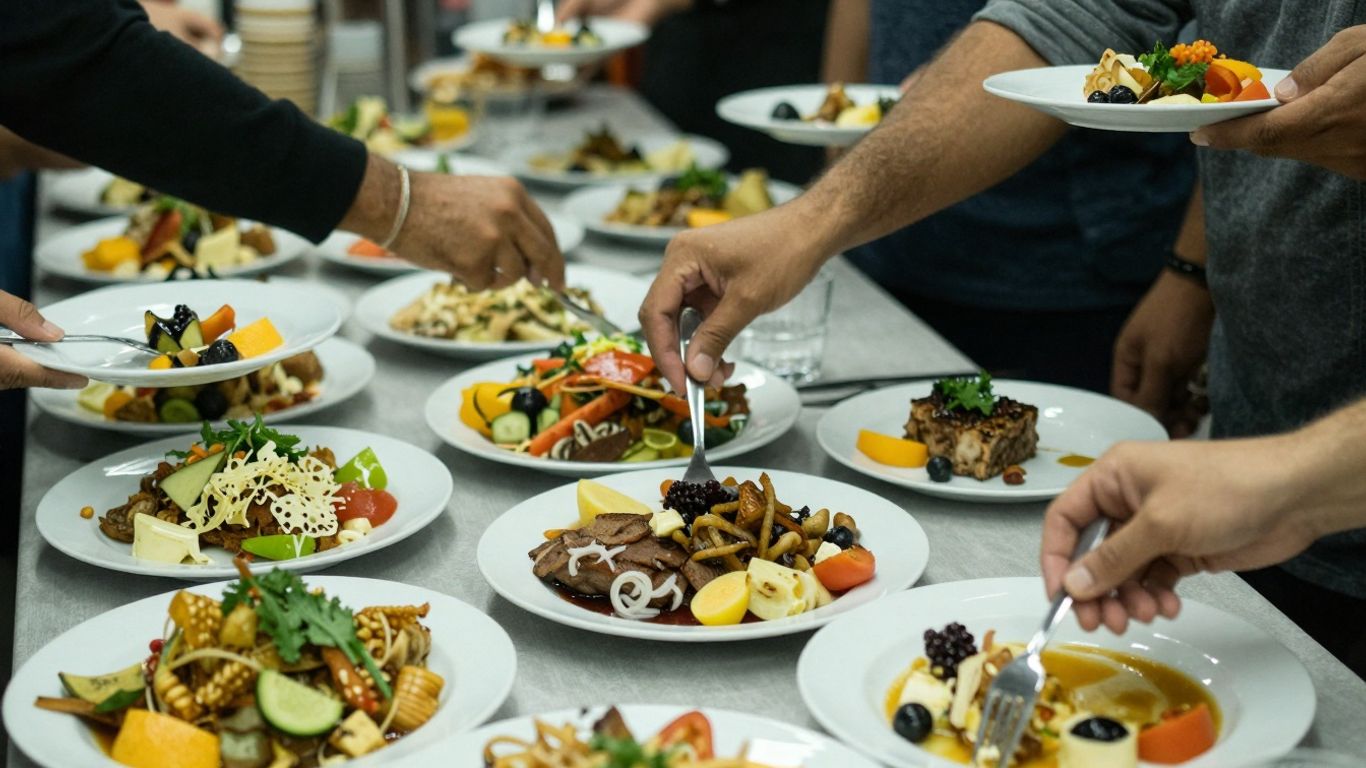
Buffets and potlucks are hard for two reasons: there is a lot of food in view, and other people have opinions about what goes on your plate. A short plan for the plate, plus a few kind, ready-made phrases, takes care of both. This article gives you 12 phrases to borrow and a simple plate method you can use at any shared table.
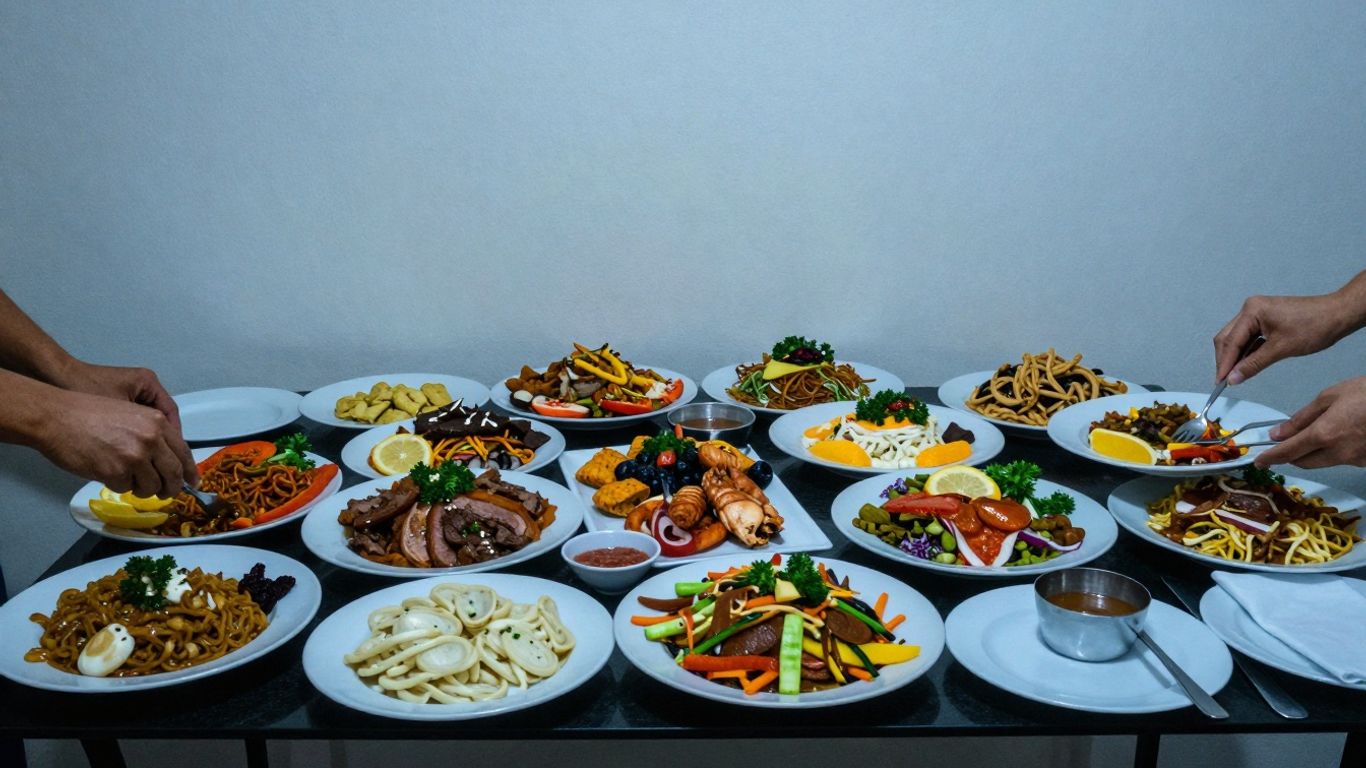
Why scripts help at shared meals
Most of the pressure at a potluck is social, not physical. Someone offers seconds, a relative asks why you skipped the pie, or you feel you should taste every dish so nobody feels left out. When you have to invent an answer on the spot, it is easy to say yes just to end the awkward moment.
A script is simply a sentence you have decided on ahead of time. It lets you answer warmly and quickly, then move the conversation along. You are not being rude or secretive; you are being clear. The best scripts are short, friendly, and true, and they put the focus on the person or the food rather than on your eating plan.
The plate strategy: decide before you queue
Canada’s Food Guide suggests building meals with half the plate vegetables and fruits, a quarter protein foods, and a quarter whole grain foods. That pattern works well on a buffet line because it gives you an order to follow.
- Walk the whole table first. Look before you serve. Pick the two or three dishes you really want, so you are not taking spoonfuls of everything “just in case.”
- Fill half the plate with vegetables or fruit. Salads, roasted vegetables, crudités, fruit trays. If the table is light on vegetables, bring a big vegetable dish yourself.
- Add a palm-sized protein. Beans, lentils, chicken, fish, eggs, tofu, or a cheese-and-bean dish.
- Use the last quarter for starches and favourites. This is where the special casserole or the homemade rolls go. Choose the ones you love, not the ones you can get any day.
- One plate, then pause. Sit down, eat slowly, and talk. Give yourself 15 to 20 minutes before deciding on seconds.
Health Canada’s tips for eating well at holidays and events note that when lots of food is served throughout an event, it can be hard to keep track. They suggest choosing based on your hunger level and, for treats, having a smaller portion and taking the time to savour it. The one-plate habit makes that much easier.
Practical plate helpers
- Use a regular dinner plate rather than a platter, if you have a choice.
- Stand or sit away from the serving table so food is not in constant view.
- Hold a glass of water or sparkling water; it gives your hands something to do while you mingle.
- Eat a small, balanced snack beforehand if the meal is late, so you do not arrive starving.
- Bring a dish you are happy to fill up on, like a hearty bean salad or a big tray of roasted vegetables. For ideas, see Smart Potlucks: plates people love that align with goals.
12 phrases for buffets and potlucks
Pick two or three that sound like you and practise them out loud once. Adjust the words so they feel natural.
When someone offers seconds
- “That was so good. I’m happily full, thank you.”
- “I’m going to let this settle for a bit. I’ll grab more later if I’m still hungry.”
- “No thanks for now, but could I take a little home? I’d love to have it tomorrow.”
When you are skipping a dish
- “It looks wonderful. I filled up on the salad and the chili, and I’m saving room.”
- “I’m not having any today, but tell me how you made it. I’d love the recipe.”
- “That’s not one that agrees with me, but everything else has been great.”
When someone comments on your plate
- “I’m eating what I feel like today. How’s your week been?”
- “I’ve been trying to eat more vegetables, and this table made it easy.”
- “I’m good, thanks. Did you try the lentil dish? It’s my favourite tonight.”
When you want dessert, but less of it
- “Could I have a small slice? I want to really enjoy it.”
- “Want to split one? I’d love a taste of each.”
When you are leaving or declining leftovers
- “Thank you so much for having us. I’ll leave the leftovers for your family; they’ll enjoy them more than I will.”
How to use the phrases without sounding rehearsed
- Compliment, decline, redirect. Most of the phrases follow this pattern: say something kind about the food or host, say no or “just a little”, then ask a question or change topic.
- Keep it short. One sentence is enough. Long explanations invite debate about your eating.
- Repeat calmly. If someone pushes, say the same thing again in a friendly tone. You do not owe a new reason each time.
- Bring the conversation back to people. Ask about their family, their trip, or the recipe. Most people are happy to talk about something other than your plate.
For family dinners with more tension, Holiday Scripts That Keep Peace and Boundaries at the Table has more examples.
A quick buffet and potluck plan
| When | What to do |
|---|---|
| Before you go | Eat regular meals that day. Decide on your dish to bring and pick two phrases to use. |
| On arrival | Get a glass of water, greet people, and walk the table before picking up a plate. |
| First plate | Half vegetables or fruit, a quarter protein, a quarter starch or favourite dish. |
| After eating | Pause 15 to 20 minutes. Move away from the food and visit. |
| Dessert | Choose the one you want most, take a small portion, and sit down to enjoy it. |
| Leaving | Thank the host. Take leftovers only if you will actually eat them as a planned meal. |
Paying attention while you eat
Potlucks are full of distractions: conversation, kids, games. Canada’s Food Guide encourages people to be mindful of their eating habits, including noticing when they are hungry and when they are full, and asking themselves whether they ate slowly or were distracted. At a buffet, a simple version is to put your fork down between a few bites and check in halfway through your plate: “Am I still hungry, or just enjoying the taste?” Both answers are fine; the point is to choose on purpose.
If you do end up eating more than you planned, treat it as one meal, not a failure. Go back to your usual routine at the next meal. No skipping meals and no “making up for it” with extra exercise.
Frequently asked questions
Is it rude to decline food someone made?
Not when you are kind about it. Complimenting the dish, asking for the recipe, or taking a small taste usually shows more respect than a full plate eaten out of obligation.
What should I bring to a potluck?
Bring something you would be glad to fill half your plate with: a big salad with beans or grains, roasted vegetables, a vegetable soup, or a fruit platter. That guarantees at least one option that fits your goals.
What if I have allergies or a medical diet?
Be direct: “I have an allergy, so I’m sticking to what I brought.” For complex medical diets, check with your doctor or a registered dietitian about how to handle shared meals safely.
Key takeaways
- Walk the table first and pick your favourites before you serve.
- Build one plate: half vegetables or fruit, a quarter protein, a quarter starch or treat.
- Pause 15 to 20 minutes before seconds, away from the food.
- Use short scripts: compliment, decline, redirect.
- Bring a filling dish you enjoy, and drink water or sparkling water.
- If you overeat, return to normal at the next meal.