
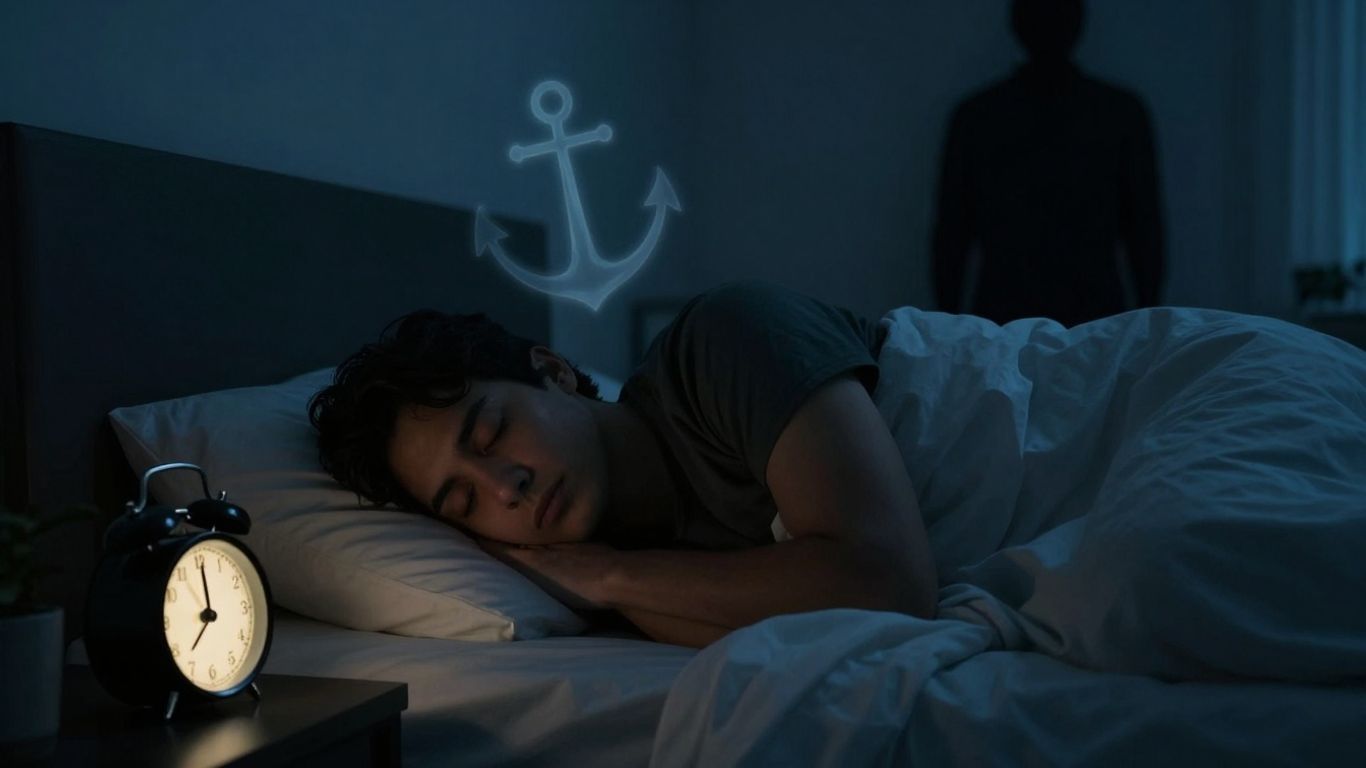
Cognitive drift at night is the slide from “I’ll just relax for a minute” into an evening of grazing, scrolling and staying up later than you meant to. It happens because tired brains default to whatever is easiest. The fix is not more willpower; it is structure: a few fixed anchors in your evening, alarms that interrupt autopilot at the right moments, and simple accountability so you can see what is working.

What evening drift looks like
- Opening the pantry “just to look” several times after dinner
- Eating in front of a screen without noticing how much
- One more episode, one more scroll, until it is past midnight
- Lying in bed replaying the day or planning tomorrow
- Waking tired, skipping breakfast and starting the cycle again
Drift is not a moral failing. By evening, you have made hundreds of decisions, your energy is lower, and the cues around you (the couch, the TV, the kitchen, the phone) all point toward low-effort habits. Planning for that predictable dip works better than hoping it will not happen.
Part 1: Anchors
Anchors are fixed points in your evening that happen at roughly the same time and in the same order. They give your brain a track to run on, so there are fewer open decisions to drift into.
Four useful evening anchors
- A real dinner at a regular time. A balanced meal with protein, vegetables and a whole grain reduces true hunger later. If dinner is early, plan an evening snack rather than leaving it to chance.
- A “kitchen closed” point. After the planned snack, tidy the kitchen, run the dishwasher, turn off the kitchen light. It is a physical signal that eating is done for the day.
- A shutdown ritual. Write tomorrow’s to-do list, set out what you need for the morning, and close the laptop. See the evening shutdown ritual for a full version.
- A fixed bedtime and wake time. The NHS notes that going to bed and getting up at similar times each day helps your body know when it is time to sleep, and recommends keeping the routine on days off too (NHS).
Why the to-do list matters
Unfinished tasks are a common reason minds race at bedtime. In a sleep-lab study of 57 young adults, those who spent five minutes writing a specific to-do list before bed fell asleep faster than those who wrote about tasks they had already completed (Scullin et al., 2018). Getting tomorrow out of your head and onto paper is a small anchor with a real payoff.
Part 2: Alarms
Alarms are reminders set for the moments when drift usually starts. They are not meant to nag. They are a tap on the shoulder that turns autopilot back into a choice.
| Alarm | Suggested time | What it prompts |
|---|---|---|
| Evening snack | About 2 hours after dinner | “Am I hungry? If yes, have the planned snack. If no, kitchen’s closed.” |
| Screens down | 1 hour before bed | Phone to its charger outside the bedroom, TV off |
| Wind-down | 30–45 minutes before bed | Shower, pyjamas, herbal tea or warm milk, a book |
| Lights out | Bedtime | In bed, lights off |
The NHS suggests avoiding phones, tablets and computers for an hour before bed, choosing relaxing activities such as reading or breathing exercises, avoiding large meals close to bedtime, and swapping caffeinated drinks for a warm milky drink or herbal tea. It also notes that alcohol and nicotine can disrupt sleep. Skipping alcohol altogether is one of the simplest ways to protect both sleep and weight goals.
Tips for alarms that work
- Label them with the action, not just the time: “Phone on kitchen charger.”
- Use a gentle tone. A jarring sound makes you more likely to dismiss it.
- Keep the number small. Two to four alarms is plenty; more becomes noise.
- Pair alarms with environment. Charge your phone outside the bedroom and use a basic alarm clock, so the screen is not the last thing you see. More ideas in phone boundaries that protect sleep and meals.

Part 3: Accountability
Accountability means you can see what is happening, and ideally someone else can too. It is not about judgment. It is about catching drift early, before a few late nights become a habit.
Track three things
Each morning, note in a notebook or app:
- What time you went to bed
- Did you eat after the “kitchen closed” point? (yes/no)
- How you felt on waking (1–5)
The NIDDK recommends tracking progress to spot strengths and areas to improve, and recording how you felt as well as what you did, because feelings play a role in habits (NIDDK). After a week or two, patterns show up: maybe Thursdays are always late, or drift follows stressful workdays.
Add a person
Tell a partner, family member or friend about your evening plan. Options include:
- A shared “screens down” time in the household
- A quick good-night text to a friend at your wind-down time
- A weekly check-in on how your evenings went
For more on making this work, see the habit buddy system.
When drift happens anyway
Some nights you will end up on the couch with a snack and a screen at 11 pm. That is normal. When you notice it:
- Stop where you are, without a lecture to yourself.
- Do one anchor step: put the food away, plug in the phone, brush your teeth.
- Go to bed. Do not try to “catch up” by staying up later.
- In the morning, eat breakfast as usual. No skipping to make up for it.
- Look at your tracking at the end of the week and adjust one thing.
If evenings keep going sideways, check the basics: Are you eating enough during the day? Is dinner too small or too early? Is your bedtime realistic for your schedule?
When to check with a professional
Talk to your doctor if you regularly struggle to sleep despite good habits, snore loudly or wake gasping, feel very sleepy during the day, or if night eating feels out of control or is followed by guilt or compensating. If evening eating is tied to distress or feels compulsive, the National Eating Disorder Information Centre (NEDIC) offers free support in Canada.
Key takeaways
- Evening drift is predictable; plan for it rather than relying on willpower.
- Anchors: regular dinner, a kitchen-closed point, a shutdown ritual with a to-do list, a fixed bedtime.
- Alarms: two to four gentle, labelled reminders at the moments drift usually starts.
- Accountability: track bedtime, after-hours eating and morning energy; share the plan with someone.
- When drift happens, do one anchor step and go to bed. Start fresh at breakfast.