
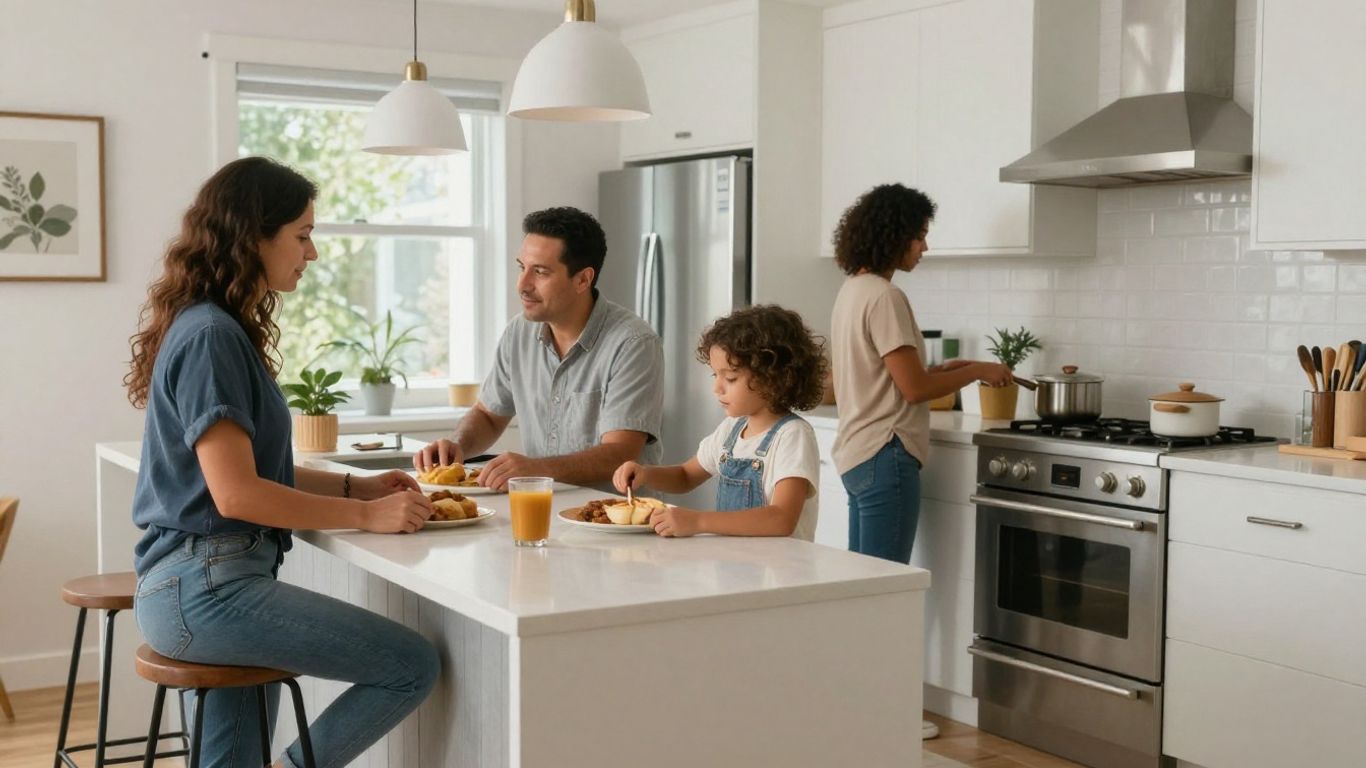
A kitchen truce is a simple set of agreements that lets everyone in the family use the kitchen without constant friction: clear zones for different tasks, easy signals for “busy” or “help needed,” and a few shared rules everyone helped write. It’s especially useful when you’re trying to eat healthier and need the kitchen to support your plans rather than derail them. Here’s how to set one up in a weekend.

Why the kitchen becomes a battleground
The kitchen is small, busy and shared. Common flashpoints include:
- Someone starts cooking while someone else is making a snack.
- Dishes pile up and nobody agrees whose turn it is.
- Food you bought for planned meals disappears.
- Different eating styles or preferences clash.
- Everyone needs the kitchen at the same time, usually around 5:30 p.m.
A truce works better than a rulebook handed down because everyone has a say. Canada’s Food Guide notes that planning and preparing meals with others helps nurture healthy eating habits, builds food skills, and can make meal prep more fun and less work.
Step 1: Set up zones
Zones reduce collisions by giving each type of task its own space. Even a small kitchen can have three or four.
| Zone | What lives there | Who uses it |
|---|---|---|
| Cooking zone | Stove, main cutting board, knives, pots | Whoever is making the meal |
| Snack and breakfast zone | Bowls, cereal, fruit, toaster, a shelf of ready snacks | Anyone, anytime |
| Drinks zone | Cups, water jug, milk, herbal teas | Anyone, anytime |
| Clean-up zone | Sink, dish rack, dishwasher, compost and recycling | Dish crew of the day |
| Planning zone | Fridge door or whiteboard with menu and grocery list | Everyone |
Put the snack and drink zones away from the stove so people can grab something without getting in the cook’s way. Kids especially benefit from a low, reachable shelf of approved snacks.
Fridge and pantry zones
- One shelf or bin for “planned meal ingredients — please ask.”
- One shelf for “free to eat” snacks and leftovers.
- Labels with names or dates on anything that belongs to someone or needs using soon.
Step 2: Agree on signals
Signals let people communicate quickly without interrupting or arguing.
- “Cook at work”: an apron on, or a sign on the counter. It means “snack zone only, please don’t ask for the stove.”
- “Help wanted”: a magnet on the fridge or a simple call: “Kitchen crew!”
- Timer: set a visible kitchen timer when the stove or oven is in use so others know when it’ll be free.
- Whiteboard notes: “Saving the chicken for Thursday” or “Leftover soup is free.”
Keep the list short. Three or four signals that everyone remembers beat ten that nobody uses.
Step 3: Write shared rules together
Hold a short family meeting, maybe 20 minutes over a snack. Ask everyone, “What bugs you about the kitchen?” and “What would make it easier?” Then turn the answers into five to seven rules. Examples:
- Clean as you go: put away what you take out.
- Rinse your own dishes right after eating.
- Ask before using ingredients on the “planned meals” shelf.
- The cook chooses the music, the dish crew can change it.
- No phones on the counter during meal prep.
- Kitchen closes at a set time in the evening (except for water).
- Speak up kindly: “Can I have that space in five minutes?” rather than reaching across.
Include basic food safety so nobody has to argue about it. The CDC’s four steps are clean, separate, cook and chill: use one cutting board for raw meat, poultry and seafood and another for produce and bread, and refrigerate perishable leftovers within 2 hours.
Post the rules where everyone can see them, and agree to review them in a month.
Step 4: Share the work by age and skill
Dividing tasks fairly cuts down on resentment. Canada’s Food Guide lists age-appropriate kitchen tasks for kids, for example:
- Ages 2–3: wash fruits and vegetables, add ingredients to a bowl.
- Ages 4–6: set the table, stir, slice soft fruit with a child’s knife.
- Ages 8–11: pack their own lunch, prepare a vegetable platter, use the stove with help.
- Teens: follow full recipes and take charge of a meal on set days.
The guide also notes that kids who help prepare food may be more willing to try it, which helps with picky eating.
A rotating chart keeps things fair: one person cooks, one sets the table, one is on dish crew, and the roles shift each night. If you prep in batches on the weekend, see task batching for meals and training. Theme nights can also cut down on “what’s for dinner” debates; our guide to theme days has ideas.
When eating styles differ
One person may be cutting back on sweets while another loves baking. Someone may be plant-based while others eat meat. A few ways to keep peace:
- Build-your-own meals: tacos, grain bowls or wraps with a base everyone shares and toppings each person chooses.
- Cook the base, vary the extras: plain roasted vegetables and grains, with sauces and proteins on the side.
- Respect personal goals: agree that nobody comments on what’s on someone else’s plate.
- Store tempting foods out of sight: an opaque bin for treats makes life easier for anyone trying to cut back, without banning anything.
Handling rush hour and conflicts
When everyone needs the kitchen at once:
- Schedule a 15-minute “snack window” before dinner prep so hungry kids aren’t underfoot.
- Prep ingredients earlier in the day or on the weekend.
- Assign one cook and one helper; everyone else stays in the snack zone or out.
When a disagreement happens, pause, use “I” statements (“I feel rushed when…”), and look for a compromise. Bring repeat problems to the next family check-in rather than arguing mid-meal. Weekends can unsettle routines; our guide to weekend systems helps you keep progress when schedules loosen.
A sample weekend setup
- Saturday morning (30 minutes): Clear the counters and decide where each zone goes. Move snack foods and cups to their new spots.
- Saturday afternoon (20 minutes): Family meeting. List frustrations, agree on signals and draft the rules.
- Saturday evening: Make labels for fridge shelves and bins. Post the rules and job chart.
- Sunday: Plan the week’s dinners on the whiteboard and do a short prep session together, with each person taking one task.
- One month later: Check in. What’s working? What needs to change?
Key takeaways
- Set up zones for cooking, snacks, drinks, clean-up and planning.
- Agree on three or four simple signals.
- Write five to seven rules together, including basic food safety.
- Share tasks by age and skill, and rotate roles.
- Use build-your-own meals when eating styles differ.
- Review the truce monthly and adjust.
FAQ
What if one person won’t follow the rules?
Ask what isn’t working for them. Rules that someone helped create are easier to follow, so adjust together rather than enforcing harder.
How young can kids help in the kitchen?
Canada’s Food Guide suggests even 2- to 3-year-olds can wash produce and add ingredients to a bowl with supervision.