Figuring out restaurant macros without an app can feel like a puzzle. You’re out, you’re hungry, and the menu doesn’t give you any numbers. Instead of stressing, let’s talk about some simple ways to get a good estimate. We’re not aiming for perfect here, just a better idea of what you’re eating so you can stay on track with your goals. It’s about making smart guesses and building awareness, one meal at a time.
Key Takeaways
- Use your hand as a guide: A palm-sized portion for protein, a fist for carbs or veggies, and a thumb for fats can help you estimate serving sizes without a scale.
- Break down your plate: Mentally separate your meal into protein, carbs, and fats to better assess the components and their likely macro contributions.
- Sauces and dressings are sneaky: Always ask for them on the side. A thumb-sized estimate is a good starting point for oils and creamy options.
- Find a ‘stunt double’: If the restaurant isn’t in a database, search for a similar dish from a chain restaurant to get a ballpark macro estimate.
- Focus on awareness, not perfection: The goal is to make educated guesses and build a better understanding of your food, not to hit exact numbers every time.
Mastering Restaurant Macros: Visual Estimation Techniques
Eating out can feel like the ultimate macro-tracking hurdle. Restaurant menus almost never list macros, and eyeballing portion sizes is often a guessing game. But instead of throwing in the towel, we can shift our focus from strict precision to general awareness. It’s about making educated guesses and understanding the general makeup of your meal.
The Challenge of Dining Out
When you’re at a restaurant, you don’t have your trusty kitchen scale or measuring cups. The ingredients are often hidden in sauces, and portion sizes can be wildly inconsistent. This is where the idea of perfect tracking goes out the window, and we need a different approach.
Shifting Focus from Precision to Awareness
Instead of aiming for exact numbers, let’s aim for a good ballpark. The goal isn’t to be perfect; it’s about staying mindful and making the best estimation you can. Think of it as a skill you’re developing, not a test you have to ace every time.
Embracing Imperfection in Tracking
It’s okay not to hit your numbers exactly when dining out. The most important thing is to make a conscious effort to estimate. This practice helps you learn more about food portions and how different meals contribute to your daily intake, even if the numbers aren’t spot-on. We’re aiming for progress, not perfection, and that’s a much more sustainable way to approach eating out.
Deconstructing Your Plate: A Visual Approach
![]()
When you’re at a restaurant, the menu often doesn’t give you the exact numbers you’re used to seeing in your tracking app. It can feel a bit like a guessing game, right? Instead of getting stressed about it, let’s break down how to look at your meal and make a pretty good estimate. The main idea is to mentally separate your food into its basic building blocks: protein, carbohydrates, and fats. This helps you see the bigger picture of your meal’s composition.
Identifying Core Components: Protein, Carbs, and Fats
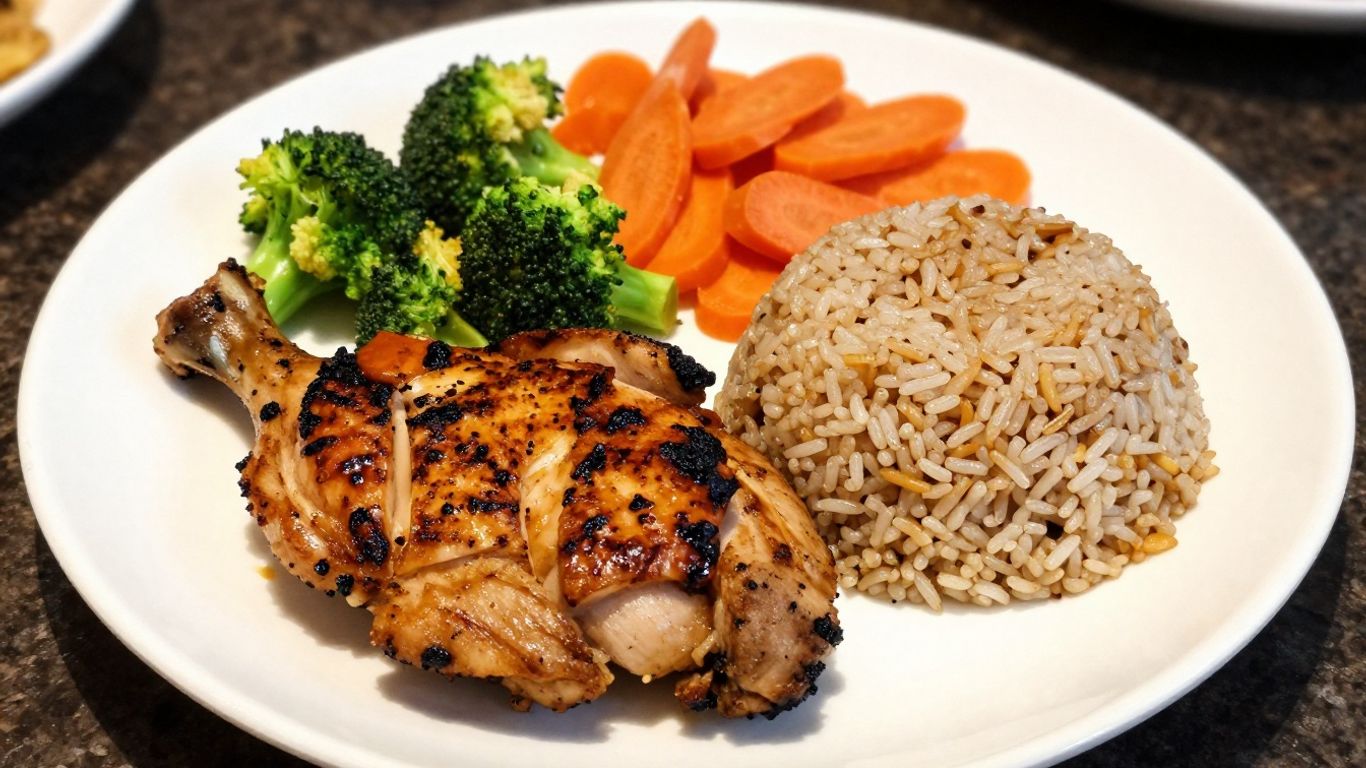
Think about what’s actually on your plate. Is there a piece of chicken, fish, or a tofu steak? That’s your protein. Are there potatoes, rice, pasta, or bread? Those are your carbs. And what about the oil used to cook things, any nuts, seeds, or creamy sauces? Those are your fats. Just being able to spot these main categories is the first step. It’s like learning the alphabet before you can read a book.
Utilizing Your Hand as a Measuring Tool
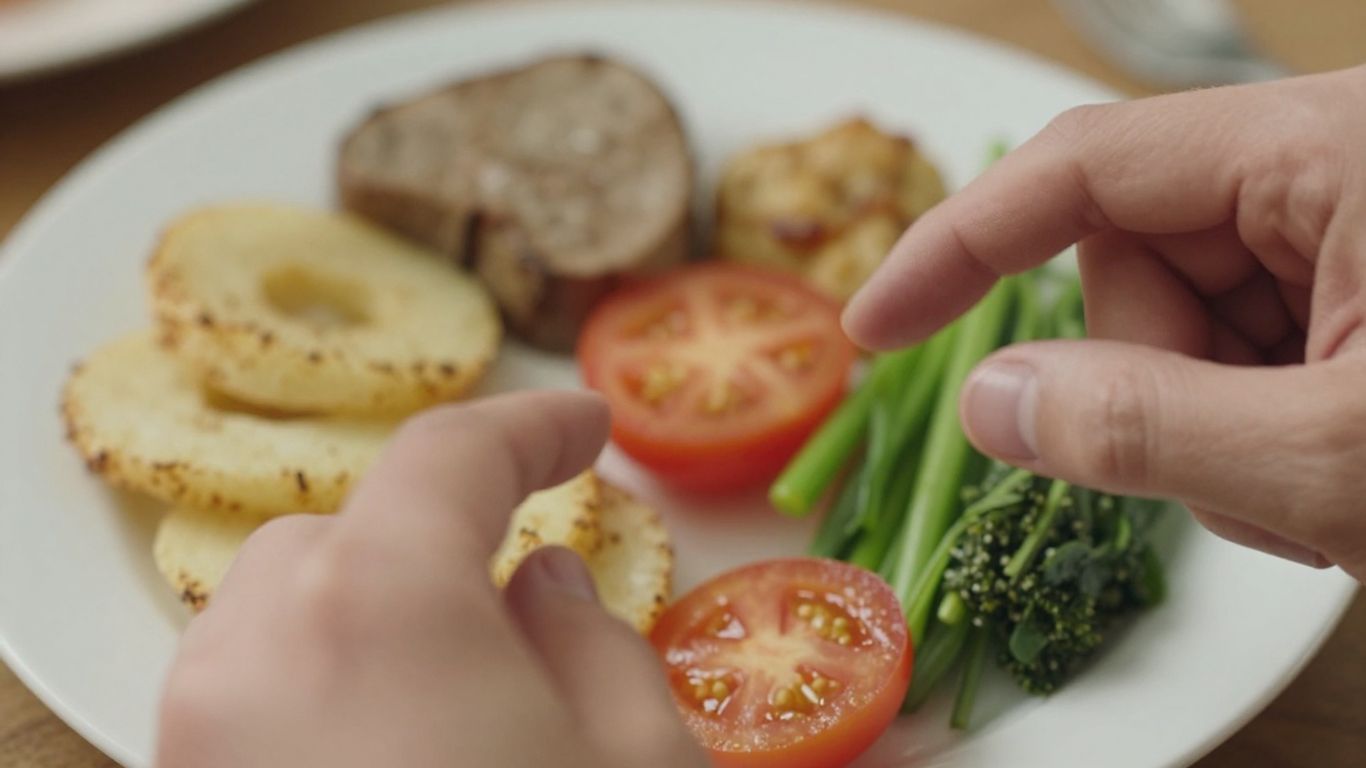
Your hand is surprisingly useful for estimating portion sizes, and it’s always with you! For protein, aim for a portion about the size of your palm. For carbohydrates like rice, pasta, or potatoes, a cupped hand can give you a good idea of a serving. And for fats, like nuts or a drizzle of oil, think about the size of your thumb. It’s not perfect, but it’s a solid way to get a ballpark figure without any special tools.
Here’s a quick guide:
- Protein: Your palm (roughly 3-4 oz)
- Carbohydrates: Your cupped hand (roughly 1/2 cup cooked)
- Fats: Your thumb (roughly 1 tbsp)
The Power of Visual Cues for Portion Control
Beyond your hand, just looking at the plate can tell you a lot. Restaurants often serve larger portions than we might eat at home. If you notice a huge pile of pasta or a massive steak, it’s a visual cue that you might want to eat only part of it, or plan to take some home. Paying attention to these visual signals helps you manage your intake without needing to count every single gram. It’s about building awareness of what a reasonable portion looks like for you.
The Plate Method: Building Balanced Meals Visually
![]()
Okay, so you’re at a restaurant, and the menu looks like a foreign language when it comes to calories and macros. Instead of stressing, let’s talk about a super simple visual trick: the Plate Method. It’s all about building a balanced meal right there on your plate, without needing a calculator or a scale. Think of it as a mental blueprint for good eating.
Allocating Space for Non-Starchy Vegetables
This is where you get to load up! Aim to fill about half of your plate with non-starchy vegetables. We’re talking about things like broccoli, spinach, bell peppers, asparagus, or a big side salad. These guys are packed with nutrients and fiber, but they don’t pack a lot of calories. They add volume to your meal, helping you feel full and satisfied. So, pile them high – it’s a win-win.
Balancing Protein and Complex Carbohydrates
Now, let’s fill the other half of your plate. Divide that remaining space into two equal quarters. One quarter should be dedicated to your protein source. This could be grilled chicken, fish, lean beef, tofu, or beans. The other quarter is for your complex carbohydrates. Think brown rice, quinoa, sweet potatoes, or whole-wheat pasta. These provide sustained energy and are important for keeping you going.
Incorporating Healthy Fats for Satiety
Don’t forget the fats! While they don’t get their own big section on the plate, healthy fats are super important for feeling full and absorbing certain vitamins. A small amount is usually all you need. This could be a drizzle of olive oil on your veggies, a few slices of avocado, or some nuts sprinkled on a salad. A good visual cue is about the size of your thumb – that’s generally a good portion for added fats like oils or dressings.
The Plate Method isn’t about rigid rules; it’s a flexible guide. It helps you make conscious choices about building a meal that’s satisfying and nutritious, even when you’re not in control of every ingredient.
Navigating Hidden Calories: Sauces and Dressings
Recognizing the Impact of Condiments
Sauces, dressings, and other condiments can really sneak up on you. They often add a significant amount of calories, fats, and sugars without you even realizing it. Think about that creamy dressing on your salad or the glaze on your chicken – those little additions can pack a punch. It’s easy to overlook them when you’re focused on the main part of your meal, but they can easily add hundreds of calories. Paying attention to these extras is key to accurate estimation.
The Strategy of Requesting Sauces on the Side
One of the simplest and most effective tricks is to ask for sauces and dressings on the side. This gives you complete control over how much you use. You can dip your fork into the dressing before picking up your salad, or use just a small amount of sauce to flavor your dish. It’s a small change that makes a big difference in managing your intake.
Estimating Dressings with a Thumb-Sized Guide
When you can’t get sauces on the side, or for other high-fat additions like butter or oil, use your thumb as a handy visual guide. A portion roughly the size of your thumb is a good estimate for about one tablespoon. This applies to things like salad dressings, mayonnaise, or even a drizzle of olive oil. It’s not perfect, but it’s a much better guess than just pouring it on!
Here’s a quick reference:
| Item Type | Visual Estimation Guide |
|---|---|
| Creamy Dressings | Thumb-sized portion |
| Oil-based Dressings | Thumb-sized portion |
| Sauces (e.g., BBQ, Teriyaki) | Thumb-sized portion |
| Butter/Margarine | Thumb-sized portion |
Leveraging External Resources for Estimation
Sometimes, you just can’t get a perfect measurement, and that’s okay. Luckily, there are ways to use what’s already out there to help you make educated guesses.
Finding ‘Stunt Doubles’ in Online Databases
When you’re looking at a menu and can’t find the exact dish listed in your tracking app, don’t panic. Think of it like finding a ‘stunt double’ for your meal. Most apps have huge databases of foods. If you ordered chicken stir-fry, search for "chicken stir-fry" and see what comes up. Look for an entry that seems pretty close to what you’re eating. Does it have a similar amount of chicken and veggies? Is the sauce description similar? Pick the closest match you can find. It won’t be perfect, but it’s way better than just guessing wildly.
Using Restaurant Menus for Pre-Meal Planning
This is a game-changer. Before you even leave the house, or at least before you order, take a peek at the restaurant’s menu online. Many places now have their menus available, and some even list nutritional information. Even if they don’t have the full breakdown, you can often get a good idea of the ingredients. This lets you plan ahead. You can search for similar items in your app beforehand or decide on a meal that you know will be easier to estimate.
The Role of Recipe Importers for Complex Dishes
Got a dish that’s a bit more complicated, maybe with a special sauce or a mix of ingredients you can’t easily break down? Some apps have a feature called a ‘recipe importer.’ You can often paste a link to a recipe from a website, or manually enter the ingredients yourself, and the app will calculate the macros for you. It’s like having a personal chef do the math. This is super helpful for things like casseroles, complex curries, or anything with a homemade sauce that you wouldn’t find in a standard database.
When you’re eating out, the goal isn’t always pinpoint accuracy. It’s about making a reasonable estimate based on the information you have. Using online databases, menus, and app features can give you a solid starting point for logging your meals.
Refining Your Estimation Skills
So, you’ve been practicing the visual tricks, using your hand as a guide, and getting a feel for portion sizes. That’s awesome! But like any skill, estimation gets better with practice. It’s not about being perfect right away, but about getting more comfortable and accurate over time. Think of it like learning to ride a bike – you wobble a bit at first, but eventually, you’re cruising.
Practicing with Accurate Measurements at Home
This is where you build your internal reference library. When you can use a scale or measuring cups, do it! It’s like training wheels for your eyes. Weigh out a standard serving of something you eat often, like chicken breast or rice. Then, try to visually estimate that amount next time without the scale. How close were you? Doing this regularly helps calibrate your perception. You’ll start to see what 4 ounces of chicken or a cup of cooked pasta actually looks like, even when you’re not measuring.
Here’s a quick way to practice:
- Pick a common food: Think chicken, rice, pasta, or a piece of fruit.
- Measure it accurately: Use a scale or measuring cup.
- Visually memorize it: Take a mental snapshot of the portion size.
- Estimate it later: Try to guess the portion size of the same food when you see it again, ideally without measuring.
- Check your guess: If possible, measure it to see how close you were.
Learning from Past Logging Experiences
Every meal you’ve logged, whether accurately or with a best guess, is a learning opportunity. If you logged a meal and later realized it was way off, or if you felt unusually full or hungry after a meal you estimated, take a moment to reflect. What might have been different? Was that "medium" baked potato actually quite large? Did that "tablespoon" of peanut butter look more like two?
Your past experiences, even the ones that felt like mistakes, are your best teachers. They provide real-world data points that help you adjust your internal estimations for future meals.
Considering Individual Ingredient Contributions
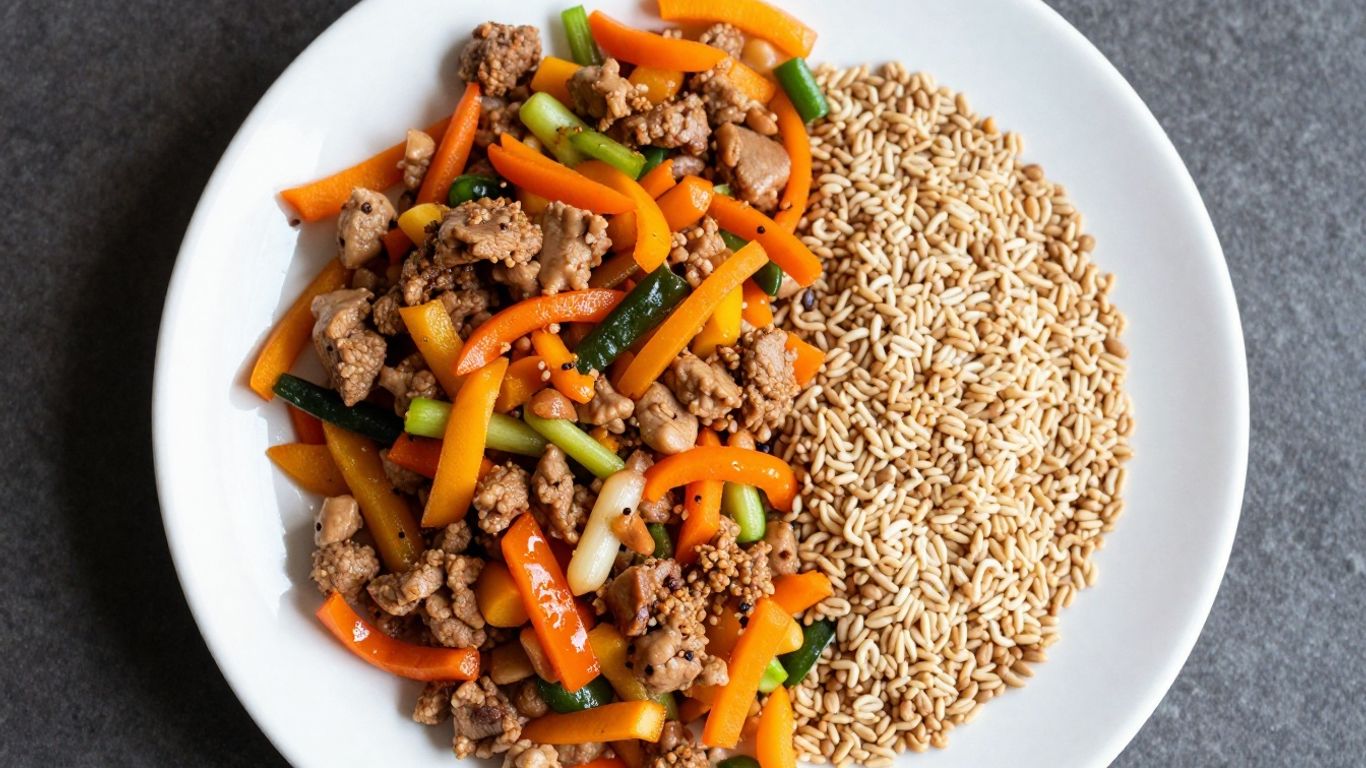
When you’re looking at a plate, especially in a restaurant, try to mentally break it down. Instead of just seeing "chicken stir-fry," think: "Okay, there’s chicken (protein), rice (carbs), and a bunch of veggies (fiber/volume). What about the sauce?" Sauces and oils are often where extra calories hide. If you can identify the main components and make educated guesses about their quantities, you’ll be much closer to an accurate estimate. For example, a creamy sauce will add more fat than a light soy-based one. Noticing these details makes your estimations much more informed.
Beyond Macros: Nutrient Density and Satiety
The Importance of Fiber for Feeling Full
Sure, hitting your protein, carb, and fat targets is important, but it’s not the whole story. Sometimes, even if you’re ‘on track’ with your numbers, you might still feel hungry. This often comes down to the quality of the food you’re eating. Fiber is a big player here. It adds bulk to your meals without adding a lot of calories, and it helps slow down digestion. This means you stay feeling full and satisfied for much longer. Think of it as the unsung hero of feeling content after a meal.
Prioritizing Whole Grains and Legumes
When you’re looking at your plate, especially when eating out, try to spot the sources of fiber. Whole grains like brown rice, quinoa, or whole wheat bread are much better choices than their refined counterparts (white rice, white bread). They offer more fiber and nutrients. Legumes, like beans and lentils, are also fantastic. They pack a good amount of protein and fiber, making them super filling. If you see a dish with beans or lentils, it’s usually a good bet for keeping hunger at bay.
Incorporating Non-Starchy Vegetables for Volume
Non-starchy vegetables are your best friend when you want to add volume to a meal without significantly impacting your macros. Things like broccoli, spinach, bell peppers, and zucchini are low in calories and carbs but high in fiber, vitamins, and minerals. They fill up your plate and your stomach. When dining out, don’t shy away from ordering extra side salads or vegetable-based dishes. They’re a smart way to boost satiety and nutrient intake.
Here’s a quick look at how different food types contribute to fullness:
| Food Type | Primary Contribution to Satiety |
|---|---|
| Lean Protein | High protein content |
| Fiber-Rich Veggies | Volume and fiber |
| Whole Grains | Complex carbs and fiber |
| Healthy Fats | Slows digestion |
| Refined Carbs/Sugars | Low satiety, quick energy spike |
Sometimes, a meal that ‘looks’ right on paper (macro-wise) might leave you wanting more simply because it lacks the fiber and nutrient density to keep you truly satisfied. Focusing on these elements can make a big difference in how you feel after eating.
Overcoming Tracking Plateaus and Challenges
Hitting a plateau or facing unexpected hurdles in your macro tracking journey can feel discouraging. It’s easy to think you’re doing something wrong, but these moments are actually a normal part of the process. Your body is smart and adapts to changes, and sometimes, that adaptation looks like a stall. Instead of seeing these as failures, view them as signals that it might be time to adjust your approach or simply reassess what’s going on.
Understanding Plateaus as a Normal Adaptation
Think of plateaus not as roadblocks, but as your body’s way of saying, "Okay, I’ve gotten used to this." Whether it’s weight loss stalling or energy levels dipping, it often means your metabolism has adjusted to your current intake and activity. This is a sign that your body has become efficient. It’s not a sign of failure, but rather a cue that a slight recalibration might be in order. Sometimes, simply continuing with your plan for a bit longer can help you push through, but often, a small change is needed.
Viewing Challenges as Learning Opportunities
Every time you go off track, whether it’s overeating at a restaurant or skipping a workout, it’s a chance to learn. Instead of beating yourself up, ask some simple questions. Was it a stressful day? Did you not plan your meals ahead? Were you genuinely hungry because your food choices weren’t filling enough?
These moments are data points. They reveal your habits, your triggers, and where you might need more support or a different strategy. Treat each instance as a mini-experiment to gather information about yourself.
For example, if you consistently find yourself overeating at dinner after a long day, it might point to needing more substantial meals earlier in the day or finding healthier ways to manage stress. Recognizing these patterns is the first step to overcoming them.
Adapting Your Approach for Long-Term Success
When you encounter a plateau or a challenge, don’t be afraid to tweak your plan. This doesn’t mean throwing everything out the window. Small adjustments can make a big difference.
- Re-evaluate your intake: Are you still tracking as accurately as you were when you started? Sometimes, small, unlogged bites or slightly larger portions can creep in.
- Assess your activity: Has your daily movement decreased? Even small changes in your routine can impact your energy balance.
- Consider a diet break: If you’ve been in a deficit for a long time, a short period (1-2 weeks) of eating at maintenance calories can help reset your metabolism and give you a mental break.
- Focus on nutrient density: If you’re feeling hungry despite hitting your numbers, look at the quality of your food. Are you getting enough fiber from vegetables, fruits, and whole grains? Fiber is key for feeling full and satisfied.
Remember, macro tracking is a flexible tool, not a rigid set of rules. Adapting your strategy based on your body’s feedback and life’s demands is how you build a sustainable approach that works for the long haul.
Smart Strategies for Logging Restaurant Meals
The Benefit of Overestimating When Unsure
When you’re out and the exact measurements are a mystery, it’s often better to lean towards a slightly higher estimate, especially for calorie-dense items like oils, cheeses, and sauces. A little extra olive oil or a dollop of butter can add up quickly. By logging a bit more than you think you might have consumed, you give yourself a buffer and help keep your tracking closer to reality. It’s a simple way to avoid underestimating your intake when precision is impossible.
The Value of Taking Meal Photos for Reference
Don’t have time to log your meal right at the table? No problem. Snap a quick photo of your plate before you dig in. This visual record is incredibly helpful. Later, when you have a moment, you can refer back to the picture to log your meal more accurately. It’s like having a personal food diary that captures the details you might forget.
Choosing Similar Items in Databases as a Close Match
When you can’t find an exact match for your restaurant meal in a food database, don’t get discouraged. Look for entries that are very similar. For instance, if you had a chicken stir-fry, search for "chicken stir-fry" and pick the closest option available. Consider the main ingredients and preparation method. It might not be perfect, but it’s a much better approximation than leaving it blank.
Here’s a quick way to think about it:
- Protein Source: Chicken, beef, fish, tofu, beans?
- Cooking Method: Grilled, fried, baked, stir-fried?
- Main Vegetables: What veggies are prominent?
- Sauce/Dressing: Creamy, oil-based, light vinaigrette?
By breaking down the meal into these components, you can find a more suitable database entry, even if it’s not a perfect replica.
Finding Your Personal Balance in Macro Tracking
Aligning Methods with Individual Goals
Figuring out your personal macro balance is less about rigid rules and more about finding what works for you. Think about what you’re trying to achieve. Are you aiming to build muscle, lose fat, or just feel generally healthier? Your primary goal will shape how you approach your macro targets. For instance, someone focused on muscle gain might prioritize protein more heavily, while someone looking for sustained energy might lean towards a more balanced carb intake. It’s about making your macro targets a tool that helps you reach your specific objectives, not a one-size-fits-all prescription.
Exploring Hybrid Approaches for Sustainability
Sometimes, a single method doesn’t quite cut it. That’s where hybrid approaches come in. You might find that using visual estimation tricks, like the hand-portion guide, works perfectly for dining out or busy weekdays. Then, on weekends or when you have more time, you might switch to a more precise method, like using a food scale or a tracking app for a few meals. This flexibility is key. It stops tracking from feeling like a constant chore and makes it adaptable to different situations in your life. The goal is to build a system that supports your lifestyle, not one that dictates it.
Making Tracking a Habit, Not a Chore
Ultimately, the most effective macro tracking strategy is the one you can stick with long-term. This means finding a balance that feels sustainable and doesn’t lead to burnout. It’s about building awareness, not obsession. If a particular method feels too demanding or stressful, it’s okay to adjust. Maybe you focus on hitting your protein goal each day and allow more flexibility with carbs and fats. Or perhaps you only track your meals on weekdays. The real success comes from making informed choices consistently, not from hitting perfect numbers every single time.
Here are a few ways to make tracking feel less like a chore:
- Focus on patterns, not perfection: Look for trends in your energy levels, hunger, and performance rather than stressing over daily fluctuations.
- Use tools that fit your life: Whether it’s an app, visual cues, or a combination, choose what makes logging easier.
- Listen to your body: Pay attention to how different foods and macro splits make you feel. Adjust based on your personal experience.
- Celebrate small wins: Acknowledge when you make good choices or stick to your plan, even on challenging days.
Finding your personal balance in macro tracking doesn’t have to be complicated. It’s all about figuring out what works best for you and your lifestyle. Forget strict rules; focus on making smart choices that feel good. Ready to discover your unique path to a healthier you? Visit our website to learn more and start your journey today!
Your Takeaway: Progress Over Perfection
So, we’ve covered some simple ways to get a handle on restaurant meal macros without needing an app for every single bite. Remember, the goal here isn’t to be a food-tracking robot, but to build a better sense of what you’re eating. Using your hand as a guide, breaking down your plate, or even just looking up similar dishes online can make a big difference. It’s about making educated guesses and staying mindful, not stressing over exact numbers. Real life happens, and eating out is part of it. By using these visual tricks, you can enjoy your meals more and still keep moving toward your health goals. It’s a practical approach that fits into a normal life, and that’s what really matters in the long run.
Frequently Asked Questions
Why is it hard to track food eaten at restaurants?
Restaurants don’t usually tell you exactly what’s in their food, like how much oil or sugar is used. Plus, their meals are often bigger than what you’d make at home. This makes it tricky to guess the right amounts for your tracking.
What’s the easiest way to estimate food portions without apps?
You can use your hand as a guide! A palm-sized portion is good for protein, a fist is about right for carbs or veggies, and your thumb can help measure fats like oils or dressings.
How can I make my restaurant meals healthier using the ‘Plate Method’?
Imagine your plate divided. Fill half with colorful veggies that aren’t starchy, like broccoli or peppers. Then, fill one-quarter with a protein source like chicken or fish, and the last quarter with a healthy carb such as sweet potato or brown rice.
What should I do about sauces and dressings when eating out?
Sauces and dressings can hide a lot of extra calories. The best trick is to ask for them on the side. That way, you can control how much you add, using your thumb as a guide for creamy ones.
What if the restaurant meal isn’t in a tracking app’s database?
Don’t worry if you can’t find the exact dish. Look for something similar on the menu or in the app, like a different type of stir-fry or chicken dish. It’s about getting a close guess, not being perfect.
How can I get better at guessing food amounts?
Practice at home! When you can measure your food accurately, try guessing the amount first, then weigh it. This helps you learn what different portion sizes look like so you can estimate better when you’re out.
Why might I still feel hungry even if I’ve met my macro goals?
Sometimes, hitting your numbers with processed foods doesn’t keep you full. Eating more fiber from vegetables, whole grains, and beans can help you feel satisfied for longer.
What’s the best strategy if I’m unsure about a food’s amount?
When in doubt, it’s usually better to guess a little higher. This helps prevent you from accidentally going over your goals. It’s better to overestimate slightly than underestimate.