
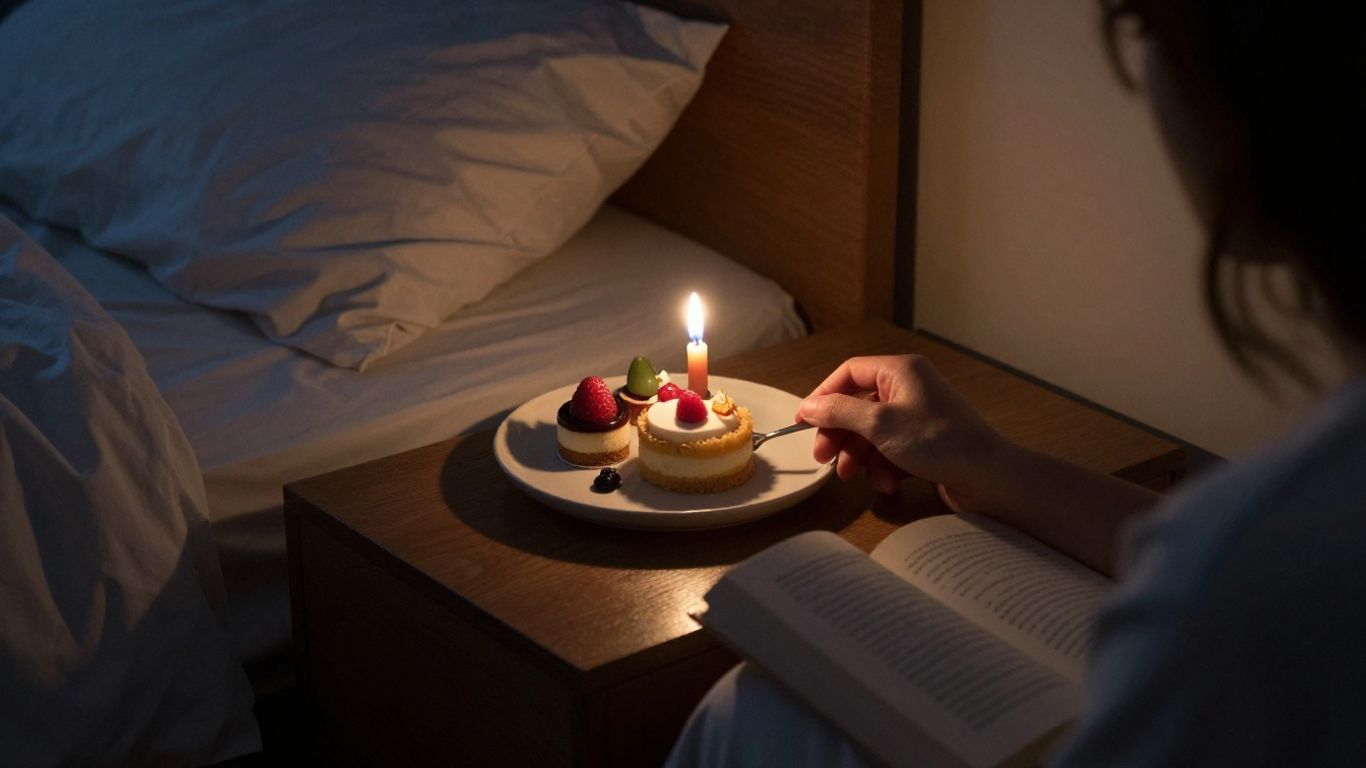
A good evening dessert ritual is a small, planned sweet treat enjoyed slowly, at a consistent time, early enough that it doesn’t disturb sleep. Keeping it modest in size, pairing it with a calming drink like herbal tea or warm milk, and leaving alcohol out of the evening altogether means you wake up rested instead of groggy. The ritual matters as much as the food: it signals that the day is done.
Why a ritual works better than “being good”
Many people try to avoid evening sweets completely, then end up grazing through the pantry at 10 p.m. A planned dessert removes the guesswork. You know what you will have, when, and how much, so there is less to negotiate with yourself.
A ritual also does something food alone can’t: it marks a transition. Clearing the kitchen, making a warm drink and sitting down with a small treat tells your body and mind that work and chores are over. That sense of closure can reduce the “something’s missing” feeling that drives late-night snacking.
Timing: protect your sleep
What and when you eat in the evening affects how you sleep. Mayo Clinic’s sleep advice is to avoid going to bed hungry or stuffed and to avoid heavy or large meals within a couple of hours of bedtime. The same page notes that caffeine takes hours to wear off and can interfere with sleep, and that calming activities before bed may help.
Practical timing guidelines:
- Have dessert soon after dinner or at least an hour or two before bed, rather than right before lying down.
- Keep the portion small enough that you feel comfortable, not full.
- Watch hidden caffeine: dark chocolate, chocolate desserts and some sodas contain it. If you are sensitive, choose fruit-based or vanilla desserts at night.
Leave alcohol out of the evening
Dessert is often paired with an alcoholic drink or a nightcap, and that pairing is what leads to rough mornings. Skipping alcohol is one of the simplest things you can do for better sleep, steadier energy and weight goals. Mayo Clinic notes that alcohol might make you feel sleepy at first but can disrupt sleep later in the night. Alcohol also adds calories and can weaken your resolve around food, so one small dessert turns into a second helping.
A dessert ritual without alcohol means no fuzzy head, no extra calories from drinks and a clearer start to the next day.
Drinks that make the ritual feel special
Canada’s Food Guide recommends making water your drink of choice, and many evening drinks can be just as enjoyable:
| Drink | Why it works at night | Pairs well with |
|---|---|---|
| Peppermint or chamomile herbal tea | Warm, caffeine-free, soothing | Fruit crisps, shortbread, dark berries |
| Rooibos or hibiscus herbal tea | Naturally caffeine-free, rich flavour | Baked apples, oat cookies |
| Warm milk with cinnamon or vanilla | Comforting, adds a little protein | A square of chocolate, banana bread |
| Sparkling water with citrus or berries | Feels festive, no sugar | Sorbet, fruit salad, lemon desserts |
| Small hot chocolate | A treat that can be the dessert itself | On its own |
Serving a sparkling drink in a nice glass with frozen berries can make the evening feel like a celebration with nothing to regret in the morning.
Dessert ideas that end the day well
Good evening desserts are satisfying in a small portion and not too heavy. Some ideas:
- Baked apple or pear with cinnamon and a spoonful of Greek yogurt.
- Two squares of chocolate eaten slowly with herbal tea.
- Berries with a little whipped cream or vanilla yogurt.
- Frozen banana “nice cream” blended with cocoa or peanut butter.
- A small slice of homemade banana bread or a single oat cookie.
- Chia pudding made earlier in the day with milk and fruit.
- Warm stewed fruit cooked with a splash of orange juice and spices.
For lower-sugar frozen options, see our frozen fruit desserts.
How to build your own dessert ritual
- Pick a time. For example, 30 minutes after dinner, after the dishes are done.
- Choose two or three go-to desserts. Rotating a short list keeps it simple and makes shopping easy.
- Portion it on a plate. Never eat from the package. Use a small bowl or a favourite plate.
- Make a drink. Herbal tea, warm milk or sparkling water.
- Sit down without screens. Eat slowly and notice the taste. A dessert you actually pay attention to is more satisfying.
- Close the kitchen. When you finish, rinse your dish and turn off the kitchen light. That’s the end of eating for the night.
This pairs naturally with a broader evening shutdown ritual, and with phone boundaries that protect sleep and meals.
A sample week
Rotating a few favourites keeps the ritual simple without getting boring:
- Monday and Thursday: baked apple with Greek yogurt and peppermint tea.
- Tuesday and Friday: two squares of chocolate with warm vanilla milk.
- Wednesday: berries with a spoonful of whipped cream and sparkling water.
- Saturday: a small slice of homemade banana bread shared with family.
- Sunday: frozen banana “nice cream” and chamomile tea.
Prepare what you can ahead of time, such as washing berries or slicing banana bread into portions, so the ritual takes only a few minutes at night.
Sharing dessert with others
A dessert ritual can be social. Families can make it a short, screen-free time to talk about the day. Friends can share a pot of herbal tea and a plate of fruit and cookies instead of meeting for drinks. When hosting, offer an interesting non-alcoholic drink, such as sparkling water with fresh mint and lime, or a pitcher of iced hibiscus tea, so everyone has something festive to hold.
If others are drinking and you are not, you don’t need to explain. A simple “I’m good with this, thanks” is enough.
If dessert brings up guilt
A planned dessert is meant to reduce food stress, not add to it. If you notice strong guilt, secrecy, or a pattern of losing control around sweets, talk with your healthcare provider. NEDIC (National Eating Disorder Information Centre) offers free support and information in Canada.
Practical takeaways
- Plan a small dessert at a set time, ideally an hour or more before bed.
- Serve it on a plate, sit down, and eat it without screens.
- Pair dessert with herbal tea, warm milk or sparkling water.
- Leave alcohol out for better sleep and a clear-headed morning.
- Choose caffeine-free desserts if chocolate keeps you awake.
- Close the kitchen when the ritual ends.
FAQ
Is it bad to eat dessert every night?
Not necessarily. A small, planned portion can fit into a balanced eating pattern and may prevent bigger late-night snacking.
What’s the best drink with dessert at night?
A caffeine-free herbal tea, warm milk or sparkling water. They feel like a treat without disrupting sleep.
How long before bed should I eat dessert?
Aim for at least an hour or two, and keep the portion light so you go to bed comfortable rather than full.