
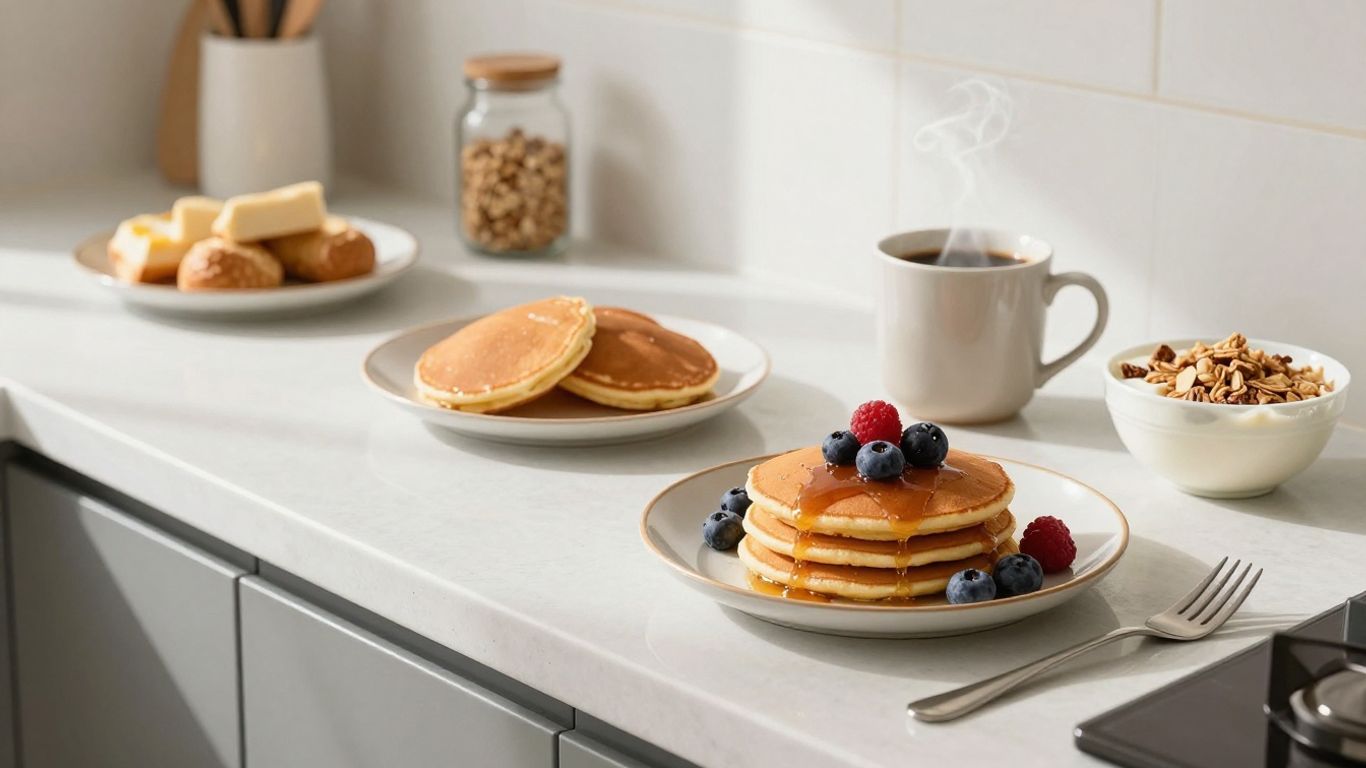
If you wake up late, your first meal and lunch can end up too close together, which leads either to skipping one or overeating at both. The fix is to match the size of your breakfast to the gap before your next meal: a light, protein-forward breakfast if lunch is only two hours away, or a fuller “brunch” that replaces lunch and shifts your next meal to mid-afternoon. Either way, include protein and fibre so you stay steady until the next meal.

First, decide which pattern fits your day
Late risers usually fall into one of three situations. Pick the one that matches your morning:
| You wake up… | Gap before usual lunch | Best approach |
|---|---|---|
| Around 9 to 10 a.m. | 3 or more hours | Normal breakfast, normal lunch |
| Around 10:30 to 11 a.m. | About 1.5 to 2 hours | Mini breakfast, then lunch slightly later |
| Around noon or later | None | One balanced brunch, then a mid-afternoon meal or snack and dinner |
The aim is to avoid stacking two full meals on top of each other or going so long without food that you arrive at dinner ravenous. Plan your eating around your own schedule, not the clock on someone else’s day.
What a balanced late breakfast includes
Whatever the size, the same building blocks keep it from leaving you hungry an hour later:
- Protein: eggs, Greek yogurt, cottage cheese, milk or soy beverage, tofu, nut butter, beans.
- Fibre-rich carbohydrate: oats, whole-grain bread or wraps, fruit.
- Something fresh: fruit or vegetables.
This follows Canada’s Food Guide, which recommends plenty of vegetables and fruit, whole grains and protein foods, with water as your drink of choice.
Option 1: mini breakfasts (when lunch is close)
These are small enough that you will be ready for lunch in two hours, but substantial enough to stop you from grazing.
- Greek yogurt cup: 3/4 cup plain Greek yogurt with berries and a spoonful of oats or seeds.
- Egg and fruit: one or two hard-boiled eggs and an orange.
- Half sandwich: one slice whole-grain toast with peanut butter and sliced banana.
- Cottage cheese bowl: 1/2 cup cottage cheese with cucumber, tomato, pepper and black pepper.
- Smoothie: milk or soy beverage, frozen berries and a handful of spinach. Add yogurt for more protein.
Keep a few of these ready to grab, especially hard-boiled eggs and portioned yogurt, so a late start doesn’t become a skipped meal.
Option 2: overnight and make-ahead breakfasts
If you know you’ll sleep in, prepare breakfast the night before.
Basic overnight oats
- 1/2 cup rolled oats
- 1/2 cup milk or soy beverage
- 1/4 cup plain Greek yogurt
- 1 tablespoon chia seeds
- Fruit, cinnamon and a little honey or maple syrup
Stir in a jar, refrigerate overnight and eat cold. For a smaller mini-breakfast, make a half portion.
Egg muffins
Whisk eggs with chopped vegetables and a little cheese, pour into a muffin tin and bake until set. Refrigerate and reheat one or two in the morning.
More ideas are in our high-fibre breakfasts that actually satisfy.
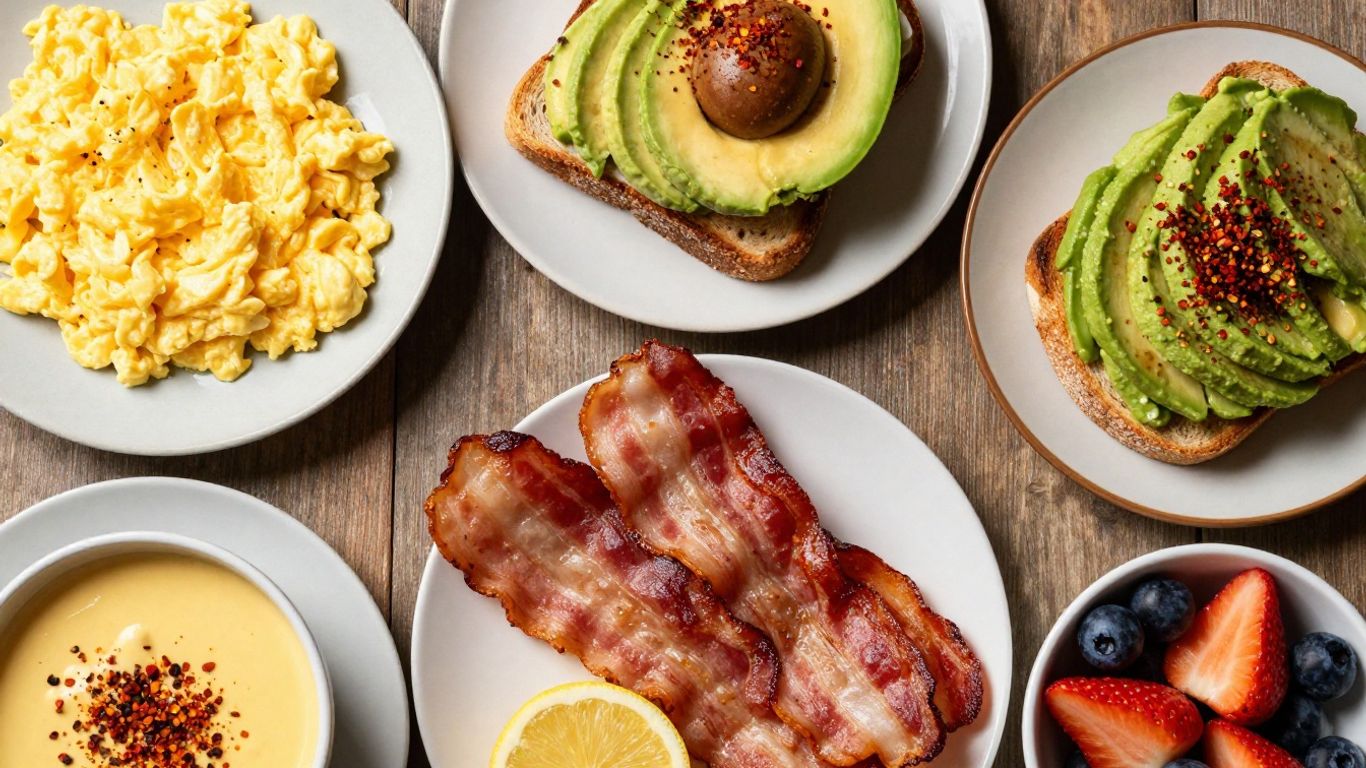
Option 3: brunch that replaces lunch
When you wake up close to noon, have one proper meal instead of trying to fit in two. A brunch should look like a full lunch: protein, vegetables, whole grains and a little fat.
- Vegetable scramble: two or three eggs with spinach, peppers and mushrooms, whole-grain toast with avocado, and fruit.
- Breakfast burrito: whole-grain wrap with scrambled eggs or tofu, black beans, salsa and a little cheese.
- Savoury toast plate: two slices whole-grain toast with smoked salmon or hummus, cucumber, tomato and a side of yogurt.
- Grain bowl: leftover brown rice or quinoa topped with a fried egg, sautéed greens and avocado.
Then plan your next meal three to four hours later. A mid-afternoon snack with protein (such as apple and cheese, or vegetables and hummus) keeps you comfortable until dinner.
Why protein matters more for late breakfasts
A late breakfast of only toast or a pastry often leaves you hungry again before lunch, so you end up eating twice in quick succession. Protein helps meals hold you longer. Canada’s Food Guide encourages a variety of protein foods, including plant-based choices like beans, nuts and seeds along with eggs, yogurt and lower fat dairy. As a reference point, Harvard Health notes the basic daily recommendation is 0.8 grams of protein per kilogram of body weight, which works out to roughly 53 grams for a sedentary 140-pound woman. Spreading protein across meals makes that easier to reach.
If eggs or shakes aren’t your thing, see our protein breakfast blueprints without eggs or shakes.
Sample late-riser days
| Time | Wake at 10:30 a.m. | Wake at noon |
|---|---|---|
| On waking | Glass of water; Greek yogurt with berries and seeds | Glass of water |
| Around 12:30 p.m. | Lunch: lentil soup, whole-grain roll, raw vegetables | Brunch: vegetable scramble, toast with avocado, fruit |
| Around 3:30 p.m. | Snack: apple and cheese | Light meal or snack: hummus wrap with vegetables |
| Around 6:30 p.m. | Dinner | Dinner |
Both days include three or four eating occasions spaced a few hours apart, which is easier on energy and appetite than one huge meal or long stretches with nothing.
Mistakes that can wreck lunch
- A big, sugary breakfast close to lunch. Pancakes with syrup at 11 a.m. can leave you uncomfortably full at noon and hungry by 2 p.m.
- Skipping breakfast, then overeating. If you wake late and skip food entirely, you may arrive at lunch overly hungry. Even a mini breakfast helps.
- Grazing instead of eating. Picking at crackers and leftovers for two hours adds up and rarely satisfies.
- Forgetting fluids. Start with a glass of water. Thirst can feel like hunger after a long sleep.
Practical takeaways
- Match breakfast size to the gap before your next meal.
- If lunch is two hours away, eat a mini breakfast with protein.
- If you wake near noon, have one balanced brunch and push your next meal to mid-afternoon.
- Prepare overnight oats or egg muffins when you know you’ll sleep in.
- Include protein and fibre every time; skip pastry-only breakfasts.
- Start the day with a glass of water.
FAQ
Is it OK to skip breakfast if I wake up late?
Some people do fine combining breakfast and lunch into one brunch. What matters most is that your meals are balanced and you are not overly hungry later.
How long should I wait between breakfast and lunch?
Around three to four hours suits many people, but go by your own hunger. If lunch is sooner, keep breakfast small.
What if I am not hungry when I wake up late?
Start with a glass of water and something small, like yogurt or a piece of fruit with a few nuts. Appetite often picks up within an hour. Then have a proper meal when you are hungry, rather than forcing a large breakfast you don’t want.