
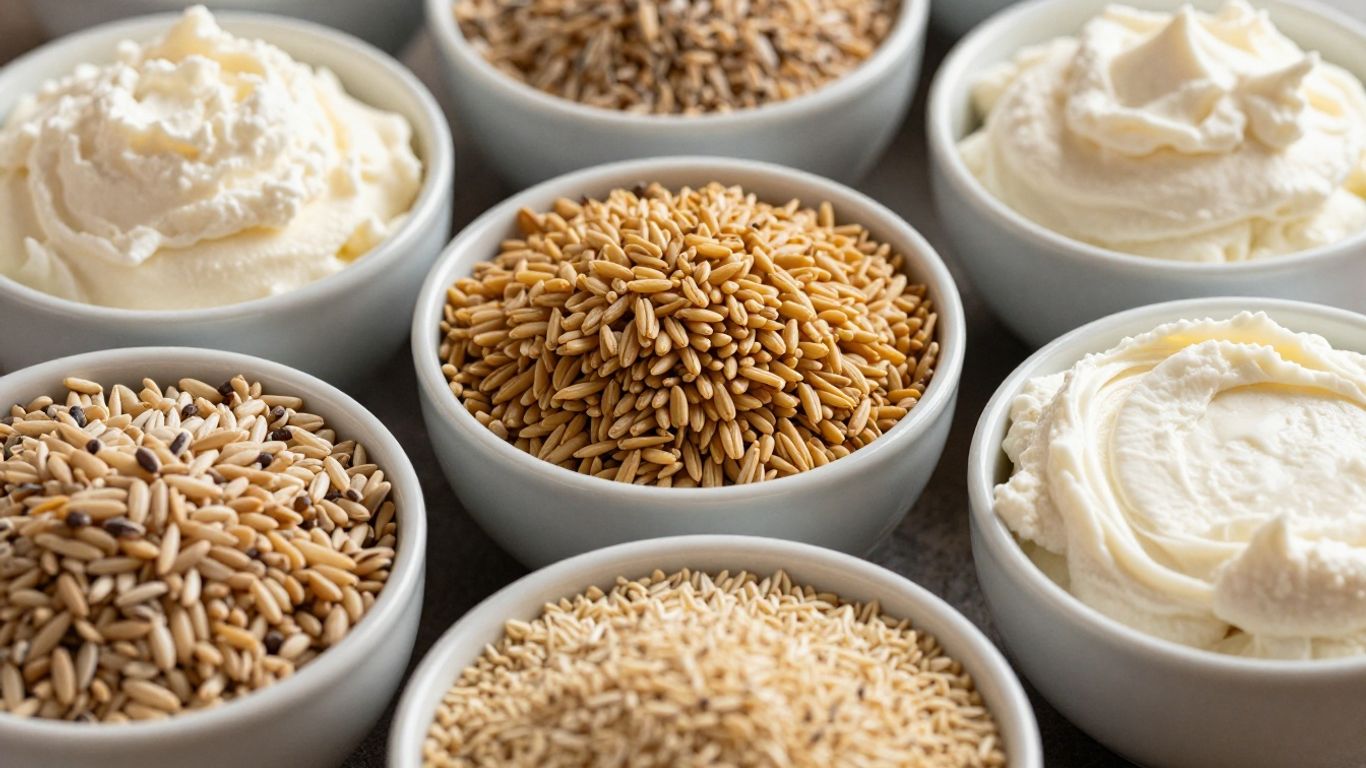
For most grains, the texture you get comes down to three things: how much liquid you use, how long you cook, and if you let the grain rest off the heat. Less water and a proper rest give fluffy, separate grains. More water and stirring give creamy, porridge-like results. The charts below give reliable starting ratios and times for common grains, plus how to adjust for the texture you want.
Why whole grains are worth mastering
Whole grains keep the bran and germ that refining removes, so you get fibre along with vitamins, minerals and other plant compounds. Harvard Health notes these nutrients have been linked to benefits such as lower blood pressure, blood sugar and cholesterol. Canada’s Food Guide suggests making one quarter of your plate whole grain foods. When you can cook a pot of grains you actually enjoy, it’s much easier to make that a habit.
Two cooking methods
- Absorption method: measured liquid, simmer covered until it’s absorbed, then rest. Best for rice, quinoa, millet, couscous and oats. No nutrients poured down the drain.
- Pasta method: cook in plenty of boiling water, then drain. Best for farro, barley, wheat berries and wild rice, which vary a lot in how much water they absorb. It’s very forgiving and prevents gummy results.
Grain cooking chart
Ratios are liquid to dry grain, by volume. Times are simmering times after the liquid boils. These are starting points; brands, grain age and pot size vary, so check the package the first time and adjust.
| Grain (1 cup dry) | Liquid | Simmer time | Rest (covered, off heat) | Typical texture |
|---|---|---|---|---|
| White long-grain or basmati rice | 1½–1¾ cups | 15–18 min | 5–10 min | Fluffy, separate |
| Brown rice | 2–2¼ cups | 40–45 min | 10 min | Chewy-tender |
| Quinoa (rinsed) | 1¾–2 cups | 15 min | 5 min | Light, slight pop |
| Millet | 2 cups (fluffy) to 3 cups (creamy) | 20 min | 10 min | Fluffy or soft |
| Couscous (regular) | 1–1¼ cups boiling | None: steep off heat | 5 min | Light, fine |
| Bulgur (medium) | 2 cups | 10–12 min | 5–10 min | Tender, nutty |
| Rolled oats | 2 cups water or milk | 5 min | 1–2 min | Creamy |
| Steel-cut oats | 3–4 cups | 20–30 min | 5 min | Chewy, porridge |
| Cornmeal polenta (medium grind) | 4 cups (soft) or 3 cups (firm) | 25–40 min, stirring | None needed | Creamy or sliceable |
| Pearl barley | 3 cups, or pasta method | 30–40 min | 5–10 min | Chewy, plump |
| Farro (semi-pearled) | Pasta method | 20–30 min | Drain, no rest | Firm with bite |
| Wild rice | Pasta method | 45–55 min | Drain, no rest | Chewy, some kernels split |
Lentils aren’t a grain, but they cook in a similar way: red lentils soften in about 15 to 20 minutes, while green or brown lentils hold their shape after about 20 to 30 minutes in plenty of water.
Dialling in the texture you want
For fluffy, separate grains
- Rinse rice and quinoa first to remove surface starch (quinoa also loses its bitter coating).
- Toast the dry grain in a little oil for 1 to 2 minutes before adding liquid.
- Use the lower end of the liquid range.
- Don’t stir while it simmers. Stirring releases starch.
- Rest covered off the heat, then fluff with a fork.
For creamy, cohesive grains
- Use the higher end of the liquid range, or add more as it cooks.
- Stir often, especially for oats and polenta.
- Cook with some milk or unsweetened plant milk for extra creaminess.
- Serve right away; creamy grains thicken as they sit. Loosen with a splash of hot liquid.
For firm grains with bite (great for salads)
- Use the pasta method and start tasting a few minutes before the shortest time.
- Drain well and spread on a tray to cool so they don’t keep cooking.
- Toss with a little dressing while still warm so they absorb flavour.
Why the rest matters
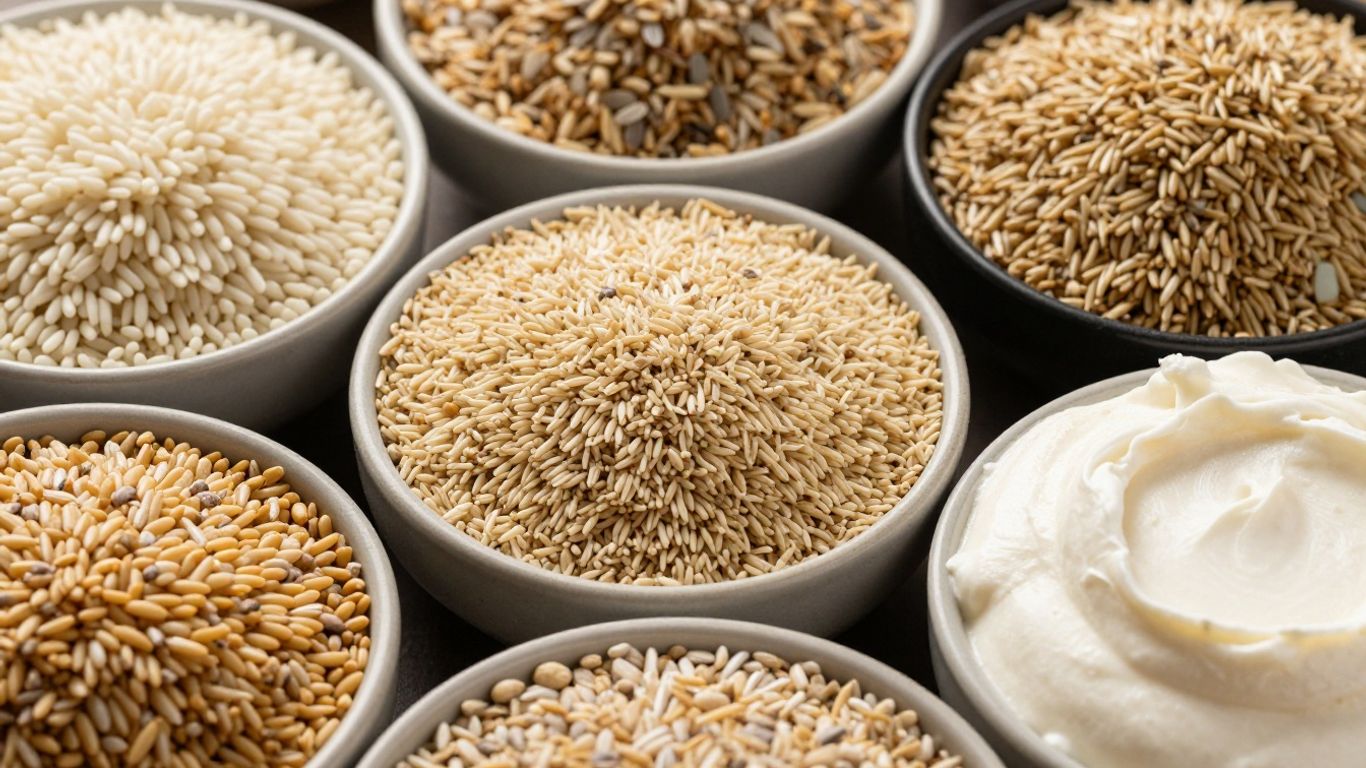
When the timer goes off, the grains at the top are often a little firmer than those at the bottom. Leaving the pot covered off the heat for 5 to 10 minutes lets steam finish cooking the top layer and evens out moisture. Skipping the rest is the most common reason for rice that’s both wet and crunchy.
Troubleshooting
| Problem | Likely cause | Fix |
|---|---|---|
| Crunchy centre | Too little liquid or too short a rest | Add 2–3 tbsp hot water, cover and cook on low 5 minutes more |
| Mushy or gummy | Too much liquid, stirring, or no rinse | Spread on a tray to dry; next time cut liquid by a few tablespoons |
| Burnt bottom | Heat too high or thin pot | Use the lowest simmer and a heavy pot; don’t scrape the burnt layer into the rest |
| Water left in the pot | Lid not tight, or grain older/drier than usual | Uncover and cook a few minutes, or drain |
Altitude, very old grains and wide, shallow pots all change how fast water evaporates. Keep a note of what works in your kitchen.
Flavour without much effort
- Cook in low-sodium broth instead of water.
- Add a bay leaf, garlic clove or strip of lemon peel to the pot.
- Stir in fresh herbs, lemon juice or toasted seeds after fluffing.
- For breakfast grains, add cinnamon, grated apple or vanilla.
Matching grains to meals
Choosing the right texture for the dish makes grains far more enjoyable:
- Stir-fries and curries: fluffy basmati or brown rice that soaks up sauce without turning sticky.
- Salads and grain bowls: firm, chewy farro, barley, wheat berries or quinoa that hold up to dressing for days.
- Soups and stews: pearl barley or brown rice. Add pre-cooked grains near the end if you plan to have leftovers, since grains keep absorbing broth in the fridge.
- Breakfast: creamy rolled or steel-cut oats, millet porridge or soft polenta topped with fruit and nuts.
- Side dishes: bulgur or couscous, which are ready in minutes and pair well with herbs and lemon.
Mixing two grains, such as brown rice with a little wild rice or quinoa with millet, adds interest and variety without extra work.
Batch cooking and storage
A big pot of grains makes weekday meals much faster, but cooked rice and grains need care. The NHS explains that spores of some food poisoning bacteria can survive cooking, so cool cooked rice and grains within 1 hour and keep them refrigerated. Eat cooked rice within 24 hours, reheat it only once until steaming hot throughout, and throw out any rice or grains left at room temperature overnight.
To cool quickly, spread grains on a tray, then pack into shallow containers. Portion extra into freezer bags for longer storage. For more on safe batch cooking, see batch-cooking food safety. If you’d like to speed things up, pressure cooker mastery covers grains too, and grain bowl frameworks give you ways to use them all week.
Quick takeaways
- Use the chart as a starting point, then adjust liquid by a few tablespoons for your preferred texture.
- Fluffy: rinse, toast, less liquid, no stirring, rest covered.
- Creamy: more liquid, stir often, serve right away.
- Firm and chewy: pasta method, taste early, drain and spread to cool.
- Cool cooked rice and grains within an hour and refrigerate.