
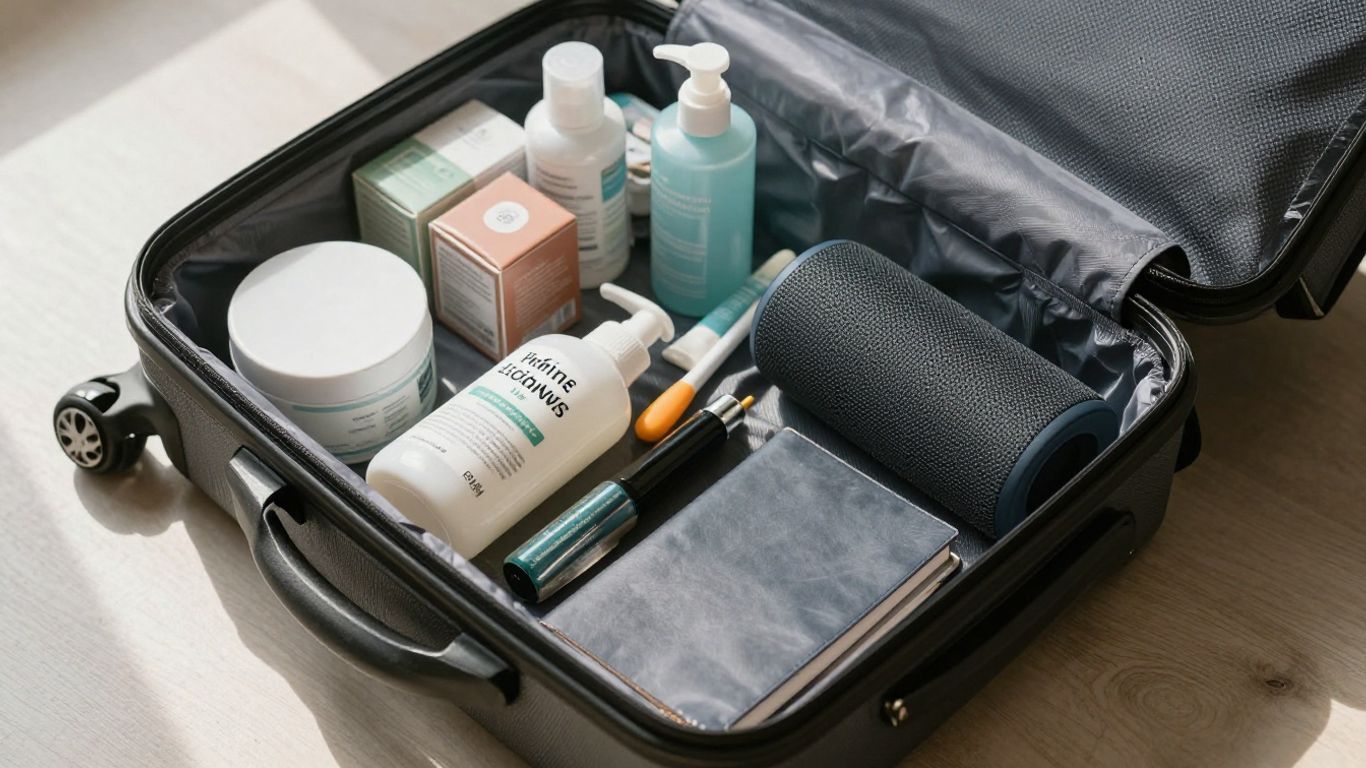
Travel anchors are a few small, portable habits and items that keep you feeling like yourself when your usual routine disappears. Pack a short kit (water bottle, snacks, walking shoes, a playlist), keep two or three mini-routines you can do anywhere, and you’ll arrive home with your health habits mostly intact instead of starting over.
Why travel weeks knock habits off course
At home, many healthy choices happen without thinking: the fruit bowl on the counter, the regular bedtime, the walk with a neighbour. Travel removes those cues all at once. Meals come at odd times, sleep shifts with time zones and long stretches are spent sitting. The answer isn’t to recreate home perfectly. It’s to bring a few anchors that give you stability while you enjoy something new.
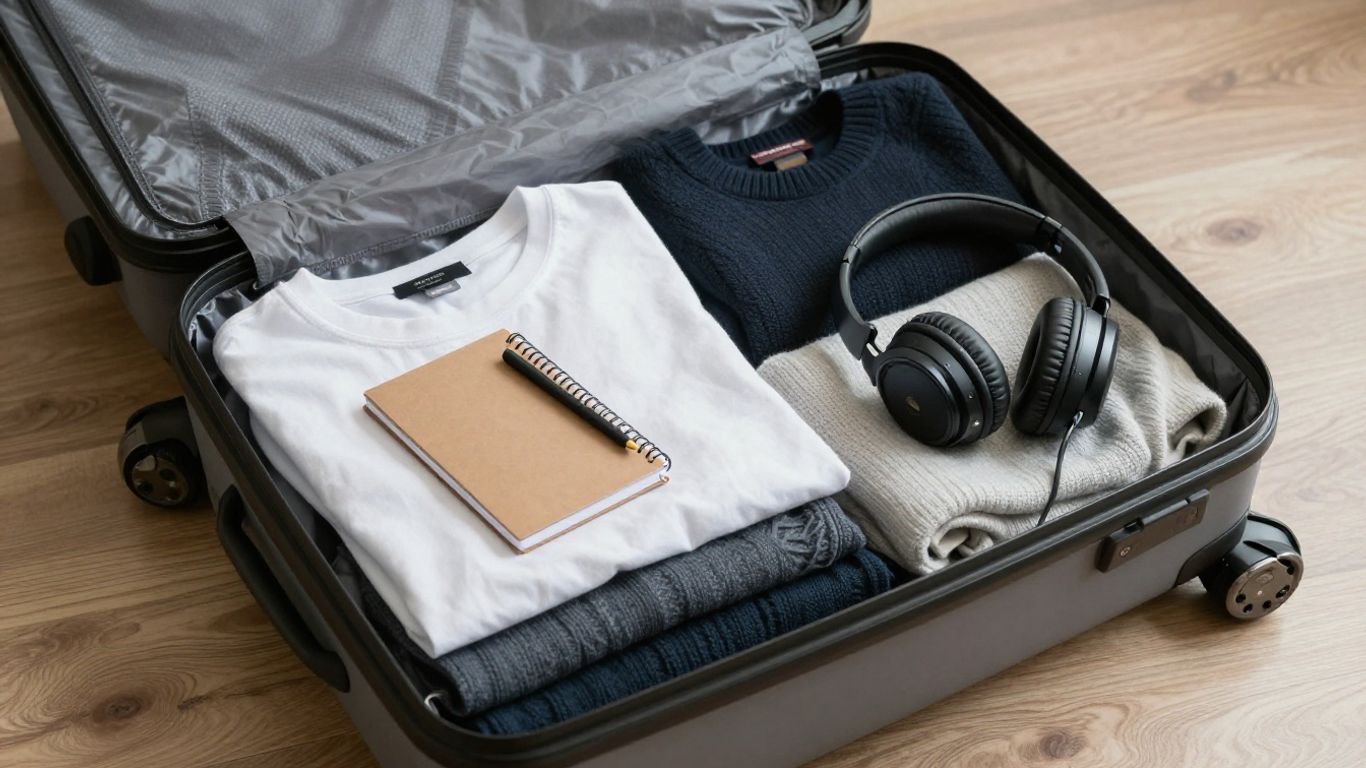
The packable anchor kit
These items take little space and make the healthy option the easy option:
- Refillable water bottle. Fill it after security and at every hotel stop.
- Two or three days of snacks. Nuts, roasted chickpeas, whole-grain crackers, dried fruit, nut-butter packets or sturdy fruit such as apples. Check entry rules before bringing food across borders.
- Comfortable walking shoes. If they’re on your feet, you’ll walk more.
- A resistance band. It weighs almost nothing and turns a hotel room into a gym.
- Sleep helpers. Eye mask, earplugs and a familiar pillowcase.
- A small notebook. For a two-line daily check-in (more below).
- Comfort items from home. A favourite herbal tea, a photo, your usual toiletries. Familiar smells and objects help a new room feel settled.
Playlists as anchors
Music is one of the easiest ways to bring a piece of home along. Download a few playlists before you leave so you aren’t relying on Wi-Fi:
| Playlist | Use it for |
|---|---|
| Morning wake-up | Getting moving in an unfamiliar room |
| Walking | Exploring on foot; the playlist length becomes your walk length |
| Workout | A 10–15 minute hotel-room session |
| Wind-down | Calm music or a podcast to signal bedtime |
Using the same wind-down playlist every night, at home and away, can become a strong cue that it’s time to sleep.
Mini-routines you can do anywhere
Pick two or three of these and treat them as non-negotiable but small.
Morning (5–10 minutes)
- Drink a full glass of water.
- Open the curtains or step outside for daylight.
- Do a short stretch or five minutes of band exercises.
- Decide on one healthy choice for the day, such as “vegetables at lunch.”
Movement (10–20 minutes)
Walk to breakfast instead of taking a taxi, use the stairs or do a quick circuit in your room: squats, push-ups against the desk, lunges, band rows and a plank, repeated two or three times. The NHS physical activity guidelines for adults recommend some activity every day, at least 150 minutes of moderate activity a week and strengthening on at least two days, and they note that breaking up long periods of sitting also helps. A travel week is a good time to aim for “some activity every day” rather than your usual full program.
Meals
- Start the day with protein and fibre if you can: eggs, yogurt, oatmeal, fruit.
- At restaurants, look for one vegetable side and one lean protein, then enjoy the rest.
- Keep a snack in your bag so you’re not ravenous at dinner.
- Choose water, sparkling water or milk as your usual drinks.
Evening (5 minutes)
- Write two lines in your notebook: one thing you enjoyed and one healthy choice you made.
- Set out tomorrow’s shoes and water bottle.
- Start your wind-down playlist.
Flights and long drives
Long stretches of sitting deserve their own plan. The CDC notes that anyone travelling more than four hours, by air, car, bus or train, can be at risk for blood clots, and recommends moving your legs often, exercising your calf muscles and getting up to walk around regularly (blood clots and travel). Simple anchors:
- Stand and walk the aisle or stop the car every hour or two.
- While seated, flex your ankles and pull your toes toward you, a few times every half hour.
- Keep your water bottle full.
If you have risk factors for clots, ask your doctor about prevention before a long trip.
Handling jet lag
Time-zone changes can upset sleep and appetite for several days. The NHS page on jet lag suggests getting plenty of rest before you travel, drinking plenty of water and moving around during the flight, switching to the new time zone’s sleep schedule as quickly as possible, going outside in daylight and avoiding daytime naps. It also notes that caffeine and alcohol can make jet lag worse. Skipping alcohol entirely on travel days supports better sleep, steadier energy and your weight goals. For trips of only two or three days, the NHS says you could keep your home eating and sleeping times instead.
Hotel rooms, rentals and staying with family
Where you stay changes which anchors are easiest:
- Hotel: ask for a mini-fridge, keep fruit and yogurt on hand, and check whether the hotel has a gym or a safe walking route nearby. Use the room for your band circuit.
- Rental with a kitchen: make a quick grocery stop on day one for breakfast foods, fruit, vegetables and simple lunch makings. Cooking even one meal a day gives you steadier energy and saves money.
- Staying with family or friends: offer to bring a vegetable dish or salad to shared meals, and invite your hosts on an after-dinner walk. Keep your snack kit in your bag so you’re not dependent on someone else’s schedule.
The first day home
Re-entry is where many travel weeks go sideways. Plan a soft landing before you leave: a frozen meal or easy pantry dinner waiting at home, a grocery order scheduled for the day you return and your regular bedtime set for that first night. The next morning, restart with the same small morning routine you used while away. Because the anchors travelled with you, there’s nothing new to rebuild.
Keep expectations realistic
A travel week is not the time for a personal best. Aim to keep your anchors, enjoy local food in reasonable portions and return home with your habits close enough to pick up the next day. If you miss a routine, don’t try to “make up” for it; simply do the next one.
For a full pre-trip list, see our travel checklist for health. For short sessions that fit a hotel room, try these 10-minute buffer workouts.
Key takeaways
- Pack a small anchor kit: water bottle, snacks, walking shoes, a band, sleep helpers.
- Download playlists for waking up, walking, working out and winding down.
- Keep two or three mini-routines short enough to do every day.
- On long trips, get up and move every hour or two and drink water.
- Shift to local sleep times quickly and get daylight to ease jet lag.
- Aim for consistency, not perfection, and restart with the next routine after a miss.
FAQ
How much exercise should I aim for while travelling?
Some movement every day is a realistic target. Walking while sightseeing counts, and a 10-minute room circuit on a busy day keeps the habit going.
What if I can’t bring snacks across a border?
Buy them after you arrive. A quick stop at a grocery store or market on day one for fruit, nuts and yogurt sets up the rest of your stay.