
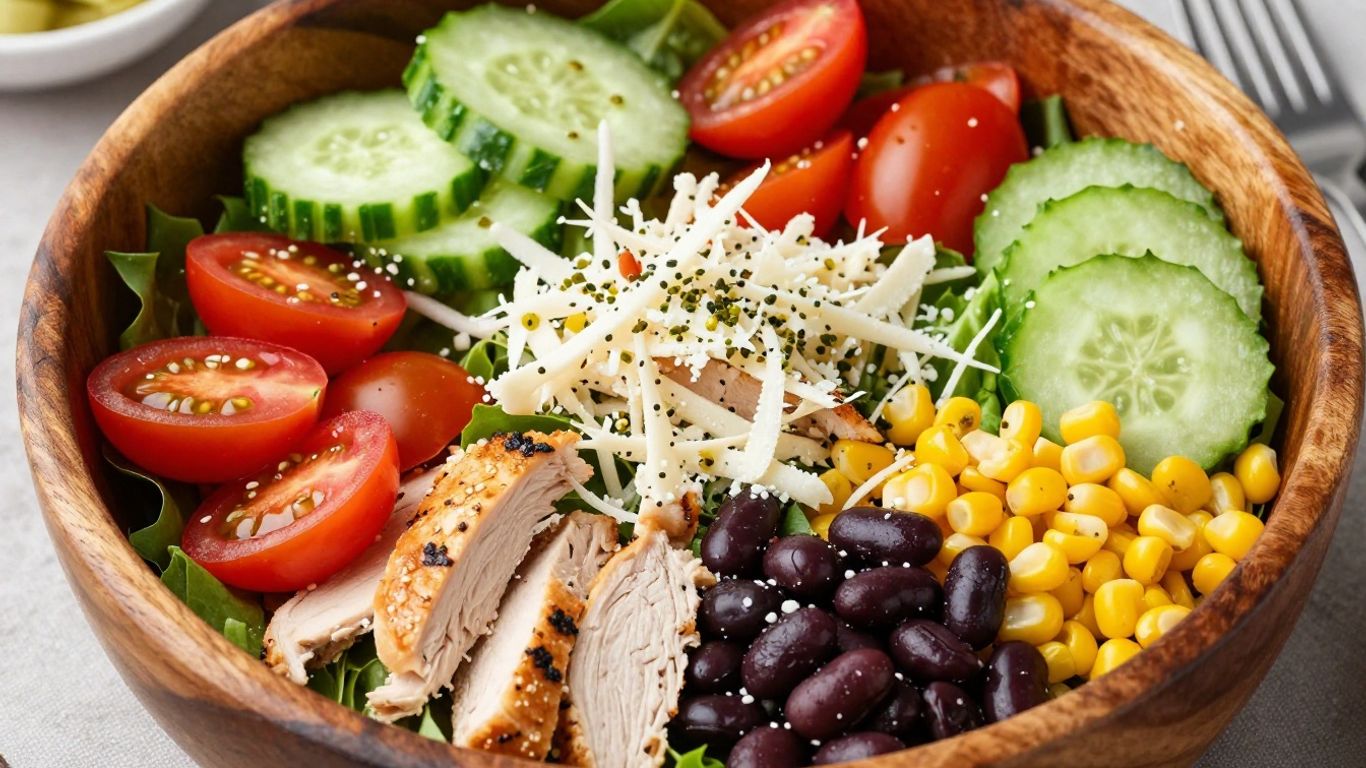
Big salad nights work when the salad is a full meal: a base of greens, a hearty grain or bean, a protein, lots of colourful vegetables, something crunchy and a dressing people like. Set the parts out build-your-own style so everyone can make the bowl they’ll actually eat. With a little prep, it’s a fast, balanced dinner that fits nicely with Canada’s Food Guide plate.
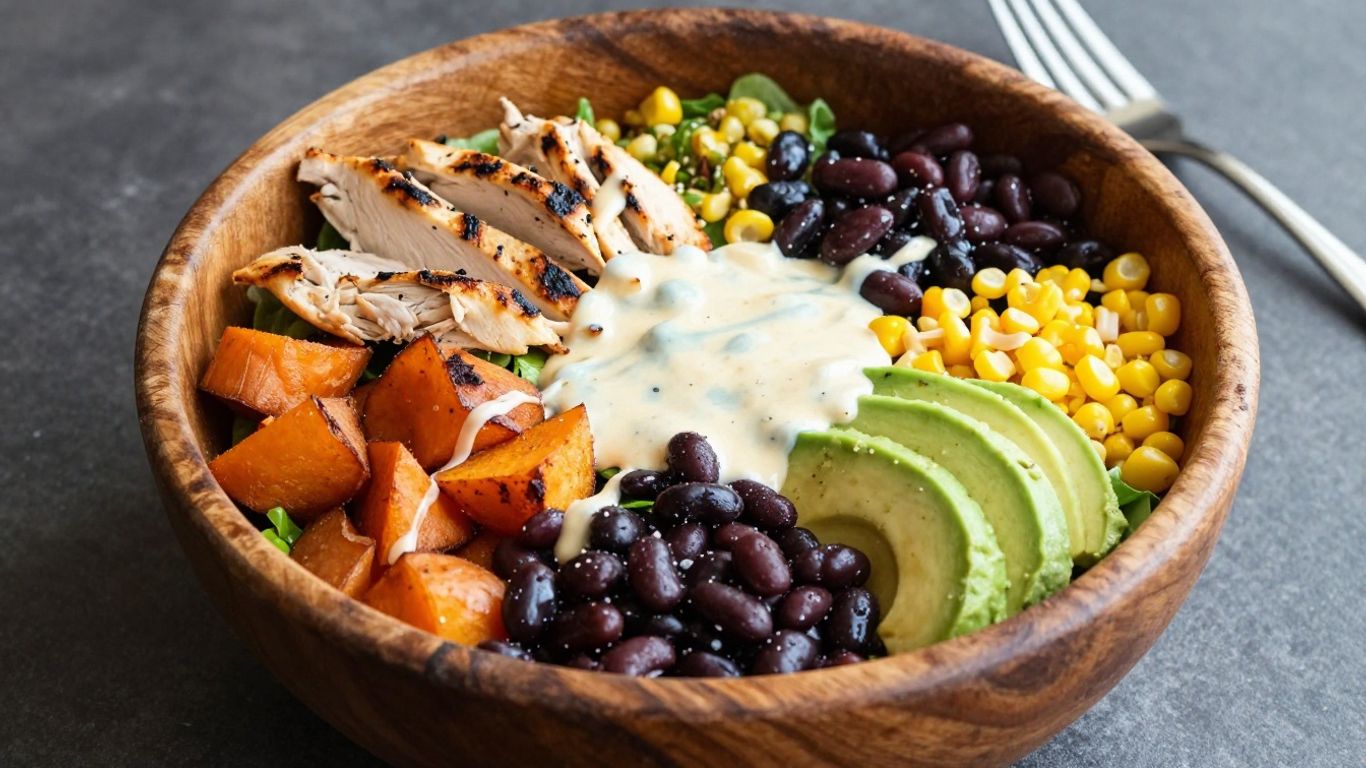
The formula for a filling family salad
Canada’s Food Guide suggests making half your plate vegetables and fruits, one quarter whole grain foods and one quarter protein foods, and notes the same proportions apply when a meal is served in a bowl. A big salad is an easy way to hit that balance. Use this template:
| Part | Roughly how much | Options |
|---|---|---|
| Greens and vegetables | About half the bowl | Romaine, spinach, kale, cabbage, cucumber, peppers, carrots, tomatoes, corn, roasted squash |
| Hearty grain or starch | About a quarter | Quinoa, brown rice, farro, barley, whole wheat pasta, roasted potatoes, tortilla strips |
| Protein | About a quarter | Chicken, eggs, tuna, salmon, chickpeas, black beans, lentils, tofu, cheese |
| Crunch | A sprinkle | Toasted seeds, nuts, roasted chickpeas, whole grain croutons |
| Flavour | 1–2 tbsp dressing, plus extras | Fruit, herbs, avocado, pickled onions, feta, salsa |
The grain and protein are what keep a salad from leaving people hungry an hour later. Don’t skip them.
Why build-your-own works for families
Kids (and plenty of adults) are more willing to eat vegetables when they can pick them. Laying everything out separately lets one child skip tomatoes while another piles them on, and nobody has to pick things out of a mixed bowl. It also gets everyone involved. Canada’s Food Guide notes that planning and preparing meals with others helps nurture healthy eating habits that last a lifetime and makes it easier to try new foods.
Easy jobs to hand off:
- Younger kids: wash and spin lettuce, tear greens, pour dressing into a jar, set out bowls.
- Older kids: grate carrots, slice cucumbers, shake a dressing, toast seeds with supervision.
- Everyone: choose one new topping to try each week.
Six bowls to put on rotation
1. Southwestern black bean bowl
Romaine, black beans, corn, peppers, brown rice, cheddar and crushed tortilla chips. Top with salsa, diced mango and a lime-yogurt dressing.
2. Chicken Caesar-style grain bowl
Chopped romaine, sliced chicken, farro or whole wheat pasta, cherry tomatoes and whole grain croutons. Use a lighter Caesar dressing made with plain yogurt, lemon, garlic and parmesan.
3. Mediterranean chickpea bowl
Spinach and romaine, chickpeas, quinoa, cucumber, tomatoes, olives and feta. Dress with olive oil, lemon and oregano. Add grilled chicken or hard-boiled eggs if you’d like more protein.
4. Thai-inspired crunchy bowl
Shredded cabbage and carrots, edamame or tofu, brown rice noodles or rice, cucumber, cilantro and peanuts. Toss with a peanut-lime dressing (peanut butter, lime juice, soy sauce, a little honey and warm water).
5. Harvest bowl
Kale massaged with a little dressing, roasted squash or sweet potato, barley or wild rice, lentils, apple slices and toasted pumpkin seeds. Use a maple-Dijon dressing.
6. Taco salad in a tortilla bowl
Bake whole wheat tortillas over an upside-down oven-safe bowl until crisp. Fill with lettuce, seasoned ground turkey or lentils, beans, tomatoes, cheese, salsa and avocado. The edible bowl is often the thing that wins kids over.
Dressings the family will actually use
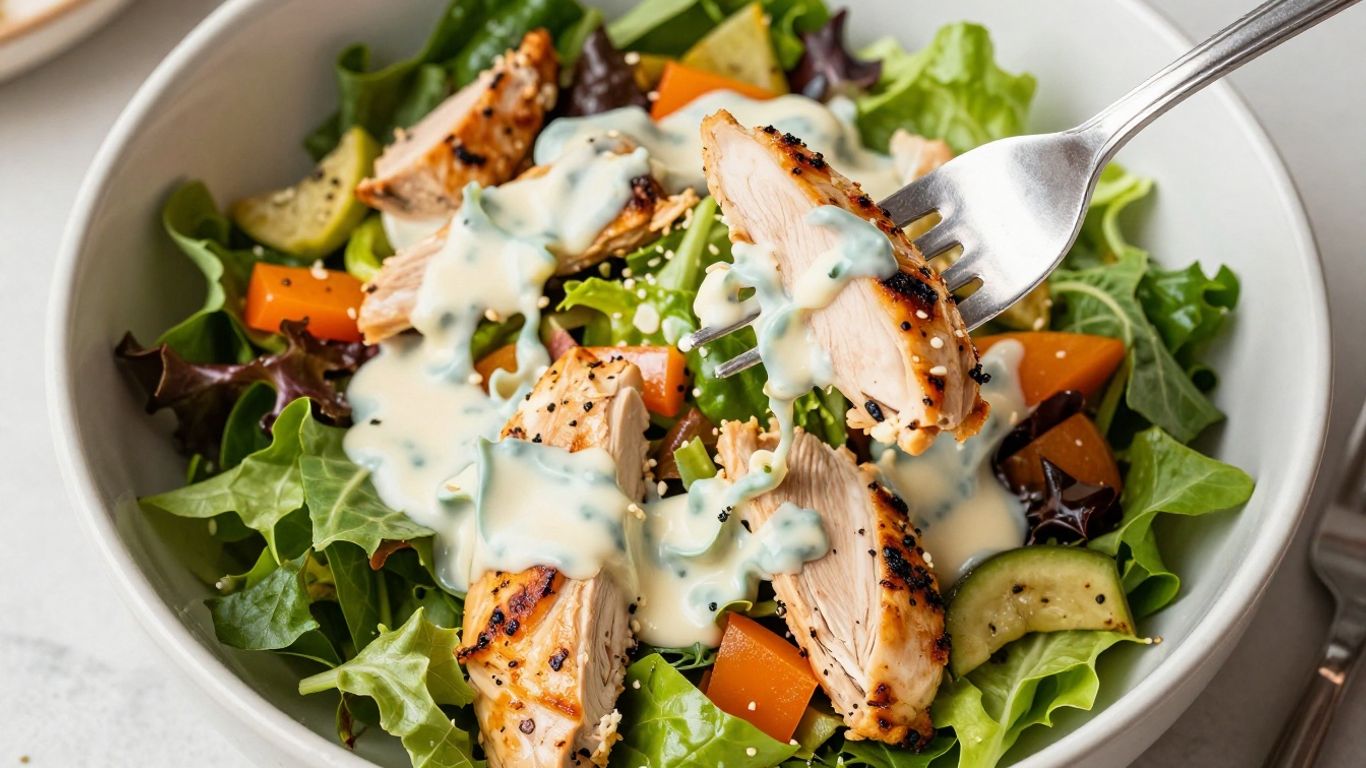
A good dressing is often the difference between a salad that gets eaten and one that doesn’t. Homemade versions take two minutes in a jar:
- Lemon-herb: 3 tbsp olive oil, 1 tbsp lemon juice, 1 tsp Dijon, pinch of salt, dried or fresh herbs.
- Honey-lime yogurt: ½ cup plain yogurt, juice of 1 lime, 1 tsp honey, pinch of cumin.
- Peanut-lime: 2 tbsp peanut butter, 1 tbsp lime juice, 1 tsp soy sauce, 1 tsp honey, warm water to thin.
- Maple-Dijon: 3 tbsp olive oil, 1 tbsp apple cider vinegar, 1 tsp maple syrup, 1 tsp Dijon.
- Creamy ranch-style: plain yogurt, a spoon of mayonnaise, garlic powder, dill, lemon and a splash of milk.
Serve dressing on the side for picky eaters, and let kids dip vegetables in it. For more on balancing flavour and texture, see the 5-part meal salad.
Prep once, eat twice
Big salad nights are fastest when the slow parts are done ahead:
- Cook grains in bulk. Make a pot of quinoa, rice or farro on the weekend. The NHS advises cooling cooked rice and grains within an hour and keeping them refrigerated until you use them, and eating cooked rice within 24 hours.
- Cook or open proteins. Roast a tray of chicken, boil a batch of eggs, or rinse a couple of cans of beans.
- Wash and dry greens. Store them in a container lined with a paper towel to absorb moisture.
- Chop sturdy vegetables. Carrots, peppers, cabbage and cucumbers keep well for a few days in sealed containers.
- Make one or two dressings. Most keep about a week in the fridge in a jar.
Store wet and dry parts separately so nothing gets soggy, then assemble at the table. Leftovers pack straight into lunches. If you like jar salads, salad-jar layering explains how to keep them crisp.
Setting up the salad bar
A little organisation at the table keeps salad night quick and calm:
- Line up the bowls in order: greens first, then grains, proteins, vegetables, crunchy toppings and dressings last. People build in the same order and nothing gets missed.
- Use small bowls or a muffin tin for toppings so kids can see their choices.
- Warm one component. Warm grains, roasted vegetables or freshly cooked chicken make a salad feel like dinner, especially in colder months.
- Offer a “plain” option. Let reluctant eaters have their components side by side on a plate rather than tossed together. It still counts.
- Add bread or fruit on the side for anyone with a big appetite, such as teenagers or someone who exercised that day.
Seasonal swaps
- Winter: roasted root vegetables, kale, cabbage, apples, pears, pomegranate seeds.
- Spring: asparagus, peas, radishes, fresh herbs, baby greens.
- Summer: tomatoes, corn, cucumbers, peaches, berries, zucchini.
- Fall: squash, sweet potatoes, Brussels sprouts, cranberries, apples.
Frozen corn, peas and edamame work year-round and thaw quickly under cool water.
Quick takeaways
- Make salads a full meal: greens and vegetables, a grain, a protein, crunch and dressing.
- Set components out separately so each person builds their own bowl.
- Prep grains, proteins, greens and dressing ahead, and cool grains quickly.
- Keep two or three family-favourite dressings on hand.
- Rotate six or so bowl themes and swap produce with the seasons.
FAQ
How do I get kids to eat salad for dinner?
Let them choose their toppings, include at least one food they already like, offer dressing for dipping and keep portions of new foods small. Repeated low-pressure exposure helps more than insisting.
Can salad night work without meat?
Yes. Beans, lentils, chickpeas, tofu, eggs and cheese all make filling protein options.