
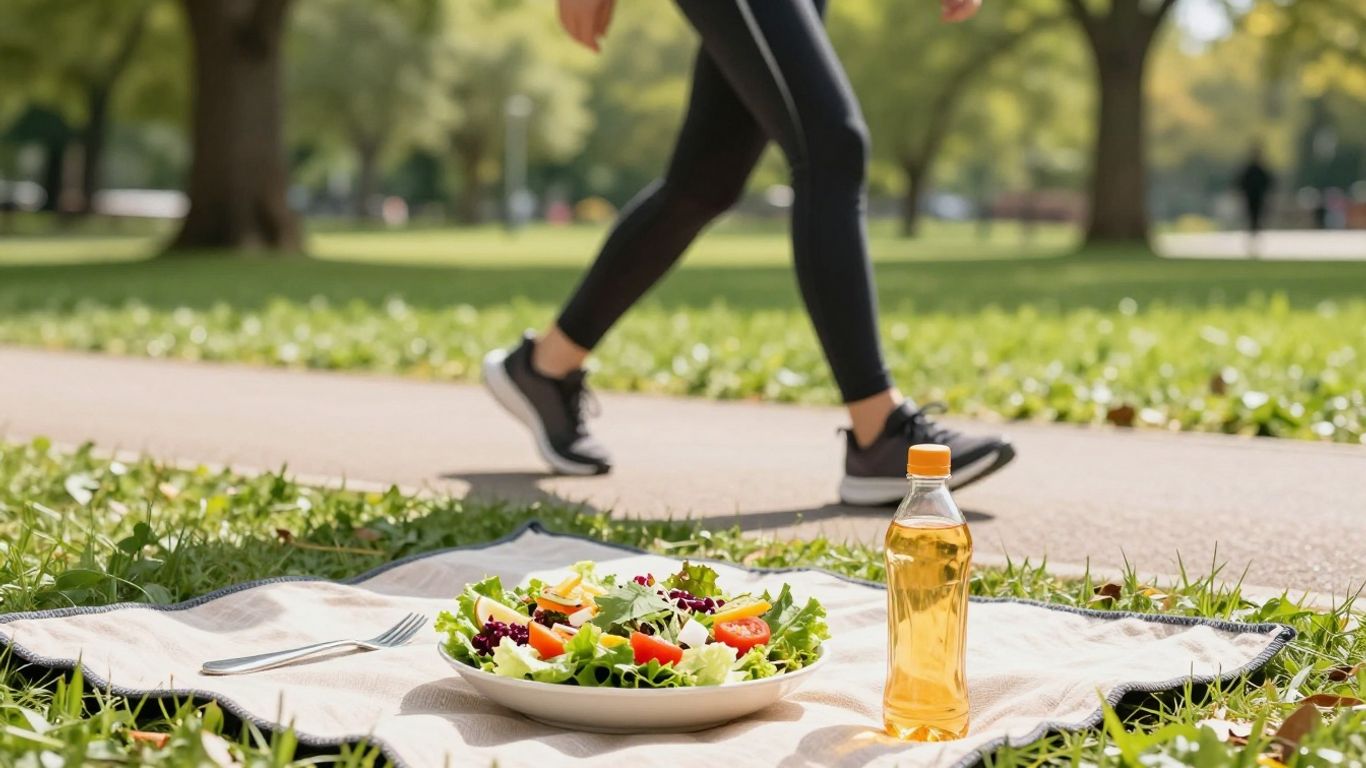
Pairing a 10- to 30-minute lunch-break walk with a balanced lunch of protein, fibre-rich carbs and some healthy fat is one of the simplest ways to avoid the mid-afternoon slump. The walk helps your body handle the meal and gives your mood a lift. The food keeps your energy steady until dinner. Below are timing options, easy food combos and a plan for busy workdays.
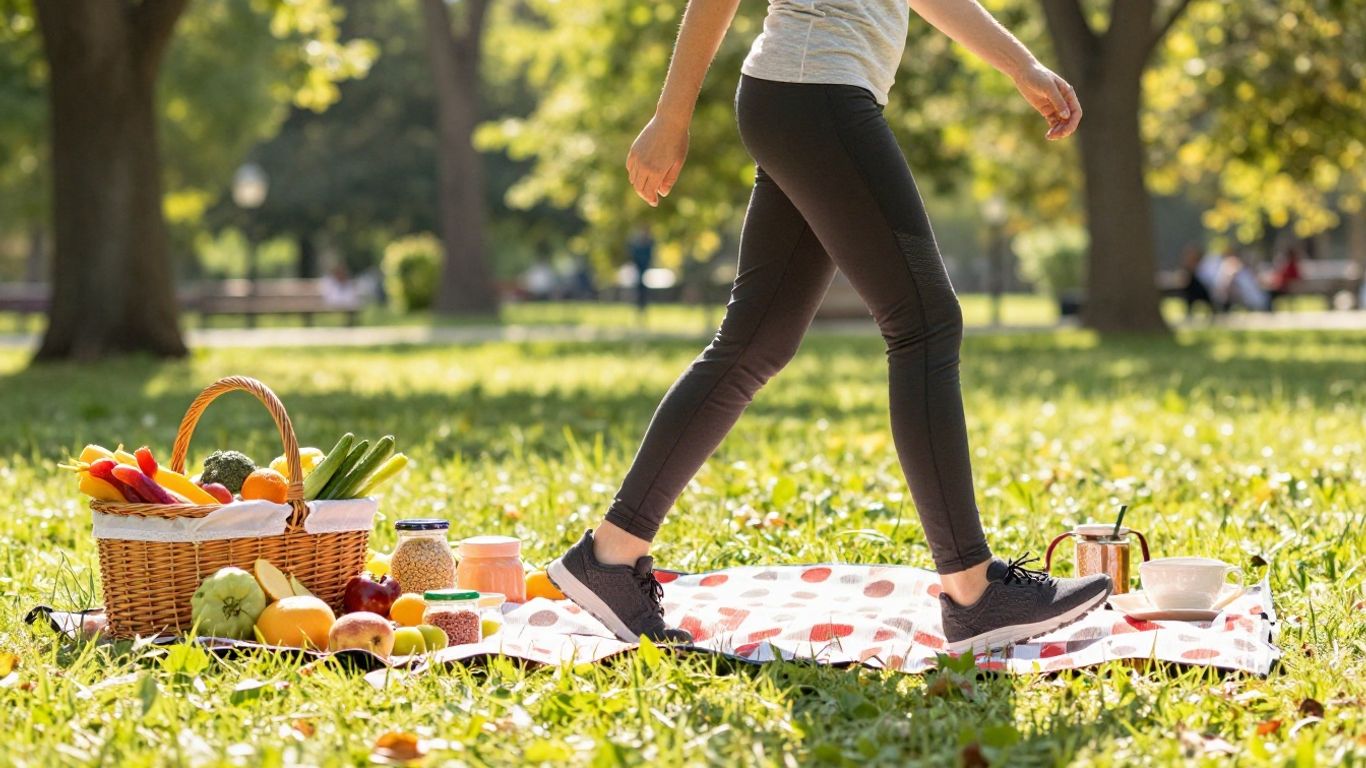
Why walking and lunch work well together
Movement after eating helps your muscles use the glucose from your meal. A systematic review and meta-analysis found that breaking up prolonged sitting with short bouts of light walking significantly lowered blood glucose and insulin after meals compared with staying seated, and worked better than standing breaks. For anyone who sits at a desk most of the afternoon, a walk around lunch is an easy way to get that benefit.
There’s a mood effect too. In a randomized trial with previously inactive office employees, 30-minute lunchtime walks three times a week improved enthusiasm and relaxation and reduced nervousness at work. And it all counts toward your activity goals: the NHS notes that even a brisk 10-minute daily walk has health benefits and counts toward the 150 minutes of weekly activity recommended for adults.
Walk before or after you eat?
Both work. Choose based on your schedule and how you feel.
| Timing | Best for | Tips |
|---|---|---|
| Walk first, then eat | Clearing your head after a busy morning; arriving at lunch calmer and less rushed | If you’re very hungry, have a small snack (fruit, a few nuts) first so you don’t overdo it at lunch |
| Eat first, then walk | Steadier energy and blood sugar in the afternoon | Keep the walk easy to moderate; give yourself 10–15 minutes after a large meal if a brisk pace feels uncomfortable |
| Split it | Short breaks | Walk 10 minutes, eat, then walk another 5–10 minutes back to your desk |
Build a lunch that keeps you going
A lunch that powers a productive afternoon has four parts:
- Protein: chicken, tuna, eggs, tofu, beans, lentils, Greek yogurt, cottage cheese
- Fibre-rich carbs: whole grain bread or wraps, brown rice, quinoa, oats, potatoes, fruit
- Vegetables: any you like, raw or cooked, ideally filling about half the container
- Healthy fat: avocado, nuts, seeds, olive oil dressing, hummus
Protein and fibre slow digestion, which helps prevent a quick rise and drop in energy. Very large lunches, or lunches made mostly of refined carbs, are the ones most likely to leave you sleepy by 2 p.m.
Eight walk-friendly lunch combos
- Lentil and veggie wrap: whole grain tortilla, seasoned lentils, shredded lettuce, salsa and avocado.
- Greek yogurt parfait plus: plain Greek yogurt, berries, a handful of nuts and a hard-boiled egg on the side.
- Chicken grain bowl: brown rice or quinoa, sliced chicken, roasted vegetables and a lemon-tahini dressing.
- Tuna and bean salad: canned tuna, white beans, cherry tomatoes, cucumber, olive oil and lemon, with whole grain crackers.
- Hummus snack box: hummus, whole wheat pita, carrot and pepper sticks, cheese cubes and grapes.
- Tofu stir-fry leftovers: tofu, mixed vegetables and noodles or rice from last night’s dinner.
- Egg salad sandwich: on whole grain bread with spinach, plus an apple.
- Bean and veggie soup: in a thermos, with a whole grain roll and a pear for later.
For more packing ideas, see adult lunchboxes that beat takeout.
Portable snacks for the walk
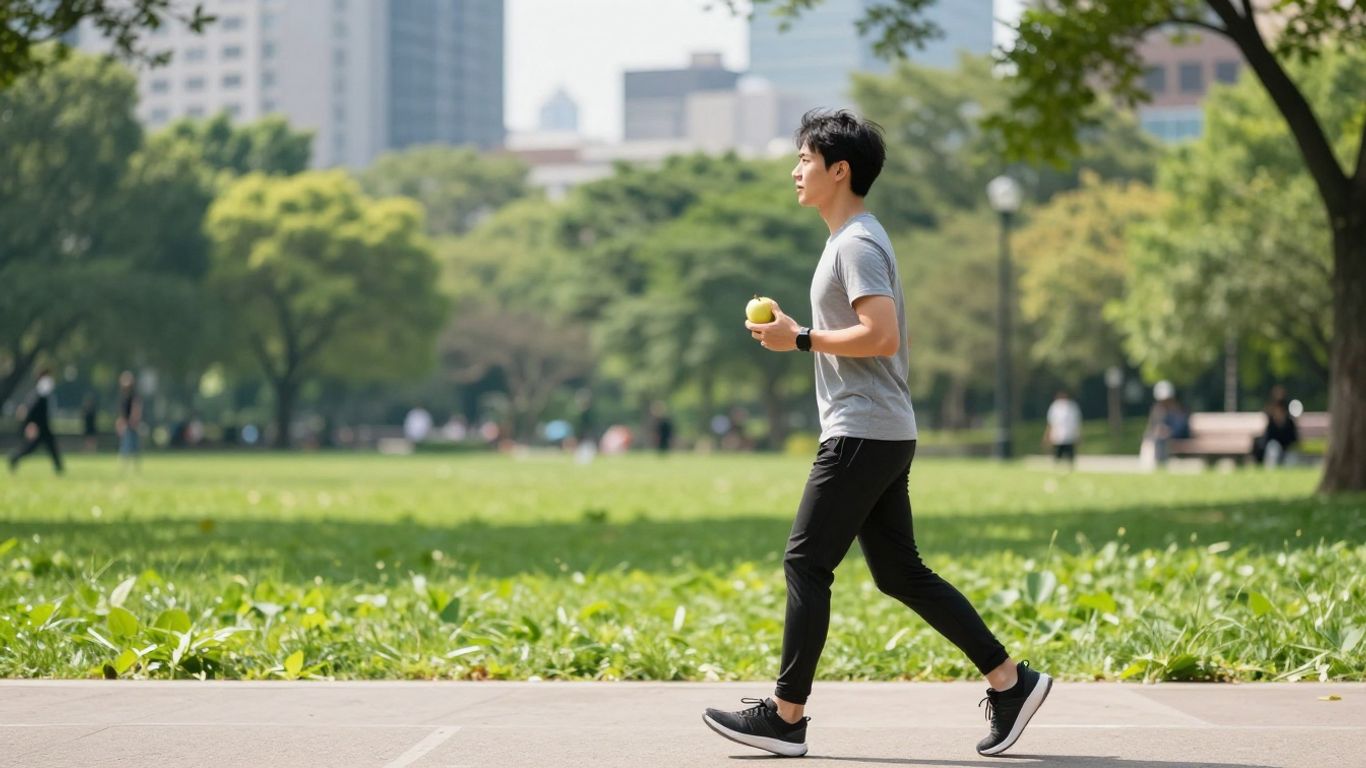
If lunch is late, or you walk a long way, a small snack keeps you comfortable:
- An apple or banana with a small handful of almonds
- A cheese string and whole grain crackers
- A small container of roasted chickpeas
- A homemade energy ball made with oats, nut butter and dried fruit
- A few squares of dark chocolate with walnuts
Pairing a carb with protein or fat is the key. These snack pairings give more ideas.
Drinks and hydration
Mild dehydration can make you feel tired and foggy, which is easy to mistake for hunger or low energy. Bring a water bottle on your walk and refill it when you get back. If plain water gets boring, try sparkling water, water with sliced lemon or cucumber, or a chilled herbal tea like peppermint or rooibos. On hot days or longer walks, a glass of milk or a smoothie with your lunch helps replace fluid as well as provide protein.
How to fit the walk into a busy day
- Book it. Put a 20-minute walk in your calendar like a meeting. If lunch tends to disappear, these lunch-protection tips can help.
- Pack lunch the night before. If your food is ready, you won’t spend the break waiting in line.
- Keep shoes at work. Comfortable shoes and a light jacket at your desk remove an excuse.
- Find a buddy. Walking with a co-worker makes it social and harder to skip.
- Have a bad-weather plan. Walk the stairwells, an indoor mall or hallways, or do laps of the building.
- Start small. Ten minutes is enough to begin. Add a few minutes each week if you’d like.
A sample week
| Day | Walk | Lunch |
|---|---|---|
| Monday | 15 min after eating | Chicken grain bowl (Sunday leftovers) |
| Tuesday | 20 min before eating | Lentil and veggie wrap, apple |
| Wednesday | 10 min indoor stair walk | Bean and veggie soup, whole grain roll |
| Thursday | 20 min with a co-worker | Tuna and bean salad, crackers |
| Friday | 10 + 10 min split | Hummus snack box |
That’s about 85 minutes of walking without any extra time outside your workday.
How hard should you walk?
An easy-to-moderate pace is perfect. The NHS describes a brisk walk as one where you can still talk but can’t sing. After a big meal, start slower and build. Even a gentle stroll after eating supports blood sugar, so the pace doesn’t have to be intense.
When to check with a professional
If you have diabetes or take medication that lowers blood sugar, talk with your healthcare provider before changing your meal and activity timing, since walking after meals can affect your readings. The same goes for people with heart or joint conditions starting a new activity routine. If walking causes chest pain, unusual breathlessness or dizziness, stop and seek medical advice.
Quick takeaways
- A 10- to 30-minute walk around lunch supports steadier blood sugar and a better mood at work.
- Build lunch from protein, fibre-rich carbs, vegetables and a little healthy fat.
- Walk before or after eating, whichever suits you. Easy pace after a big meal.
- Bring water, and pack a carb-plus-protein snack if lunch is late.
- Schedule the walk, keep shoes at work and have an indoor backup.
FAQ
Is 10 minutes really enough?
Yes, it’s a meaningful start. Short walks add up across the week and still help with post-meal blood sugar.
Will walking after lunch upset my stomach?
For most people a gentle walk is comfortable. If you feel uneasy, eat a slightly smaller lunch or wait 10 to 15 minutes before heading out.