
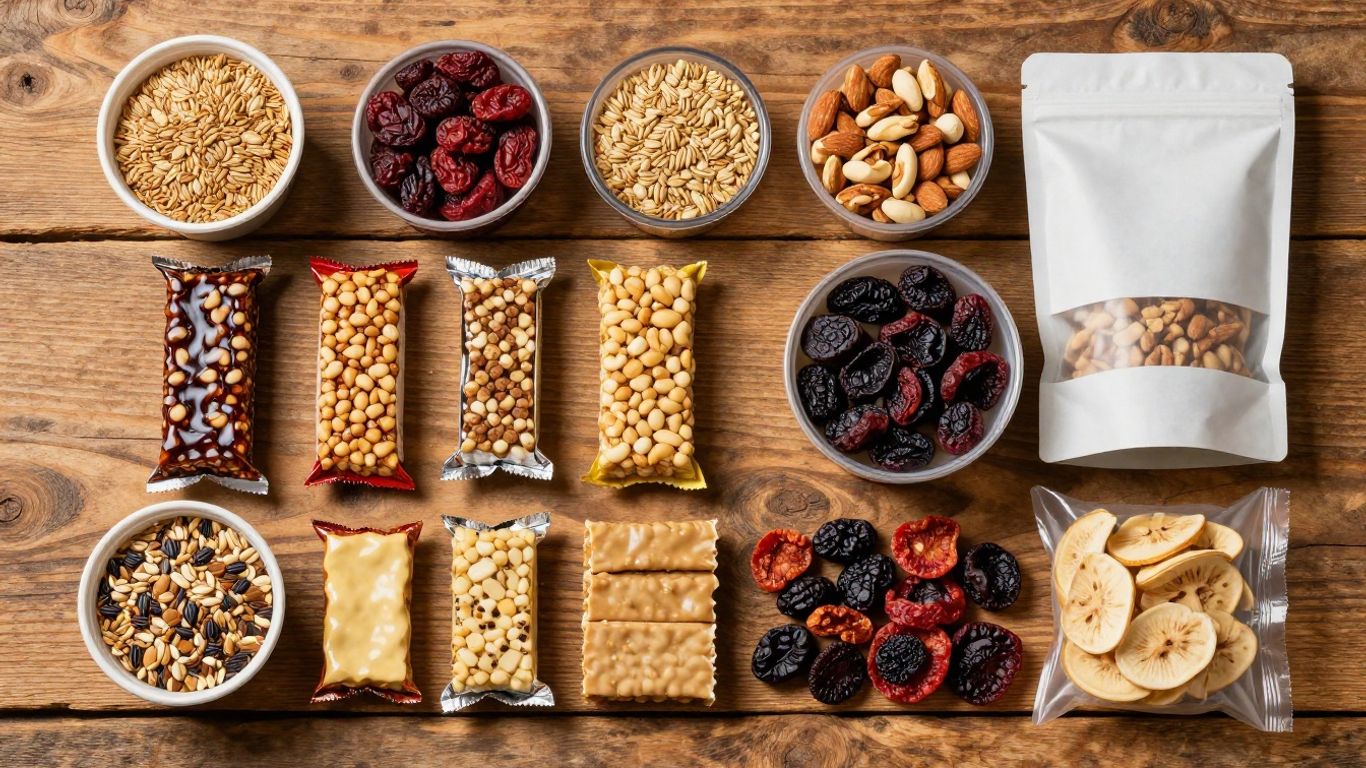
The best travel proteins are foods that are compact, hard to crush, and either shelf-stable or easy to keep cold: roasted nuts and seeds, single-serve nut butters, roasted chickpeas or edamame, tuna or salmon pouches, hard cheese, hard-boiled eggs, Greek yogurt and simple protein bars. Pack a mix of shelf-stable options for long days and a small cooler for the perishable ones, and pair each with fruit, vegetables or whole grains so they hold you longer.
Why bring protein when you travel
Travel days often mean long gaps between meals, limited choices and lots of refined snacks. Packing protein helps you avoid arriving somewhere starving and grabbing whatever is closest. A protein snack paired with fibre usually keeps people satisfied longer than crackers or candy alone.
Jerky is the classic option, but it can be high in sodium and isn’t for everyone. There are plenty of alternatives.
Shelf-stable proteins (no cooler needed)
| Food | Why it travels well | Pair with |
|---|---|---|
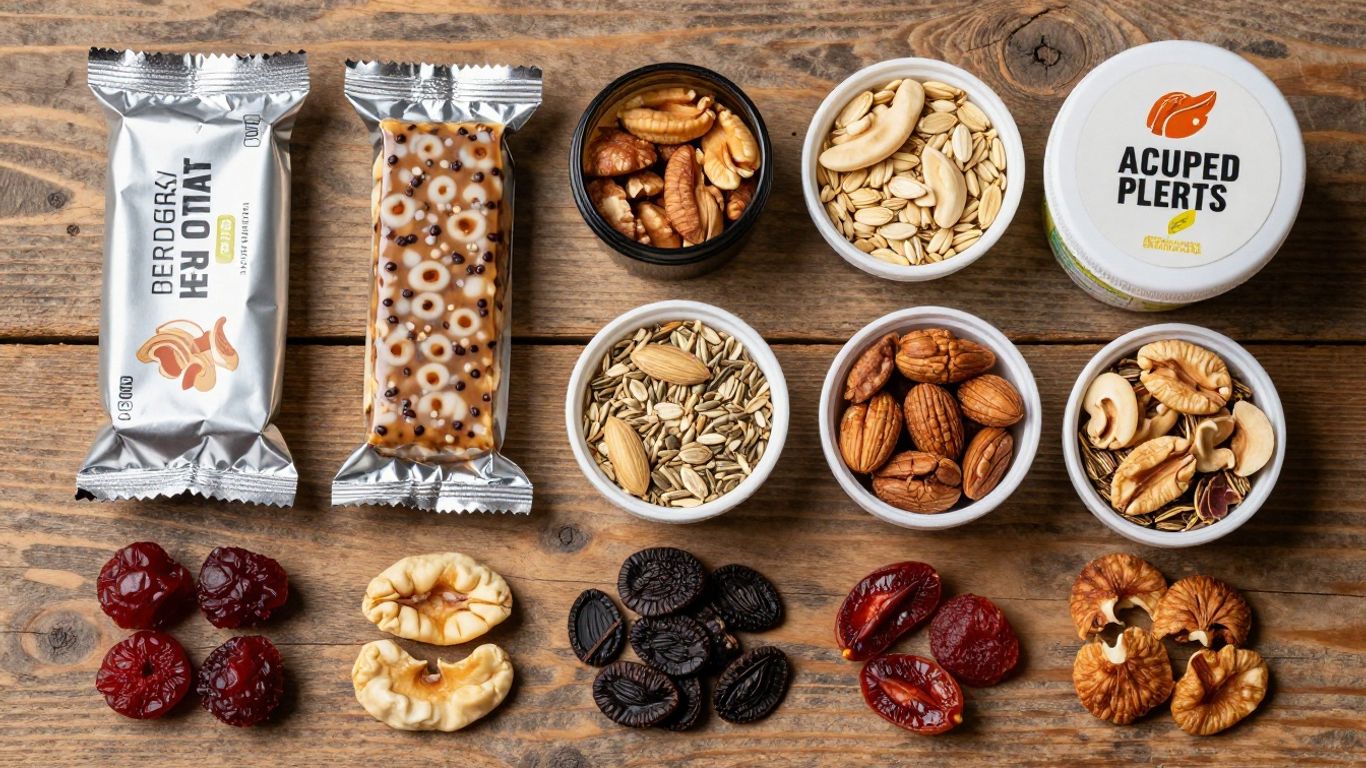
| Dry roasted nuts and seeds | Compact, no prep, lasts for weeks | Dried or fresh fruit |
| Single-serve nut or seed butter packets | No mess, no knife needed | Apple, banana, whole-grain crackers |
| Roasted chickpeas or edamame | Crunchy, plant protein plus fibre | Cut vegetables |
| Tuna, salmon or chicken pouches | Ready to eat, no can opener | Crackers or a wrap |
| Protein bars | Durable, easy to count on | Fruit and water |
| Shelf-stable milk or soy beverage boxes | Drinkable protein | A muffin or granola |
| Dried lentil or bean snacks | Light and crunchy | Cheese or nuts |
Canada’s Food Guide suggests choosing dry roasted nuts and seeds without added sugar, oil or salt, and nut butters made only from nuts. Those are good defaults when stocking a travel bag.
Choosing a protein bar
Bars vary a lot. Read the label and look for:
- A short ingredient list that starts with whole foods like nuts, oats or dates.
- A reasonable amount of protein compared with sugar.
- Some fibre.
- A taste you actually like, so it doesn’t sit in your bag for months.
Some bars use sugar alcohols, which can upset some people’s stomachs. Try a new bar at home before relying on it on a travel day.
Cooler-friendly proteins
For road trips and day trips with a small insulated bag and ice packs, these options add variety:
- Hard-boiled eggs
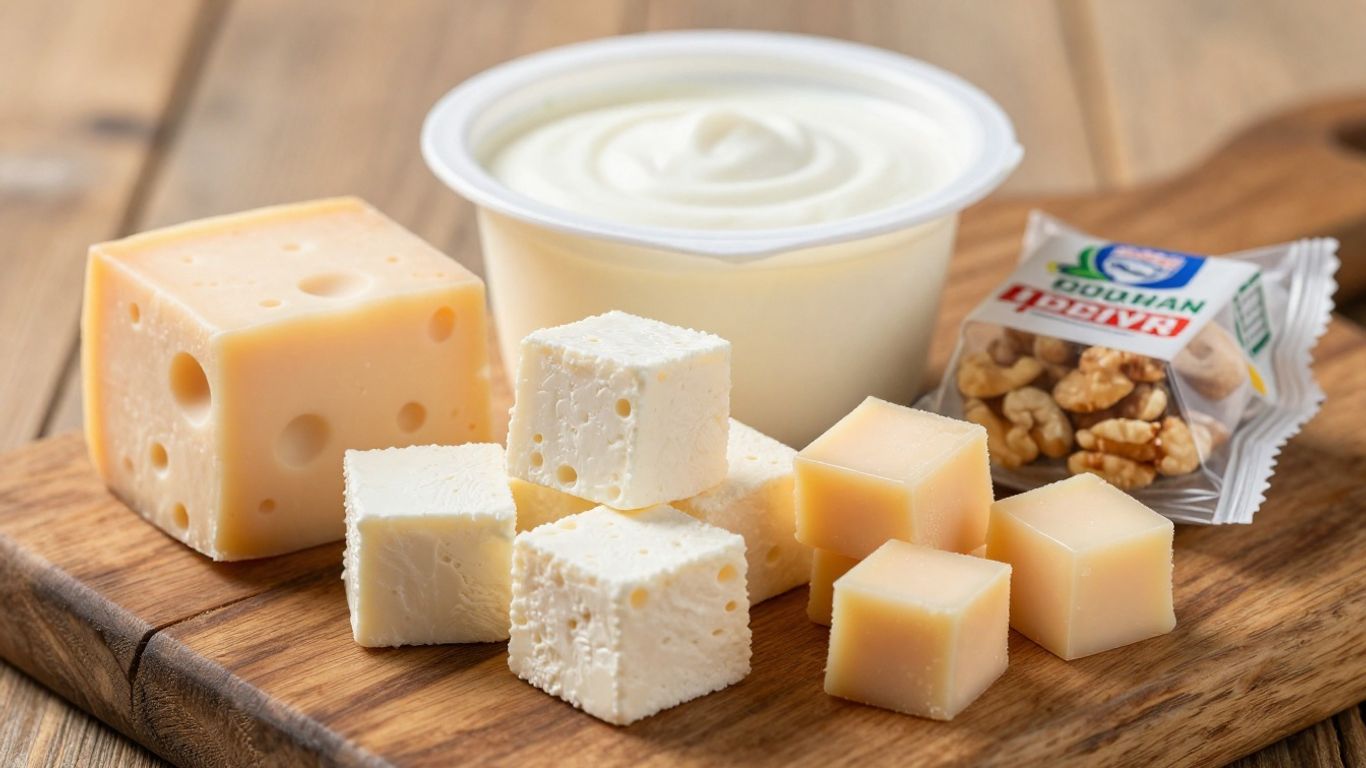
- Cheese sticks or cubes of hard cheese
- Single-serve Greek yogurt or skyr cups
- Cottage cheese cups
- Hummus or bean dip with vegetables
- Leftover grilled chicken or tofu
- Edamame in the pod
Food safety on the move
Perishable proteins are where travel snacks can go wrong. Health Canada recommends using a cooler with ice packs, keeping the temperature inside at or below 4°C (40°F), and not keeping food at room temperature for more than one hour on hot summer days. It also suggests separate coolers for food and drinks so the food cooler is opened less often.
For eggs specifically, Health Canada advises not leaving raw or cooked eggs at room temperature for more than two hours, and says hard-boiled eggs keep up to one week in a sealed container in the fridge.
Simple rules:
- Pack perishables straight from the fridge into a pre-chilled cooler.
- Freeze water bottles or yogurt tubes to double as ice packs.
- Keep the cooler inside the car, not the hot trunk.
- Eat perishable foods first; save shelf-stable items for later in the day.
- When in doubt, throw it out.
Strategy by type of trip
Road trips
You have the most flexibility. Bring a cooler with eggs, yogurt, cheese, hummus and cut vegetables, plus a bag of shelf-stable backups. Plan stops near grocery stores where you can restock fruit and yogurt.
Flights
Solid foods like nuts, bars, roasted chickpeas, nut butter packets and hard cheese usually travel easily, but liquid and gel rules can apply to yogurt, hummus and nut butters at security. Check the current rules for your airport and destination before you pack, and remember that some countries restrict bringing fresh food, meat or dairy across the border.
Hikes and outdoor days
Choose foods that tolerate heat and jostling: trail mix, nut butter packets, bars and tuna pouches. Pack out all wrappers. For more on timing food and water on the trail, see our guide to hike fueling.
Build balanced travel snacks
Protein on its own can be a bit flat. Pair it with fibre and flavour:
- Almonds and a pear
- Peanut butter packet with an apple or banana
- Tuna pouch with whole-grain crackers and cherry tomatoes
- Cheese stick, grapes and a few walnuts
- Greek yogurt with a small bag of granola
- Roasted chickpeas with carrot sticks
Our snack pairing rules give more combinations, and the travel checklist for health covers the rest of your packing.
A sample travel-day pack
For a full day on the road, a simple kit might include:
- Cooler bag: two hard-boiled eggs, two Greek yogurt cups, cheese sticks, cut vegetables and hummus, plus frozen water bottles as ice packs.
- Dry bag: a small container of dry roasted almonds, two nut butter packets, a tuna pouch, whole-grain crackers, apples and bananas, and one or two protein bars as backup.
- Extras: a refillable water bottle, napkins, a spoon and a small bag for wrappers.
Eat the perishable items in the first part of the day while they’re coldest, and keep the shelf-stable foods for later or for unexpected delays.
Options for dietary needs
- Plant-based: roasted chickpeas, edamame, soy beverage boxes, nuts, seeds, hummus, plant-based protein bars.
- Nut-free: sunflower or pumpkin seeds, sunflower seed butter, roasted chickpeas, cheese, eggs.
- Dairy-free: soy yogurt, tuna or salmon pouches, eggs, nuts and seeds.
- Gluten-free: most nuts, seeds, eggs, cheese and pouches are naturally gluten-free; check bars and crackers.
Drinks
Bring a refillable water bottle. Milk or soy beverage boxes add protein, and herbal tea bags take up no room if you’ll have access to hot water.
Practical takeaways
- Pack a mix of shelf-stable proteins and cooler items for variety.
- Choose nuts without added salt or sugar and nut butters made only from nuts.
- Keep the cooler at or below 4°C and limit time at room temperature.
- Pair each protein with fruit, vegetables or whole grains.
- Check security and border rules before flying with food.
- Test new protein bars at home first.
FAQ
What is the healthiest alternative to jerky?
Dry roasted nuts, roasted chickpeas, tuna pouches and hard-boiled eggs all provide protein with less sodium than most jerky.
How long can hard-boiled eggs be out of the fridge?
Health Canada advises no more than two hours at room temperature, so keep them in a cooler with ice packs.
Can I bring yogurt or hummus on a plane?
These may count as liquids or gels at security, so check the current rules before you fly. Solid foods like nuts, bars, cheese and crackers are usually simpler, and you can buy yogurt after security or at your destination.