
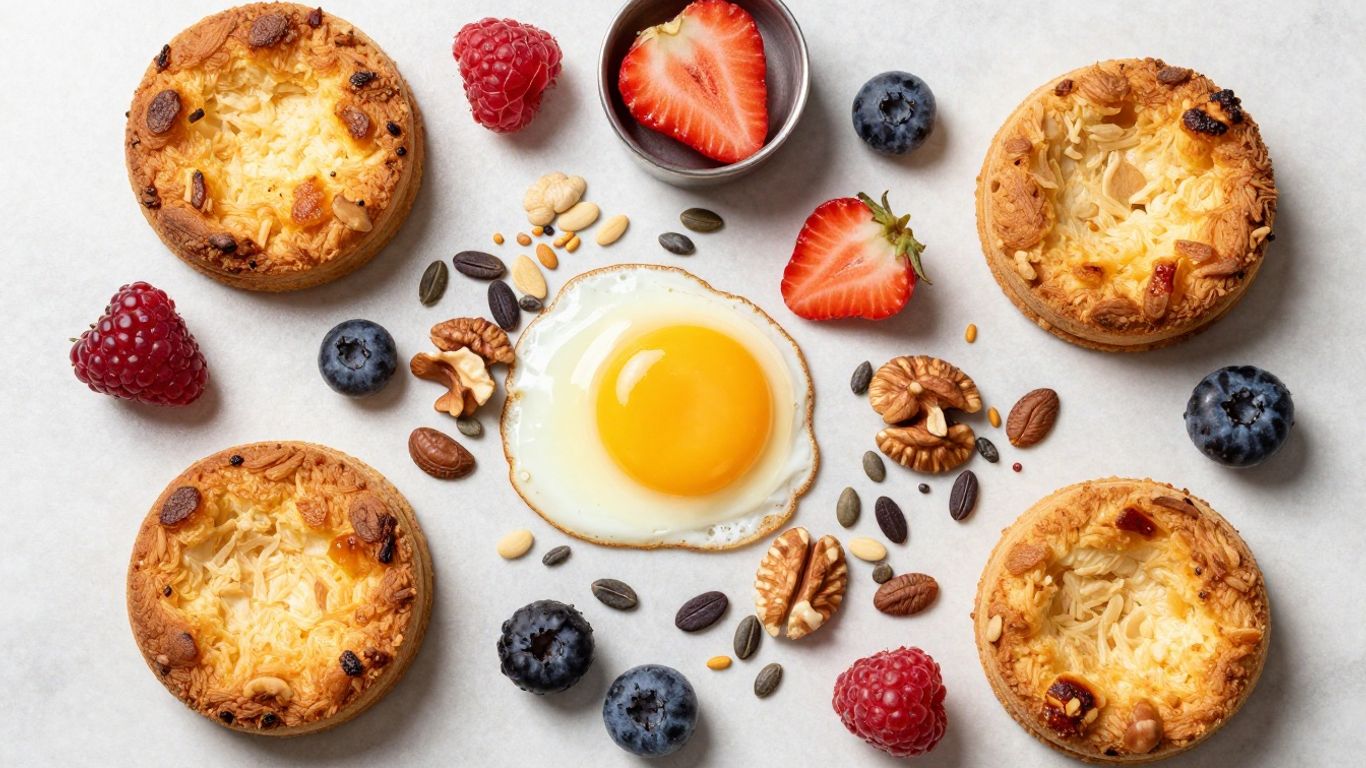
A good homemade breakfast bar combines three things: a slow-digesting carbohydrate base (usually oats), a protein source to keep you full, and colourful fruit, seeds or vegetables for fibre and flavour. Bake or press one pan on the weekend, cut it into portions, and you have a grab-and-go breakfast for the week that is far less sugary than most packaged bars.
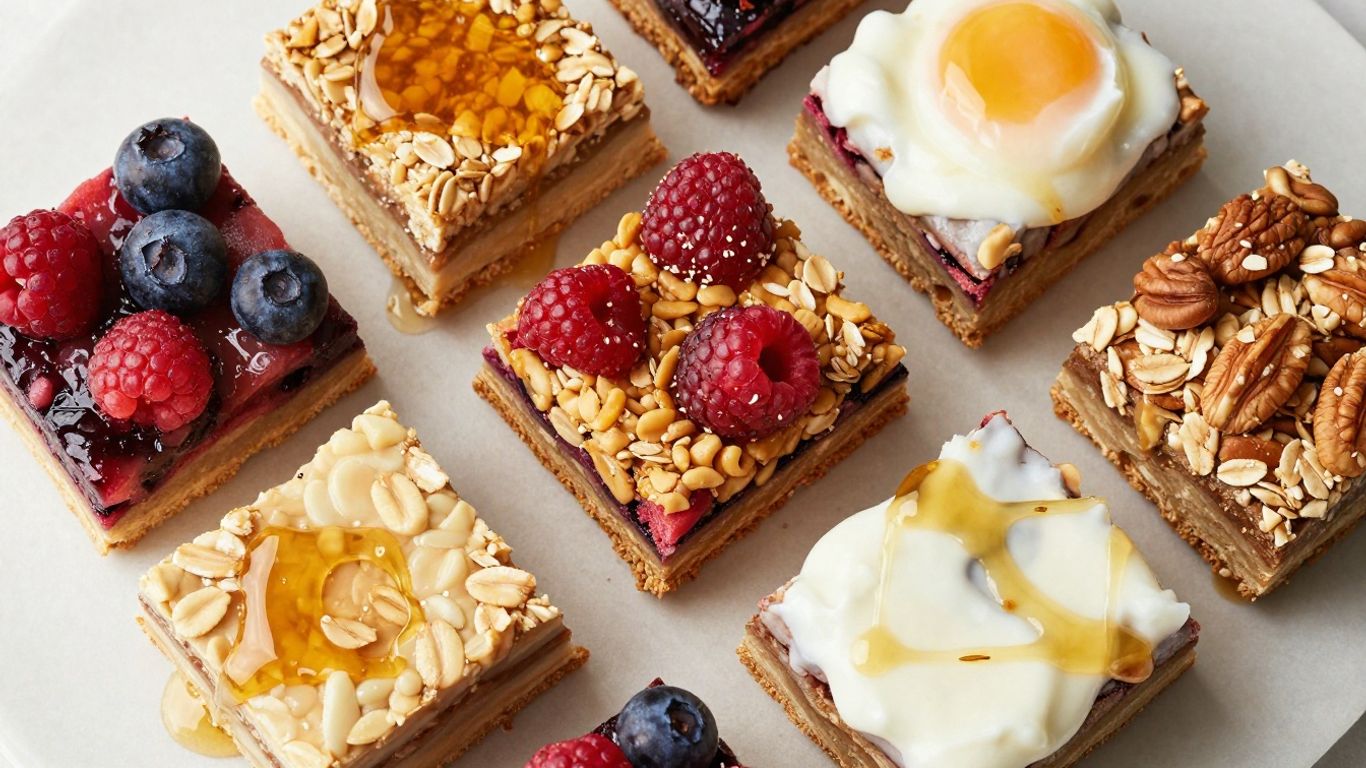
The formula: protein + carbs + colour
Think of each bar as a balanced mini-meal. Use this framework to build your own recipe:
| Component | Job | Options |
|---|---|---|
| Carb base | Structure and steady energy | Rolled oats, quick oats, puffed whole grains, oat flour, mashed sweet potato |
| Protein | Fullness and staying power | Eggs, Greek yogurt, peanut or almond butter, sunflower seed butter, hemp hearts, unflavoured or vanilla protein powder |
| Binder | Holds it together | Mashed banana, applesauce, eggs, nut or seed butter, a little honey or maple syrup |
| Colour | Fibre, vitamins, flavour | Berries, grated carrot or zucchini, chopped apple, dried apricots, pumpkin purée |
| Crunch | Texture and healthy fats | Pumpkin seeds, chia, ground flax, chopped nuts |
Why oats make the best base
Oats are an inexpensive whole grain that bakes into a chewy, sturdy bar. Canada’s Food Guide recommends choosing whole grain foods because they keep all parts of the grain and contain more fibre than refined grains, and it lists whole oats and oatmeal among its examples. Rolled oats give the most texture; blending a third of them into flour makes a softer, more cake-like bar.
Three base recipes
1. Baked oat and berry bars
- 3 cups rolled oats
- 2 eggs (or 2 flax eggs)
- 2 ripe bananas, mashed
- 1 cup plain Greek yogurt or milk
- ¼ cup peanut butter or sunflower seed butter
- 2 tbsp maple syrup
- 1 tsp baking powder, 1 tsp cinnamon, a pinch of salt
- 1½ cups fresh or frozen berries
Mix wet ingredients, stir in dry ingredients, fold in berries, spread in a parchment-lined 23 x 33 cm (9 x 13 inch) pan and bake at 180°C (350°F) for about 25 to 30 minutes, until set and lightly golden. Cool completely before cutting into 12 bars.
2. No-bake power squares
Warm ½ cup nut or seed butter with ¼ cup honey just until runny. Stir in 2 cups rolled oats, ¼ cup hemp hearts, 2 tbsp ground flax, ¼ cup chopped dried fruit and ¼ cup pumpkin seeds. Press firmly into a lined 20 cm (8 inch) pan and refrigerate for an hour before cutting.
3. Carrot cake breakfast bars
Follow the baked recipe, but swap the berries for 1½ cups grated carrot and ¼ cup raisins, use applesauce in place of one banana, and add ginger and nutmeg with the cinnamon.
Boosting protein without making bars dry
- Add yogurt or cottage cheese blended smooth; both add protein and moisture.
- Use eggs in baked bars. They bind and add protein.
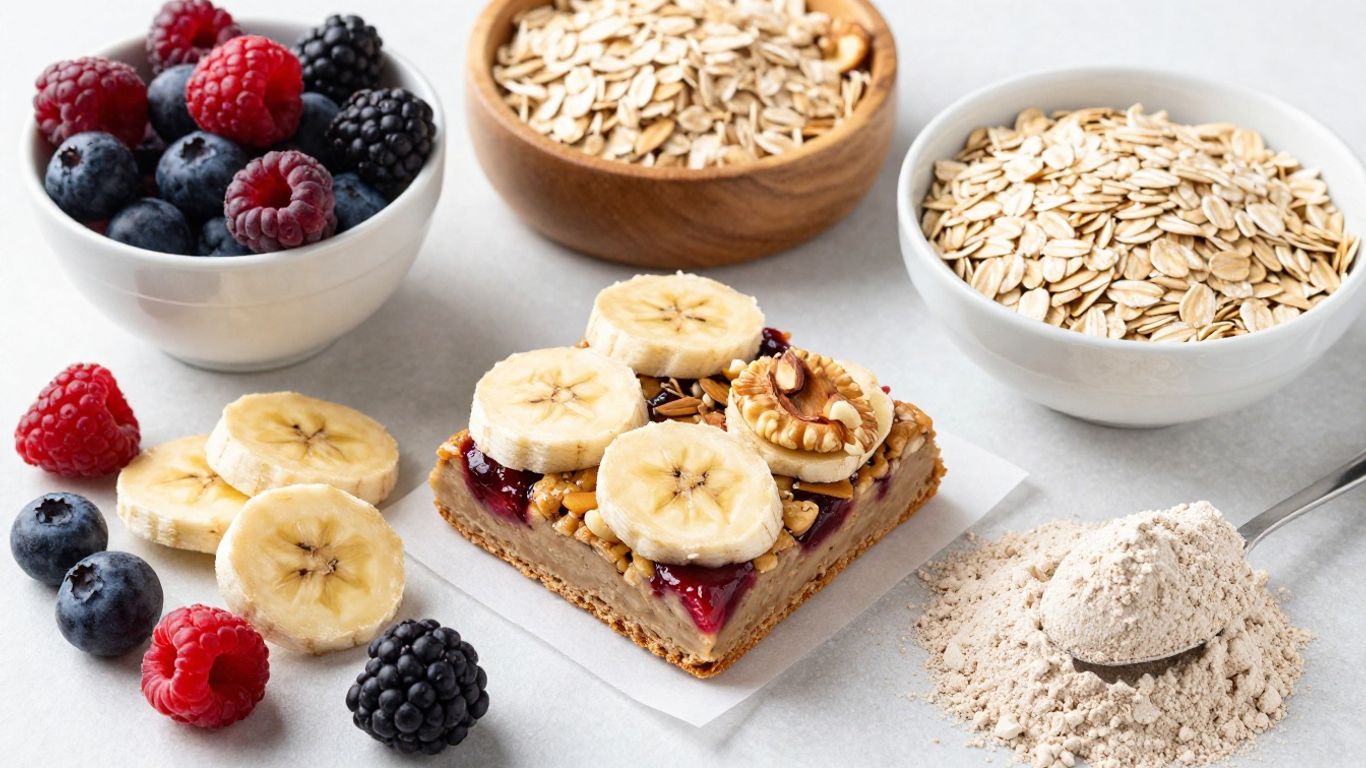
- Add protein powder carefully. Replace up to ⅓ cup of the oats, and add a few tablespoons of extra milk, because powder absorbs liquid.
- Serve alongside a protein. A bar with a glass of milk, a fortified soy beverage or a yogurt cup makes a more filling breakfast.
Allergy-friendly swaps
- Nut-free: use sunflower seed butter and pumpkin or sunflower seeds. (Sunflower butter can turn slightly green when baked with baking soda or powder. It’s harmless.)
- Egg-free: 1 tbsp ground flax plus 3 tbsp water per egg, rested 5 minutes.
- Dairy-free: use fortified soy or oat beverage and a plant-based yogurt.
- Gluten-free: buy oats labelled gluten-free, since regular oats can be cross-contaminated.
Homemade versus store-bought
Packaged bars are handy, but many are closer to dessert than breakfast. Health Canada’s guide to using food labels explains that 5% Daily Value or less is a little and 15% or more is a lot, and that ingredients are listed in order of weight. When you compare bars:
- Look for a whole grain near the start of the ingredient list.
- Check the sugars line. Choose bars with less sugar per serving, and notice how many different sweeteners appear in the ingredient list.
- Look for higher fibre (% DV) and some protein.
- Compare serving sizes; some packages contain two servings.
Making your own lets you control the sweetener, often using half the amount a typical recipe calls for, with fruit providing most of the sweetness.
Batch, store and grab
- Cool completely before cutting; warm bars crumble.
- Room temperature: dry no-bake bars keep for a few days in an airtight container.
- Fridge: store baked bars with fresh fruit, eggs or yogurt in the fridge and eat them within a few days.
- Freezer: wrap bars individually and freeze. Move one to the fridge the night before, or warm it for 20 to 30 seconds in the microwave.
- Crumbled bars make a quick granola topping for yogurt.
Pair your bar prep with other weekend kitchen jobs. Our guide to mise en place for real life shows how to fit it into one short session, and task batching for meals and training explains how to make it a weekly routine.
Getting the family on board
Let everyone pick one mix-in each week and taste-test the results. For picky eaters, try a “bridge” approach: start with a familiar flavour such as banana-chocolate chip, then gradually add more oats, seeds or grated vegetables over a few batches.
Turning a bar into a balanced breakfast
One bar on its own is a light breakfast. To make it last until lunch, add one or two of these:
- A glass of milk or fortified soy beverage
- A cup of plain yogurt with a few berries
- A hard-boiled egg
- A piece of whole fruit, such as an apple, orange or pear
- A handful of cherry tomatoes or cucumber slices for something savoury
If you’re often hungry mid-morning, try cutting the pan into 9 larger portions instead of 12, or add an extra egg and a spoon of seeds to the recipe.
FAQ
Why do my bars fall apart?
Usually there isn’t enough binder or they were cut while warm. Add an extra egg or 2 tablespoons of nut or seed butter, press the mixture firmly into the pan, and cool completely, or chill for an hour, before slicing.
Can I use frozen fruit?
Yes. Add berries straight from frozen so they don’t bleed into the batter, and expect to bake for a few extra minutes.
Are breakfast bars good for weight management?
They can be, if they are built around whole grains, protein and fruit, and if the portion fits your hunger. Homemade bars make it easier to control added sugar and size.
Quick takeaways
- Build bars from a whole-grain base, a protein, a binder and colourful fruit or vegetables.
- Let fruit do most of the sweetening; keep added honey or syrup modest.
- Add yogurt, eggs, seeds or nut butter for more staying power.
- Read labels on store-bought bars: whole grain first, less sugar, more fibre.
- Store bars with fresh fruit or dairy in the fridge, and freeze extras individually.