
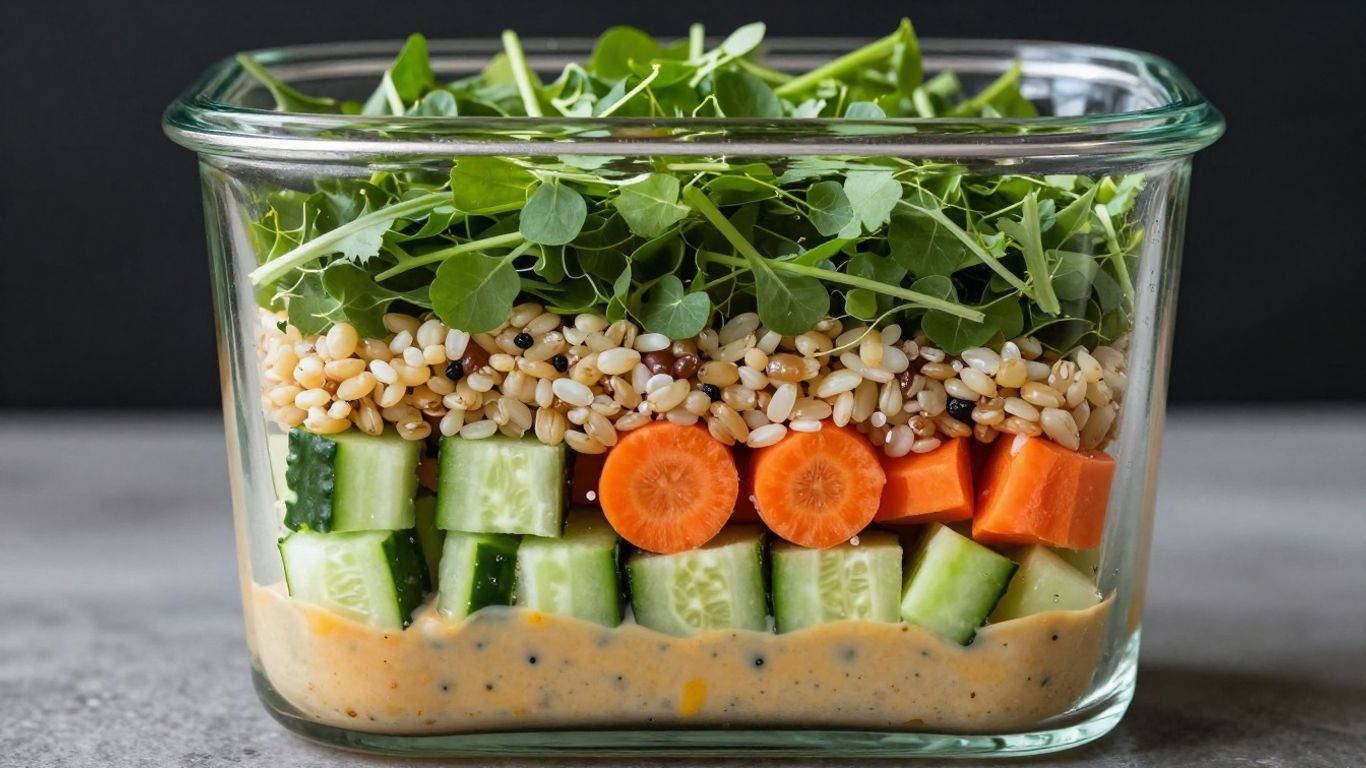
A salad jar stays crisp when wet ingredients sit at the bottom and delicate greens sit at the top, with sturdy “barrier” vegetables and grains in between. Dry everything well, keep the jar upright and cold, and add soft or crunchy toppings close to serving time. Built this way, most salad jars stay fresh for about three days.
Why salads go soggy
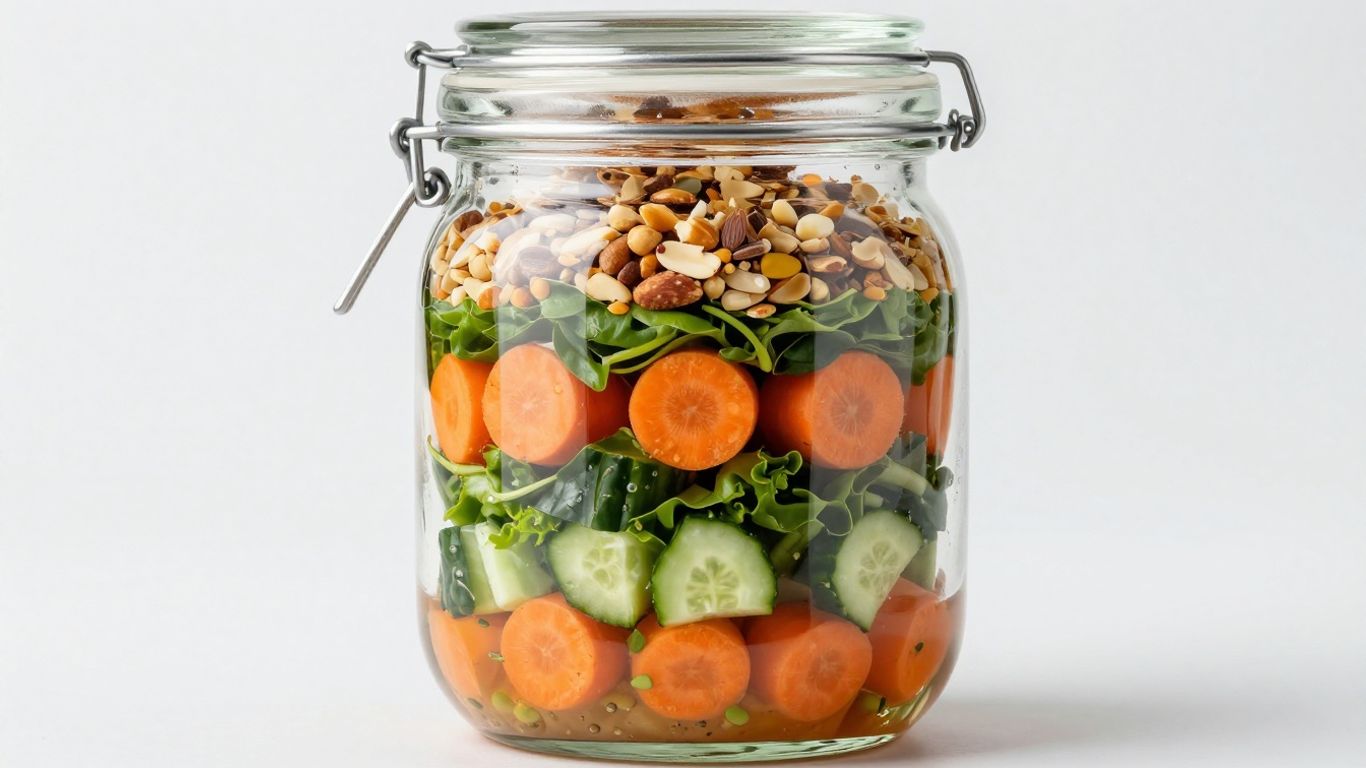
Sogginess comes from three things: dressing soaking into leaves, water from juicy vegetables pooling, and salt pulling moisture out of cut produce over time. Layering keeps these apart. Gravity holds the dressing at the bottom, and the firm vegetables above it act like a wall so the greens never touch liquid until you shake the jar.
The layer order, bottom to top
| Layer | What goes here | Why |
|---|---|---|
| 1. Dressing | 2–4 tbsp vinaigrette, yogurt or tahini dressing | Stays put at the bottom |
| 2. Hard vegetables | Carrots, peppers, cucumber, red onion, radishes, celery | Can marinate without wilting; forms a barrier |
| 3. Beans and grains | Chickpeas, lentils, quinoa, farro, brown rice | Absorb a little dressing and add staying power |
| 4. Protein and softer items | Eggs, tofu, chicken, cheese, corn, tomatoes (seeded) | Kept away from the dressing |
| 5. Greens | Romaine, spinach, kale, mixed greens | Furthest from moisture |
| 6. Toppers (pack separately) | Nuts, seeds, croutons, avocado | Add right before eating |
Seven rules for crisp salad jars
- Dry the greens thoroughly. Wash them, then use a salad spinner and pat with a clean towel. Water on leaves is the main cause of limp salads.
- Choose sturdy greens. Romaine, kale, cabbage and spinach hold up for days; delicate butter lettuce and spring mix are best eaten within a day or two.
- Seed juicy vegetables. Scoop seeds out of tomatoes and cucumbers, or use cherry tomatoes whole.
- Pack tightly. Press each layer down gently. Less air means less shifting and less browning.
- Use a wide-mouth jar. A 1-litre (32 oz) wide-mouth jar fits a full meal and is easy to fill and empty.
- Keep it upright and cold. Tipping the jar lets dressing reach the greens. Keep it in the fridge until you leave and use an insulated bag with an ice pack.
- Add soft and crunchy items last. Avocado browns and nuts soften; pack them in a small separate container.
Food safety basics
Health Canada’s leafy greens safety tips recommend washing greens under cool running water rather than soaking them in a sink, discarding outer leaves, and storing greens in the refrigerator for up to seven days. Bagged greens labelled pre-washed or triple-washed do not need washing again. For cooked proteins, grains and beans, Health Canada’s leftover tips say to refrigerate promptly and eat within 2 to 3 days, so plan jars with cooked chicken or eggs for the first part of the week.
Wash jars and lids in hot soapy water and let them dry completely before filling. Keep cutting boards for raw meat separate from those used for salad vegetables.
Four balanced combinations
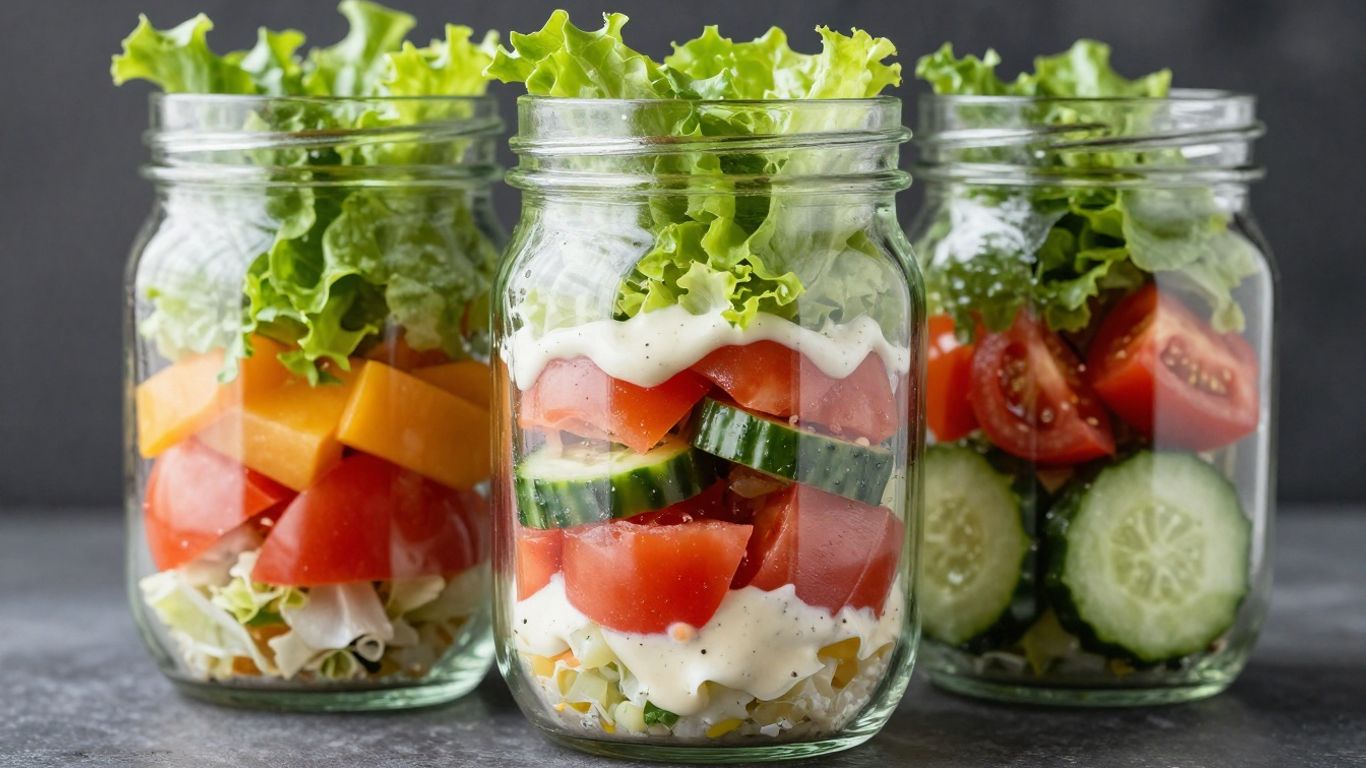
Mediterranean chickpea
Lemon-oregano vinaigrette; cucumber, red onion and pepper; chickpeas and quinoa; cherry tomatoes and a little feta; romaine.
Southwest black bean
Salsa mixed with lime juice and a spoon of Greek yogurt; peppers and red onion; black beans, corn and brown rice; shredded chicken or tofu; romaine. Pack avocado separately.
Asian-style crunch
Peanut-lime or sesame-ginger dressing; shredded carrots, red cabbage and edamame; soba noodles or brown rice; baked tofu; spinach. Top with sesame seeds or peanuts at lunch.
Harvest lentil
Maple-Dijon vinaigrette; diced apple tossed in lemon juice and celery; green lentils and farro; roasted squash and a few pumpkin seeds packed separately; kale.
Making each jar a full meal
A salad that leaves you hungry by mid-afternoon won’t stick as a habit. Canada’s Food Guide suggests filling half your plate with vegetables and fruits, with the rest shared between protein foods and whole grains. In a jar, that looks like:
- About 2 cups of vegetables and greens
- ½ to ¾ cup of beans, lentils, tofu, eggs or chicken
- ½ cup of a cooked whole grain
- A measured 2 to 3 tablespoons of dressing
For more ways to put balanced meals together quickly, see minimum viable meals.
Batch-prep plan for four jars
- Cook a grain and a pot of lentils or beans (or open a can, rinsed).
- Wash and spin greens; wash and chop the hard vegetables.
- Whisk one large jar of dressing.
- Line up four jars and build them in order, layer by layer, like an assembly line.
- Pack toppers into small containers.
- Store upright in the fridge. Eat the jars with cooked protein first.
A single prep session can cover salad jars, chopped snacks and dinner components together; our mise en place guide shows how.
Three jar-friendly dressings
Thicker dressings stay put at the bottom of the jar better than very thin ones. Each recipe makes enough for about four jars; shake in a small jar and refrigerate.
- Lemon-Dijon: ¼ cup olive oil, 3 tbsp lemon juice, 1 tsp Dijon, 1 small garlic clove (grated), a pinch of salt and pepper.
- Creamy herb: ½ cup plain Greek yogurt, 2 tbsp lemon juice, 1 tbsp olive oil, chopped dill or chives, salt and pepper. Thin with a spoonful of water if needed.
- Peanut-lime: 3 tbsp peanut butter, 2 tbsp lime juice, 1 tbsp soy sauce, 1 tsp maple syrup, grated ginger, warm water to thin.
Measure your dressing rather than pouring freely. Two to three tablespoons is usually enough to coat a full jar once tossed.
Eating it
Tip the jar into a large bowl so the dressing ends up on top, then toss. If you prefer to eat from the jar, use one that is only two-thirds full so there is room to shake.
Quick takeaways
- Dressing on the bottom, hard vegetables next, then grains and beans, protein, and greens on top.
- Dry greens well and choose sturdy varieties for jars you’ll eat later in the week.
- Keep jars upright and cold; use an ice pack when you’re out.
- Pack avocado, nuts and croutons separately.
- Eat jars with cooked protein within 2 to 3 days.
- Build each jar as a full meal: vegetables, protein, whole grain and a measured dressing.
FAQ
Can I use plastic containers instead of glass jars?
Yes. Any tall, leak-proof container works. Glass is easy to clean, doesn’t hold odours and lets you see the layers at a glance, while lightweight plastic is better for carrying in a backpack or for children’s lunches. The layering principle is the same.
How many days ahead can I make salad jars?
Jars with sturdy greens and plant proteins usually stay crisp for about three days. Jars with cooked chicken, fish or eggs are best eaten within 2 to 3 days.