
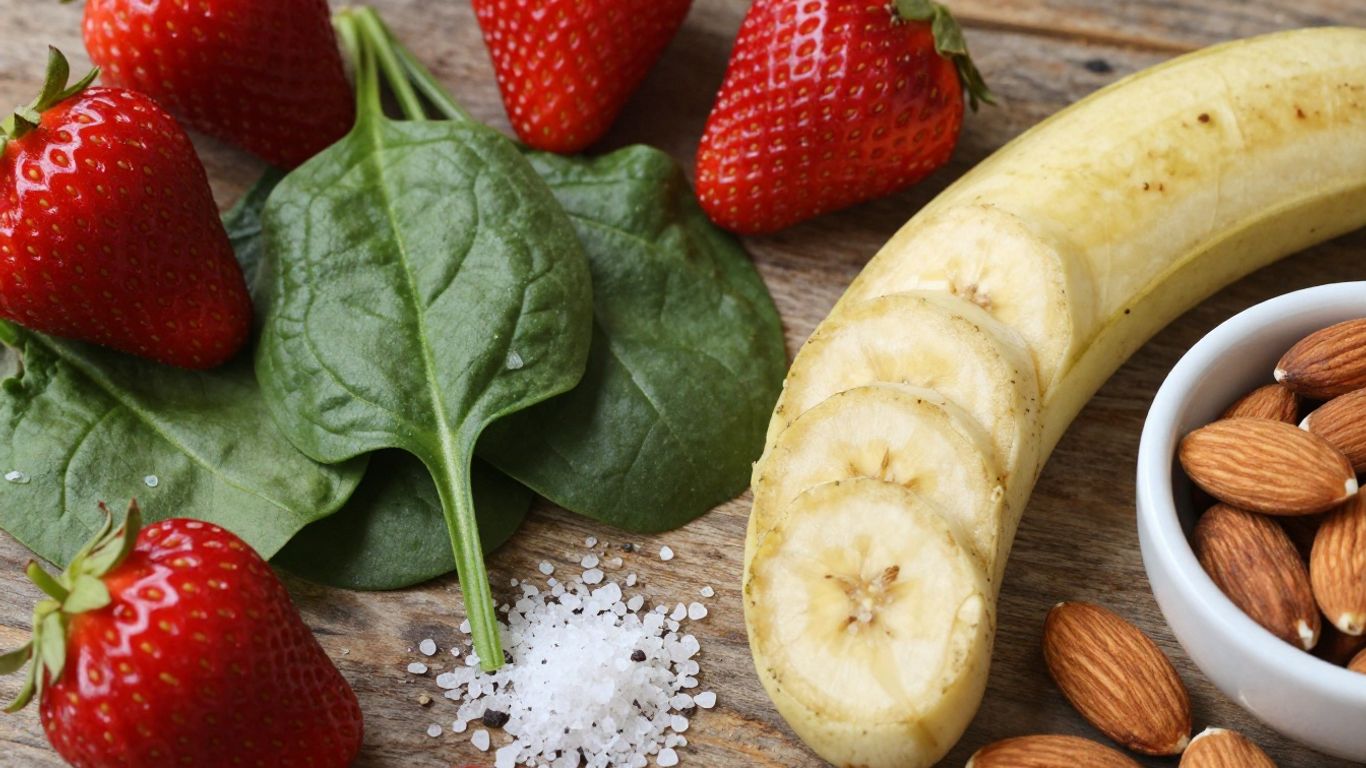
Most people can meet their sodium, potassium and magnesium needs from everyday food and water, without sports drinks or electrolyte powders. The main gaps are usually too much sodium from packaged foods and too little potassium and magnesium from produce, beans, nuts and whole grains. Extra electrolytes become worth planning for mainly during long, hot or very sweaty exercise.
What electrolytes do
Electrolytes are minerals that carry an electrical charge in body fluids. They help control fluid balance, nerve signals and muscle contraction, including your heartbeat. Your kidneys keep blood levels in a tight range, so day-to-day intake matters most over weeks and months, not hour by hour.
- Sodium mainly controls fluid outside your cells and is the electrolyte lost in the largest amount in sweat.
- Potassium works mostly inside cells. The NHS notes it helps control fluid balance and helps the heart muscle work properly.
- Magnesium helps turn food into energy and supports muscle and nerve function and bone health.
Sodium: usually too much, sometimes too little
For most adults, the issue is excess sodium. The NHS advises adults to have no more than 6 g of salt a day (about 1 level teaspoon), and notes that around three quarters of the salt people eat is already in packaged and everyday foods such as bread, breakfast cereals, processed meats and ready meals. Too much salt can raise blood pressure.
That is why a food-first electrolyte strategy usually means less processed sodium and more potassium-rich whole foods, not adding salt tablets.
When extra sodium may make sense
- Exercise lasting more than about an hour, especially in heat or humidity.
- Heavy sweaters who see white salt marks on clothing or a hat.
- Long hikes, tournaments or work shifts outdoors in summer.
In those cases, salty foods often do the job: salted crackers or pretzels, a cup of broth, salted nuts, a cheese sandwich or pickles. A sports drink is one option, not the only one.
Potassium: the common gap
The NHS lists a potassium need of 3,500 mg a day for adults and says most people should be able to get this from a varied diet. Many people fall short simply because they eat few vegetables, fruits and legumes.
| Food group | Good everyday choices |
|---|---|
| Vegetables | Potatoes and sweet potatoes (with skin), squash, spinach, broccoli, Brussels sprouts, tomatoes, parsnips |
| Fruit | Bananas, oranges and orange juice, cantaloupe, kiwi, dried apricots, raisins |
| Beans and pulses | Lentils, kidney beans, white beans, chickpeas, edamame |
| Dairy and alternatives | Milk, yogurt, fortified soy beverage |
| Nuts and seeds | Almonds, pistachios, pumpkin and sunflower seeds |
| Fish | Salmon, trout, halibut |
Potassium supplements are a different matter. They can be risky for people with kidney disease or those on certain blood pressure medications, so food is the safer route unless your doctor prescribes otherwise.
Magnesium: quiet but important
The NHS gives magnesium needs of 300 mg a day for men and 270 mg a day for women aged 19 to 64, and lists foods such as spinach, nuts and wholemeal bread as good sources. Other easy options include:
- Pumpkin seeds, almonds, cashews and peanut butter
- Black beans, edamame and tofu
- Oats, brown rice, quinoa and whole-grain bread
- Leafy greens such as spinach and Swiss chard
- Cocoa powder and dark chocolate in small amounts
Refined grains lose much of their magnesium during processing, so swapping white bread and rice for whole-grain versions is one of the easiest upgrades.
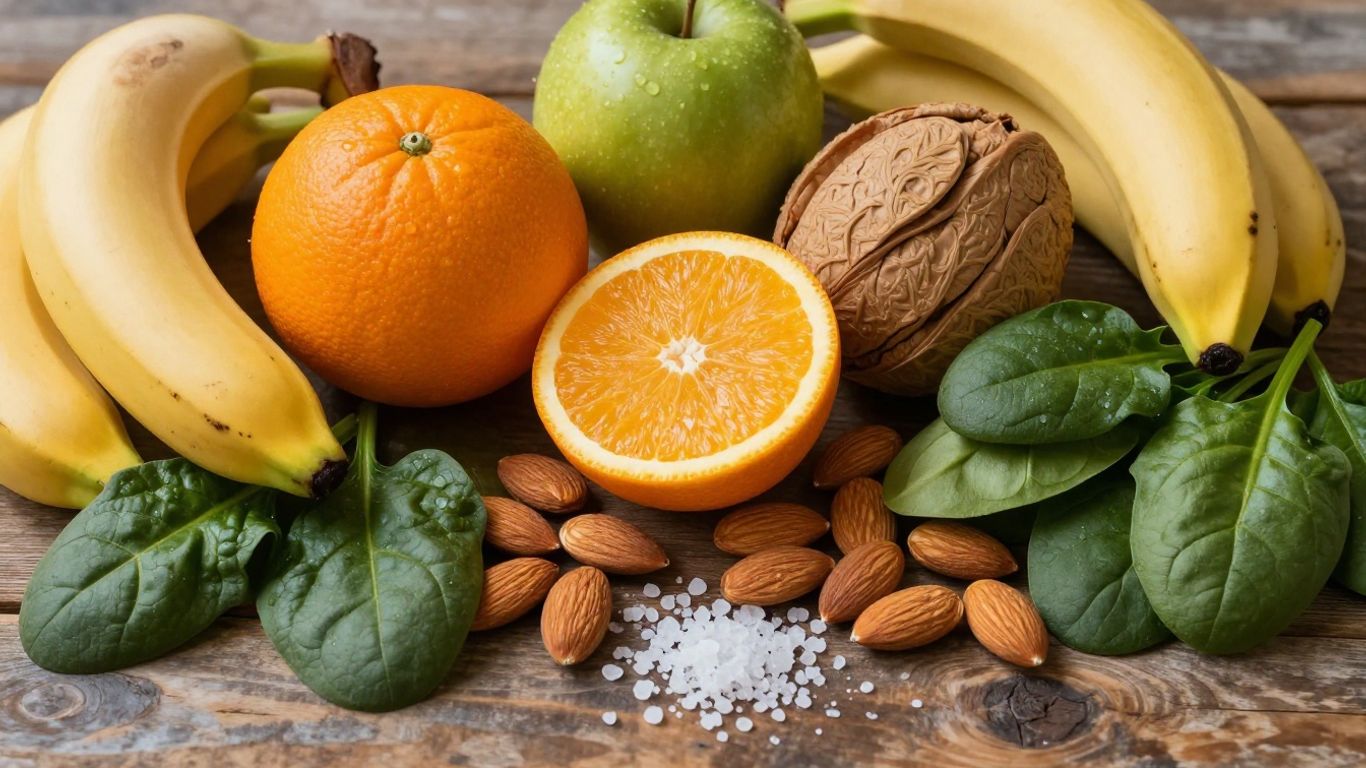
A food-first electrolyte day
- Breakfast: Oats cooked in milk with a sliced banana and pumpkin seeds.
- Lunch: Lentil soup with a whole-grain roll and a spinach salad.
- Snack: Yogurt with kiwi, or a handful of almonds and an orange.
- Dinner: Salmon or tofu with a baked potato (skin on) and broccoli.
- Drinks: Water through the day, milk, and a small glass of orange juice if you like it.
That pattern covers all three minerals without any special products, and it keeps sodium reasonable if you limit salty packaged extras.
Electrolytes around exercise
The American College of Sports Medicine’s position on exercise and fluid replacement notes that sweat rates and sweat sodium vary widely between people, so personalized plans make more sense than one rule for everyone. It suggests estimating sweat loss by weighing yourself before and after exercise, aiming to avoid losing more than about 2% of body weight, and notes that drinks containing electrolytes and carbohydrate can help over water alone in some situations.
Simple guide by session type
| Session | What usually works |
|---|---|
| Under 60 minutes, mild conditions | Water, then your normal meals |
| 60 to 90+ minutes, or hot and sweaty | Water plus a salty snack, or a homemade drink (see below) |
| Long events (half day or more) | Planned fluids, sodium and carbohydrate; practise your plan in training |
| After exercise | A meal with salty and potassium-rich foods plus fluids, e.g. a rice bowl with beans, vegetables and broth |
A simple homemade drink
Mix water with some orange or apple juice for carbohydrate and potassium, plus a small pinch of salt. Adjust to taste; it should not taste like seawater. Coconut water is another option that is naturally higher in potassium but fairly low in sodium.
Do not overdo plain water
More is not always better. Mayo Clinic explains that drinking too much water during endurance events such as marathons and triathlons can dilute blood sodium, a condition called hyponatremia. Symptoms can include nausea, headache, confusion and fatigue. Drink to thirst during most exercise and use your sweat-test results for long events.
Signs your intake may need attention
- Frequent muscle cramps, unusual fatigue or headaches after long sweaty sessions
- Very few servings of vegetables, fruit, beans or whole grains most days
- A diet built mostly on packaged and restaurant food (high sodium, low potassium)
- Following a very low-carbohydrate diet, which can increase sodium and fluid losses early on
Cramps have many causes, including fatigue, so they are not proof of an electrolyte problem.
For more, see our potassium playbook, guide to adjusting sodium sensibly, and hydration salts from food.
When to check with a professional
Talk to your doctor before using electrolyte or salt supplements if you have high blood pressure, heart or kidney disease, or take diuretics, ACE inhibitors or other medications that affect potassium or sodium. Get urgent care for confusion, vomiting, severe headache or fainting during or after long exercise. A sports dietitian can help build a sweat-based plan for endurance events.
Practical takeaways
- Build meals around vegetables, fruit, beans, whole grains, dairy or fortified alternatives, nuts and seeds.
- Cut back on processed, high-sodium foods for daily health.
- Add salt or salty snacks mainly for long, hot or very sweaty sessions.
- Weigh yourself before and after long workouts to learn your sweat losses.
- Drink to thirst, and avoid forcing large amounts of plain water during endurance events.
- Use supplements only with professional guidance.