
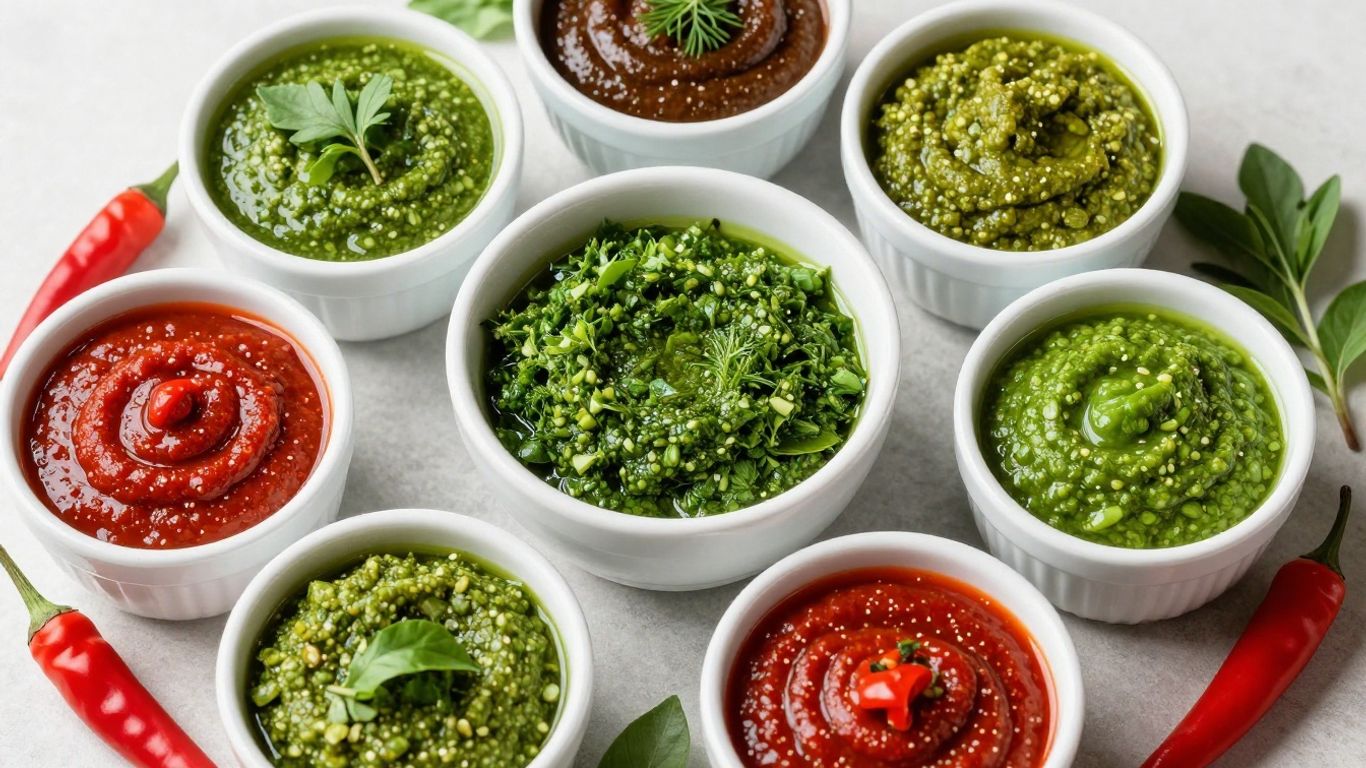
Herb sauces like chimichurri, zhug and pesto turn plain beans, eggs, grilled vegetables, fish or chicken into something you look forward to. They all follow the same pattern: a big handful of fresh herbs, an aromatic like garlic or chili, an acid, a little oil, and salt. Master that ratio and you can make a fresh green sauce in five minutes with whatever herbs you have.
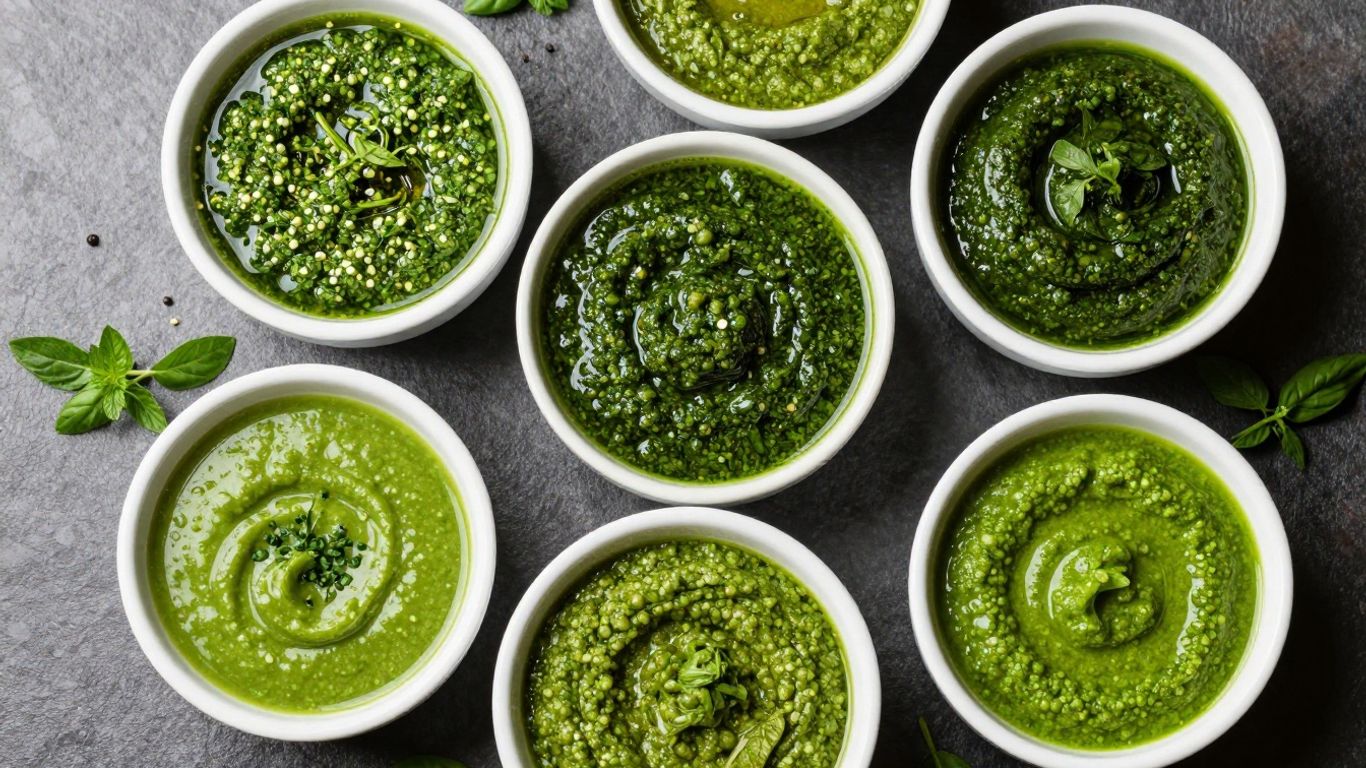
Why herb sauces are worth learning
A spoonful of herb sauce adds a lot of flavour per bite. That matters when you’re cooking simply, because plain protein and vegetables are easier to stick with when they taste great. Herb sauces also let you lean on herbs, garlic, chili and citrus for flavour rather than extra salt, which the NHS recommends as a practical way to cut back on salt.
The fat in most herb sauces comes from olive oil, nuts or seeds. Harvard’s Healthy Eating Plate encourages healthy plant oils like olive and canola, in moderation. These sauces are still energy-dense, so serve them by the spoonful rather than the ladle.
The basic formula
| Component | Role | Examples |
|---|---|---|
| Herbs (the base) | Fresh, green flavour and colour | Parsley, cilantro, basil, mint, dill, oregano |
| Aromatics | Bite and depth | Garlic, shallot, green onion, fresh or dried chili |
| Acid | Brightness, balance | Lemon or lime juice, apple cider vinegar, white vinegar |
| Fat | Carries flavour, smooth texture | Olive oil, toasted nuts or seeds, a little cheese |
| Seasoning | Sharpens everything | Salt, pepper, cumin, coriander, cardamom |
A useful starting ratio: about 2 packed cups of herbs, 1–2 garlic cloves, 2 tablespoons acid, 3–4 tablespoons oil and salt to taste. Adjust from there. If you want less oil, replace some with water, plain yogurt or a spoon of white beans blended in.
Three classics, step by step
Chimichurri (Argentina and Uruguay)
Chimichurri is a loose, tangy sauce traditionally served with grilled meat. Its sharpness also suits grilled vegetables, potatoes, beans and eggs.
- 1 cup finely chopped flat-leaf parsley
- 1–2 tablespoons fresh oregano (or 1 teaspoon dried)
- 2 cloves garlic, minced
- 1/2 teaspoon chili flakes
- 2–3 tablespoons vinegar (apple cider or plain white)
- 3–4 tablespoons olive oil, salt and pepper
Chop by hand for the classic texture, stir everything together and let it sit 15–20 minutes so the garlic mellows and the flavours blend.
Zhug (Yemen)
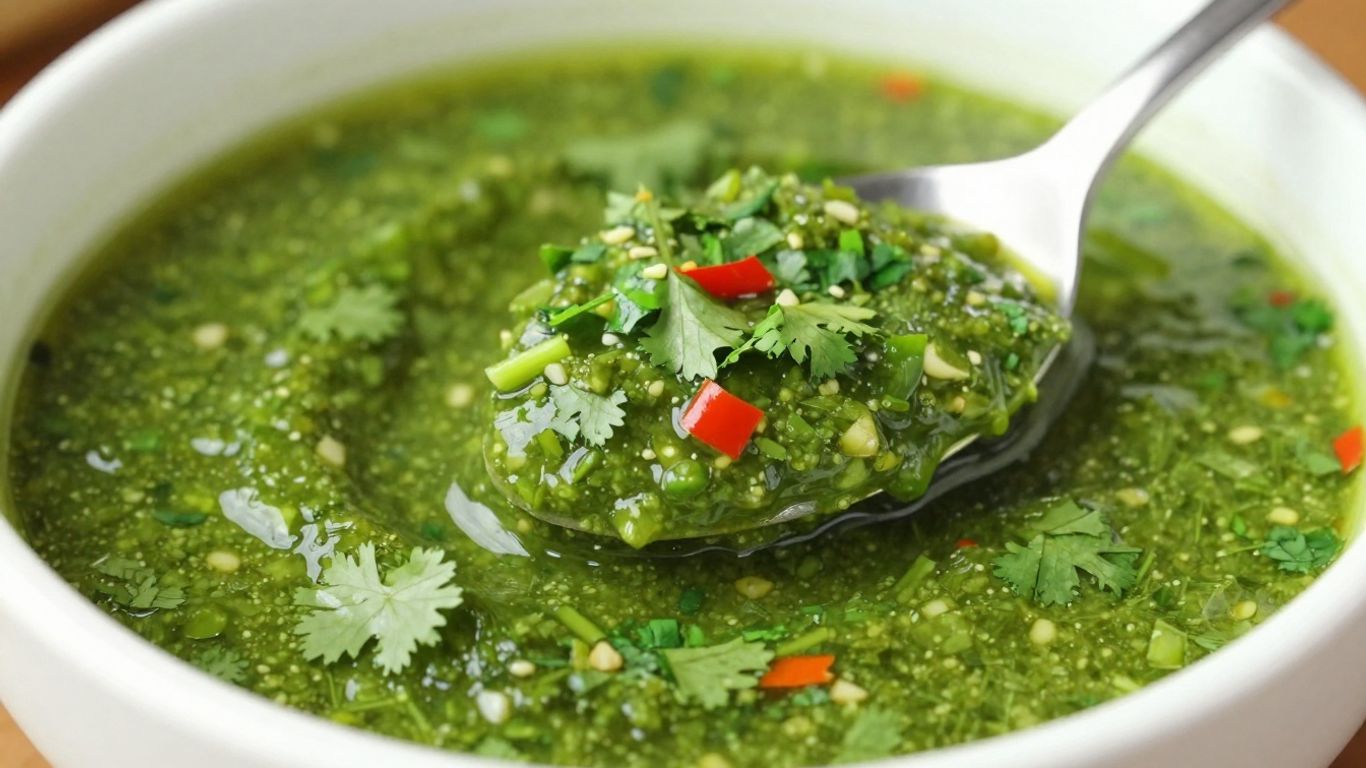
Zhug (also spelled skhug) is a spicy green sauce built on cilantro and hot chili, warmed with spices like cumin and cardamom.
- 1 large bunch cilantro, with tender stems
- 1/2 bunch parsley
- 1–3 green chilies (seeded for milder heat)
- 2 cloves garlic
- 1/2 teaspoon each ground cumin and coriander, a pinch of cardamom
- Juice of 1/2 lemon, 3 tablespoons olive oil, salt
Pulse in a food processor until finely chopped but not completely smooth. Try it on eggs, roasted cauliflower, lentil soup, hummus bowls or grilled fish. A small spoon goes a long way.
Pesto (Genoa, Italy)
Classic pesto Genovese combines basil, garlic, pine nuts, Parmesan or pecorino and olive oil. It’s richer than chimichurri or zhug, so it shines in smaller amounts.
- 2 packed cups basil leaves
- 2 tablespoons toasted pine nuts (or walnuts or sunflower seeds)
- 1 small garlic clove
- 1/4 cup grated Parmesan
- 3–4 tablespoons olive oil, a squeeze of lemon, salt
Pulse the nuts and garlic first, add basil and pulse, then stream in the oil. Stir in cheese last. To stretch it, blend in a handful of spinach, or thin a spoonful with pasta water before tossing.
More sauces to try
- Salsa verde: parsley, capers, lemon zest and juice, garlic and olive oil. Great with fish and potatoes.
- Green yogurt sauce: plain Greek yogurt blended with dill, mint, garlic and lemon. Creamy, lighter and higher in protein.
- Cilantro-lime sauce: cilantro, lime, green onion, a little jalapeño and yogurt or avocado.
- Mint-pea pesto: thawed peas, mint, lemon, Parmesan and a small amount of oil.
- Pebre (Chile): a fresh, chunky mix of cilantro, onion, tomato, chili and vinegar.
- Tahini-herb sauce: tahini thinned with lemon and water, blended with parsley and garlic.
Technique tips
- Dry your herbs. Wet leaves make a watery, dull sauce.
- Use tender stems. Cilantro and parsley stems have lots of flavour; discard only the tough ends.
- Knife or processor? Hand-chopping gives a bright, textured sauce; a processor is faster and smoother. Pulse rather than run continuously so the herbs don’t turn muddy.
- Keep it green. Add acid just before serving if you’re making it ahead, and press plastic wrap onto the surface to limit browning. A quick 10-second blanch of basil keeps pesto bright for longer.
- Taste on the food. A sauce that tastes strong on a spoon is often just right on plain beans or chicken.
Storage and food safety
Fresh herb sauces are best within a few days. Keep them covered in the fridge. Garlic and herbs in oil need special care: the CDC advises that you refrigerate homemade oils made with garlic or herbs and throw them away after 4 days, because of the risk of botulism. Don’t leave herb-and-garlic sauces at room temperature for long, and don’t store them in oil in the cupboard.
For longer storage, freeze sauces in an ice-cube tray, then pop the cubes into a freezer bag. Each cube is roughly one serving to stir into soup, pasta or grains. For pesto, freeze without the cheese and add it after thawing.
Ways to use a jar this week
- Spoon over scrambled or fried eggs.
- Toss with roasted potatoes or sweet potatoes.
- Stir into a can of drained white beans with tomatoes for a fast lunch.
- Thin with yogurt and use as a salad dressing.
- Swirl into vegetable or lentil soup at the table.
- Brush on fish, tofu or chicken in the last minutes of cooking.
If you like having flavour ready to go, The Herb Pantry shows how to build blends for the week, and Skillet Dinners pairs well with a jar of green sauce.
Quick takeaways
- Herbs + aromatic + acid + a little fat + salt = almost any green sauce.
- Chimichurri is tangy, zhug is spicy, pesto is rich; pick by the meal.
- Use herb sauces to add flavour instead of extra salt, and serve by the spoonful.
- Refrigerate garlic-and-oil sauces and use within 4 days, or freeze in cubes.
- Swap some oil for yogurt, water or beans if you want a lighter sauce.
FAQ
Is zhug a hot sauce?
It’s spicy, but it’s a fresh herb condiment rather than a fermented or vinegar-based hot sauce. You can make it as mild or hot as you like by adjusting the chilies.
Can I make pesto without nuts?
Yes. Sunflower or pumpkin seeds work well, or simply leave the nuts out and add a little more cheese or white beans for body.