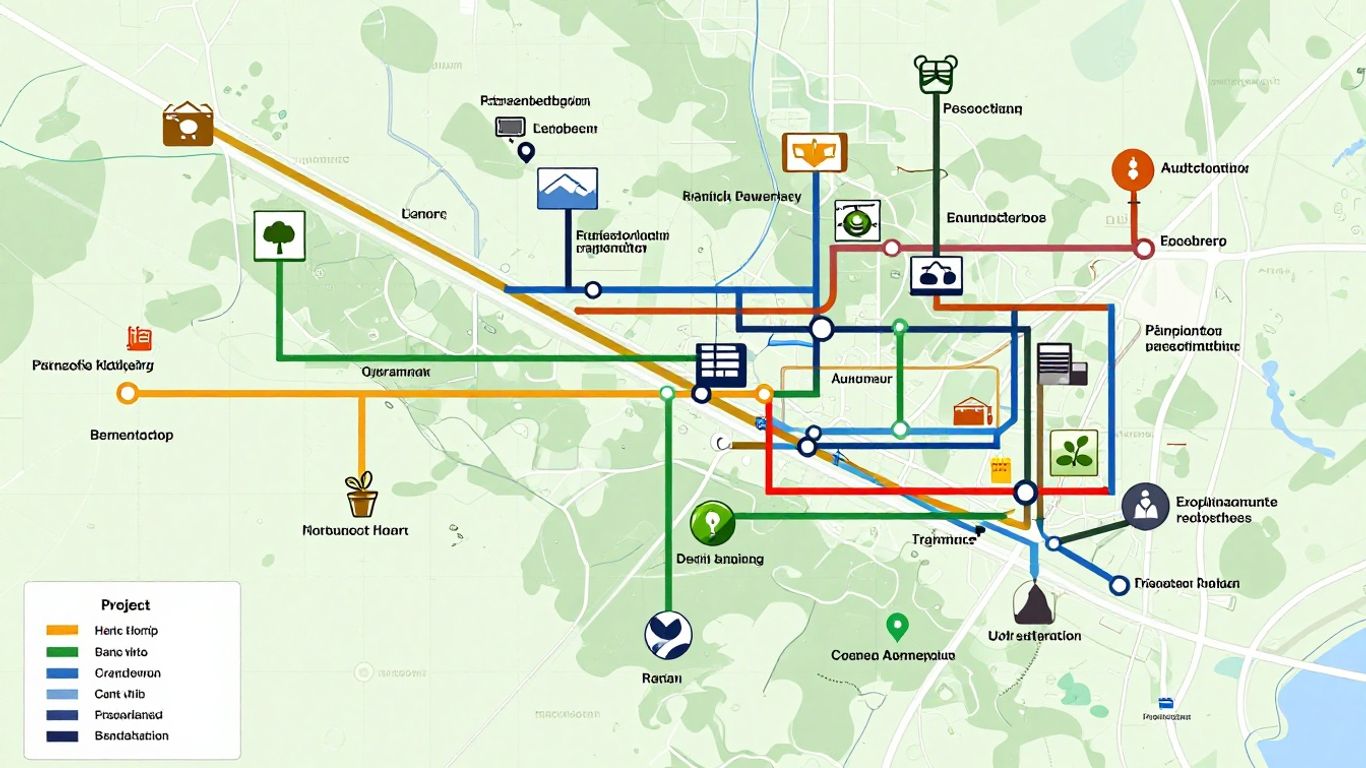
So, you’ve got a big plan, a strategy ready to go. But how do you actually make it happen? That’s where an implementation map comes in. Think of it like a detailed GPS for your project. It lays out all the steps, who’s doing what, and what could go wrong. It’s not just about getting from A to B; it’s about doing it smoothly and smartly. We’ll break down how to build one and why it’s so important for success.
Key Takeaways
- Clearly define who’s responsible for each part of the plan. This stops confusion and makes sure everyone knows their job.
- Figure out what success looks like and how you’ll measure it. This keeps everyone focused on the real goals.
- Plan out your resources – people, time, money – so you know you have what you need, when you need it.
- Think about what could go wrong and have a plan for it. A risk log helps you spot problems early and prepare.
- Use a risk heat map to see which problems are the most serious and need the most attention.
Foundational Elements Of Your Implementation Map
Getting an implementation map off the ground means setting up some core pieces first. Think of it like building a house – you need a solid foundation before you start putting up walls. These initial steps make sure everyone knows what they’re doing, how we’ll know if we’re succeeding, and that we have the right stuff to get the job done.
Defining Clear Roles And Responsibilities
This is super important. If nobody knows who’s supposed to do what, things get messy fast. We need to clearly state who is in charge of each part of the plan. This isn’t about pointing fingers; it’s about making sure every task has an owner. When roles are clear, confusion goes down, communication gets better, and work gets spread out more evenly. It also helps us figure out who we need and what skills they should have.
- Assign a specific person to each task.
- Document these assignments clearly.
- Make sure everyone understands their part.
Establishing Success Metrics For Evaluation
How will we know if this whole thing is actually working? That’s where success metrics come in. These are the yardsticks we’ll use to measure if we’re hitting our targets. It could be finishing by a certain date, staying within budget, or making sure the quality is good. Setting these up front keeps us focused on the end result, not just the busywork. It also gives everyone, including the higher-ups, a way to see how we’re doing and make smart choices along the way.
Here’s a quick look at what we might track:
| Metric Category | Example Metrics |
|---|---|
| Timeline Adherence | On-time completion of key phases, overall project duration |
| Budget Performance | Actual spend vs. allocated budget, cost per deliverable |
| Quality Standards | Defect rates, customer feedback scores, performance benchmarks |
| Stakeholder Satisfaction | Survey results, feedback session outcomes |
Strategic Resource Allocation Planning
Resources are basically everything we need to get this done: people, materials, tools, and money. Smart planning means making sure we have these things when we need them and that we’re not wasting them. The map should show what resources each task needs and when. This helps avoid having too many people on one thing while another is short-staffed, or having equipment sit idle. It also lets us spot potential shortages early, before they cause big problems.
Planning resources isn’t just about having enough; it’s about having the right resources at the right time. This prevents bottlenecks and keeps the project moving smoothly, saving both time and money.
This groundwork is what makes the rest of the implementation map actually useful. Without clear roles, a way to measure success, and a plan for resources, even the best ideas can fall apart.
Navigating Potential Challenges With A Risk Log
![]()
Projects rarely go exactly as planned. Things pop up, right? That’s where a risk log comes in handy. Think of it as your project’s early warning system. It’s a place to jot down all the things that could go wrong, how likely they are to happen, and what kind of mess they might make if they do. This isn’t about being negative; it’s about being prepared.
Anticipating And Addressing Potential Problems
Before you even start, take some time to brainstorm. What could derail your project? Talk to your team, people in other departments, maybe even folks who’ve done similar projects before. You’d be surprised what issues people have seen. List them out. It doesn’t have to be fancy, just clear.
Prioritizing Issues And Preparing Contingencies
Once you have your list, you need to figure out which risks are the most serious. Not all risks are created equal, after all. Some might be a minor annoyance, while others could sink the whole project. You can use a simple system to rank them. For example:
- High Risk: Something that’s very likely to happen and would cause major problems.
- Medium Risk: Could happen, and would cause some disruption.
- Low Risk: Unlikely to happen, or wouldn’t cause much trouble if it did.
For the high and medium risks, start thinking about what you’d do if they actually happened. This is your contingency plan. It’s like having a backup plan ready to go.
Maintaining A Proactive Approach To Risk
Keeping a risk log isn’t a one-and-done thing. You need to revisit it regularly. As the project moves forward, new risks might appear, or some of the ones you listed might become less of a worry. Make it a habit to check in on your risk log, update it, and discuss it with your team. This keeps everyone aware and ready to act, rather than just reacting when something goes wrong.
A well-managed risk log helps keep surprises to a minimum. It allows for better decision-making and keeps your project moving forward smoothly, even when unexpected things happen.
Visualizing Risk With A Heat Map
So, you’ve identified a bunch of potential problems, right? Now what? We need a way to see them all clearly, and that’s where a risk heat map comes in. Think of it like a weather map, but for your project’s potential issues. It helps us get a handle on what could go wrong and how bad it might be.
Understanding Risk Likelihood and Impact
Basically, we’re looking at two main things for each risk: how likely is it to happen, and if it does, how much of a mess will it make? We can plot these on a grid. The horizontal axis (left to right) shows how likely something is to occur, maybe from ‘rarely happens’ to ‘almost certain’. The vertical axis (bottom to top) shows the impact, from ‘no big deal’ to ‘major disaster’. Putting these together gives us a clear picture of where to focus our attention.
Utilizing Color-Coding for Risk Severity
To make this even easier to grasp, we use colors. It’s like a traffic light system. Green usually means low risk – not much to worry about. Yellow signals a medium risk, something we should keep an eye on. Red means high risk – this is where we need to act fast. This color-coding helps everyone quickly see which issues need the most urgent attention.
Here’s a simple way to think about it:
- Low Risk (Green): Unlikely to happen, or if it does, the impact is minor. We can probably just monitor this.
- Medium Risk (Yellow): Could happen, and the impact would be noticeable. We should plan for this.
- High Risk (Red): Very likely to happen, or the impact would be severe. We need a solid plan to prevent or deal with this.
Communicating Risk Information Effectively
This heat map isn’t just for the project managers; it’s for everyone involved. By using this visual tool, we can talk about risks in a way that’s easy to understand. It helps us decide where to put our energy and resources to prevent problems before they start. It also makes it easier to explain to bosses or other teams why certain issues are more important than others.
When we map out risks like this, we’re not just listing problems. We’re creating a shared understanding of what could challenge our progress and giving ourselves a roadmap to deal with those challenges. It’s about being prepared, not just reactive.
This approach helps us make smarter choices about how we spend our time and money, making sure we’re tackling the most important potential issues first.
Integrating Risk Management Into Your Strategy
Driving Operational Accountability For RMAP Delivery
Making sure everyone knows their part in managing risks is a big deal. It’s not just about having a plan; it’s about having people own their piece of it. This means clearly defining who is responsible for what, from setting up the initial risk assessments to making sure the follow-up actions actually happen. Think of it like a sports team – everyone has a position and a job to do for the team to win. Without that clear accountability, things can fall through the cracks, and risks that were identified might not get the attention they need.
Fostering Relationships And Connectivity Across Company
Risk management isn’t a solo sport. It works best when people across different departments and levels are talking to each other. Building these connections helps because risks often don’t stay neatly within one department. A problem in IT might affect sales, or a change in manufacturing could impact customer service. When teams communicate openly about potential issues and share what they’re seeing, it creates a more complete picture. This also helps build trust, making people more comfortable raising concerns before they become major problems.
Integrating ERM Into The Strategic Plan
Enterprise Risk Management (ERM) shouldn’t be an add-on; it needs to be woven into the very fabric of your company’s long-term goals. This means when you’re setting your business objectives, you’re also thinking about the risks that could get in the way or opportunities that might arise from taking calculated risks. It’s about making sure that risk considerations are part of the decision-making process for new projects, market entries, or any significant business move.
Here’s how to start thinking about it:
- Link Risk to Goals: Directly connect identified risks and mitigation strategies to specific business objectives. If a goal is to increase market share, what are the risks, and how do they tie into achieving that goal?
- Resource Allocation: When planning budgets and allocating resources, factor in the costs associated with managing key risks. This isn’t just about spending money to fix problems, but investing in resilience.
- Performance Metrics: Include risk-related Key Performance Indicators (KPIs) alongside your standard business KPIs. This reinforces that risk management is a performance driver, not just a compliance exercise.
When risk management is part of the strategy, it moves from being a reactive measure to a proactive enabler of success. It helps the company make smarter decisions, knowing the potential downsides and upsides.
For example, if a company’s strategic plan includes expanding into a new international market, the integration of ERM would involve:
- Identifying Risks: Political instability, currency fluctuations, regulatory differences, cultural barriers.
- Assessing Impact: How would these risks affect profitability, timelines, and reputation?
- Developing Strategies: Hedging currency, seeking local partnerships, conducting thorough legal reviews.
- Assigning Ownership: Designating specific individuals or teams to monitor and manage these risks.
This approach makes risk management a dynamic part of achieving strategic aims, rather than a separate checklist item.
The Dynamic Nature Of Risk Assessment
Revisiting And Updating The Risk Heat Map Periodically
Think of your risk heat map not as a static document, but as a living guide. The business world doesn’t stand still, and neither do the risks we face. New technologies pop up, market trends shift, and even global events can suddenly change the landscape. Because of this, your risk assessment needs to be a continuous process. Regularly checking in on your heat map is key to staying ahead. It’s about making sure the risks you’ve identified are still relevant and that their potential impact or likelihood hasn’t changed. This isn’t a ‘set it and forget it’ kind of task; it requires ongoing attention.
Involving All Levels Of The Organization In Risk Discussions
Risk isn’t just a concern for the executive suite. People on the front lines, in different departments, often have the clearest view of emerging issues. They’re the ones dealing with customers, using the equipment, and seeing day-to-day operations. Bringing them into the conversation about risks means you get a much fuller picture. It helps identify problems that might otherwise be missed and also builds a shared sense of responsibility. When everyone understands the risks and their role in managing them, the whole organization becomes more resilient.
Securing Buy-In From Senior Leadership
While input from all levels is important, you can’t move forward without support from the top. Senior leaders have the authority to allocate resources, make big decisions, and set the overall tone for risk management. Getting their agreement and active participation is vital. This means clearly communicating the findings from your risk assessments, explaining why certain risks are a priority, and showing how managing them aligns with the company’s broader goals. Without this backing, even the best risk management plans can falter.
A risk heat map is most effective when it’s a shared tool, not just a report. It should spark conversations and drive action across the company, from the newest team member to the CEO.
Leveraging Your Implementation Map For Success
![]()
Mapping Out Tasks And Timelines Clearly
An implementation map isn’t just a list of things to do; it’s a clear picture of how we get from here to there. Think of it like a detailed travel itinerary. You wouldn’t just decide to go on a trip without knowing where you’re staying or how you’re getting around, right? The same applies here. We need to break down the big goals into smaller, manageable steps. Each step needs a clear start and end point, and we need to know how long we expect it to take. This isn’t about micromanaging; it’s about making sure everyone knows what’s coming next and what’s expected of them.
- Define each task: What exactly needs to be done?
- Estimate duration: How long will this task realistically take?
- Set deadlines: When must this task be completed?
- Identify dependencies: What needs to happen before this task can start?
This structured approach prevents confusion and keeps momentum going.
Ensuring Alignment With Business Goals
It’s easy to get caught up in the day-to-day tasks and lose sight of the bigger picture. Your implementation map needs to constantly point back to why we’re doing all this in the first place. Every task, every milestone, should have a direct connection to what the business is trying to achieve. If a task doesn’t help us move closer to a business objective, we should question why it’s on the map at all. This keeps our efforts focused and makes sure we’re not wasting time or resources on things that don’t matter.
We need to regularly ask: "Does this action directly support our strategic objectives?"
Facilitating Communication And Transparency
An implementation map is a powerful tool for keeping everyone in the loop. When the map is clear and accessible, people can see how their work fits into the overall plan. They can understand progress, identify potential bottlenecks, and even suggest improvements. This open flow of information builds trust and makes it easier for teams to work together. It means fewer surprises and a better chance that everyone is working towards the same outcome.
- Regularly update the map: Keep it current with actual progress.
- Share the map widely: Make it accessible to all relevant team members and stakeholders.
- Discuss progress openly: Use team meetings to review the map and address any issues.
- Encourage feedback: Create channels for people to ask questions or raise concerns about the plan.
Managing Project Evolution With A Change Log
Tracking All Adjustments to the Roadmap
Projects rarely go exactly as planned. Things shift, new information comes to light, or priorities change. That’s where a change log becomes your best friend. It’s a simple but powerful tool for keeping tabs on every modification made to your implementation roadmap. Think of it as a diary for your project’s journey, noting down who changed what, when, and why. This isn’t just about keeping records; it’s about maintaining clarity and control.
Ensuring Transparency in Decision-Making
When changes happen, it’s important that everyone involved understands the reasoning behind them. A well-kept change log makes this easy. It provides a clear history of decisions, so no one is left guessing why a task was moved, a deadline shifted, or a resource reallocated. This transparency builds trust and helps prevent misunderstandings down the line. It means that when you look back, you can see the evolution of the plan and the logic that guided it.
Preventing Scope Creep and Maintaining Control
One of the biggest challenges in any project is scope creep – when the project’s requirements gradually expand beyond what was originally agreed upon. A change log acts as a gatekeeper. By documenting every proposed and approved change, you can easily see if the project is starting to drift from its original goals. This helps the team stay focused and prevents the project from becoming unmanageable. It’s about making deliberate choices about the project’s direction, rather than letting it expand unchecked.
Here’s a look at what a typical change log entry might include:
- Date of Change: When the modification was made.
- Description of Change: What exactly was altered (e.g., task duration, resource assignment, requirement update).
- Reason for Change: The justification for the adjustment (e.g., new information, stakeholder request, unforeseen issue).
- Impact Assessment: How the change affects the timeline, budget, or other project aspects.
- Approver: Who signed off on the change.
Keeping a change log isn’t just busywork; it’s a proactive measure that safeguards your project’s integrity. It ensures that every deviation from the original plan is intentional and understood, keeping the team aligned and the project on track.
Keeping track of changes in a project is super important. Our article, "Managing Project Evolution With A Change Log," breaks down how to do it easily. Learn how to keep everything organized and clear for your team. Want to see how we help projects stay on track? Visit our website today!
Putting It All Together
So, we’ve walked through how to map out your project, from the big picture down to the nitty-gritty details. Remember, a solid plan isn’t just about listing tasks; it’s about knowing who’s doing what, what you’ll need to get it done, and what might go wrong along the way. Think of your timeline as the skeleton, your resources as the muscles, and your risk assessment as the safety net. By clearly defining roles, allocating resources wisely, and keeping an eye on potential problems with tools like a risk log, you’re building a strong foundation for success. It’s not always a straight line, and things will change, but having this roadmap helps everyone stay on the same page and move forward with confidence. Let’s get building.
Frequently Asked Questions
What exactly is an implementation roadmap?
Think of an implementation roadmap as a visual game plan for making a big idea or project happen. It breaks down a strategy into smaller, manageable steps, showing who does what and when. It’s like a map that guides everyone involved, making sure the project stays on track and reaches its final destination successfully.
Why is it important to define roles and responsibilities?
Knowing who’s in charge of what is super important! When everyone on the team knows their specific job and what they’re accountable for, it avoids confusion and makes working together much smoother. This clear assignment helps projects move along faster and ensures that all the necessary tasks get done without anyone dropping the ball.
How do success metrics help a project?
Success metrics are like checkpoints that tell you if you’re doing a good job. They are specific goals, like finishing on time or staying within budget, that you measure throughout the project. These help the team stay focused on the end goal and allow leaders to see how well the project is performing and make smart decisions.
What is a risk log and why is it useful?
A risk log is a list of all the things that could go wrong with a project. For each potential problem, it notes how likely it is to happen and how bad it would be. It also includes plans for how to deal with these issues if they do occur. This helps teams prepare for the unexpected and keeps the project from getting derailed.
What is a risk heat map?
A risk heat map is a visual chart that shows you which risks are the most serious. It uses colors, like a stoplight, to show how likely a risk is to happen and how much of a problem it would be if it did. This helps everyone quickly see where the biggest dangers are and focus their efforts on managing those first.
How does a change log help manage a project?
Projects often change, and a change log keeps track of every single adjustment made to the original plan. This means everyone knows why changes were made and what the new plan is. It helps prevent the project from getting too big (scope creep) and keeps things under control by making sure all decisions are clear and recorded.