
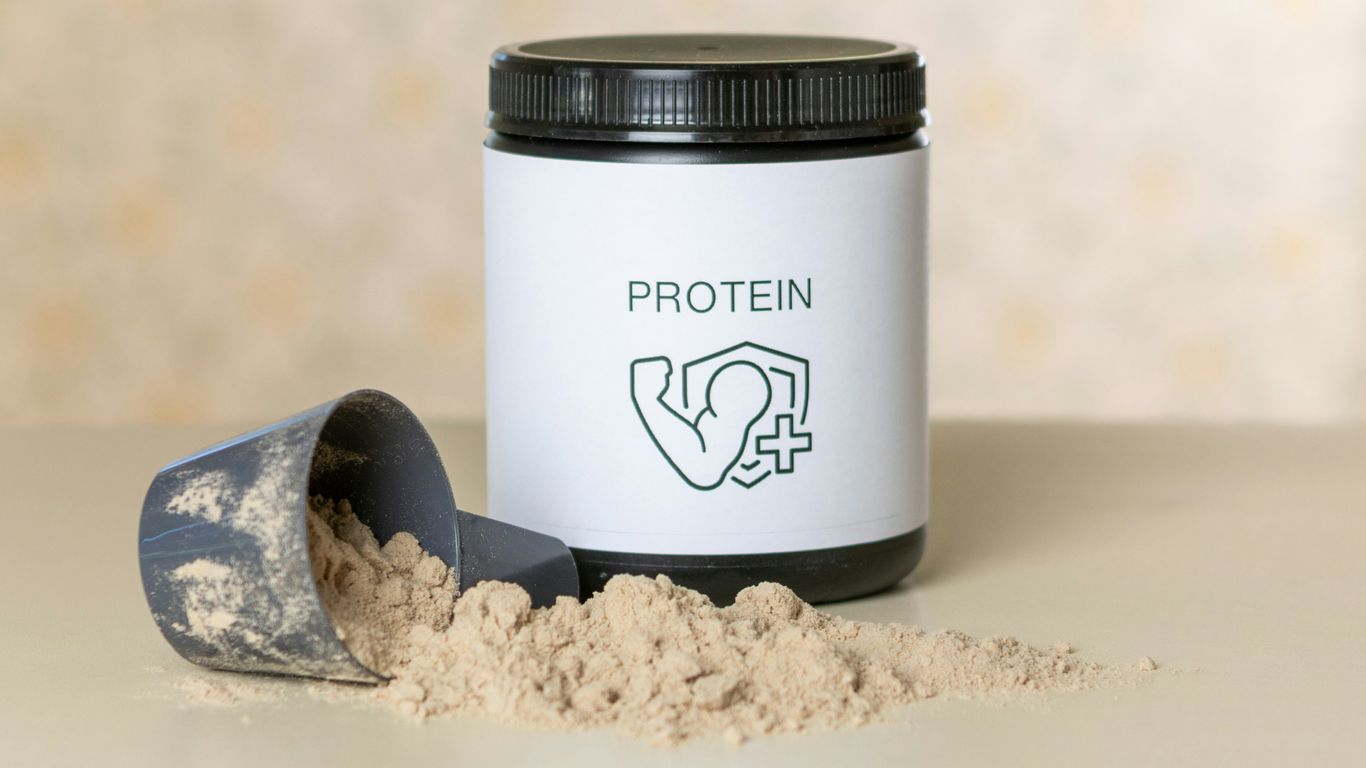
Most people can get enough protein from food, so a protein powder is a convenience, not a requirement. If you do buy one, look for a short ingredient list, a clear amount of protein per scoop, little or no added sugar, no “proprietary blends,” and ideally a third-party certification or a Health Canada product licence number. This guide walks through how to read the label, what the different protein types mean, the red flags to avoid, and food-first alternatives.
Start with food: do you need a powder at all?
The U.S. National Institutes of Health Office of Dietary Supplements notes that even athletes can probably eat enough protein-containing foods to meet their needs, and that protein supplements and protein-fortified products can help if needed. It also says there is no benefit to eating more than the recommended amounts.
Harvard Health takes a similar view: outside specific medical situations, it recommends getting protein from whole foods such as nuts, seeds, low-fat dairy, legumes, fish, poultry, eggs and lean meat.
A powder can still be useful when:
- You have a small appetite or trouble eating enough at breakfast.
- You eat a vegan or vegetarian diet and want an easy extra source.
- You need something portable after a workout or during a long workday.
- Your doctor or dietitian has suggested more protein for a specific reason.
Food-first swaps
Before buying a tub, see whether one of these fits your day:
| Instead of a shake… | Try |
|---|---|
| At breakfast | Greek yogurt or skyr, eggs, cottage cheese, a smoothie made with milk or soy milk and yogurt |
| After a workout | Chocolate milk, a turkey or egg sandwich, yogurt with fruit |
| As a snack | Edamame, roasted chickpeas, cheese and crackers, a hard-boiled egg |
| Plant-based | Tofu, tempeh, lentils, beans, soy milk, peanut butter on whole grain toast |
For more ideas, see our guides to protein intake and high-protein snacks.
How protein powders are regulated in Canada
In Canada, some protein products are licensed as natural health products. Health Canada advises consumers to look for the eight-digit Natural Product Number (NPN) on the label, which means the product has been authorized for sale in Canada. Other protein powders are sold as foods and show a Nutrition Facts table instead. Either way, an NPN or a food label does not mean a product has been independently tested for contaminants, which is where third-party certification comes in.
Many products sold online are made for other markets. Harvard Health points out that in the U.S., the FDA leaves it to manufacturers to evaluate the safety and labelling of these products, so you can’t be sure a powder contains exactly what its label says.
Reading the label, step by step
- Serving size and protein per serving. Check how many grams of protein are in one scoop, and how big the scoop is. Two products can look similar until you compare grams per serving.
- Protein source. The first ingredient should be the protein itself (for example, “whey protein isolate” or “pea protein”).
- Sugar. Look at sugars in the Nutrition Facts and at sweeteners in the ingredient list. Harvard Health notes some powders have very little added sugar and others have as much as 23 grams per scoop.
- Length of the ingredient list. Shorter is usually easier to understand. Flavour, a sweetener and a thickener are common; a long list of extras is not necessary.
- Allergens. Check for milk, soy, wheat, tree nuts or other allergens you need to avoid, and “may contain” warnings.
- Licence number or certification seal. Look for an NPN and/or a third-party testing seal.
Types of protein, explained simply
Whey (from milk)
- Whey concentrate: usually the least expensive; contains some lactose and fat along with the protein.
- Whey isolate: more filtered, so it is higher in protein per scoop and usually lower in lactose, fat and carbohydrate. Often a better choice for people who are sensitive to lactose.
- Whey hydrolysate: partly broken down during processing. It tends to cost more and can taste more bitter; most people don’t need it.
Casein (from milk)
Thicker in texture. Some people prefer it for puddings or overnight oats.
Plant proteins
Common options include pea, soy, rice, hemp and blends of these. Soy is a complete protein on its own; blends such as pea and rice are often used to round out the amino acid profile. Plant powders can be grittier, so a blend or a smoothie with fruit helps with texture.
Other diet needs
If you need a powder that is lactose-free, soy-free, gluten-free, halal or kosher, look for that claim on the label and a certification symbol where it applies, rather than assuming.

Red flags to watch for
- Proprietary blends. A “blend” lists ingredients without the amount of each. You can’t tell how much of the product is actually protein.
- Big promises. Claims like “melts fat,” “boosts metabolism” or “builds muscle fast” on a protein powder are marketing, not evidence.
- Added stimulants or “energy” blends. Caffeine, herbal stimulants or unfamiliar compounds don’t belong in a basic protein product. The NIH ODS warns that some performance products have been found to contain unlabelled stimulants, steroids or hormone-like ingredients.
- High sugar per scoop. Some powders are closer to a dessert mix than a protein supplement.
- No company contact information. Reputable brands list who makes the product and how to reach them.
- Prices that seem too low for a well-known brand, or sellers on marketplaces that are not authorized retailers.
Contaminants and third-party testing
Harvard Health reports that a 2025 Clean Label Project review found many protein powders contained heavy metals such as lead, arsenic, cadmium and mercury, though not every product tested had elevated levels. You can’t see or taste these, so independent testing is your best signal.
The NIH ODS names NSF Certified for Sport, Informed Choice and the Banned Substances Control Group as services that test supplements and certify they are free of many banned ingredients. Products that pass can carry the certifier’s logo and are listed on the certifier’s website, so you can look a product up before you buy.
Smart buying tips
- Compare price per gram of protein, not price per tub. Divide the price by the number of servings, then by grams of protein per serving.
- Buy from the brand or an authorized retailer to lower the risk of counterfeit or expired products.
- Try a small size or sample first. Taste and texture vary a lot, and a product you don’t enjoy won’t get used.
- Check the best-before date and the seal when it arrives.
- Mix it into food: stir into oats, yogurt or a smoothie with fruit if plain shakes aren’t for you.
When to check with a professional
Talk to your doctor, pharmacist or a registered dietitian before using protein powder if you have kidney or liver disease, are pregnant or breastfeeding, are buying for a child or teen, take medications, or have food allergies. If you compete in tested sport, choose only products certified for sport and check with your sport’s governing body. A dietitian can also help you work out whether you need extra protein at all.
Quick takeaways
- Food comes first; a powder is a convenience for gaps.
- Check grams of protein per scoop, sugar, allergens and the length of the ingredient list.
- Avoid proprietary blends, stimulants and bold fat-loss or muscle claims.
- Look for a Health Canada NPN and a third-party seal such as NSF Certified for Sport or Informed Choice.
- Compare cost per gram of protein and buy from authorized sellers.
- Ask a health professional first if you have a health condition, are pregnant, or take medications.
Frequently asked questions
Is whey or plant protein better?
Neither is better for everyone. Whey isolate is a good fit if you tolerate dairy; soy or a pea-rice blend works well if you don’t. Choose the one you’ll actually use and that suits your diet.
Are artificial sweeteners in protein powder a problem?
Many powders use sweeteners such as sucralose or stevia to keep sugar low. If you prefer to avoid them, look for unflavoured or unsweetened versions and add fruit for sweetness.