
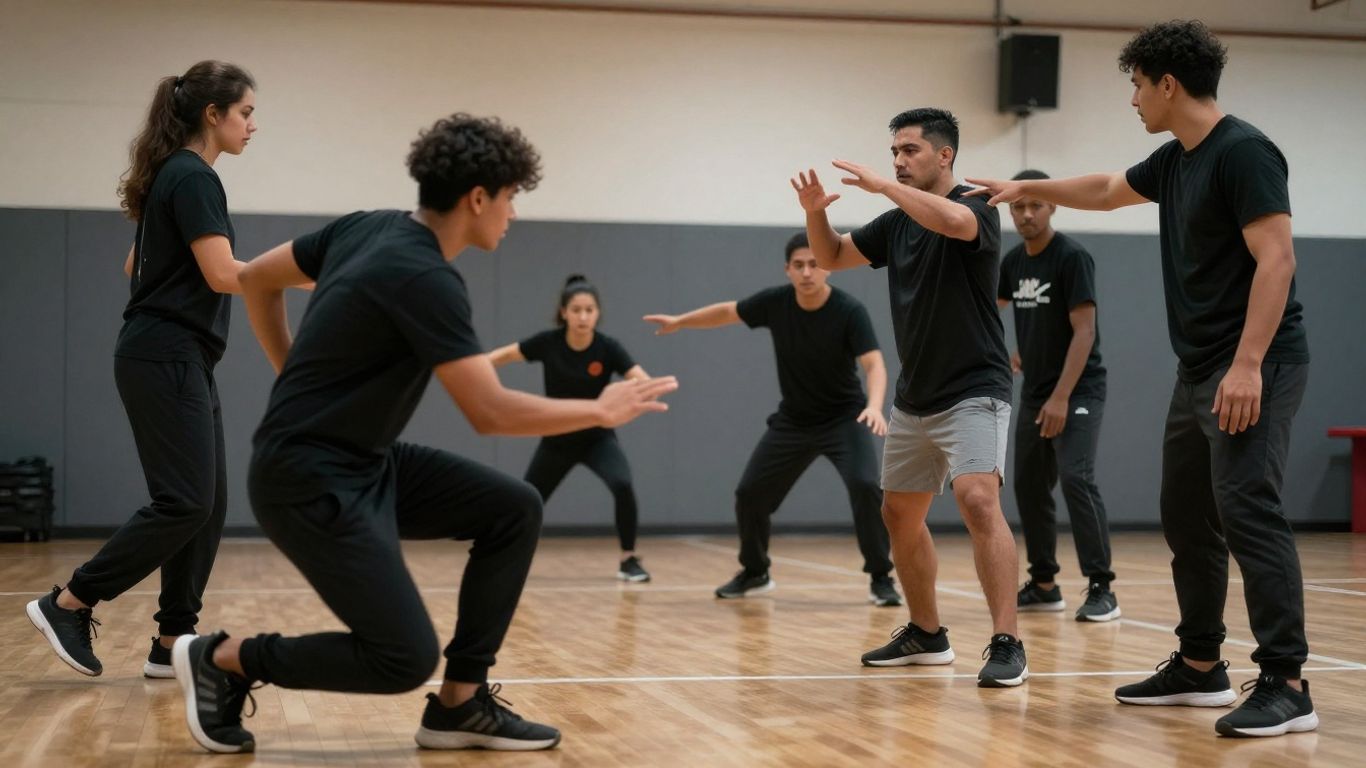
Life throws curveballs, right? Sometimes it feels like you’re just trying to keep your head above water. That’s where building up your resilience comes in. It’s not about avoiding tough times, but about getting better at handling them when they happen. Think of it like training for a marathon – you wouldn’t just show up on race day without preparing. This article is about those regular, smaller efforts, those ‘resilience rounds,’ that keep your mental and physical game sharp, so you’re ready for whatever comes your way.
Key Takeaways
- Regular practice, like ‘resilience rounds,’ helps you handle setbacks better by reframing them as chances to learn.
- Treating mental strength like physical muscle means consistent exercises build it up over time, turning positive actions into habits.
- Emotional control is built by having a plan for life’s ups and downs, using tools like mindfulness and deep breathing to find balance.
- Sharpening your mind involves staying present, often with techniques like the 5-4-3-2-1 grounding method, to boost self-awareness.
- Physical readiness needs varied training, including cardio and strength work, to avoid plateaus and build power, especially for grip and core.
Cultivating Resilience Through Consistent Practice
Building resilience isn’t about avoiding tough times; it’s about developing the inner strength to navigate them. Think of it like training a muscle – the more you work it, the stronger it gets. This section is all about those regular "Resilience Rounds" that keep your mental and emotional fitness sharp.
The Power of Reframing Setbacks
Life throws curveballs, and how we react makes all the difference. Instead of seeing a setback as a dead end, we can learn to view it as a detour, a chance to reassess and find a new path. This shift in perspective is key. It’s about understanding that challenges aren’t personal failures, but opportunities to learn and grow.
- Analyze the situation objectively: What actually happened? What were the contributing factors?
- Identify lessons learned: What can you take away from this experience?
- Adjust your approach: How can you use this new knowledge moving forward?
Reframing isn’t about pretending bad things don’t happen. It’s about choosing how you respond to them, turning potential negatives into fuel for progress.
Transforming ‘I Can’t’ into ‘I Can Learn’
That little voice that says "I can’t" can be a powerful barrier. But what if we changed the script? By adopting a growth mindset, we start seeing challenges not as insurmountable obstacles, but as learning opportunities. This simple linguistic shift can open up a world of possibilities. It’s about recognizing that abilities aren’t fixed; they can be developed with effort and practice.
- Challenge negative self-talk: When you catch yourself thinking "I can’t," pause and ask "How can I learn to do this?"
- Break down large tasks: Big goals can seem overwhelming. Divide them into smaller, manageable steps.
- Seek out new information: Don’t be afraid to ask questions or look for resources to help you understand.
Embracing Failure as a Stepping Stone
Failure often gets a bad rap, but it’s an unavoidable part of growth. Every successful person has faced their share of stumbles. The difference lies in how they treat those moments. Instead of letting failure define them, they use it as a stepping stone. It’s a chance to gather data, refine strategies, and come back stronger. Learning to be comfortable with not getting it right the first time is a superpower.
| Aspect of Failure | Traditional View | Resilience View |
|---|---|---|
| Outcome | Negative endpoint | Learning opportunity |
| Emotion | Shame, frustration | Curiosity, determination |
| Action | Avoidance | Analysis, adaptation |
Integrating Mental Strength Exercises into Daily Life
Think of your mental fortitude like a muscle. You wouldn’t expect to lift heavy weights after just one gym session, right? The same applies to your mind. Building mental strength isn’t about a single breakthrough; it’s about consistent, deliberate practice. By weaving specific mental exercises into your everyday routine, you gradually build a more robust and resilient mindset. This isn’t about grand gestures, but small, repeatable actions that, over time, become second nature.
Building Mental Fortitude Like Physical Muscle
Just as a physical trainer designs a program to target specific muscle groups, we can approach mental training with a similar structure. The goal is to create a habit of mental conditioning that supports your overall resilience. This involves regularly engaging in activities that challenge your comfort zone and push your mental limits in a controlled way. Think of it as progressive overload for your mind.
- Gradually increase the duration or intensity of mentally demanding tasks. Start with short periods of focused work and slowly extend them.
- Expose yourself to mild discomfort regularly. This could be anything from taking a cold shower to delaying a small gratification.
- Practice reframing negative thoughts. When faced with a setback, consciously shift your perspective to identify lessons learned.
The Culmination of Practice into Habit
When you consistently apply these mental exercises, something interesting happens. They stop feeling like separate tasks and start to blend into your natural way of operating. This is where practice transforms into habit. It’s the point where you’re not actively thinking about ‘training your mind’; you’re simply living with a mind that’s already trained. This shift is what allows for hardwired positive action, making resilience an automatic response rather than a conscious effort.
The transition from deliberate practice to ingrained habit is where true mental strength takes root. It’s the quiet transformation that happens when consistent effort becomes your default setting.
Achieving Hardwired Positive Action
This stage is the ultimate outcome of consistent mental conditioning. It means that when faced with challenges, your response is naturally geared towards problem-solving, perseverance, and maintaining a positive outlook. You’ve essentially programmed your mind to react constructively, making you more adaptable and capable of handling life’s inevitable ups and downs without being derailed. It’s about developing an inner operating system that prioritizes growth and resilience, no matter the circumstances.
Mastering Emotional Regulation for Robustness
Life throws curveballs, and sometimes it feels like a constant barrage. Learning to manage your reactions, not just to the big stuff but the everyday annoyances, is key to staying steady. It’s about building a personal toolkit for those moments when things get heated or overwhelming.
Developing a Plan for Life’s Ups and Downs
Think of this as your personal strategy guide for navigating emotional weather. It’s not about suppressing feelings, but about having healthy ways to process them. When you have a plan, you’re less likely to be caught off guard by stress or frustration. This could involve anything from setting aside time to journal your thoughts to having a go-to activity that helps you decompress, like a brisk walk or listening to music.
- Identify your triggers: What situations or events tend to set you off?
- Develop coping mechanisms: What can you do before you get overwhelmed?
- Practice self-compassion: Be kind to yourself when you don’t handle things perfectly.
Having a structured approach to emotional challenges means you’re not just reacting; you’re responding with intention. This proactive stance builds a strong inner core.
Utilizing Mindfulness and Deep Breathing
These aren’t just trendy buzzwords; they’re practical techniques that can genuinely shift your state. Mindfulness is about paying attention to the present moment without judgment. Deep breathing, particularly diaphragmatic breathing (belly breathing), has a direct effect on your nervous system, helping to calm it down. When you feel your emotions rising, taking a few slow, deep breaths can create a crucial pause, giving you space to choose a more constructive response.
Here’s a simple way to practice deep breathing:
- Find a comfortable position, sitting or lying down.
- Place one hand on your chest and the other on your belly.
- Inhale slowly through your nose, feeling your belly rise more than your chest.
- Exhale slowly through your mouth, letting your belly fall.
- Repeat for several minutes, focusing on the sensation of your breath.
Achieving Emotional Equilibrium
Emotional equilibrium isn’t about being emotionless; it’s about finding a balanced state where strong emotions don’t dictate your actions. It’s the ability to experience a full range of feelings without being swept away by them. This state is built through consistent practice of the strategies mentioned above. The goal is not to eliminate difficult emotions, but to manage them effectively so they don’t derail your progress or well-being. Over time, this practice helps to hardwire more stable responses, making you more resilient in the face of life’s inevitable challenges.
The Foundation of Resilience Rounds
Bouncing Back from Adversity
Life throws curveballs, and sometimes it feels like a whole batting cage is aimed at you. Resilience isn’t about avoiding those hits; it’s about how quickly and effectively you can get back up after being knocked down. Think of it like a martial arts drill – you practice falling, you practice getting up, and you do it over and over until it’s second nature. This consistent practice builds a mental muscle that helps you face challenges head-on, rather than crumbling under pressure. It’s about developing that inner strength to push through when things get tough, whether that’s a personal setback or a professional hurdle.
Strengthening Mental Fortitude
Building mental toughness is a lot like training your physical body. You wouldn’t expect to run a marathon without training, right? The same applies to your mind. Resilience rounds are designed to systematically build your capacity to handle stress and adversity. This involves actively engaging in activities that push your comfort zone, even in small ways, and learning to reframe your perspective on difficulties. Instead of seeing a problem as an insurmountable obstacle, you learn to view it as a puzzle to be solved or a lesson to be learned. This shift in mindset is key to developing a robust mental state.
Consistent Daily Focus on Growth
True resilience isn’t built in a single day or a single intense session. It’s the product of consistent, focused effort over time. Think of it as a daily commitment to self-improvement. This might mean dedicating just a few minutes each day to a mindfulness exercise, reflecting on a challenge you overcame, or setting a small, achievable goal. The key is regularity. By making these small, consistent efforts, you gradually build a stronger, more adaptable mindset. It’s this steady focus on growth that transforms temporary resilience into a lasting trait.
The real magic happens when you start to see that you’re capable of much more than you initially thought. Each small victory, each time you push through a tough moment, builds a quiet confidence that grows week after week. This isn’t about grand gestures; it’s about the steady accumulation of small wins that prove your own strength.
Sharpening Your Mental Edge with Mindfulness
Living in the Present Moment
Think about that time you were really focused on something, maybe a tough climb or a tricky technique. Your mind wasn’t racing about what happened yesterday or what’s for dinner. You were just there, fully engaged. That’s living in the present, and it’s a big part of building mental toughness. It helps you deal with what’s right in front of you, whether that’s a challenging situation or just enjoying the moment.
Boosting Self-Awareness and Control
Mindfulness is like giving your brain a regular tune-up. It’s about paying attention to your thoughts, feelings, and what’s happening around you without getting carried away by it. When you practice this regularly, you start to notice your own patterns – what triggers stress, what makes you feel calm. This awareness gives you more control. Instead of reacting automatically, you can choose how to respond. It’s not about stopping thoughts, but about not letting them run the show.
The 5-4-3-2-1 Grounding Technique
Sometimes, when things get overwhelming, you need a quick way to pull yourself back to reality. The 5-4-3-2-1 technique is a simple, effective tool for this. It uses your senses to bring you back to the here and now.
Here’s how it works:
- 5 things you can see: Look around and name five different objects.
- 4 things you can touch: Notice four things you’re physically touching right now – your clothes, the chair, the ground.
- 3 things you can hear: Listen and identify three distinct sounds.
- 2 things you can smell: Try to detect two different scents in the air.
- 1 thing you can taste: Pay attention to any taste in your mouth.
This exercise helps anchor you when your mind feels scattered. It’s a practical way to reset and regain focus, making it a valuable addition to your resilience toolkit.
Enhancing Physical Readiness with Targeted Conditioning
Beyond Traditional Drills
Forget just rolling around on the mats for your conditioning. While sparring is great for technique and some endurance, it doesn’t always push your body to its absolute limits in the way targeted exercises can. We need to think smarter about how we build our physical capacity. This means looking at exercises that specifically build the kind of stamina and power needed for those intense moments in a match, not just general fitness.
Integrating Aerobic and Anaerobic Work
Your body uses two main energy systems: aerobic and anaerobic. Aerobic is your long-haul endurance, like jogging or steady cycling. Anaerobic is your short, explosive power, like sprinting or lifting heavy weights quickly. For martial arts, you need both. You need the aerobic base to recover between bursts of action and to last through multiple rounds. You also need that anaerobic punch for takedowns, escapes, and powerful strikes.
Here’s a simple way to think about it:
- Aerobic: Builds your engine. Think steady-state cardio like rowing or cycling for 20-30 minutes at a moderate pace. This helps you recover faster when things slow down for a second.
- Anaerobic: Builds your turbo boost. This is where high-intensity interval training (HIIT) comes in. Short, hard efforts followed by brief rest periods mimic the demands of a tough sparring round.
Preventing Training Plateaus
Doing the same thing over and over leads to stagnation. Your body adapts, and then you stop seeing improvements. To keep getting stronger and fitter, you need to change things up. This is called periodization, and it’s about planning your training in cycles. You might focus on building strength for a few weeks, then switch to building power, and then focus on endurance. Varying the intensity and the type of exercises keeps your body guessing and forces it to keep adapting. It’s like giving your body a new puzzle to solve every few weeks, which is exactly what you want for continuous growth.
Developing Unwavering Grip and Core Strength
The Critical Link Between Technique and Power
Think about it: your grip is how you connect to your training partner. If your hands give out, even the most technically sound move can fall apart. It’s not just about holding on; it’s about controlling the situation. A strong grip means you can maintain positions, apply submissions effectively, and resist your opponent’s attempts to break free. It’s the foundation upon which your technique is built. Without it, you’re just going through the motions.
Grip-Centric Drills for Enhanced Control
We need to train our hands and forearms specifically. Relying only on rolling means we might miss out on building that raw gripping power. Here are a few ways to get started:
- Farmer’s Walks: Grab some heavy dumbbells or kettlebells and just walk. Focus on keeping your posture straight and your grip tight. Do this for a set distance or time.
- Towel Pull-Ups: Drape a towel over a pull-up bar and grip the ends. This makes your hands work much harder to hold on.
- Plate Pinches: Take two weight plates, smooth sides out, and squeeze them together with your fingertips. See how long you can hold them.
Building Trunk Stability for Grappling
Your core is more than just your abs. It’s your entire midsection – your back, your obliques, your hips – and it’s what keeps you stable when things get chaotic. When you’re being pushed, pulled, or twisted, a strong core is what allows you to maintain your base and resist. It’s the difference between being solid and being easily moved.
Here’s how to build that stability:
- Pallof Presses: These work on resisting rotation. You stand sideways to a cable machine or resistance band and press straight out, fighting the pull to twist.
- Plank Variations: Standard planks are good, but try side planks or planks where you lift one arm or leg. This forces your core to work harder to keep you steady.
- Russian Twists: Sit on the floor, lean back slightly, and twist your torso from side to side. You can hold a weight for added challenge.
Building a strong grip and a stable core isn’t just about getting stronger in the gym; it’s about making your skills on the mats more effective and reliable. These drills directly translate to better control, more power, and greater resilience when you’re in a tough spot.
Strategic Program Design for Peak Performance
Periodization for Continuous Adaptation
Think of your training like a marathon, not a sprint. Periodization is all about structuring your training over time, breaking it down into phases. This helps you avoid hitting a wall and keeps your progress moving forward. Instead of just doing the same thing week after week, you’ll cycle through different types of training. This could mean focusing on building raw strength for a few weeks, then shifting to power and speed, and finally moving into a phase where you hone your endurance. This planned variation means your body is constantly adapting, getting stronger and fitter without getting bored or injured. It’s about working smarter, not just harder, all year round.
Varying Load and Intensity
This is where the rubber meets the road in periodization. You’re not just changing the type of training, but also how much you’re doing and how hard you’re pushing. Some weeks might be heavy lifting days, focusing on lower reps with maximum weight to build that foundational strength. Other weeks, you’ll dial back the weight and focus on explosive movements, doing more reps faster to build speed and power. Then there will be times when the focus is on endurance, where you’ll do higher reps or longer durations at a moderate intensity. It’s a careful dance between pushing your limits and allowing for recovery, ensuring you’re always ready for the next challenge.
Here’s a quick look at how load and intensity might shift:
| Training Phase | Primary Focus | Typical Load (Weight) | Typical Intensity | Reps/Duration |
|---|---|---|---|---|
| Strength | Max Strength | High (85-95% 1RM) | High | 3-5 |
| Power | Explosive Strength | Moderate (50-70% 1RM) | Very High | 1-5 (fast) |
| Hypertrophy | Muscle Growth | Moderate (65-85% 1RM) | Moderate | 8-12 |
| Endurance | Stamina | Low-Moderate | Low-Moderate | 15+ or timed |
The Importance of Planned Deloads
Sometimes, the best way to get stronger is to back off. Planned deloads are short periods, usually a week, where you significantly reduce the volume and intensity of your training. This isn’t about slacking off; it’s a strategic move. Your body needs time to recover, repair, and rebuild. Pushing too hard for too long without a break can lead to burnout, injury, and plateaus. A deload week allows your nervous system and muscles to fully recover, making you feel refreshed and ready to tackle your next training cycle with renewed vigor. It’s like letting the soil rest before planting new seeds – it makes everything grow better in the long run.
Taking planned breaks isn’t a sign of weakness; it’s a mark of intelligent training. It allows your body to adapt and come back stronger, preventing overtraining and injury. This strategic recovery is just as important as the hard work itself.
The Role of Social Connections in Resilience
Building a Strong Support Network
It’s easy to think of resilience as a solo mission, something you build up inside yourself. But honestly, that’s only half the story. The people around you play a massive part in how well you handle tough times. Think about it: when you’re really struggling, who do you turn to? It’s usually not a stranger, right? It’s the folks you trust, the ones who know you.
These aren’t just casual acquaintances. We’re talking about real connections, built on shared experiences and genuine care. Having a solid group of people who have your back means you’re not facing challenges alone. They can offer a different perspective, a word of encouragement, or just a listening ear when you feel like you’re drowning. This kind of support acts like a safety net, catching you when you stumble and giving you the confidence to get back up.
- Shared Burdens: When you share your struggles, they often feel less heavy.
- Accountability: Friends can help keep you on track with your goals.
- Motivation: Seeing others persevere can inspire you to keep going.
The Power of Redirecting Focus
Sometimes, when you’re stuck in your own problems, it’s hard to see a way out. That’s where "redirecting" comes in. It sounds simple, but it’s a powerful tool. It means shifting your attention from your own difficulties to helping someone else. When you offer support or encouragement to another person, it does two things: it strengthens your bond with them, and it pulls you out of your own head for a bit.
This isn’t about ignoring your own issues. It’s about finding a different way to cope and build strength. By focusing on someone else’s needs, you can gain a fresh perspective on your own situation. You might even find that the act of helping someone else gives you a boost of energy and motivation you didn’t expect. It’s a win-win, really. You help someone else, and in turn, you build your own resilience.
Helping others can be a surprisingly effective way to manage your own stress and build mental toughness. It shifts your focus and reminds you of your own capabilities.
Fostering Collective Strength and Motivation
When people train together, especially in something like martial arts, they naturally start to build a sense of community. You see each other showing up day after day, pushing through tough workouts, and celebrating small victories. This shared journey creates a unique kind of motivation. You don’t want to let your training partners down, and their progress can inspire you to work harder.
This collective energy is infectious. It creates an atmosphere where everyone feels supported and encouraged to grow. It’s more than just individual effort; it’s about a group of people working towards common goals, lifting each other up along the way. This shared experience can make even the most challenging drills feel more manageable and rewarding. You learn that by working together, you can achieve more than you ever could alone.
Innovating Training for a Thriving Community
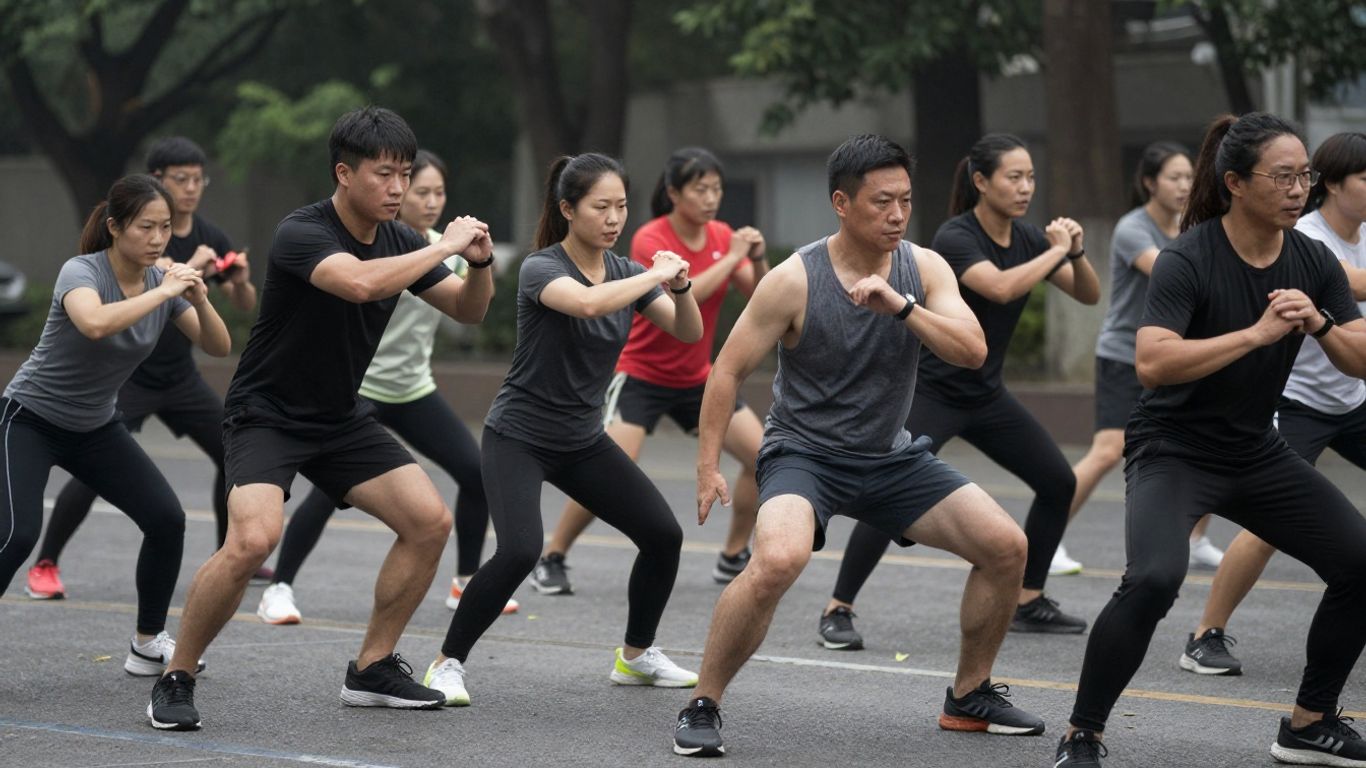
Keeping students engaged, conditioned, and motivated is the cornerstone of a thriving martial arts school. While traditional kata and sparring are essential, incorporating fresh and dynamic group exercises can transform your class atmosphere, boost overall fitness, and build a stronger dojo community. Stale warm-ups and repetitive drills can lead to student burnout, but innovative conditioning routines keep training exciting and purposeful.
Keeping Students Engaged and Motivated
It’s easy for training to become monotonous if you stick to the same old routine. We need to mix things up to keep everyone interested. Think about adding some new drills that challenge students in different ways. This isn’t about replacing what makes your school special, but about adding layers that keep people coming back, excited for what’s next. A varied training schedule prevents boredom and keeps the energy high.
Transforming Class Atmosphere
When you introduce new, exciting exercises, the whole vibe of the class changes. People start talking about the new drills, sharing tips, and pushing each other. This creates a more positive and supportive environment. It’s about building a place where everyone feels like they’re part of something bigger, a team working towards common goals. This shared experience can really change how people feel about coming to class.
Enhancing Martial Arts Skills Holistically
Innovative training isn’t just about making things fun; it’s about making people better martial artists. Drills that combine striking with conditioning, for example, help build endurance under stress, which is exactly what you need when sparring or in a real situation. Other exercises might focus on balance, coordination, or explosive power. By looking at the whole picture of what makes a good martial artist, we can design training that improves skills in a more complete way.
Here are a few ideas to get you started:
- The Striking Pyramid: A HIIT drill that fuses striking combinations with conditioning exercises. It’s great for building cardiovascular endurance and technical sharpness when tired.
- Core Stability Circuits: Focus on exercises that build trunk strength, which is vital for power generation and balance in all martial arts.
- Agility Ladder and Cone Drills: Improve footwork, speed, and coordination, directly impacting movement efficiency on the mat.
The goal is to create a training environment that is both challenging and rewarding, pushing students to grow physically and mentally while strengthening the bonds within the community. This approach ensures that every class contributes to a student’s overall development as a martial artist and as a person.
The Striking Pyramid: A HIIT Fusion Drill

Looking for a way to really push your students’ limits while keeping them engaged? The Striking Pyramid is a high-intensity interval training (HIIT) drill that does just that. It’s a fantastic way to blend striking practice with conditioning, making sure everyone gets a solid workout that directly benefits their martial arts skills. This drill is all about building that cardiovascular endurance and testing how well students can maintain their technique when they’re really feeling the burn.
Combining Striking and Conditioning
The core idea behind the Striking Pyramid is simple: students perform a set of striking combinations, immediately followed by a conditioning exercise. The twist is the structure – it builds up like a pyramid. You start with one strike combo and one conditioning move, then two of each, then three, and so on, until you reach a peak number. After hitting the peak, you descend back down. This progressive overload keeps the intensity high and the challenge fresh.
For instance, a basic round might look like this:
- Round 1: 1 Jab-Cross-Hook combo, 1 Burpee
- Round 2: 2 Jab-Cross-Hook combos, 2 Burpees
- Round 3: 3 Jab-Cross-Hook combos, 3 Burpees
This continues up to a predetermined peak, say 8 reps, and then works back down from 7 reps to 1. The peak can be adjusted based on the group’s fitness level – maybe 5 reps for beginners or 10 for advanced practitioners.
Building Cardiovascular Endurance Under Stress
This drill is designed to get the heart rate soaring and keep it there. By minimizing rest between the striking and conditioning phases, and between each ascending/descending round, you’re creating a demanding cardiovascular challenge. Students have to learn to recover quickly and maintain focus, which is a skill that translates directly to sparring or self-defense situations where fatigue can set in.
The real magic happens when students have to execute precise techniques while their lungs are burning and muscles are tired. It’s a true test of their conditioning and mental toughness.
Progressive Overload Through Pyramid Structure
The pyramid format itself is a form of progressive overload. Each round increases the volume, pushing students to adapt and perform at a higher level. Then, the descending rounds offer a chance to maintain intensity while working on controlled execution as fatigue mounts. This structure ensures that the workout is challenging from start to finish, preventing plateaus and keeping the training dynamic.
Variations can keep this drill exciting. You could swap the striking combinations to focus on different techniques – maybe kicks, elbows, or knee strikes. For the conditioning part, instead of burpees, try sprawls, kettlebell swings, or medicine ball slams to work different muscle groups and add variety. The key is to keep it moving and keep the energy high.
Ready to try a new way to get fit? The Striking Pyramid is a cool workout that mixes different exercises to help you get stronger and faster. It’s designed to be challenging but fun, pushing you to reach your fitness goals. Want to see how this awesome drill can change your routine? Visit our website to learn more and start your journey today!
Putting It All Together
So, we’ve talked about a bunch of ways to keep your skills sharp, from those quick drills to building up your mental game. It’s not about doing everything perfectly all the time, but more about making these practices a regular thing. Think of it like going to the gym – you don’t get strong in one session, right? It takes showing up, putting in the work, and being consistent. These ‘Resilience Rounds’ aren’t just about avoiding mistakes; they’re about learning from them and getting better, little by little. So, find what works for you, make it a habit, and you’ll be surprised at how much more capable and confident you become, both in your work and in life.
Frequently Asked Questions
What does it mean to be resilient?
Being resilient means you can bounce back when things get tough. It’s like a rubber band that stretches but snaps back to its original shape. You can handle challenges without falling apart.
How can I get better at handling setbacks?
You can practice looking at tough situations differently. Instead of thinking ‘I can’t do this,’ try thinking ‘How can I learn from this?’ This helps you see mistakes as chances to grow, not as failures.
Is it important to have a plan for difficult times?
Yes, having a plan helps a lot! It’s like having a toolbox with different tools for different problems. Knowing how to handle life’s ups and downs, whether big or small, makes you stronger.
How does mindfulness help with resilience?
Mindfulness means paying attention to what’s happening right now. It helps you stay calm, understand your feelings better, and not get overwhelmed by stress. It’s like hitting a pause button for your mind.
Can I really build mental strength like a muscle?
Absolutely! Just like you lift weights to make your body stronger, you can do specific mental exercises to make your mind tougher. The more you practice, the stronger your mental muscles get.
What’s the 5-4-3-2-1 Grounding Technique?
It’s a simple way to focus on the present. You notice 5 things you can see, 4 things you can touch, 3 things you can hear, 2 things you can smell, and 1 thing you can taste. It helps calm you down when you feel stressed.
Why is having friends and family important for resilience?
Having people who support you is super important. They can help you when you’re feeling down and cheer you on. Sometimes, just talking to someone or helping them can make you feel stronger too.
How often should I practice these resilience drills?
Consistency is key! It’s best to practice these skills regularly, even if it’s just for a few minutes each day. Think of it like brushing your teeth – doing it often keeps things healthy and strong.