
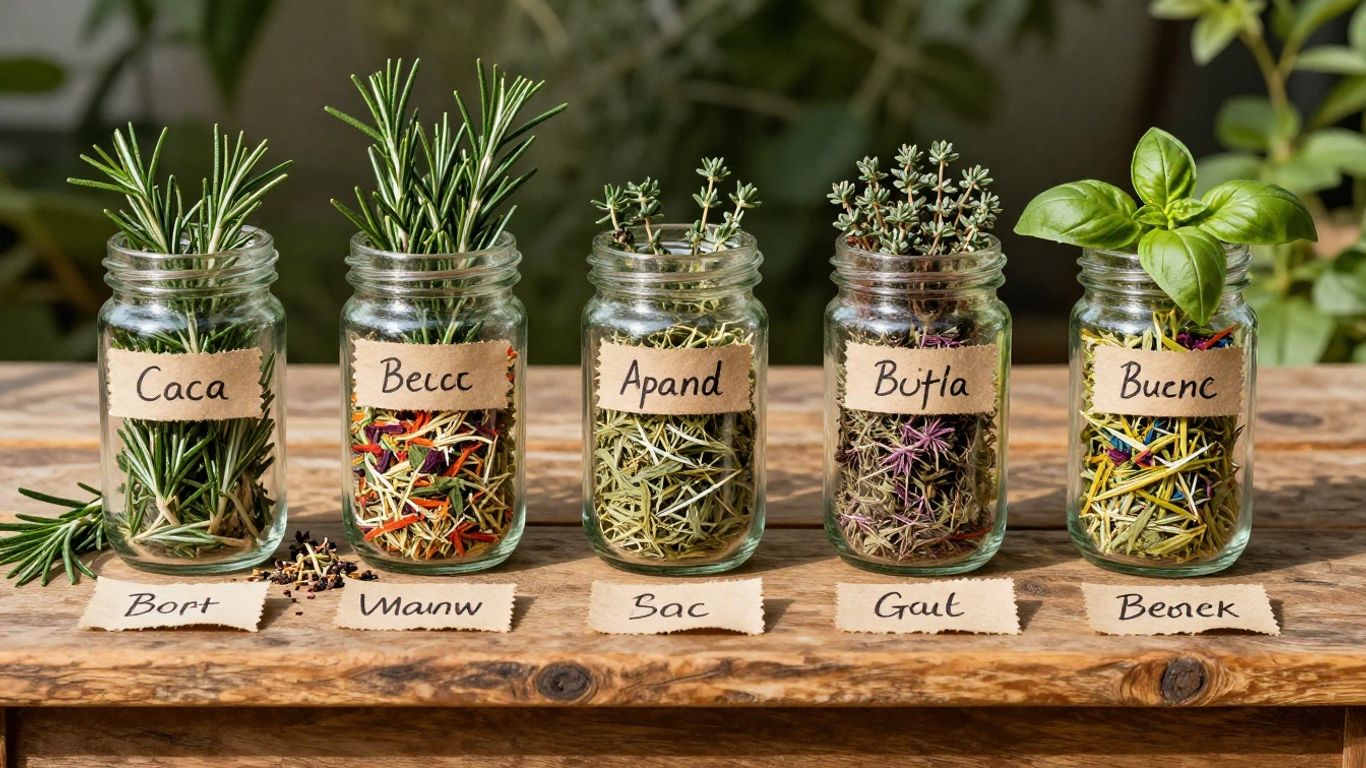
An herb pantry is a small set of homemade dried herb and spice blends you rotate through the week, so the same simple meals (eggs, roasted vegetables, beans, chicken, rice) taste different each night. Five blends are enough: an all-purpose savoury mix, a bright citrus-herb mix, za’atar, a smoked paprika mix and garam masala. They take about 15 minutes to make and let you add flavour with less salt.
Why make your own blends
- Less sodium: Health Canada notes that store-bought spice mixes can be costly and often contain a lot of sodium. When you mix your own, salt is optional and you add it separately, to taste.
- More flavour, same food: Health Canada’s food guide says you can decrease the salt you use by adding herbs, spices and seasonings. A strong blend makes a plain plate feel finished.
- Fewer decisions: Picking “this week’s blend” removes the nightly “what should this taste like?” question.
How to measure and mix
The recipes below use “parts,” so you can make any amount. One part could be a teaspoon for a small test jar or a tablespoon for a bigger batch. Stir or shake well, and break up any clumps. If you grind whole spices, toast them in a dry pan for a minute or two first, cool, then grind.
1. All-purpose savoury blend
This is the background blend that makes food taste more like itself. It suits chicken, eggs, potatoes, soups, beans and roasted vegetables.
- 3 parts dried thyme
- 2 parts dried marjoram
- 2 parts dried savory
- 1 part finely ground bay leaf (sift out tough bits)
- 1 part ground black pepper
How much: Start with about 1 teaspoon per 450 g (1 lb) of protein or 2 cups of vegetables. In soups and stews, add half at the start and half near the end.
2. Bright citrus-herb mix
A fresh, light blend for fish, chicken, zucchini, green beans, rice and yogurt dips.
- 2 parts dried dill weed
- 2 parts dried parsley
- 1 part dried lemon balm or lemon thyme (if you can find it)
- 1 part ground coriander
- ½ part garlic powder
- ½ part ground black pepper
Tip: Dried lemon zest can turn bitter and dusty in storage. For a real citrus hit, add fresh zest or a squeeze of lemon when you cook rather than storing it in the jar.
3. Za’atar
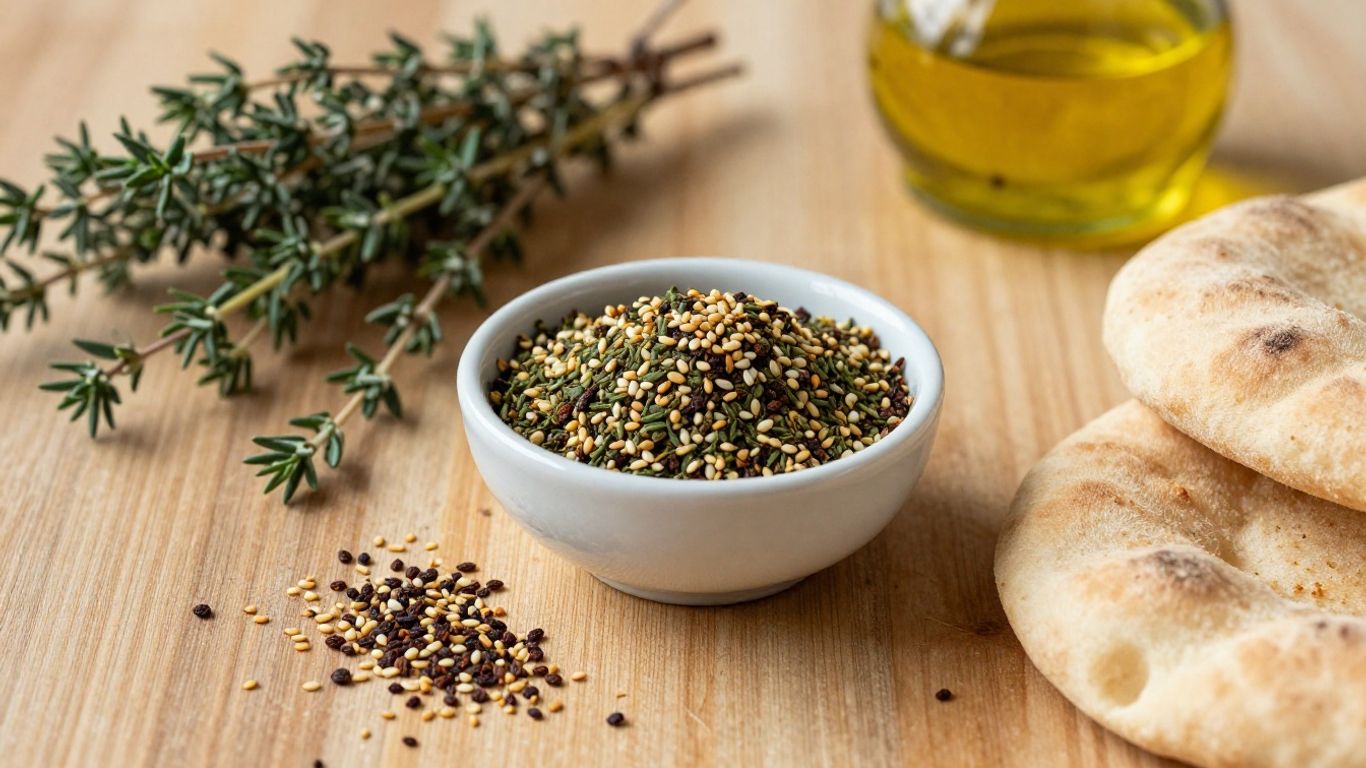
A Middle Eastern blend that’s herby, tangy and nutty. Try it on eggs, hummus, roasted carrots, chickpeas, flatbread brushed with olive oil, or stirred into plain yogurt.
- 2 parts dried thyme (or a mix of thyme and oregano)
- 1 part toasted sesame seeds
- 1 part ground sumac
- Pinch of salt (optional)
Because it contains seeds, za’atar is best made in smaller batches.
4. Smoked paprika mix
Warm and smoky, great for beans, roasted potatoes, cauliflower, chicken, tofu and lentil chili. It gives a “from the grill” taste without the grill.
- 3 parts smoked paprika
- 1 part garlic powder
- 1 part onion powder
- 1 part ground cumin
- 1 part dried oregano
- ½ part ground black pepper
- Pinch of cayenne or chili flakes (optional)
5. Garam masala
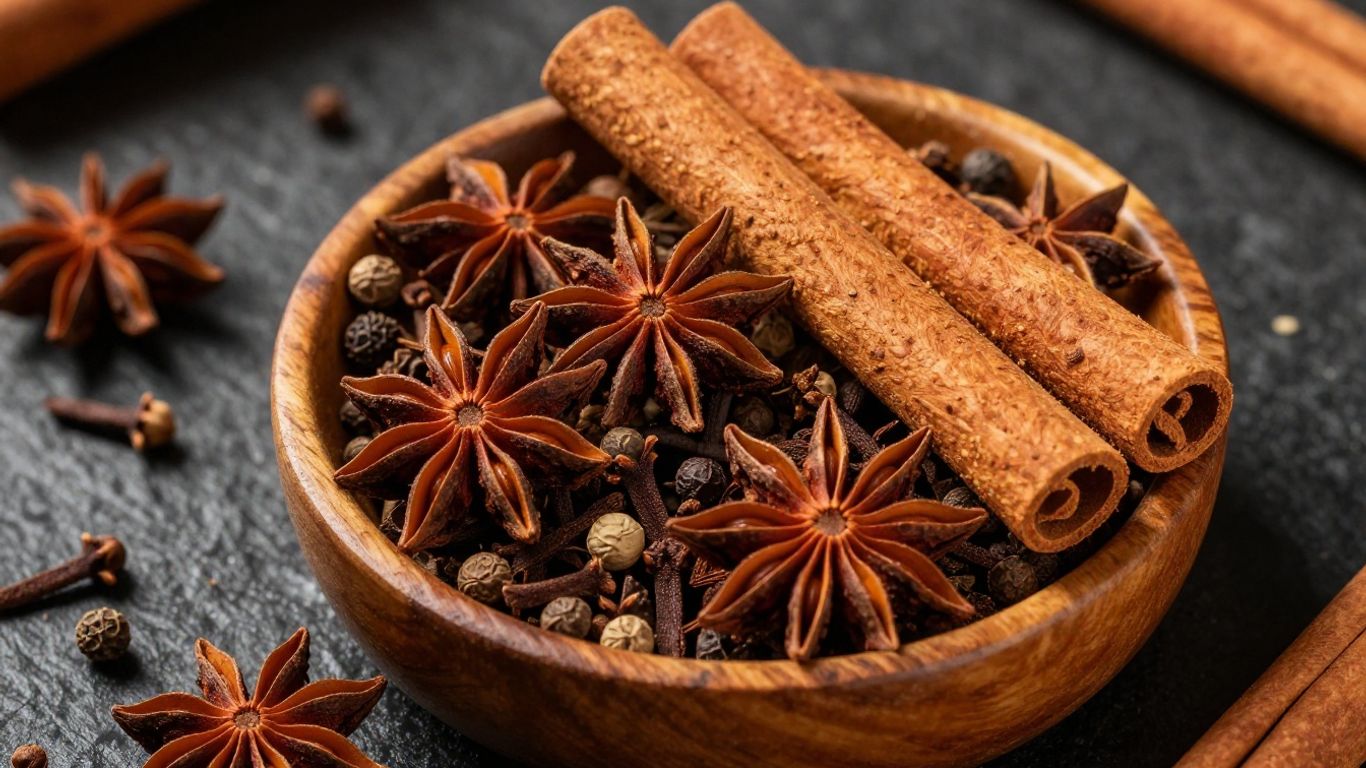
A warming North Indian blend, often added near the end of cooking. Use it in lentil dal, chickpea curry, roasted squash, vegetable soups and rice.
- 2 parts ground coriander
- 2 parts ground cumin
- 1 part ground cardamom
- 1 part ground black pepper
- 1 part ground cinnamon
- ½ part ground cloves
- ½ part ground nutmeg
Recipes vary a lot by region and family. Adjust to what you like.
A simple weekly rotation
| Week | Blend of the week | Easy meals |
|---|---|---|
| 1 | All-purpose savoury | Roast chicken and vegetables, herbed omelette, white bean soup |
| 2 | Citrus-herb | Baked fish, cucumber-yogurt dip, herbed rice with peas |
| 3 | Za’atar | Za’atar eggs, roasted chickpeas, flatbread with vegetables and hummus |
| 4 | Smoked paprika | Bean chili, smoky potato wedges, paprika tofu bowls |
| 5 | Garam masala | Red lentil dal, chickpea curry, spiced roasted cauliflower |
You don’t have to switch weekly. Some people keep two blends in play at once: the all-purpose savoury for everyday cooking plus one “feature” blend.
Using dried and fresh herbs together
Health Canada’s guide to herbs suggests using about one-third the amount of dried herbs when replacing fresh (for example, 1 teaspoon dried for 1 tablespoon fresh). Add dried herbs at the start of cooking so their flavour has time to come out, and add fresh herbs in the last 10 to 20 minutes or as a garnish. A pinch of your blend plus a handful of fresh parsley or cilantro at the end gives you depth and freshness.
Storing your blends
- Use small airtight glass jars, filled close to the top.
- Keep them away from the stove, sunlight and steam.
- Label each jar with the name and the date you made it.
- Make modest batches you’ll use within a few months, since ground spices lose aroma over time. If a blend smells faint when you rub a pinch between your fingers, it’s time for a fresh batch.
- Use a dry spoon; shaking over a steaming pot lets moisture in.
If your family resists new flavours
- Start with the all-purpose savoury blend, which tastes familiar.
- Season one tray or half the pot with the new blend.
- Put the blend on the table so people can add their own.
- Use new blends in foods everyone already likes, such as potatoes, eggs or rice.
Three ways to use a blend at every meal
- Breakfast: Sprinkle on eggs, avocado toast or savoury oats.
- Lunch: Stir a teaspoon into plain Greek yogurt for an instant dip or dressing, or toss with canned chickpeas and lemon for a quick salad.
- Dinner: Rub on chicken, fish or tofu, toss with vegetables before roasting, or bloom a spoonful in oil before adding lentils or beans.
FAQ
Can I use store-bought blends instead?
Yes. Look for blends without salt listed as the first ingredient, compare sodium on the nutrition facts table, and add your own salt to taste.
Will this take more time?
Less, once the jars are made. Reaching for one blend is faster than measuring four separate spices every night.
How many blends do I really need?
Start with two: the all-purpose savoury and one you’re curious about. Add the others as you use them up.
Key takeaways
- Five homemade blends can carry a whole month of simple meals.
- Mix by “parts,” leave salt out of the jar, and season to taste when cooking.
- Dried herbs go in early; fresh herbs go in late.
- Store blends airtight, away from heat, and make small batches.
For more flavour tools, see our DIY umami spice kits, the herb sauce masterclass, and ideas for a staples rotation that avoids ruts.