
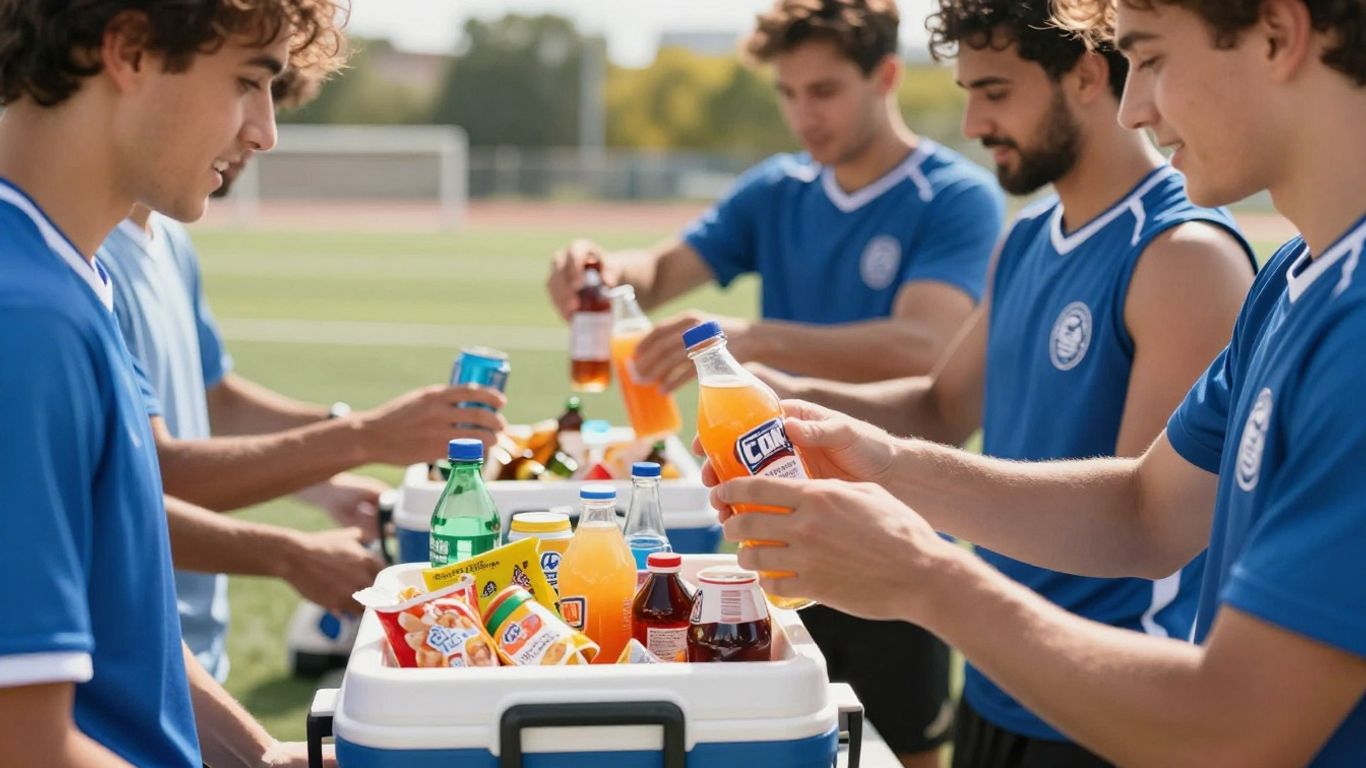
A good sports day cooler does three jobs: it keeps drinks cold so players actually drink them, it keeps perishable food safely chilled until it is eaten, and it holds a simple recovery snack for the end of the game. Pack two coolers (one for drinks, one for food), plan water first, and choose easy carbohydrate-plus-protein snacks for after play.
This guide walks through what to pack, how to keep it safe, and how to feed a team without a pile of candy and soda.
Start with the two-cooler system
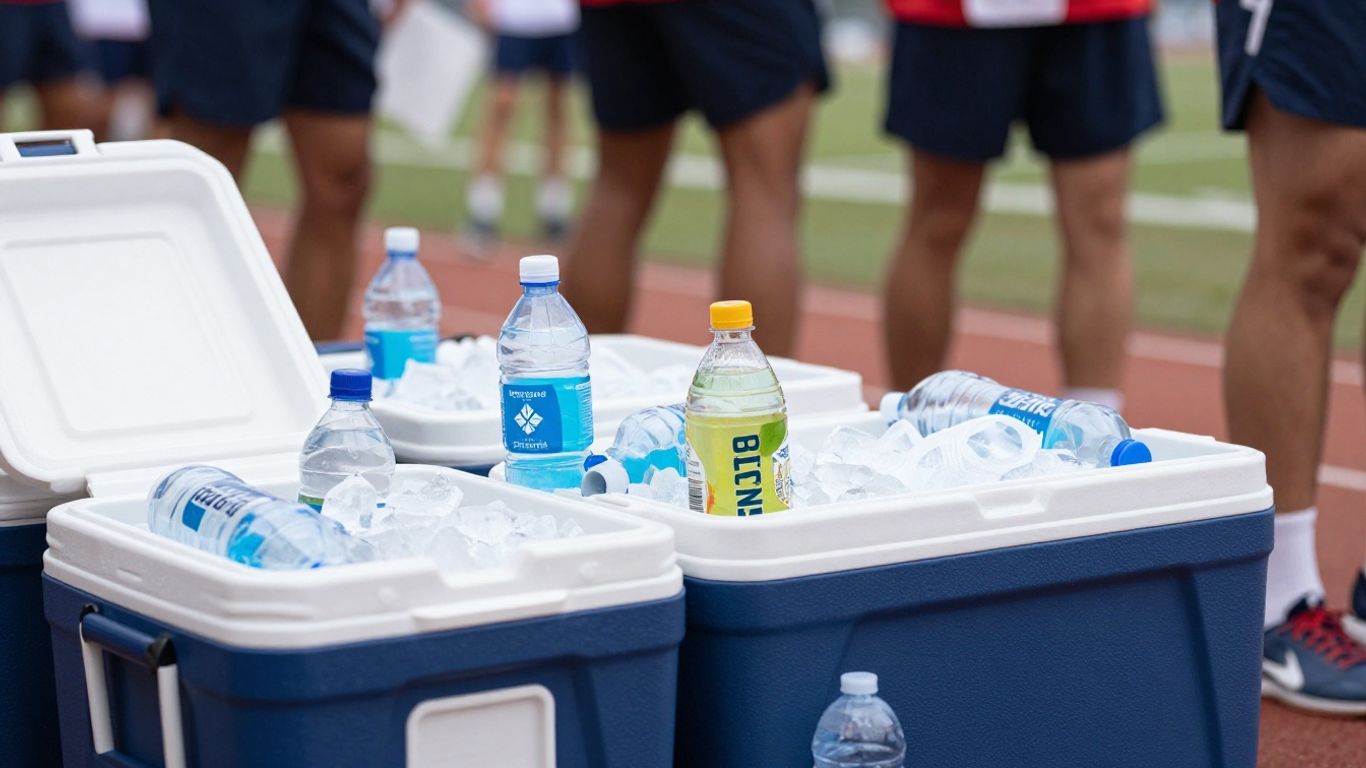
Health Canada recommends using separate coolers for food and drinks, because the drink cooler gets opened constantly while the food cooler can stay closed and cold. The same page says the inside of a cooler should stay at or below 4°C, out of direct sunlight, and opened as little as possible.
- Drink cooler: water bottles or a large water jug, plus a few backup drinks for long or hot events. This one lives at the bench.
- Food cooler: cut fruit, yogurt tubes, sandwiches, cheese, hummus and anything else that needs to stay cold. Keep it in the shade, under a chair or a towel, and assign one adult to open it at set times.
Pack the food cooler with ice packs on the bottom and on top, and pre-chill it the night before if you can. Frozen water bottles do double duty: they act as ice packs in the morning and are cold drinks by afternoon.
Hydration: plan for water first
The American College of Sports Medicine’s position on exercise and fluid replacement says the aim is to start activity well hydrated, drink during exercise to avoid large fluid losses, and replace what was lost afterward. It also notes that sweat rates vary a lot from person to person, so there is no single amount that fits every player.
For most recreational and youth games, that translates into a few practical habits:
- Have players arrive with a full water bottle and finish part of it before warm-up.
- Build drink breaks into natural stops: between periods, at half-time, during line changes or innings.
- Label bottles with names so players do not share, and so you can see who is not drinking.
- Refill from a clean jug rather than buying more single-use bottles.
When sports drinks make sense
The same ACSM statement notes that drinks with electrolytes and carbohydrates can help more than water alone under certain circumstances, such as long, intense sessions or heavy sweating in the heat. For a one-hour game in mild weather, water plus normal meals is usually enough. If you bring sports drinks for a long tournament day, keep them as a backup rather than the default, and skip soda and energy drinks in the team cooler.
For food-based ways to replace salt and potassium, see our guide to electrolytes beyond sports drinks.
What to pack in the food cooler
Think in two groups: quick fuel for during the day, and something with a bit of protein for after play. Simple foods that kids and adults already like work better than anything new.
| When | Goal | Easy options |
|---|---|---|
| Between games or at half-time | Quick, easy-to-digest carbohydrate | Orange wedges, grapes, watermelon, banana pieces, pretzels, plain crackers, small fig bars |
| Right after the game | Carbohydrate plus some protein | Chocolate milk, yogurt tubes, cheese and crackers, turkey or hummus wraps, peanut butter sandwiches (if allowed) |
| Long tournament days | A real mini-meal between games | Pasta salad, rice bowls, bean and cheese wraps, sandwiches with veggie sticks |
A joint position statement from the American College of Sports Medicine, Dietitians of Canada and the Academy of Nutrition and Dietetics states that performance and recovery are improved by well-chosen nutrition, including the type, amount and timing of food and fluids. You do not need a precise formula for a community game. Offering carbohydrate and some protein within an hour or two of finishing is a sensible, practical way to apply it.
Allergy-aware team snacks
Ask the coach or team manager about allergies before you plan. Many teams are nut-free. Good allergy-friendlier choices include fruit, vegetables, plain crackers, seed butter sandwiches, and individually wrapped items with clear labels. Keep wipes in the cooler so hands get cleaned before anyone eats.
Keeping food safe all day
Health Canada describes the temperature danger zone as 4°C to 60°C and advises not leaving food at room temperature for more than one hour on hot summer days. At a sunny field, that hour goes quickly.
- Pack perishable food straight from the fridge into a pre-chilled cooler.
- Bring out only what will be eaten right away, then close the lid.
- Toss perishable leftovers that sat out in the heat rather than repacking them.
- Wash hands or use wipes before handing out food.
- Keep raw meat out of the team cooler entirely. If there is a barbecue, it needs its own cooler.
Our article on cooler management and safe temperatures has more detail on packing order and ice.
Watch for heat illness
On hot days, the cooler is also a safety tool. The NHS lists signs of heat exhaustion such as headache, dizziness, nausea, cramps, heavy sweating and intense thirst, and advises moving the person somewhere cool, giving water to drink and cooling the skin. Keep a couple of cold, wet cloths in the drink cooler for exactly this.
Heatstroke is an emergency. Call 911 if someone has a very high temperature, hot skin that is not sweating, confusion, a seizure or loss of consciousness, or is still unwell after about 30 minutes of cooling and fluids.
Cleaning the cooler after the game
- Empty melted ice and food scraps the same day.
- Wash the inside and the jug spout with warm soapy water, rinse, and dry with the lid open.
- Store the cooler open so it does not trap moisture and odours.
- Wash reusable ice packs and refreeze them so they are ready for the next game.
Sports day cooler checklist
- Two coolers: drinks and food
- Ice packs or frozen water bottles, pre-chilled cooler
- Labelled water bottles and a clean refill jug
- Fruit and simple carbs for between games
- Carbohydrate-plus-protein snacks for after play
- Hand wipes, napkins, a garbage bag
- Cold cloths for hot days
- Allergy list from the team
Quick FAQ
How much water should each player bring?
It depends on age, weather, and how hard and how long they play. Start with a full bottle per player plus a shared refill jug, and add more for hot or long days.
Do kids need sports drinks?
For most short games, water is enough. Electrolyte drinks can help in long, very sweaty sessions. Ask your doctor or a registered dietitian for advice on a specific athlete.
What is the simplest recovery snack?
Chocolate milk or a yogurt tube with a piece of fruit covers carbohydrate, protein and fluid in one easy step.
Key takeaways
- Separate drink and food coolers keep food colder for longer.
- Make water the default and use sports drinks only for long, hot, heavy-sweat days.
- Offer fruit and simple carbs between games, and carbs with protein after.
- Keep perishables at or below 4°C and out of the sun. On hot days, limit time out of the cooler to about an hour.
- Know the signs of heat exhaustion and keep cold cloths handy.