
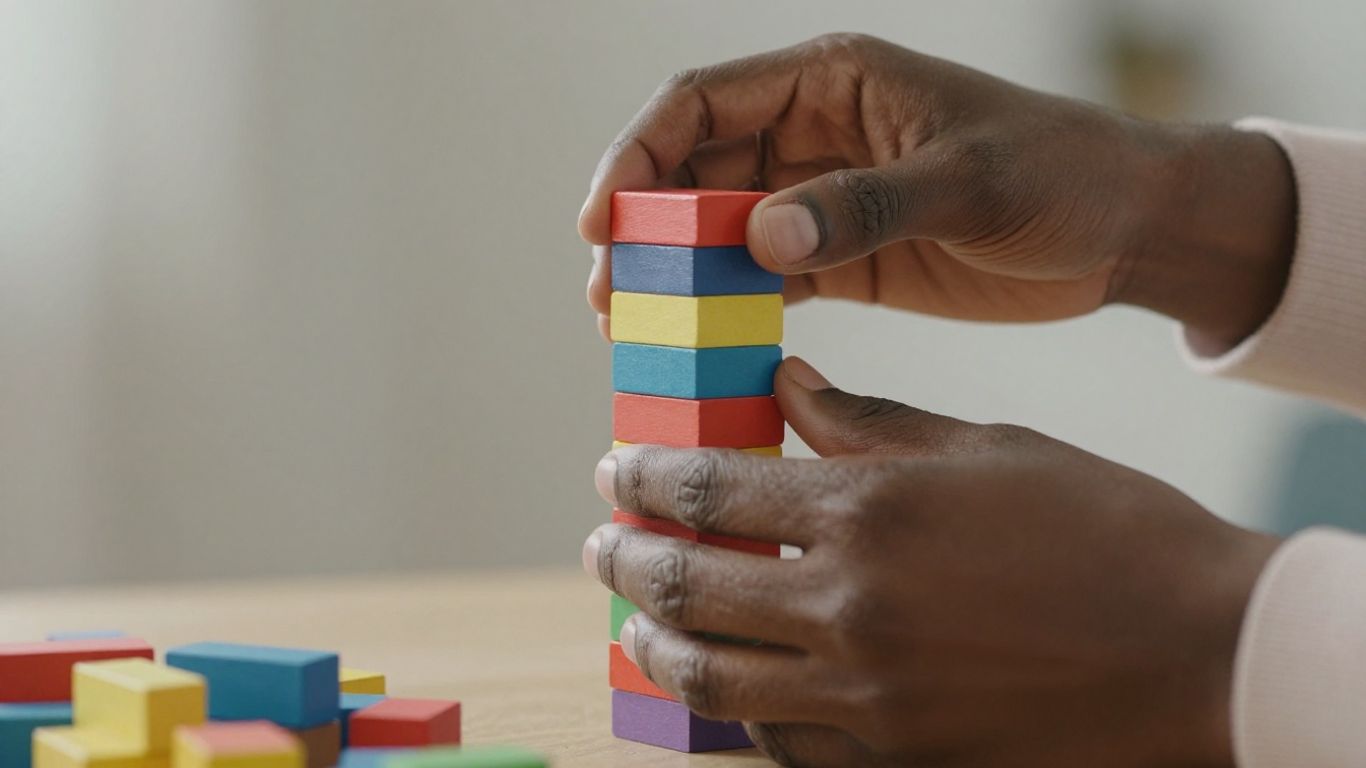
You know those moments? The ones where your kiddo hits a tiny roadblock – maybe a puzzle piece won’t fit, or a game rule is confusing – and suddenly it’s a full-blown meltdown? Yeah, we’ve all seen it. It’s easy to feel like you’re losing it when they do. But here’s the thing: that struggle is actually a chance to build something really important. It’s about learning to handle those tough feelings when things don’t go our way. This skill, called frustration tolerance, isn’t something you’re just born with. It’s like a muscle, and with a little practice, we can help our kids get stronger. We’re going to look at some simple, everyday ways to make patience a bit more practical.
Key Takeaways
- Frustration tolerance is the ability to stay calm and keep trying when things get tough or don’t go as planned. It’s not about never feeling frustrated, but about knowing how to handle it.
- Low frustration tolerance can show up as giving up easily, big emotional reactions, impatience, or avoiding challenges altogether.
- Building frustration tolerance helps kids become better problem-solvers, more resilient, and improves their ability to get along with others.
- Simple activities like cooperative games, puzzles, and step-by-step projects can help children practice patience and persistence without feeling overwhelmed.
- Parents and caregivers play a big role by modeling calm responses, breaking down tasks, and offering support, rather than always stepping in to fix things.
Understanding Frustration Tolerance: A Vital Life Skill
Defining Frustration Tolerance
Frustration tolerance is basically your ability to handle things when they don’t go your way. It’s that inner strength that lets you keep going, stay calm, and not completely lose it when you hit a roadblock or face a disappointment. Think of it as your personal resilience meter – when it’s high, you can bounce back from minor setbacks. When it’s low, even a small hiccup can feel like a major crisis. It’s not about never feeling frustrated; that’s impossible. Instead, it’s about how you respond to that feeling. It’s the skill that helps us push through challenges instead of shutting down.
The Four Dimensions of Frustration Intolerance
When we struggle with frustration, it often shows up in a few different ways. Psychologists have identified four main areas where this intolerance can manifest:
- Emotional Intolerance: This is when you have a really hard time dealing with uncomfortable feelings like anger, sadness, or disappointment. It feels like you just can’t handle being upset.
- Entitlement: This dimension is about feeling like you shouldn’t have to wait for things or deal with unfairness. It’s that voice that says, "Why me?" or "This isn’t fair!" when things don’t go your way immediately.
- Discomfort Intolerance: This is the difficulty in handling everyday hassles, annoyances, or anything that feels a bit tough or unpleasant. It’s the feeling that you shouldn’t have to put up with minor inconveniences.
- Achievement Intolerance: This happens when you get really upset because you haven’t met your goals or expectations. It’s the feeling of failure when you don’t achieve what you set out to do, making it hard to try again.
Why Frustration Tolerance Matters for Future Success
Building up your frustration tolerance isn’t just about avoiding meltdowns; it’s a building block for a more successful and fulfilling life. When you can handle frustration better, you’re more likely to stick with difficult tasks, whether it’s a tough school project, a challenging work assignment, or even learning a new hobby. This persistence is key to problem-solving and critical thinking because you’re not giving up at the first sign of trouble. It also plays a big role in how well you get along with others; being able to manage your own frustrations helps you handle disagreements and work collaboratively. Ultimately, a good level of frustration tolerance is linked to better emotional regulation, increased resilience, and a greater capacity to achieve your long-term goals. It’s a skill that pays off in almost every area of life.
Learning to manage frustration is like building a muscle. The more you practice handling small annoyances, the stronger you become when faced with bigger challenges. It’s a process, not an overnight fix, and it’s incredibly rewarding.
Recognizing the Signs of Low Frustration Tolerance

You know that feeling? When something doesn’t go quite right, and suddenly, your whole day feels off? For kids, this can be even more intense. Recognizing when a child is struggling with frustration is the first step to helping them build that important skill. It’s not about them being "difficult"; it’s about them needing a little help learning how to handle those tough feelings.
Common Behavioral Indicators
When kids have a hard time with frustration, it often shows up in their actions. They might seem to give up really quickly when a task gets even a little bit tricky. You might see them shut down, say "I can’t do this!" after just a few tries, or even avoid activities they think might be hard before they even start. It’s like they’re trying to dodge that uncomfortable feeling before it even shows up.
- Quick to quit: Dropping a task almost immediately after hitting a small snag.
- All-or-nothing thinking: Declaring a whole project "stupid" because of one small mistake.
- Avoidance: Refusing to try activities perceived as challenging to sidestep frustration.
Emotional Outbursts and Impatience
Sometimes, low frustration tolerance looks like a big emotional reaction to a small problem. A child might get really upset, cry, yell, or even have a full-blown meltdown over something that seems minor to us. Waiting for their turn can be a huge challenge, and they might get irritable or impatient when things don’t happen exactly when they want them to. It’s like their emotional fuse is a lot shorter.
The urge to escape discomfort is powerful. When children experience frustration, their immediate reaction might be to shut down, lash out, or withdraw. This is their way of trying to get away from a feeling that’s too big to handle right then.
Tendency Towards Avoidance and Giving Up Easily
This is a big one. Instead of pushing through a challenge, kids with low frustration tolerance often look for ways out. They might make excuses, blame others, or simply walk away from the task altogether. It’s not that they don’t want to succeed; it’s that the feeling of being stuck or failing is so unpleasant, they’d rather not even try. This pattern can make it hard for them to learn new things or stick with activities that require effort over time.
The Profound Benefits of Building Frustration Tolerance

When kids learn to handle frustration, it’s like giving them a toolkit for life. It’s not just about preventing a tantrum over a tricky toy; it’s about building a foundation for how they’ll approach challenges for years to come. Think of it as equipping them with a kind of inner strength that helps them keep going when things get tough.
Enhancing Problem-Solving and Critical Thinking
Dealing with frustration often means a child has to stop and figure things out. Instead of just giving up when a puzzle piece doesn’t fit or a game rule is confusing, they learn to pause and think. This pause is where problem-solving really kicks in. They start looking at the situation from different angles, trying new approaches, and really using their brains to find a way forward. This ability to stick with a problem, even when it’s annoying, is a direct pathway to better critical thinking skills.
Strengthening Emotional Regulation and Self-Control
Frustration is a strong emotion, and learning to manage it is a big part of growing up. When kids can handle feeling annoyed or disappointed without completely losing it, they’re practicing emotional regulation. They learn to recognize their feelings, take a breath, and respond in a more thoughtful way instead of just reacting. This self-control is a skill that helps them in all sorts of situations, from classroom tasks to playground disagreements.
Fostering Resilience and Grit
Life isn’t always smooth sailing, and kids who can handle frustration are better prepared for the bumps along the way. They develop resilience, which is the ability to bounce back after a setback. They also build grit, that quality of sticking with something long-term, even when it’s hard. This combination means they’re less likely to be derailed by difficulties and more likely to see things through to the end.
Improving Academic Performance and Social Skills
It might seem surprising, but how well a child handles frustration can actually impact their schoolwork and friendships. When they don’t give up easily on a tough assignment, their academic performance can improve. They’re more likely to persist with learning and seek help when needed. Socially, being able to manage frustration helps them navigate disagreements with peers, share, and work in groups without constant conflict. They learn to compromise and understand that not everything will always go their way, which is a huge part of getting along with others.
Building frustration tolerance isn’t about eliminating challenges; it’s about teaching children that they have the inner resources to face those challenges and come out stronger on the other side. It’s a skill that pays dividends throughout their entire lives.
Cultivating Patience Through Playful Activities
Sometimes, the best way to build up that frustration tolerance muscle is to make it feel less like a chore and more like, well, play! Kids, and honestly, adults too, tend to learn and absorb things better when they’re having fun. It’s about finding those sweet spots where a little bit of challenge meets a whole lot of engagement, without the pressure of a formal lesson.
Engaging Cooperative Games
Cooperative games are fantastic because they shift the focus from individual wins to group success. Instead of competing against each other, players work together towards a common goal. This means when a strategy doesn’t quite pan out, or someone makes a mistake, the whole team feels it. This shared experience teaches kids to communicate, to brainstorm solutions together, and to handle setbacks as a unit. It’s a low-stakes way to practice patience, as everyone has to wait for their turn, wait for others to make their move, and wait for the plan to unfold. Think of board games where everyone wins or loses together. It’s a great way to show that working through a tricky situation as a team can be more rewarding than going it alone.
Creative Storytelling and Social Narratives
Getting creative with stories can be a surprisingly effective way to build patience. You can start a story and have each person add a sentence or two, or even a whole paragraph. This requires listening to what came before, thinking about how to continue it, and waiting for your turn to speak. Sometimes, the story might go in a direction you didn’t expect, and you have to adapt. That’s a lot like life, right? Another approach is to create social narratives. These are short stories that describe a social situation, the expected behaviors, and the potential outcomes. For example, a story about waiting in line at the ice cream shop, or waiting for a turn on the playground. These narratives help children understand the ‘why’ behind waiting and how to manage their feelings during those moments.
Puzzles and Step-by-Step Projects
Puzzles are classic for a reason. Whether it’s a jigsaw puzzle, a maze, or a dot-to-dot, they all require a certain amount of focused effort and persistence. You can’t rush a jigsaw puzzle; you have to find the right pieces, try them out, and keep going even when it feels like you’re stuck. Starting with simpler puzzles and gradually moving to more complex ones is key. The same goes for step-by-step projects, like building with LEGOs, following a recipe, or even a simple craft. These activities teach kids to follow instructions, manage their expectations about how long things take, and experience the satisfaction of completing something through sustained effort. The process itself becomes the lesson in patience.
Building frustration tolerance doesn’t always mean facing huge, overwhelming challenges. Often, it’s the small, consistent efforts in everyday activities that build the most significant resilience. By making these activities playful and engaging, we help children see that waiting and working through difficulties can be a normal, even enjoyable, part of life.
Practical Strategies for Developing Frustration Tolerance
Sometimes, it feels like kids are just wired to get upset when things don’t go their way. And honestly, who can blame them? Frustration is a tough feeling to sit with. But here’s the thing: learning to handle it isn’t just about avoiding meltdowns; it’s about building a solid foundation for pretty much everything else they’ll do in life. It’s about teaching them that difficult moments aren’t roadblocks, but just part of the journey.
The Role of Authoritative Parenting
When we talk about parenting styles, authoritative parenting really stands out for helping kids build this skill. This approach is all about being warm and responsive while also setting clear expectations and boundaries. It’s not permissive, and it’s not overly strict. Think of it as a balanced approach where kids feel loved and supported, but also understand that there are rules and that effort is expected. This kind of environment helps children feel secure enough to try things that might be hard, knowing they have a safe base to return to. It’s about guiding them through challenges rather than just letting them struggle or swooping in to fix everything.
Teaching Through Modeling and Support
Kids are always watching, and how we handle our own frustrations speaks volumes. If you tend to get really worked up when the internet is slow or when you can’t find your keys, your child is likely to pick up on that. Try to show them how you manage your own feelings. Maybe you take a few deep breaths, step away for a moment, or talk through the problem out loud. When your child is struggling, offer support without taking over. Instead of solving the problem for them, ask questions like, "What have you tried so far?" or "What do you think you could try next?" This kind of gentle guidance helps them develop their own problem-solving muscles.
Breaking Down Challenges into Manageable Steps
Big tasks can feel overwhelming, and that’s a fast track to frustration. A really effective strategy is to help kids break down larger challenges into smaller, more bite-sized pieces. For example, if a child is learning to tie their shoes, instead of focusing on the whole process, you might focus on just making the first loop. Or if they’re working on a science project, help them create a timeline with specific, achievable goals for each day. This makes the overall task seem less daunting and provides opportunities for them to experience success along the way, which builds confidence and a willingness to keep going.
The goal isn’t to shield children from all frustration, but to equip them with the inner resources to navigate it. When we allow them to experience and work through manageable discomfort, we are actually building their capacity to handle bigger challenges later on.
Mindful Movement and Focus for Managing Frustration
Sometimes, when things get tough, our bodies and minds feel all jumbled up. That’s where mindful movement and activities that need focus can really help. It’s not about being perfect, but about learning to stay with a task, even when it’s a bit tricky.
Practicing Yoga for Calmness
Yoga isn’t just about bending into funny shapes. It’s a way to connect your breath with your body, and when you’re feeling frustrated, that connection can be a real anchor. Holding a pose, even for a short time, teaches you to stay present and manage the urge to quit. It’s like a mini-lesson in patience, right there on the mat. You learn to breathe through the wobble, to accept the challenge, and to find a sense of calm even when your muscles are working hard.
Utilizing Visual Timers for Waiting
Waiting is tough, right? Especially for kids. A visual timer can be a game-changer. Instead of just saying "wait a minute," you can show them exactly how much time is left. Seeing the color disappear or the numbers count down makes the waiting period feel more concrete and less endless. This helps build tolerance for delays, showing them that good things (or the end of the wait) do eventually come.
Engaging in Activities Requiring Focus
Activities that demand concentration, like building with LEGOs, solving a jigsaw puzzle, or even carefully drawing a picture, are fantastic for building frustration tolerance. When you’re focused on a task, you’re less likely to get sidetracked by minor annoyances. If a piece doesn’t fit or a line goes crooked, the practice of gently correcting it and continuing, rather than giving up, builds that inner strength. It’s about the process, not just the end result.
These activities help children learn to manage their physical energy and mental focus. By engaging in movements that require steady effort and concentration, they develop a greater capacity to tolerate discomfort and persist through challenges. It’s about building a quiet resilience, one focused moment at a time.
Navigating Setbacks with a Growth Mindset
Life throws curveballs, right? Sometimes, things just don’t go as planned. Maybe a project at school doesn’t turn out how you hoped, or a game with friends gets a little heated. These moments can feel frustrating, but they’re also prime opportunities to build a stronger mindset. Thinking of challenges not as dead ends, but as chances to learn and get better, is a game-changer. It’s about understanding that your abilities aren’t fixed; they can grow with effort and practice.
Viewing Challenges as Opportunities
When something feels tough, it’s easy to want to shut down. But what if we tried to see that difficulty as a sign that we’re about to learn something new? Instead of saying, "I can’t do this," we can try asking, "What can I learn from this?" This shift in perspective is key. It means that when you hit a snag, you don’t just stop. You pause, look around, and figure out the next step. It’s like finding a new path when the old one is blocked.
- Identify the challenge: What exactly is making this difficult?
- Brainstorm solutions: Are there different ways to approach this?
- Focus on learning: What new skill or knowledge can I gain?
The Power of Persistence in Learning
Persistence is that inner drive that keeps you going, even when things get sticky. It’s not about never failing; it’s about trying again after you do. Think about learning to ride a bike. You probably fell a few times, right? But you got back up. That’s persistence in action. It’s about understanding that the effort you put in directly impacts your progress. The more you try, the more you learn, and the better you become.
When we face a setback, it’s natural to feel discouraged. However, viewing these moments as temporary hurdles rather than permanent roadblocks allows us to maintain motivation and continue moving forward. Each attempt, successful or not, provides valuable information that can guide our next steps.
Learning from Mistakes and Feedback
Mistakes aren’t the end of the road; they’re signposts. They show us where we might need to adjust our approach. And feedback? That’s like getting a map from someone who’s been there before. It can point out areas we might have missed or suggest a better route. Being open to feedback, even when it’s hard to hear, helps us grow. It’s about taking what we learn and using it to do better next time. This process turns stumbles into stepping stones.
Empowering Children to Manage Discomfort
It’s completely normal for kids to get upset when things don’t go their way. That feeling of frustration is a part of life, but learning how to handle it is a skill that can be taught. When children can manage these tough feelings, they build confidence and become more resilient. It’s not about stopping the frustration, but about giving them tools to work through it.
Understanding the Urge to Avoid Frustration
Kids often want to avoid anything that feels difficult or makes them feel bad. This might look like throwing a toy when a block tower falls, or refusing to try a new activity because they’re afraid they won’t be good at it. This urge to escape discomfort is natural, but it stops them from learning and growing. We can help by showing them that it’s okay to feel frustrated and that they have the ability to get past it.
- Recognizing the feeling: Help them put a name to it. "I see you’re feeling really annoyed right now because the puzzle piece won’t fit."
- Validating the emotion: Let them know it’s okay to feel that way. "It’s frustrating when things don’t work out the way you want them to."
- Offering support, not solutions: Instead of fixing it for them, ask, "What could you try next?" or "Do you want to take a break and try again in a minute?"
The Pitfalls of Over-Rescuing
It’s tempting to jump in and fix things for our kids the moment we see them struggling. We want to make their discomfort disappear. But when we always step in, we accidentally send the message that they can’t handle things on their own. This can make them more dependent and less likely to try solving problems themselves. It’s like always carrying their backpack for them – they never learn how strong they are.
Over-rescuing can prevent children from developing their own problem-solving skills and a belief in their own capabilities. It’s a delicate balance between offering support and allowing them the space to figure things out.
Building the Frustration Tolerance ‘Muscle’
Think of frustration tolerance like a muscle. The more you use it, the stronger it gets. We can help kids build this ‘muscle’ by giving them small, manageable challenges and opportunities to practice. It’s about gradual exposure, not overwhelming them.
- Tiny Tests: Start with small things. Maybe it’s waiting an extra minute for a snack, or trying a slightly harder puzzle. Celebrate their effort, not just the success.
- Calm Down Corner: Create a safe space where they can go when they feel overwhelmed. Stock it with comforting items like soft blankets, fidget toys, or books. This isn’t a punishment, but a place to regroup.
- Problem-Solving Practice: When they face a small setback, guide them through thinking about solutions. "The crayon broke. What are some things you could do now?" This teaches them that challenges can be overcome.
Age-Appropriate Approaches to Frustration Tolerance
Early Years: Toddlers and Preschoolers
Little ones are just starting to figure out the world, and let’s be honest, it’s often a confusing place for them. Their brains are still developing, especially the parts that help them manage big feelings. So, when things don’t go their way – maybe a block tower tumbles, or they can’t get a toy to work – it can feel like the end of the world. Their frustration often comes out as loud cries, tantrums, or just plain meltdowns. It’s not because they’re being difficult; it’s because they genuinely don’t have the tools yet to handle that intense feeling.
- Offer simple choices: Giving them a sense of control, even in small ways, can reduce frustration. "Do you want to wear the red shirt or the blue shirt?"
- Use visual aids: For waiting or transitions, a visual timer or a picture schedule can help them understand what’s coming next, making delays less jarring.
- Acknowledge their feelings: Instead of saying "Don’t cry," try "I see you’re really upset because the blocks fell down." This shows you understand, even if you can’t fix it instantly.
The goal here isn’t to prevent frustration entirely, which is impossible, but to help them learn that they can get through it. It’s about building that early foundation, one small challenge at a time.
Elementary and Middle School Strategies
As kids get older, the challenges they face become more complex. Schoolwork gets harder, friendships can be tricky, and they start to understand fairness (or unfairness) more deeply. This is when low frustration tolerance can really start to show up as giving up easily on homework, getting upset over minor setbacks in games, or struggling to wait their turn. They might say things like, "This is too hard!" or "I can’t do it!" a lot.
- Break down tasks: Big projects can feel overwhelming. Help them divide assignments into smaller, manageable steps. Celebrate completing each step.
- Model problem-solving: When you face a challenge, talk through your thought process out loud. "Hmm, this recipe isn’t working. Maybe I need to add a little more liquid. Let’s try that."
- Introduce cooperative games: Games where players work together towards a common goal teach teamwork and how to handle disagreements or setbacks as a group.
Supporting Adolescents Through Challenges
Adolescence is a time of significant change and increasing independence, which naturally brings new and bigger challenges. Academic pressures, social dynamics, and future planning can all be sources of intense frustration. For teens, low frustration tolerance can manifest as avoidance of difficult subjects, irritability, or even a sense of hopelessness when they don’t meet their own high expectations. It’s a critical period to reinforce coping skills and build resilience.
- Encourage goal setting and planning: Help them set realistic goals and create action plans. When they encounter obstacles, guide them in adjusting their plan rather than abandoning the goal.
- Discuss the ‘why’ behind effort: Connect effort and persistence to long-term aspirations. Help them see how pushing through difficult tasks now builds skills for their future.
- Facilitate open communication about stress: Create a safe space for them to talk about what’s frustrating them. Listen without judgment and help them brainstorm healthy coping mechanisms, like exercise, journaling, or talking to a trusted adult.
Leveraging Tools for Enhanced Frustration Management
Sometimes, we need a little extra help to get a handle on those tough feelings. Luckily, there are some great tools out there that can make building frustration tolerance a bit more practical, especially for kids. Think of these as helpful sidekicks in the journey to becoming more patient and resilient.
Problem-Solving Worksheets
Worksheets can be more than just homework; they can be a structured way to practice tackling problems. When a child works through a worksheet that presents a challenge, they’re not just filling in blanks. They’re engaging in a mini-problem-solving session. The key is to choose or create worksheets that break down tasks into smaller, manageable steps. This way, the child experiences success along the way, building confidence rather than just facing a big, overwhelming problem. It’s about showing them that even complex issues can be solved with a bit of thought and effort.
Frustration Triggers Identification
Knowing what sets off frustration is half the battle. Tools that help identify these triggers can be incredibly useful. This might involve simple checklists or guided journaling prompts where kids can note down situations, activities, or even times of day when they tend to feel most frustrated. Understanding these patterns is the first step toward developing strategies to manage them before they escalate. It’s like having a map of potential emotional roadblocks.
- Identify the situation: What was happening right before you felt frustrated?
- Note the feeling: How did your body feel? What thoughts went through your mind?
- Recognize the trigger: Was it a specific task, a delay, or something else?
- Brainstorm coping strategies: What could you do differently next time?
Building Complex Sets and STEM Challenges
For many kids, hands-on activities are where frustration tolerance really gets a workout. Think about building with LEGOs, tackling a science experiment, or even assembling a model airplane. These activities often involve multiple steps, require careful attention, and don’t always go according to plan. When a piece doesn’t fit, or an experiment doesn’t yield the expected result, it’s a perfect opportunity to practice patience and problem-solving. The satisfaction of completing a complex project after working through its challenges is a powerful motivator. These aren’t just games; they’re practical lessons in perseverance.
These tools aren’t about eliminating frustration entirely – that’s impossible. Instead, they’re about equipping children with the skills and confidence to face it, work through it, and come out stronger on the other side. It’s about building that inner resilience, one small challenge at a time.
Feeling overwhelmed and stressed? Our "Leveraging Tools for Enhanced Frustration Management" section offers simple ways to handle tough feelings. Learn how to stay calm and in control when things get tricky. Ready to feel better? Visit our website to discover more helpful tips and start managing your frustrations today!
Putting It All Together
So, we’ve talked about what frustration tolerance is and why it’s so important, not just for kids but for all of us. It’s not about never feeling frustrated – that’s impossible. It’s about learning to handle those feelings when they pop up, so they don’t stop us in our tracks. The little tests and games we’ve explored are like practice runs. They help build that patience muscle, bit by bit. Remember, this takes time and consistency. Don’t get discouraged if things don’t change overnight. Keep trying these simple activities, and you’ll see a difference. You’re teaching a valuable skill that will help navigate life’s bumps, big and small, making challenges feel a lot more manageable.
Frequently Asked Questions
What exactly is frustration tolerance?
Frustration tolerance is basically your ability to handle it when things don’t go your way or when you hit a tough spot. It means you don’t just give up or throw a fit when something is hard. Instead, you find a way to keep trying and work through the problem.
Why is being able to handle frustration so important?
Learning to deal with frustration helps you in tons of ways! It makes you better at solving problems, helps you stay calm when things get stressful, and makes you tougher when you face challenges. This can lead to doing better in school and getting along better with others.
How can I tell if someone has low frustration tolerance?
Signs include getting upset really easily over small things, giving up quickly when a task gets hard, having trouble waiting, getting angry or having meltdowns when things don’t go their way, or avoiding difficult tasks altogether.
What are some fun ways to build frustration tolerance?
Playing cooperative games where you have to work together, telling stories that show characters overcoming challenges, and doing puzzles or building projects step-by-step are great ways. These activities teach patience and persistence in a fun way.
How can parents help their kids build this skill?
Parents can help by breaking down big tasks into smaller, easier steps. They can also show their kids how they handle frustration themselves and offer support without always jumping in to fix everything. It’s about teaching kids they can get through tough feelings.
Does mindset play a role in handling frustration?
Absolutely! Having a ‘growth mindset’ means believing you can get better with effort. When you see challenges as chances to learn instead of reasons to quit, you’re much more likely to stick with things and build your frustration tolerance.
What’s the deal with avoiding frustration?
It’s natural to want to avoid feeling bad. But when we always rescue kids from frustration, they don’t learn they can handle it. This avoidance can stop them from building their ‘frustration muscle,’ making it harder to deal with life’s ups and downs later on.
Are there specific activities for different ages?
Yes! For younger kids, simple waiting games and cooperative play work well. Older kids can benefit from more complex puzzles, strategy games, and projects that require planning and persistence. The key is to match the challenge to their age and abilities.