
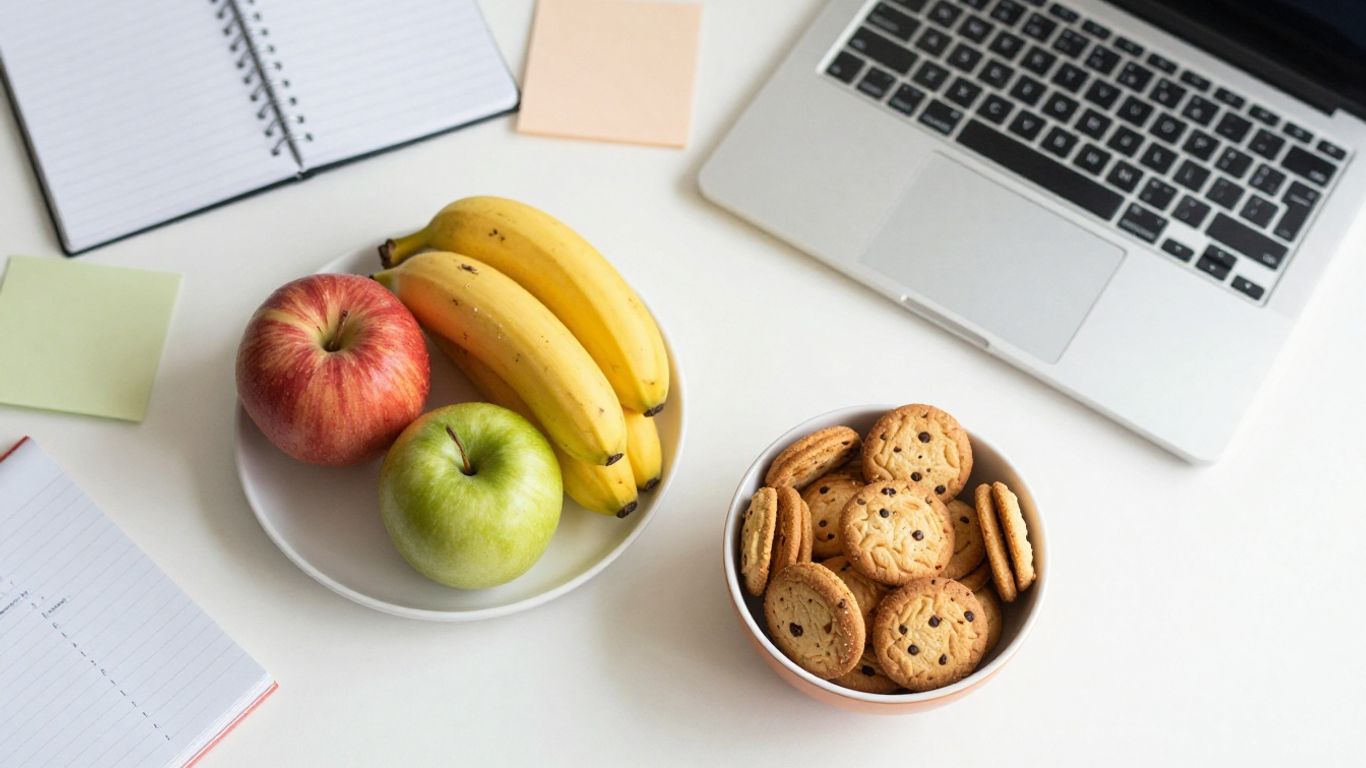
During exam week, eat regular balanced meals, have breakfast before morning exams, keep simple snacks and water on hand while you study, and stick to familiar foods on test day. Gentle treats are fine, but use them alongside real meals, not instead of them.
Here is how to build “focus plates,” plan study snacks, and handle the nervous stomach that often shows up on exam morning.
Why food matters for studying
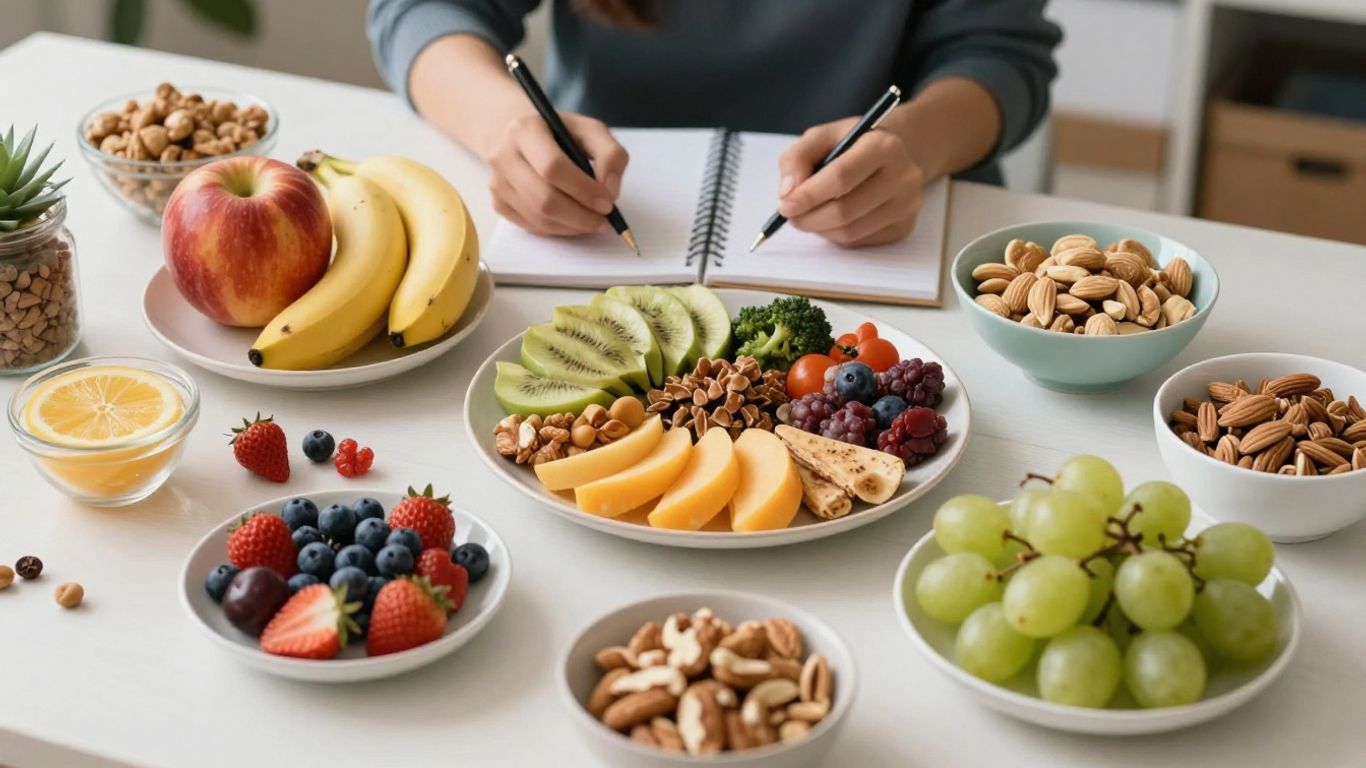
Your brain runs on a steady supply of energy. Long gaps without food, or meals made mostly of sugar and refined starch, can leave you foggy, irritable or sleepy, which makes revision harder. Eating regularly is less about any “brain food” and more about avoiding big highs and lows.
Breakfast is a good example. A systematic review of 45 studies in children and adolescents found that eating breakfast, compared with fasting, had a short-term positive effect on attention, executive function and memory on the same morning. The authors note the evidence on what to eat is less clear, so the main point is simply to eat something.
Build a focus plate
Canada’s food guide recommends making half your plate vegetables and fruits, one quarter whole grains and one quarter protein foods. That same layout works well during exams because it gives you steady energy and keeps you full between study blocks.
| Meal | Focus plate idea |
|---|---|
| Breakfast | Oatmeal made with milk, topped with berries and peanut butter; or eggs on whole-grain toast with an orange |
| Lunch | Whole-grain wrap with hummus, chicken or beans and lots of vegetables; fruit on the side |
| Dinner | Rice or pasta with a tomato-lentil sauce, a side salad, and yogurt for dessert |
| Late study session | Toast with cheese, a small bowl of cereal with milk, or apple slices with nut butter |
If cooking feels impossible this week, our guide to five-minute balanced meals has assembly-only options.
Exam morning: what and when to eat
- Eat 1 to 2 hours before a morning exam if you can, so food has time to settle.
- Choose familiar foods. Exam day is not the time to try a new cereal, protein bar or spicy breakfast.
- Combine carbohydrate with some protein: toast with eggs, yogurt with granola, or a banana with a glass of milk.
- Keep it moderate in fat and fibre if your stomach gets nervous.
When nerves kill your appetite
Many students cannot face a full breakfast on exam day. Try gentler options:
- A smoothie made with milk or yogurt, banana and frozen berries
- Plain toast or crackers with a little cheese
- A small bowl of oatmeal or cream of wheat
- Applesauce or a fruit pouch with a glass of milk
Even a few bites are better than nothing. Bring a small snack for after the exam in case your appetite comes back.
Study snacks that actually help
Plan snacks into your study breaks instead of grazing at the desk. Every 90 minutes or so, stand up, stretch, refill your water, and have a small snack if you are hungry.
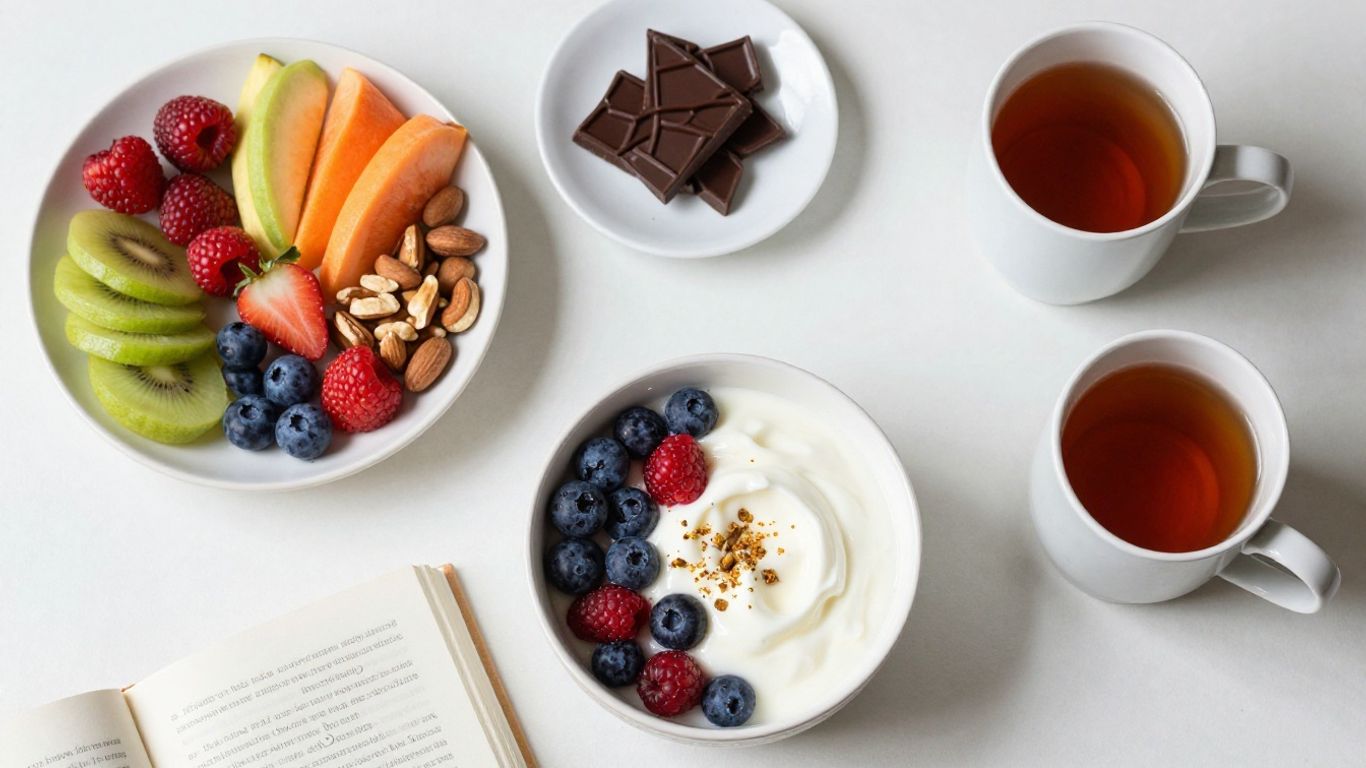
- Apple, pear or grapes with a cheese stick
- Greek yogurt with berries and a sprinkle of granola
- Hummus with carrots, cucumber or whole-grain crackers
- A small handful of nuts or roasted chickpeas
- Whole-grain toast with peanut butter
- Edamame or a hard-boiled egg
Keep a “study box” on your desk or in your bag with shelf-stable items so you are not relying on the vending machine. For ideas on breaks that refresh rather than drain you, see midday energy rituals.
Gentle treats, used well
Exam week is stressful, and comfort food has a place. A few ways to enjoy treats without the crash:
- Have a treat after a meal or alongside a protein snack, not as a meal replacement.
- Choose one you really enjoy: a square of chocolate, a homemade muffin, a mug of hot chocolate.
- Use treats as a reward after a finished study block rather than as a way to start one.
Hydration
The NHS suggests drinking enough so that your urine is a clear pale yellow colour, and lists water and lower-fat milk among good choices. Keep a water bottle on your desk and in your exam bag (if allowed). Other good options are sparkling water, milk, and herbal teas such as peppermint or chamomile in the evening.
A note on energy drinks
Energy drinks and large amounts of caffeine can make you jittery, worsen a nervous stomach and interfere with sleep, which is when your brain consolidates what you studied. Skip them during exam week and rely on regular meals, water and sleep instead.
Foods to go easy on before an exam
- Large, greasy meals that leave you sluggish
- Very spicy food if you are prone to heartburn
- Lots of sugary snacks with no protein or fibre
- New or unfamiliar foods on the day of a test
Sleep is part of the plan
Late-night cramming fuelled by snacks tends to cost more than it gains. Aim to stop studying at a set time, have a small snack if you are hungry, and keep a regular bedtime. A light evening snack such as warm milk, toast or yogurt can help you settle.
A sample exam day
For a 9 a.m. exam followed by an afternoon of studying, a steady day might look like this:
| Time | What to eat or drink |
|---|---|
| 7:00 a.m. | Familiar breakfast: oatmeal with milk and banana, or toast with eggs; a glass of water |
| 8:30 a.m. | Water; a small snack in your bag for later |
| 11:30 a.m. | Post-exam snack: yogurt and fruit, or a cheese stick and crackers |
| 1:00 p.m. | Focus-plate lunch: wrap or grain bowl with protein and vegetables |
| 3:30 p.m. | Study break snack: apple and peanut butter, plus water |
| 6:30 p.m. | Balanced dinner, then a planned treat |
| 9:30 p.m. | Light snack if hungry, herbal tea, and lights out at your usual time |
Adjust the times to your schedule. The aim is never to go more than about four hours awake without eating something.
Exam week food kit
- Water bottle
- Two or three shelf-stable snacks (nuts, crackers, granola bars, dried fruit)
- One fresh option (apple, banana, cheese stick)
- A familiar breakfast plan for every exam morning
- One planned treat for after the hardest exam
When to check with a professional
If you have diabetes, food allergies or a medical condition that affects how you eat, plan exam-day meals with your healthcare team. If stress is leading you to skip meals for long stretches, binge, or feel out of control around food, talk with your doctor or campus health service. NEDIC also offers free, confidential support in Canada.
Key takeaways
- Eat regular meals built on the half-plate vegetables and fruit model.
- Have a familiar breakfast before morning exams, even if it is small.
- Plan snacks into study breaks and keep a snack box handy.
- Drink water and herbal teas; skip energy drinks.
- Enjoy treats after meals or study blocks, and protect your sleep.