
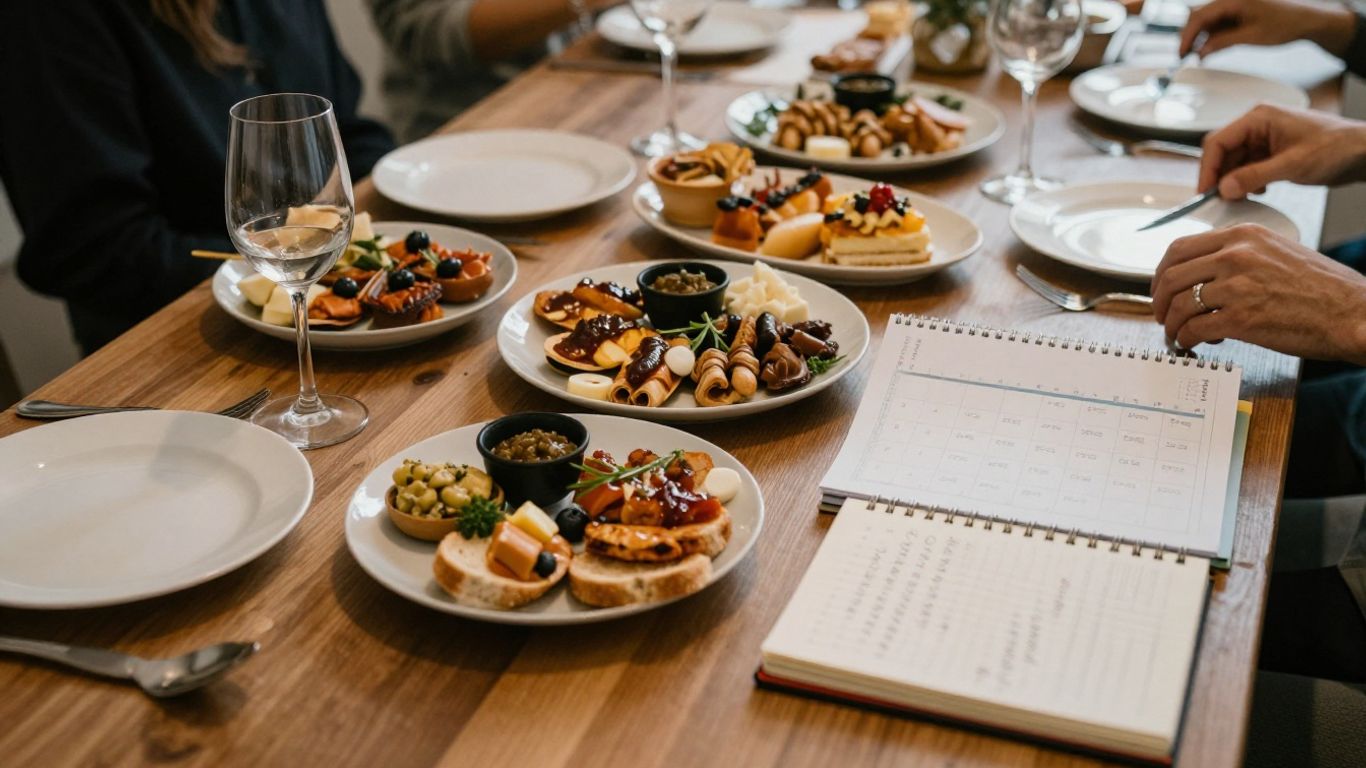
Stress-free hosting comes down to three decisions made early: a short menu built mostly from dishes you can make ahead, a written prep timeline that spreads the work over several days, and a simple plan for food safety and guests’ dietary needs. When those are settled, the day itself is mostly reheating, plating and enjoying your guests.
Below is a practical framework you can reuse for a holiday dinner, a birthday, or a casual Sunday lunch, with a menu that still fits your health goals.
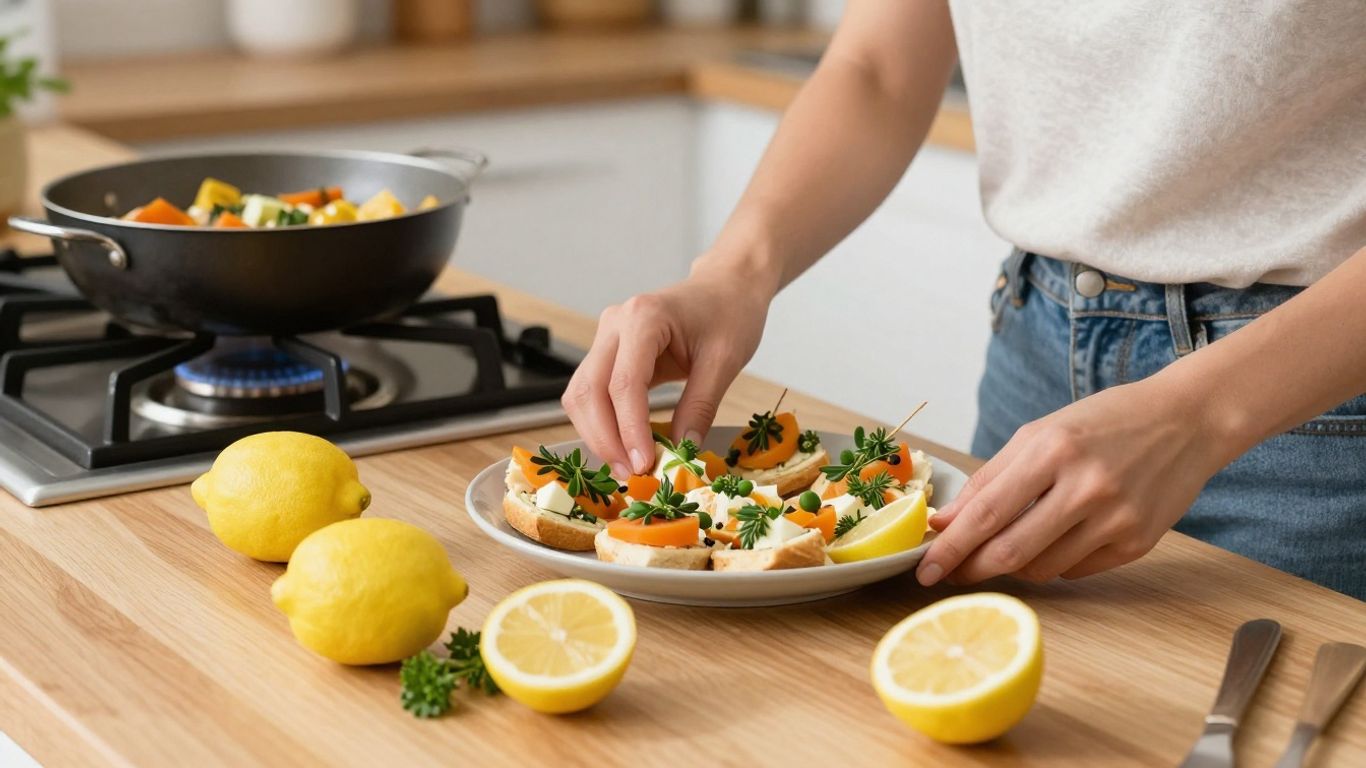
Step 1: Choose the format first
Before you pick recipes, decide how people will eat. The format shapes everything else.
| Format | Works best for | Host workload |
|---|---|---|
| Build-your-own bar (tacos, grain bowls, baked potatoes) | Mixed ages and dietary needs | Low on the day, mostly chopping ahead |
| Buffet | Larger groups, smaller spaces | Moderate; needs food safety planning |
| Family-style platters | Groups of 6 to 12 around a table | Moderate |
| Plated dinner | Small, formal gatherings | High on the day |
If you want the lowest-stress option, a build-your-own bar is hard to beat. Guests serve themselves, and people with allergies or preferences can choose freely.
Step 2: Build a balanced, make-ahead menu
Keep it to one main, two or three sides, one appetizer and one dessert. More dishes rarely make a better party, but they always make a more tired host.
Health Canada’s tips for healthy eating at holidays and events suggest including plenty of vegetables and fruits, choosing whole grains, and making water the drink of choice. Use that as your menu filter:
- Main: something that holds well, such as a roast chicken, braised beans, a lasagna, or a chili.
- Vegetable sides: a large salad and one roasted or grilled vegetable dish. Our big salad night ideas scale up well for guests.
- Grain or starch: wild rice, roasted potatoes, whole-grain rolls or a farro salad.
- Appetizer: a vegetable platter with one or two dips.
- Dessert: fruit-forward and made ahead, such as a fruit crisp, a berry trifle, or a platter of cut fruit with a small plate of cookies.
- Drinks: a big pitcher of water with citrus or cucumber, sparkling water, and a festive punch made from juice and sparkling water.
A fresh herb sauce, such as a parsley and lemon sauce or a basil pesto, is an easy way to make simple roasted vegetables or chicken taste special, and it can be made a day ahead.
Plan for dietary needs
Ask guests about allergies and dietary needs when you invite them. Then:
- Make sure at least one main and one side work for everyone.
- Keep sauces and dressings on the side.
- Label dishes with key allergens (nuts, dairy, gluten, eggs).
- Use separate serving spoons for each dish.
Step 3: Write a prep timeline
A written timeline is what turns a stressful day into a calm one. Work backwards from when guests arrive.
One week before
- Confirm guest count and dietary needs.
- Finalise the menu and write a shopping list grouped by store section.
- Check that you have enough plates, serving dishes, utensils and fridge space.
Two to three days before
- Shop for non-perishables and sturdy produce.
- Make anything that freezes or keeps well: soups, sauces, cookie dough, braises.
- Label serving dishes with sticky notes so you know where each item goes.
One day before
- Wash and chop vegetables; store them in containers lined with paper towel.
- Make dips, dressings and desserts.
- Assemble casseroles and refrigerate, unbaked.
- Set the table and set up a drink station.
Day of
- Morning: tidy the main spaces, empty the dishwasher, take out the garbage.
- Two to three hours before: start anything that needs long oven time.
- One hour before: assemble salads, set out the vegetable platter, fill water pitchers.
- Thirty minutes before: reheat, then rest. Get yourself a glass of water and sit down for five minutes.
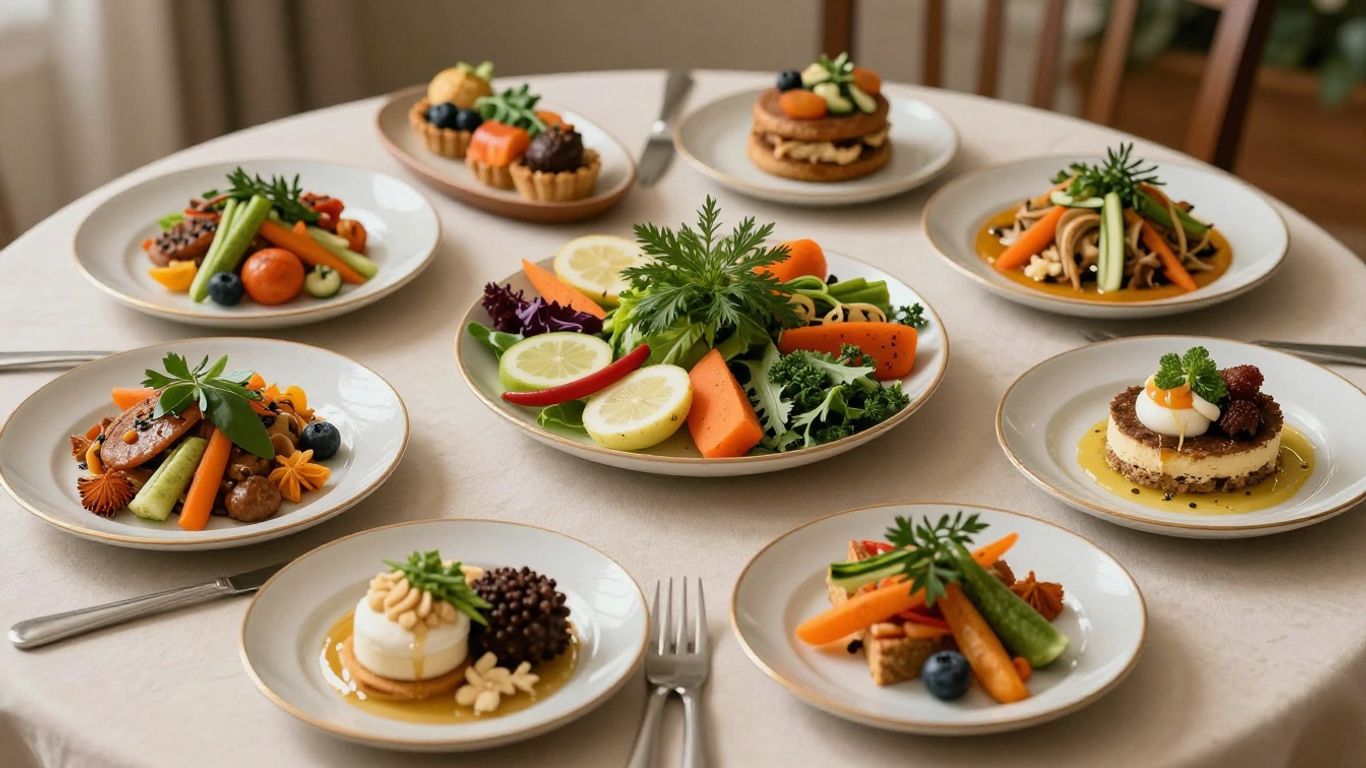
Step 4: Keep food safe
Hosting often means food sits out longer than usual. Health Canada’s food safety tips for leftovers advise keeping food out of the danger zone between 4°C and 60°C, throwing away cooked food left at room temperature for more than two hours, refrigerating leftovers promptly in shallow containers, and reheating leftovers to 74°C.
- Put out smaller platters and refill from the kitchen rather than setting everything out at once.
- Keep hot dishes in a low oven or slow cooker until serving.
- Set a phone timer for two hours after the meal goes out.
- Pack leftovers for guests in shallow containers right away.
Step 5: Set up the space for easy flow
- Put the drink station away from the food table to prevent bottlenecks.
- Arrange a buffet in order: plates, vegetables and salads first, then mains, then sides.
- Leave space for people to set down a glass while they serve themselves.
- Have a clear spot for used dishes and a lined bin nearby.
Step 6: Build in flexibility
Something will change: a late guest, an extra person, a dish that does not turn out. Keep a few backups ready.
- A bag of salad greens and a jar of dressing
- Whole-grain crackers and cheese
- Frozen berries for a quick dessert topping
- Extra sparkling water
Accept offers of help. Give specific jobs: “Could you fill the water glasses?” or “Would you bring a fruit platter?”
Sample make-ahead menu for 10
| Dish | When to make it |
|---|---|
| Vegetable platter with hummus and a yogurt-herb dip | Dips two days ahead; vegetables cut the day before |
| Chicken and vegetable bake, or a black bean and sweet potato chili | Assemble the day before; bake or reheat on the day |
| Wild rice salad with dried cranberries and toasted seeds | The day before; add seeds just before serving |
| Large green salad | Greens washed the day before; dress at the table |
| Apple-berry crisp | Bake the day before; warm gently before dessert |
| Citrus water and sparkling cranberry punch | Mix one hour before guests arrive |
Every dish on this menu can be prepared ahead, which leaves you with about an hour of active work on the day.
After the party
- Pack and refrigerate leftovers first, before you start on the dishes.
- Run the dishwasher once and leave the rest to soak overnight if you are tired.
- Jot down what worked, what was left over and what ran out. Your notes make the next gathering even easier.
Hosting while sticking to your own goals
When you host, you control the menu, which makes it easier to eat in a way that feels good. Fill your own plate with vegetables first, eat a balanced snack while you cook so you are not tasting your way through dinner, and keep water handy. For more on this, see hospitality without overeating.
Key takeaways
- Pick the serving format before the recipes.
- Keep the menu short, vegetable-forward and mostly make-ahead.
- Write a timeline that starts a week out.
- Ask about dietary needs early and label dishes.
- Follow the two-hour rule and refrigerate leftovers promptly.
- Have a few backups ready and accept specific offers of help.